


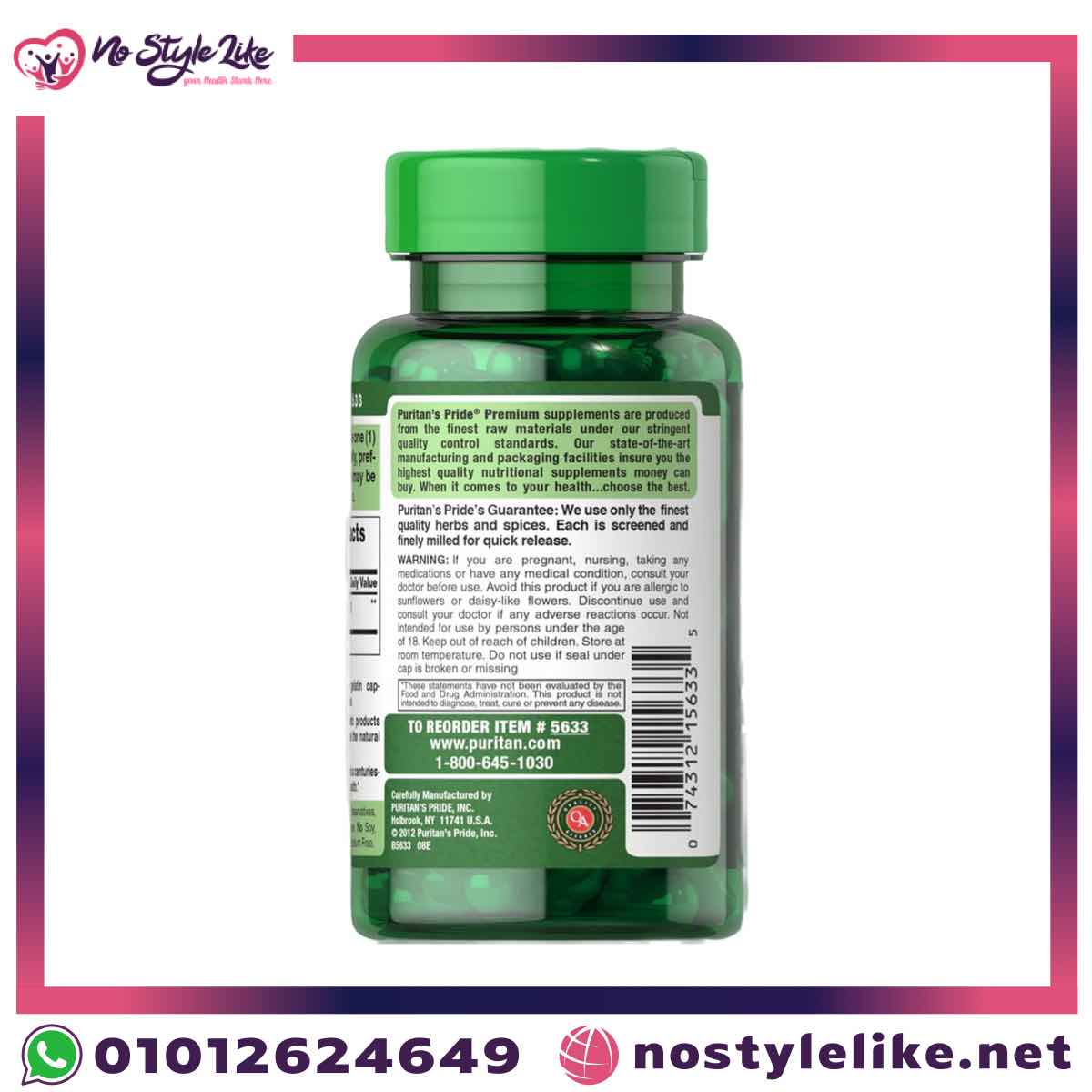
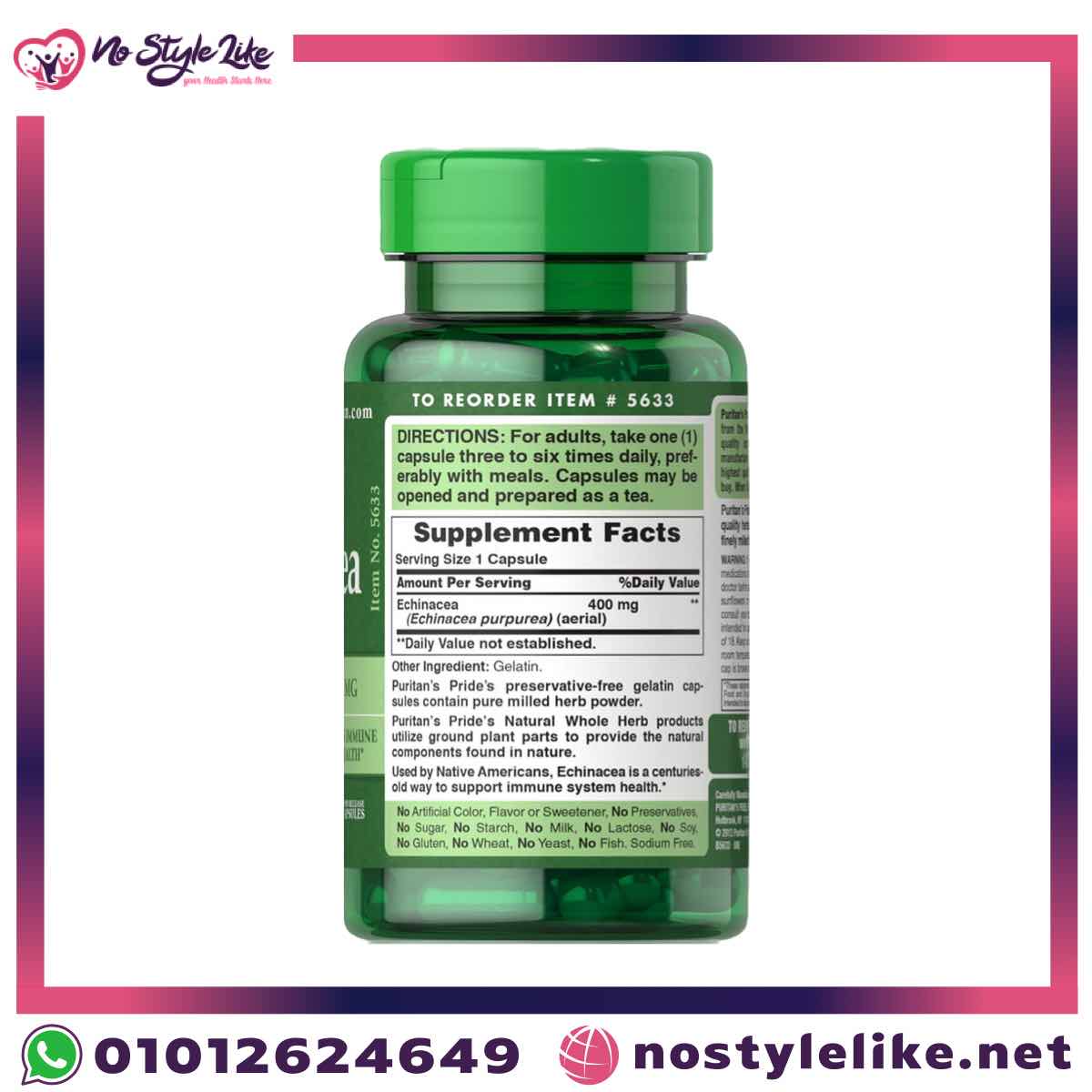
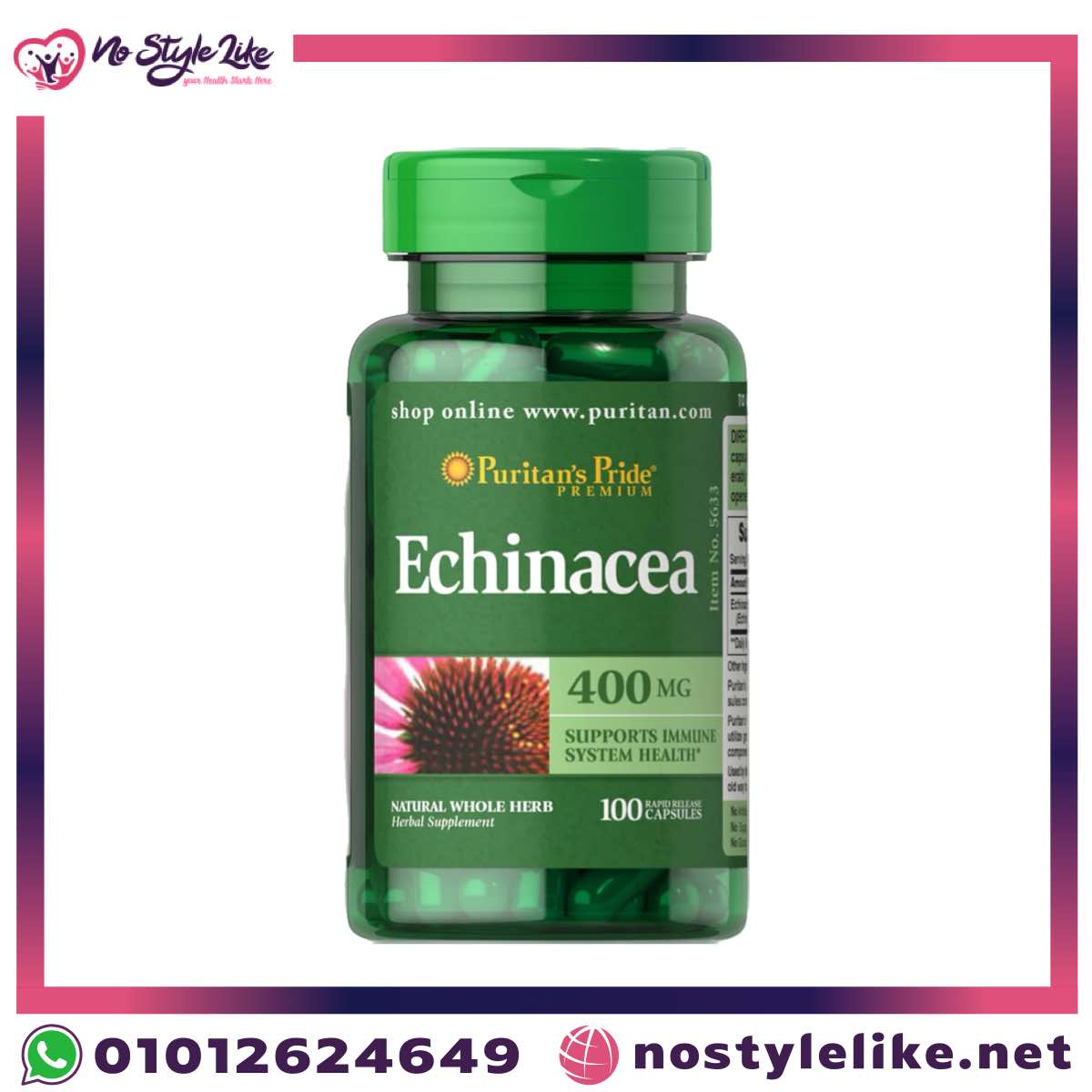
Description
Quick Answer: What Is Echinacea 400 mg?
Echinacea 400 mg capsules deliver a concentrated extract of purple coneflower, the most popular immune-support herb in the world. The honest evidence summary: taken at the very first sign of a cold, echinacea may modestly shorten its duration and soften symptoms; as a season-long shield it shows weaker, mixed results. It suits short courses during cold-and-flu season and is not for people with autoimmune conditions without medical advice.
Key Facts About Echinacea 400
| Product Name | Echinacea 400 mg Capsules |
|---|---|
| Active Ingredient | Echinacea purpurea extract 400 mg |
| Category | Herbal immune-support supplement |
| Best Use | Short courses at the first sign of a cold |
| Realistic Effect | Modest shortening of cold duration and severity |
| Prescription Status | Over the counter (dietary supplement) |
| Price in Egypt | 750 EGP |
How Echinacea Works
Echinacea’s alkamides and polysaccharides interact with the innate immune system — the body’s first responders. Laboratory research shows increased activity of macrophages and natural killer cells, the units that meet viruses in the first hours of infection. That mechanism explains the clinical pattern: the herb performs best when those first responders are being mobilized — the scratchy-throat, first-sneeze window — and adds little once a cold is fully established.
The Honest Evidence Summary
Dozens of trials and several meta-analyses give a fair verdict: a modest reduction in cold duration (roughly a day) and some reduction in severity when started immediately at onset; inconsistent results for prevention. We state this plainly because echinacea used correctly — early, short, and decisively — earns its keep, while echinacea taken passively all winter mostly earns disappointment.
How to Take Echinacea 400
- At the first sign of a cold: follow the label — commonly one capsule two to three times daily for 7-10 days.
- Start within the first 24 hours of symptoms for the documented benefit.
- Do not exceed 8 weeks of continuous use; the herb is designed for courses, not permanence.
- Pair it with the real immune infrastructure: sleep, fluids, vitamin D status, and hand hygiene.
Who Should Check With a Doctor First
- Autoimmune conditions (rheumatoid arthritis, lupus, MS) — stimulating immunity can be the wrong direction; medical advice first.
- People on immunosuppressants (including transplant patients) — echinacea can oppose their medicines.
- Allergy to the daisy family (ragweed, chrysanthemums, marigolds) — cross-reactions occur.
- Pregnant and breastfeeding women, and children — label age limits and medical guidance apply.
- Progressive systemic diseases such as tuberculosis — traditionally contraindicated.
Possible Side Effects
Generally gentle: occasional stomach upset, dizziness, or mild rash. Daisy-family-allergic users can react more strongly — first-time users should note any itching or swelling and stop if it appears.
Storage
Store below 25°C, tightly closed, away from light. Keep out of reach of children.
Echinacea Price in Egypt
The price of Echinacea 400 mg in Egypt is 750 EGP. Check availability on this page.
Related Products
Build the fuller immune stack in our immune support collection, including vitamin D and zinc options at No Style Like.
Expert Note
“Echinacea is a sprinter, not a marathoner. I tell clients to keep a bottle in the cupboard and take it the very evening the throat first scratches — used that way, it honestly earns its modest, useful place. Taken all winter as a talisman, it mostly decorates the shelf.” — Dr. Abdallah Fouad, Clinical Nutrition Specialist, 25+ years in clinical nutrition.
Frequently Asked Questions About Echinacea 400
Does echinacea prevent colds?
Prevention evidence is mixed and weak; the documented benefit is shortening and softening a cold caught at onset.
When exactly should I start taking it?
Within the first 24 hours of symptoms — the scratchy throat evening is the golden window.
Can I take echinacea year-round?
No — cap continuous use at 8 weeks. It is a course herb for acute moments.
Is echinacea safe with autoimmune disease?
Ask your doctor first; stimulating an immune system that already over-fires can be counterproductive.
Echinacea or vitamin C for colds?
Different tools: echinacea for the acute onset course, vitamin C and D as background nutritional status. Many households sensibly keep both.
The Complete First-Sign-of-a-Cold Protocol
The households that sail through winter treat the first scratchy evening as an action signal, not a wait-and-see moment. Start the herbal course immediately, then stack the basics that actually move recovery: an early night (immune cells do their heaviest work during deep sleep), warm fluids every hour or two, salt-water gargles for the throat, and a lighter schedule for a day or two instead of heroically pushing through. Check that vitamin D intake has been adequate all season — deficiency quietly lengthens every infection — and add zinc lozenges within the same 24-hour window if your doctor approves. Wash hands often and keep your distance from the household’s youngest and oldest members during the contagious first days. Each element is small; together they routinely turn a week-long cold into a three-day inconvenience.
References
Echinacea research overview: NCCIH – Echinacea.
Bottom line: Echinacea 400 mg is the classic first-sign-of-a-cold course with honest, modest evidence behind it — order echinacea 400 from No Style Like and deploy it early, briefly, and wisely.

Reviews
There are no reviews yet.