


Description
Ultra Vitamin D by Vitabiotics — 96 Tablets of 1000 IU for Immunity and Bones
Key Facts about ultra vitamin d
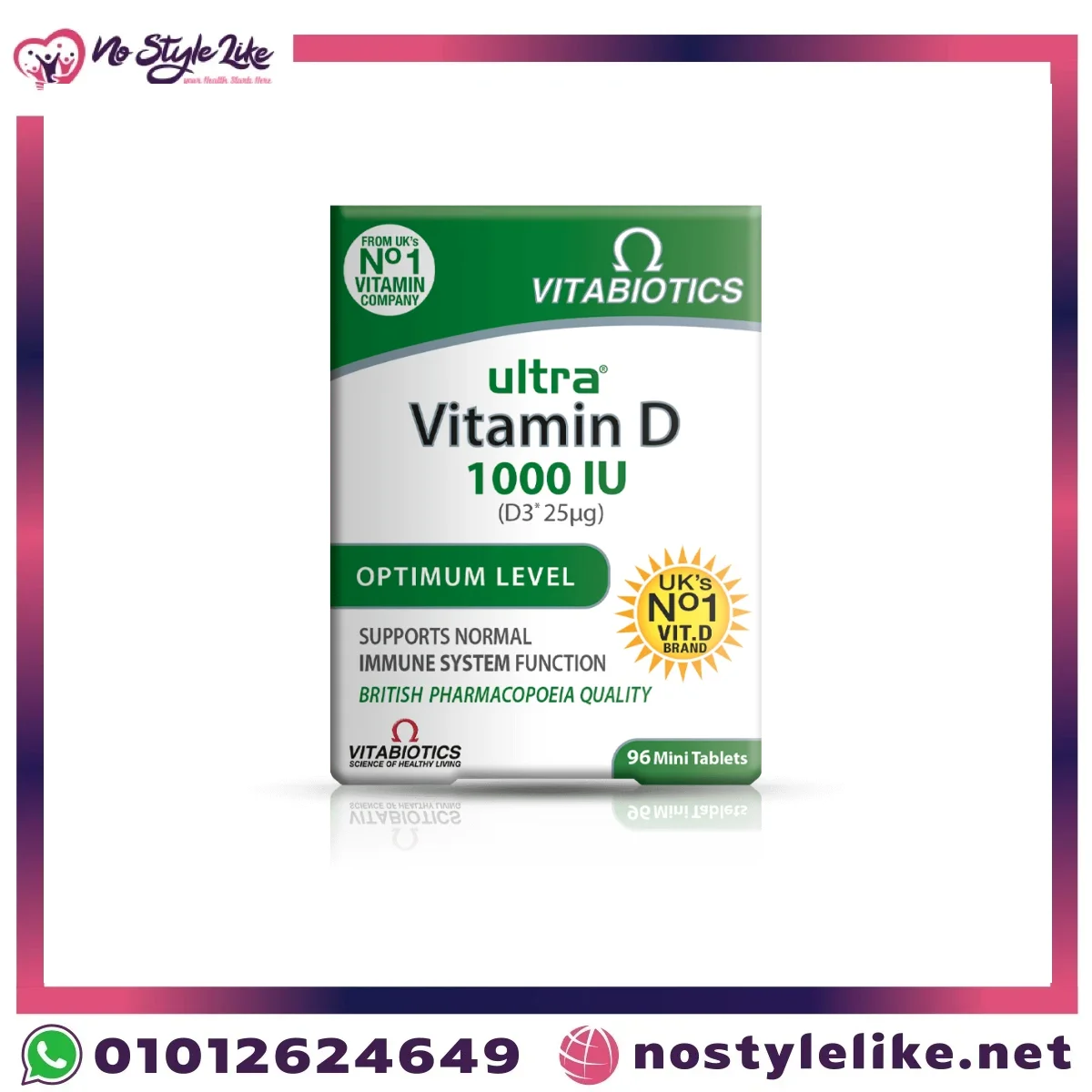
| Name | Ultra Vitamin D 1000 IU |
| Brand | Vitabiotics — United Kingdom |
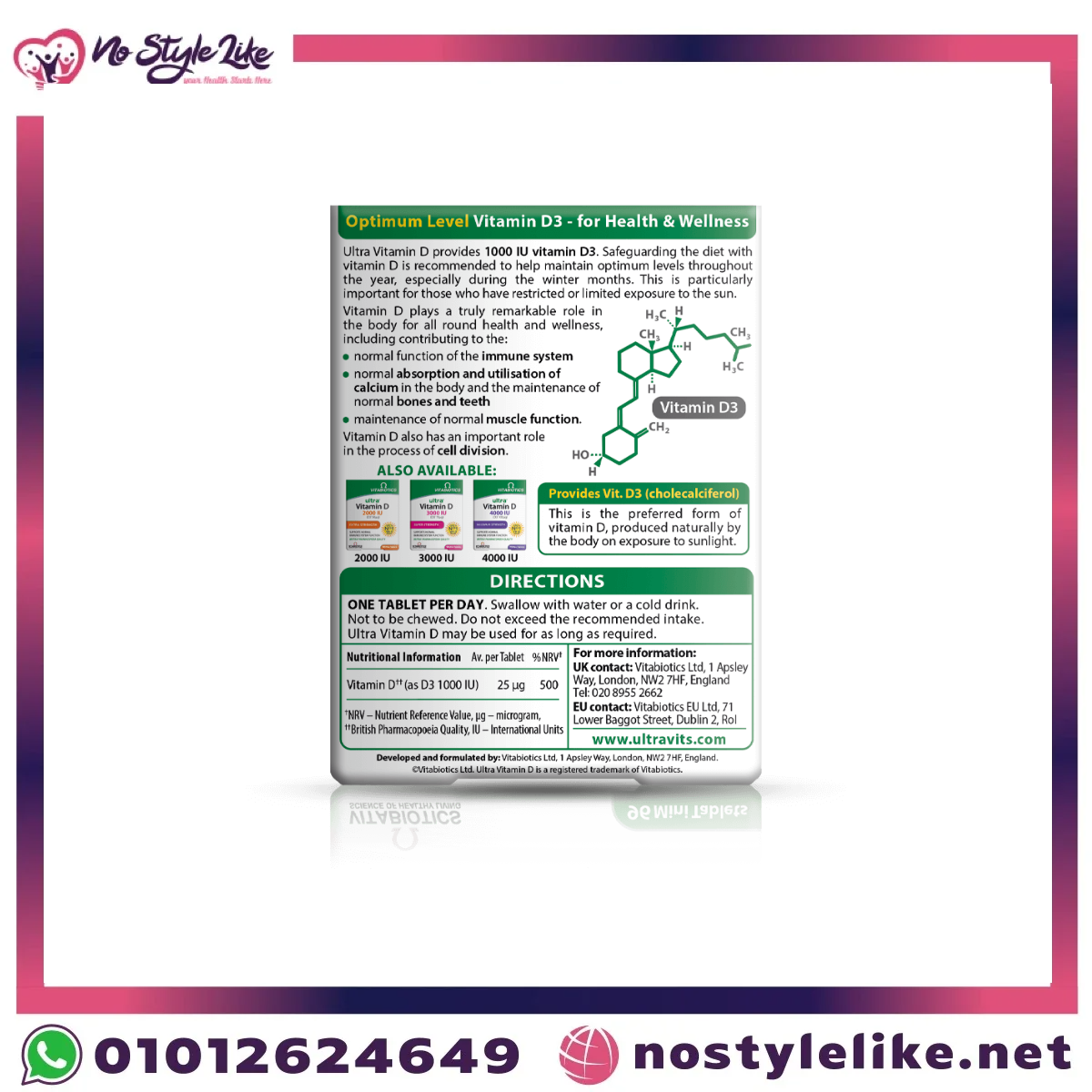
| Active | Vitamin D3 1000 IU (25mcg) |
| Pack size | 96 tablets |
| Form | Small easy-to-swallow tablets |
| Dose | One tablet daily with food |
| Suitable for | Vegetarians |
| Use | Immunity, bones and muscles |
Table of Contents
- Introduction
- What is ultra vitamin d?
- How does ultra vitamin d work?
- Key benefits of ultra vitamin d
- Real-life use cases
- Who is it for?
- Who should avoid it?
- How to use it correctly
- Best time to take it
- Expected time to benefit
- Common mistakes
- Myths vs facts
- Drug interactions
- Contraindications and warnings
- Relevant tests
- What to take alongside
- When to see a doctor
- NSL expert tip
- FAQ
- Conclusion
Introduction
Vitamin D is one of the most important vitamins for immune and bone health, and many are deficient, especially with low sun exposure. Ultra Vitamin D by Vitabiotics provides 1000 IU in one small, easy-to-swallow tablet daily. This guide explains its benefits and safe use.
What is ultra vitamin d?
Ultra Vitamin D is a small-tablet food supplement by Vitabiotics (UK), 96 tablets per pack. It provides 1000 IU (25mcg) of vitamin D3, the most effective form, with no artificial colours or preservatives, suitable for vegetarians. It is a food supplement, not a medicine.
How does ultra vitamin d work?
- Vitamin D for immunity: contributes to normal immune system function.
- Vitamin D for bones: contributes to normal bones and teeth and improves calcium absorption.
- Vitamin D for muscles: contributes to normal muscle function.
- D3: the form closest to what skin produces from sunlight and most effective at raising levels.
Key benefits of ultra vitamin d
- Supports normal immune system function.
- Contributes to bone and teeth health.
- Improves calcium and phosphorus absorption.
- Supports muscle function.
- Small easy-to-swallow tablet, suitable for vegetarians.
Real-life use cases
Many choose Ultra Vitamin D to make up for low sun exposure, or to support immunity and bones, especially in winter or for those who spend a lot of time indoors, within a healthy lifestyle.
Who is it for?
- Adults with low sun exposure.
- Those wanting immune and bone support.
- Vegetarians and older adults.
Who should avoid it?
- People with high blood calcium or vitamin D excess.
- Kidney or sarcoidosis patients: consult a doctor.
- Those taking other vitamin D supplements (to avoid excess).
- Children below the recommended age on the pack.
How to use it correctly
The usual intake is one tablet daily, swallowed with water during or after food. It is best with a meal containing some fat to improve absorption. Do not exceed the recommended dose. The supplement does not replace a balanced diet.
Best time to take it
It is best taken with your largest meal containing fat to improve absorption, and can be taken at any time of day, keeping to the same time.
Expected time to benefit
A supportive food supplement taken regularly over weeks and months within a healthy lifestyle. Raising blood vitamin D may take time; response varies from person to person.
Common mistakes
- Exceeding the dose (excess vitamin D accumulates and can harm).
- Taking it on an empty stomach without fat (reduces absorption).
- Combining with other vitamin D supplements unnoticed.
- Skipping level checks during prolonged high-dose use.
Myths vs facts
| Myth | Fact |
| A bigger dose boosts immunity further | Excess can be toxic; stick to the recommended dose |
| Sun exposure is always enough | Many do not get enough, especially in winter or with little time outdoors |
Drug interactions
Vitamin D may interact with some heart medicines (digoxin), diuretics, cholesterol-lowering medicines and high-dose calcium supplements. If you take prescription medicines, consult a doctor or pharmacist before regular use.
Contraindications and warnings
- Do not use with high blood calcium or vitamin D excess.
- Keep out of the reach of children.
- Do not exceed the recommended daily dose.
- Kidney, sarcoidosis patients and pregnant women: consult a doctor.
Relevant tests
If deficiency is suspected or before prolonged high doses, a blood vitamin D (25-hydroxy) test is preferred and followed up with a doctor.
What to take alongside
To support bones and immunity, follow a diet rich in oily fish, eggs and fortified dairy, with moderate sun exposure and calcium. Ultra Vitamin D supports this pattern rather than replacing it.
When to see a doctor
See a doctor for clear deficiency symptoms (fatigue, bone pain), before prolonged high doses, or if you have kidney disease or take heart medicines.
NSL expert tip
Take one Ultra Vitamin D tablet with your largest meal containing fat to improve absorption. If you use it long-term or suspect a severe deficiency, check your blood vitamin D level with your doctor to adjust the dose.
FAQ
What is the dose of Ultra Vitamin D?
One tablet daily with food.
What is the difference between D3 and D2?
D3 is the form closest to what skin produces and is more effective.
Is it suitable for vegetarians?
Yes, suitable for vegetarians.
When should I take it?
With a meal containing some fat.
Is it a medicine?
No, it is a supportive food supplement.
Conclusion
Ultra Vitamin D by Vitabiotics provides 1000 IU of vitamin D3 to support immunity, bones and muscles in one tablet daily. For price and availability, contact us on WhatsApp. Browse more at No Style Like pharmacy.
This page was reviewed by the content team at No Style Like pharmacy. The information is for educational purposes and does not replace advice from a doctor, especially for kidney patients and those on heart medicines. Trusted source: U.S. National Institutes of Health (NIH).

Reviews
There are no reviews yet.