


Description
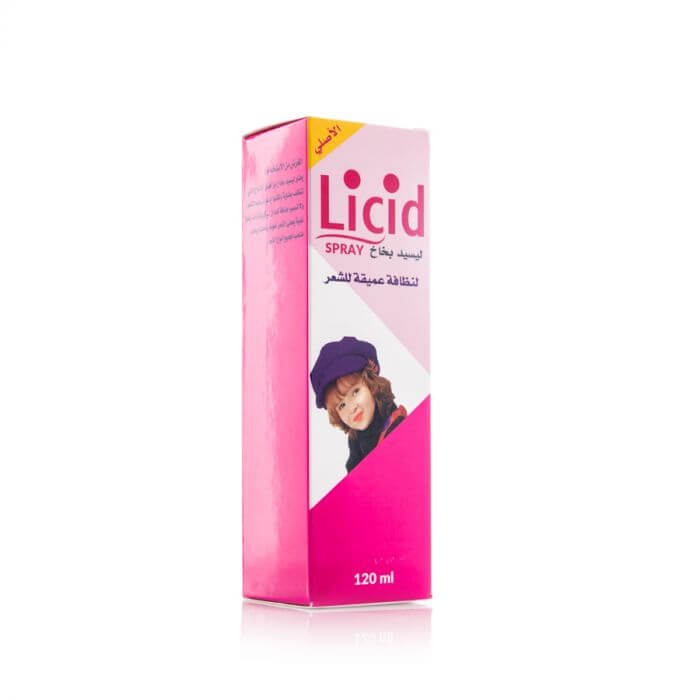
Quick answer: Licid Spray is a topical head lice treatment containing an insecticide that kills head lice on the scalp and hair. It is a medicine, not a cosmetic, so it must be used strictly according to the instructions — kept away from the eyes and mouth, used for the right contact time, and combined with wet combing to help remove eggs.
⚠️ Central safety rule: Licid Spray is an insecticide applied to the scalp — use it strictly as directed. Keep it away from the eyes, mouth and broken skin, avoid inhaling the spray, use it in a ventilated area, and do not overuse or repeat it more often than instructed. It is not suitable for very young children, or in asthma or scalp conditions, without medical advice. Keep it out of reach of children and contact a doctor or poison service if it is swallowed.
Key facts about Licid Spray
| Product | Licid Spray, 120 ml |
| Type | Topical head lice treatment (pediculicide) |
| Active ingredient | Tetramethrin (a pyrethroid insecticide) |
| Used for | Killing head lice on the scalp and hair |
| Apply to | Scalp and hair as directed — avoid eyes and mouth |
| Pair with | Wet combing to remove lice and eggs |
What is Licid Spray?
Licid Spray is a topical treatment for head lice, applied to the scalp and hair. It contains an insecticide, tetramethrin, which acts on the nervous system of lice to kill them. Head lice are a common and harmless but irritating problem, especially in children, causing itching as they feed on the scalp. Licid Spray is a medicine designed to clear an infestation, and it must be used with care and exactly as directed.
How it works
The active ingredient is a pyrethroid insecticide, a class of compounds that paralyse and kill insects by acting on their nerves. Applied to the hair and scalp, it targets the live lice. It is important to understand that, like all insecticide treatments, it is more effective against hatched lice than against eggs (nits), which is why combing and often a repeat treatment are part of clearing an infestation properly.
How to use it safely
Follow the product instructions exactly. In general, apply to the scalp and hair as directed, leave it on for the stated contact time, then wash out and comb through. Keep it well away from the eyes, mouth and any broken or inflamed skin, avoid breathing in the spray, and use it in a well-ventilated room. Wash your hands afterwards, and do not use more than directed in the belief it will work better.
The importance of wet combing
No lice treatment is complete without combing. Using a fine-toothed detection comb on wet, conditioned hair helps remove lice and eggs, and lets you check whether the treatment has worked. According to the NHS guidance on head lice and nits, regular wet combing is a key part of clearing head lice. A repeat application after about a week is often needed to catch lice that hatch from surviving eggs.
Who should be cautious
Insecticide treatments are not suitable for everyone. They should be used with particular caution, or only on medical advice, in babies and very young children, in pregnancy or breastfeeding, and in people with asthma or eczema, broken skin, or scalp conditions, as the product may irritate or trigger symptoms. If any of these apply, speak to a pharmacist or doctor before use, and consider whether wet combing alone might be preferable.
Side effects
Some scalp irritation, redness or itching after treatment is common and usually mild. Stop and seek advice if there is significant irritation, a rash, swelling, or any difficulty breathing, which could suggest a reaction. Because the product is an insecticide, avoid unnecessary skin contact beyond the scalp, and never use it on areas other than those instructed.
Treating the household
Head lice spread through direct head-to-head contact, so check everyone in the household on the same day and treat only those who actually have live lice — treating people without lice is unnecessary and exposes them to the insecticide needlessly. There is no need to treat pets or extensively fumigate the home; normal washing of recently used bedding and hairbrushes is sufficient.
Avoiding overuse and resistance
Using insecticide treatments too often, or when lice are not actually present, is unhelpful and can contribute to resistance, where lice become harder to kill. Only treat confirmed live infestations, follow the instructions on timing and repeats, and if a treatment does not work after correct use, ask a pharmacist about alternatives rather than simply repeating the same product endlessly.
Storage and safety
Store Licid Spray tightly closed in a cool, dry place away from heat, flames and direct sunlight, and out of the reach and sight of children, since it is an insecticide that must never be swallowed. If anyone swallows it or gets it in their eyes, seek medical advice or contact a poison information service promptly. Check the expiry date before use.
Expert note
Dr. Abdallah Fouad — Clinical Nutrition Specialist, 25+ years of experience: Licid Spray is an effective option for clearing head lice, but I want to be clear that it is an insecticide, not a shampoo, so it must be used strictly as directed — away from the eyes and mouth, in a ventilated room, and only on people who actually have live lice. Always pair it with wet combing and expect to repeat after about a week to catch newly hatched lice. Be cautious in young children, pregnancy, and asthma or eczema, seek pharmacist advice in those cases, and never overuse it, as that risks irritation and resistance without any extra benefit.
Frequently asked questions
How does Licid Spray work against head lice?
It contains an insecticide (tetramethrin) that acts on the nerves of lice to kill them when applied to the scalp and hair. It is more effective against live lice than against eggs, so combing and a repeat treatment are usually needed.
How do I use Licid Spray safely?
Follow the instructions exactly: apply as directed, leave it for the stated time, then wash and comb out. Keep it away from eyes and mouth, avoid inhaling it, use it in a ventilated room, and do not use more than directed.
Do I still need to comb after treatment?
Yes. Wet combing with a fine-toothed comb removes lice and eggs and lets you check the treatment worked. A repeat application after about a week is often needed to catch lice that hatch from surviving eggs.
Who should avoid or be careful with it?
Use caution or seek medical advice for babies and young children, in pregnancy or breastfeeding, and for people with asthma, eczema, broken skin or scalp conditions. Wet combing alone may be preferable in some cases.
Should I treat the whole family?
Check everyone on the same day but treat only those with live lice. There is no need to treat people without lice, or to treat pets or fumigate the home; washing recently used bedding and combs is enough.
References
- NHS — Head lice and nits: treatment and wet combing.
- Guidance on safe use of pyrethroid pediculicides.
- Advice on avoiding overuse and insecticide resistance in head lice treatment.
Bottom line
Licid Spray 120 ml is an insecticide-based head lice treatment that can clear an infestation when used strictly as directed — away from the eyes and mouth, in a ventilated area, and only on those with live lice. Always combine it with wet combing and a repeat treatment after about a week, be cautious in young children, pregnancy and asthma, avoid overuse, and keep it well out of reach of children.


Reviews
There are no reviews yet.