


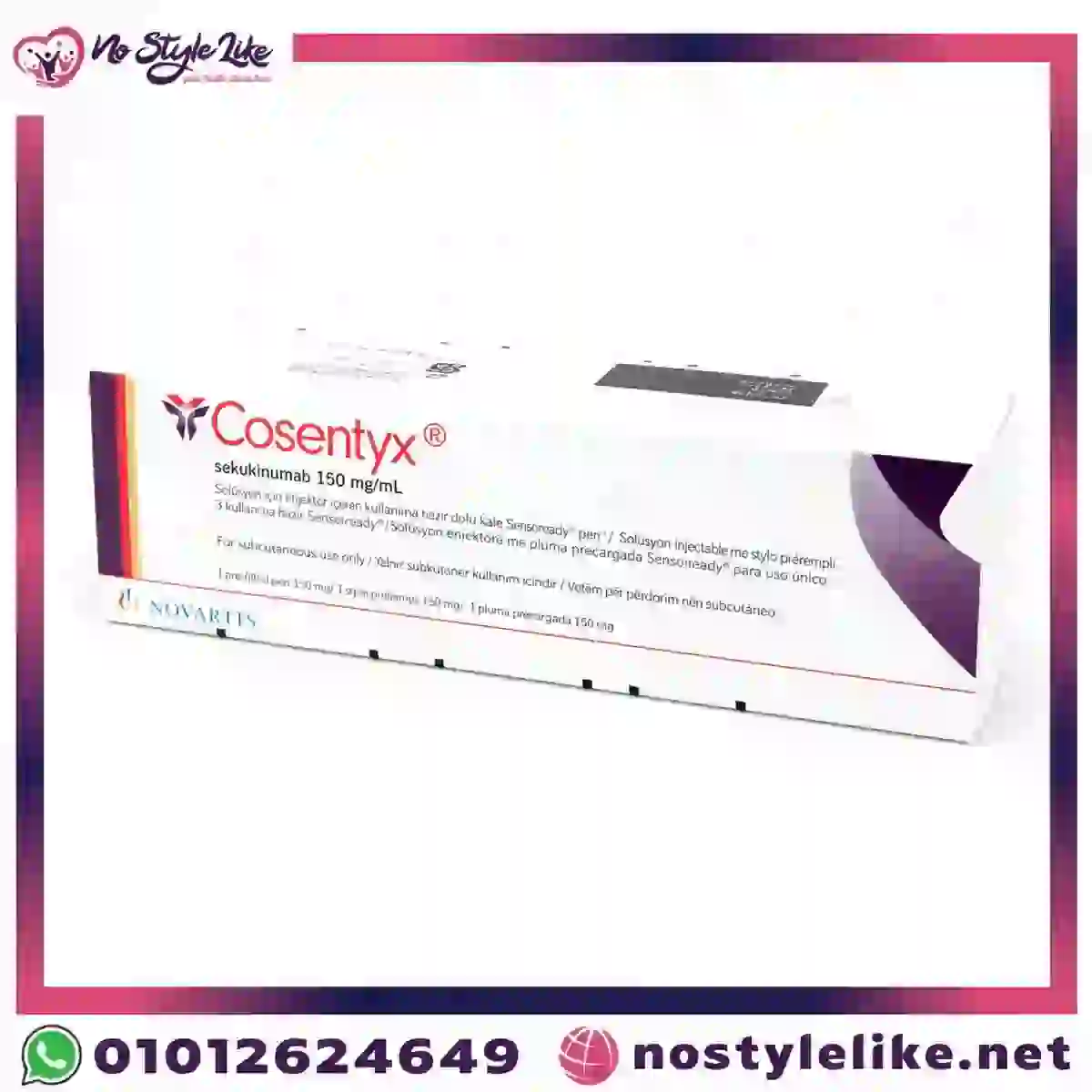


Description
Cosentyx 150 mg (Secukinumab) Pre-filled Pen — Complete Guide for Psoriasis and Related Arthritis
Quick Answer: Cosentyx 150 mg is a biologic injection containing secukinumab, used to treat moderate-to-severe plaque psoriasis, active psoriatic arthritis, and ankylosing spondylitis in adults. It works by blocking interleukin-17A (IL-17A), a key driver of the inflammation behind these conditions. It is typically given as a subcutaneous injection weekly for the first month (loading phase), then once every 4 weeks for maintenance, under specialist supervision.
Key Facts Table
| Item | Details |
|---|---|
| Active ingredient | Secukinumab (fully human monoclonal antibody) |
| Strength | 150 mg pre-filled pen or syringe (300 mg also available as two 150 mg injections) |
| Drug class | Biologic — IL-17A inhibitor |
| Main uses | Plaque psoriasis, psoriatic arthritis, ankylosing spondylitis, axial spondyloarthritis |
| Dosing | 150 mg (or 300 mg) at weeks 0, 1, 2, 3, 4, then every 4 weeks |
| Route | Subcutaneous injection |
| Storage | Refrigerator 2–8°C; do not freeze; protect from light |
| Prescription status | Prescription only — specialist supervision |
Short Description
Cosentyx (secukinumab) is an EMA- and FDA-approved biologic that neutralizes IL-17A, a cytokine central to the inflammation driving plaque psoriasis, psoriatic arthritis, and axial spondyloarthritis. It typically starts with weekly loading doses before moving to monthly maintenance injections.
Table of Contents
- Introduction
- What Is Cosentyx?
- How Does It Work?
- Main Benefits
- Real Use Cases
- Who Is It Best For?
- Who Should Avoid It?
- How to Use Correctly
- Best Time to Use
- Common Questions Users Ask
- Expected Results Timeline
- Common Mistakes
- Myths vs Facts
- Drug Interactions
- Contraindications
- Required Tests
- What to Eat With It
- Effect on Other Medications
- When To See a Doctor
- NSL Expert Tip
- Conversational FAQ
- Conclusion
Introduction
Interleukin-17A (IL-17A) sits at the center of the inflammatory cascade in plaque psoriasis and the related joint and spine conditions that often accompany it. Cosentyx was among the first biologics to directly target this pathway, offering an alternative mechanism to TNF inhibitors for patients across a spectrum of psoriatic and spondyloarthritis conditions, with a distinctive weekly-then-monthly dosing pattern.
What Is Cosentyx?
Cosentyx is a fully human monoclonal antibody (secukinumab) that selectively binds and neutralizes IL-17A. It is approved for moderate-to-severe plaque psoriasis, active psoriatic arthritis, ankylosing spondylitis, and non-radiographic axial spondyloarthritis in adults, with additional pediatric indications for psoriatic arthritis and enthesitis-related arthritis in some regions.
How Does It Work?
IL-17A is a naturally occurring cytokine involved in normal immune defense, but it becomes overactive in psoriasis and related spondyloarthritis, driving the skin inflammation, joint damage, and spinal inflammation characteristic of these conditions. Secukinumab binds IL-17A directly, preventing it from activating its receptor. This interrupts the inflammatory cascade, reducing skin plaques, joint symptoms, and spinal inflammation over the course of treatment.
Main Benefits
- Targeted action on IL-17A, a distinct mechanism from TNF inhibitors.
- Effective across a broad spectrum: skin, peripheral joints, and axial (spine) disease.
- Meaningful skin clearance demonstrated in clinical trials for plaque psoriasis.
- Can be used in patients who have had an inadequate response to TNF inhibitors.
- Convenient monthly maintenance schedule after the initial loading phase.
- Self-injectable at home after training, using a pre-filled pen or syringe.
Real Use Cases
- An adult with extensive plaque psoriasis needing systemic control beyond topical treatment.
- A psoriatic arthritis patient with both skin and joint involvement.
- An ankylosing spondylitis patient with persistent back pain and stiffness.
- A patient who did not respond adequately to a TNF inhibitor and needs a different biologic mechanism.
Who Is It Best For?
Adults with moderate-to-severe plaque psoriasis who are candidates for systemic therapy, adults with active psoriatic arthritis, and adults with active ankylosing spondylitis or non-radiographic axial spondyloarthritis, under specialist (dermatology or rheumatology) care. Some pediatric uses exist in specific regions.
Who Should Avoid It?
- Patients with clinically important active infections until resolved.
- Anyone with hypersensitivity to secukinumab or excipients.
- Patients with untreated latent tuberculosis until prophylaxis is initiated — TB screening is required before starting.
- Caution in patients with inflammatory bowel disease, as new cases or flares have been reported with IL-17 inhibitors.
- Vaccination status should be reviewed and updated before starting, avoiding live vaccines during treatment.
How to Use Correctly
- Inject 150 mg (or 300 mg as two 150 mg injections) subcutaneously at weeks 0, 1, 2, 3, and 4, then every 4 weeks for maintenance, with or without a loading dose per your specialist’s plan.
- Inject into the thigh, abdomen, or upper arm; rotate sites and avoid tender, bruised, red, or hard skin.
- Let the pen or syringe reach room temperature before injecting, per the leaflet.
- Do not shake; the solution should be clear to slightly opalescent and colorless to slightly yellow.
- Use each pen or syringe once and dispose of it in a sharps container.
- Complete age-appropriate vaccinations before starting, since live vaccines should be avoided during treatment.
Best Time to Use
Follow the specific loading schedule (weeks 0, 1, 2, 3, 4) closely, then settle into a fixed day every 4 weeks for maintenance. Time of day is flexible; consistency of the interval matters most. If a maintenance dose is missed, inject as soon as possible and resume the regular schedule, per your specialist’s guidance.
Common Questions Users Ask
Why do I need weekly doses at the start? The loading phase (weeks 0–4) helps reach effective drug levels more quickly than jumping straight to monthly dosing.
Is 150 mg enough, or do I need 300 mg? Dosing depends on your specific condition, disease severity, and response — your specialist determines whether 150 mg or 300 mg (given as two injections) is appropriate.
Do I need screening before starting? Yes — tuberculosis screening is standard practice before starting Cosentyx, as with other biologics targeting the immune system.
Expected Results Timeline
| Period | What to Expect |
|---|---|
| 2–4 weeks | Early improvement in some patients during the loading phase. |
| 12–16 weeks | Significant skin clearance or joint/spine symptom improvement typically assessed. |
| Ongoing | Monthly maintenance dosing sustains the response achieved. |
| Long term | Continued monitoring for infection risk and overall disease control. |
Common Mistakes
- Skipping doses during the weekly loading phase, delaying the full effect.
- Injecting cold straight from the fridge, increasing discomfort.
- Stopping treatment once skin or joint symptoms improve, risking a flare.
- Receiving a live vaccine during treatment without medical advice.
- Ignoring new digestive symptoms that could signal inflammatory bowel disease.
Myths vs Facts
| Myth | Fact |
|---|---|
| “All biologics for psoriasis work the same way.” | Cosentyx targets IL-17A specifically, a different pathway from TNF inhibitors or IL-23-targeted therapies. |
| “If a TNF inhibitor didn’t work, nothing will.” | Switching to an IL-17A inhibitor like Cosentyx is a standard and often effective next step. |
| “The loading phase is optional.” | The weekly loading doses (weeks 0–4) are part of the approved regimen designed to reach effective levels faster. |
Drug Interactions
- Live vaccines: avoid during treatment; complete vaccinations beforehand.
- Other biologics or strong immunosuppressants: combination is generally avoided due to increased infection risk; discuss with your specialist.
- CYP450 substrates with a narrow therapeutic index may theoretically be affected, since IL-17A inhibition can influence certain liver enzymes; disclose all medications to your specialist.
Contraindications
Hypersensitivity to secukinumab or any excipient. Clinically important active infections should be resolved before starting, and untreated latent tuberculosis requires prophylaxis first.
Required Tests
- Tuberculosis screening (IGRA or tuberculin test) plus chest imaging before starting.
- Review and update of vaccinations prior to treatment.
- Assessment for signs of inflammatory bowel disease, given reported associations with IL-17 inhibitors.
- Ongoing clinical assessment of skin, joint, or spine symptom response.
What to Eat With It
Cosentyx has no specific food interactions. A balanced, anti-inflammatory-leaning diet — rich in vegetables, whole grains, omega-3 sources, and adequate protein — supports overall skin and joint health during treatment. Patients with any gastrointestinal symptoms should discuss dietary adjustments with their specialist rather than making major changes independently, given the reported link between IL-17 inhibitors and bowel inflammation in susceptible individuals.
Effect on Other Medications
As a biologic antibody, secukinumab does not act through liver enzymes the way small-molecule drugs typically do, though IL-17A inhibition can theoretically influence certain CYP450 enzyme activity. The main practical considerations are vaccine timing and avoiding combination with other immunosuppressive biologics unless specifically directed by your specialist.
When To See a Doctor
- Signs of infection: persistent fever, cough, or any severe or unusual infection.
- New or worsening digestive symptoms such as persistent diarrhea or abdominal pain.
- Allergic reaction symptoms: swelling, hives, difficulty breathing.
- No meaningful improvement in skin, joint, or spine symptoms by the expected assessment point.
- Before any planned vaccination or surgery.
NSL Expert Tip
Dr. Abdallah Fouad — Clinical Nutrition Specialist: Don’t skip the weekly loading doses in the first month — they’re part of the design, not an optional extra, and rushing straight to monthly dosing undercuts how quickly the medicine takes effect. Complete your TB screening and vaccinations first, and mention any new digestive symptoms to your specialist rather than dismissing them as unrelated.
Conversational FAQ
Can I switch from a TNF inhibitor to Cosentyx?
Yes, switching to an IL-17A inhibitor is a common and often effective option for patients with an inadequate TNF-inhibitor response, under specialist guidance.
How is the dose decided — 150 mg or 300 mg?
Your specialist chooses based on your specific condition, disease severity, and whether you have psoriasis alongside joint or spine disease.
Do I need to keep taking other medications?
Cosentyx can be used alone or alongside other treatments as directed by your specialist, depending on your overall management plan.
Is it safe long term?
Cosentyx has substantial long-term clinical trial and real-world data supporting its safety profile with ongoing specialist monitoring.
What if I develop digestive symptoms?
Report new or worsening digestive symptoms promptly, since IL-17 inhibitors have been associated with inflammatory bowel disease in some patients.
Conclusion
Cosentyx 150 mg offers a targeted IL-17A-blocking approach across plaque psoriasis, psoriatic arthritis, and axial spondyloarthritis, providing an effective alternative or next step for patients who haven’t responded well to TNF inhibitors. With the loading phase completed correctly, consistent monthly maintenance dosing, and specialist monitoring for infection and digestive symptoms, it offers a well-established option for these related inflammatory conditions. It remains a prescription-only biologic requiring continuous specialist supervision.
Medically reviewed by: Dr. Abdallah Fouad — Clinical Nutrition Specialist, 25+ years of clinical experience.
Medical Disclaimer: This content is educational and not a substitute for professional medical advice. Cosentyx is a prescription-only biologic requiring specialist supervision and pre-treatment screening. Sources: European Medicines Agency (EMA) and U.S. FDA product information for Cosentyx (secukinumab).
Cosentyx 150 mg Product Images


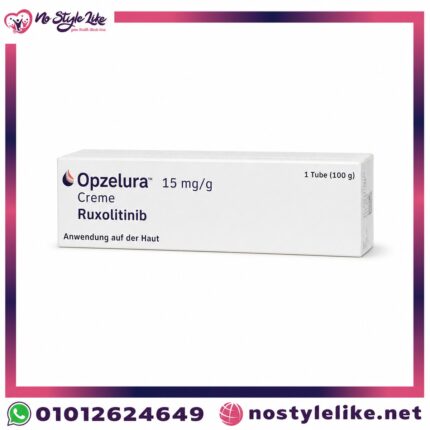
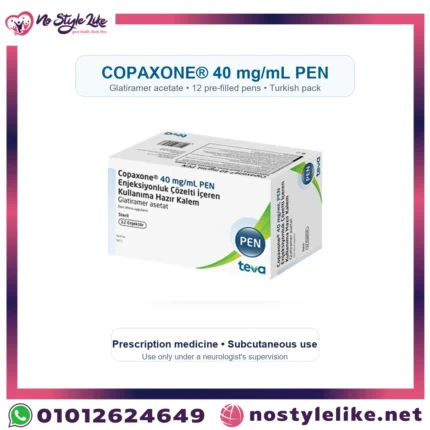
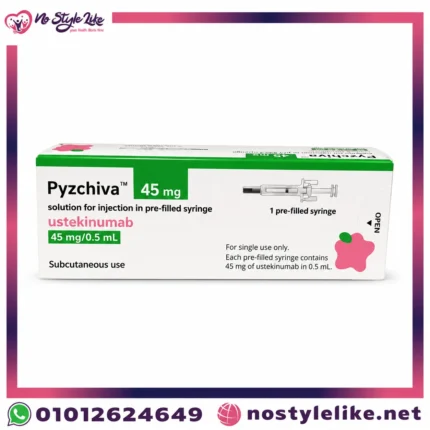
Official Information and Related Products
Read the official Cosentyx information from the European Medicines Agency, and explore more healthcare products at No Style Like.
Reviews
There are no reviews yet.