


Description
Anafranil 75 mg 20 Tablets | Sustained-Release Clomipramine for Depression and OCD
Quick Answer
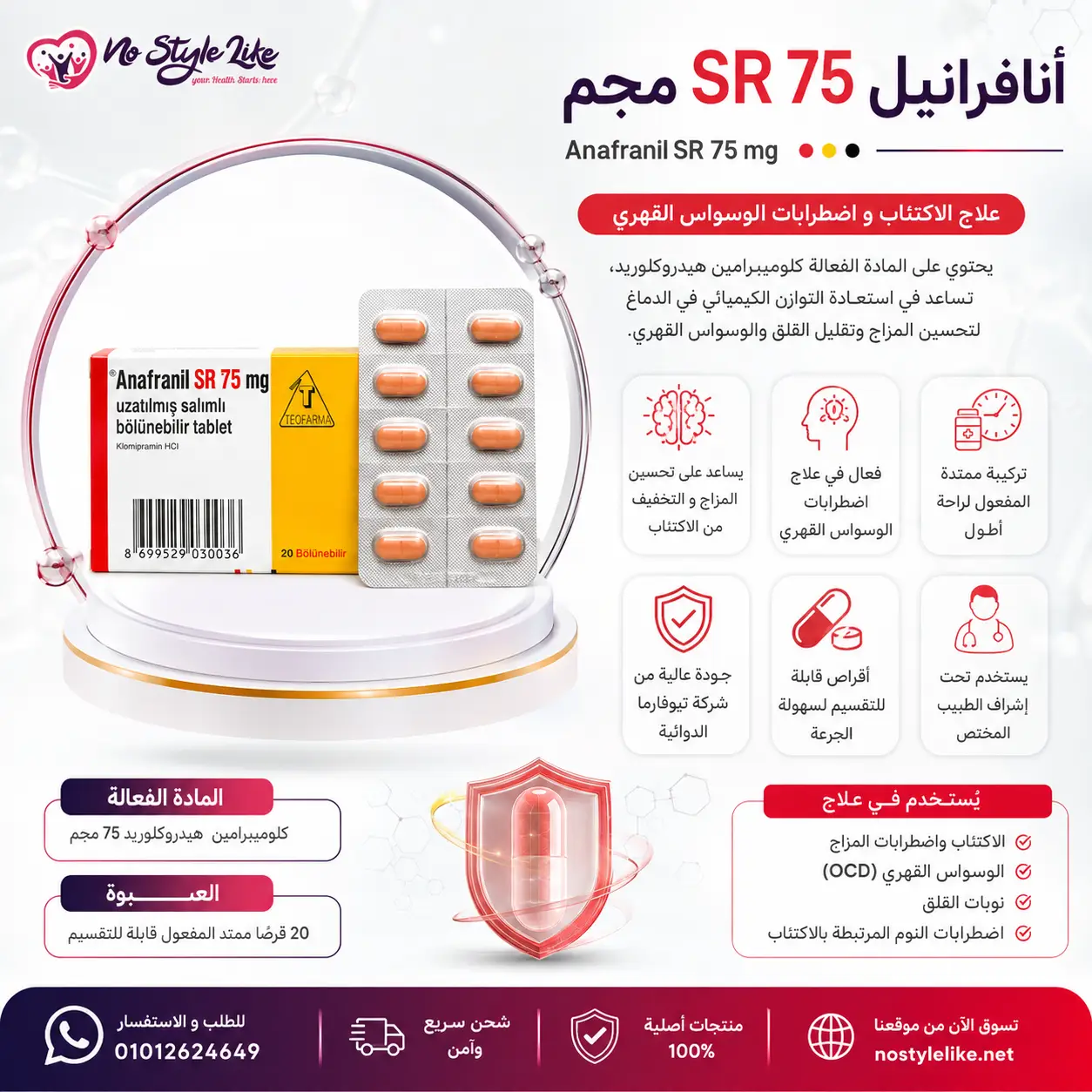
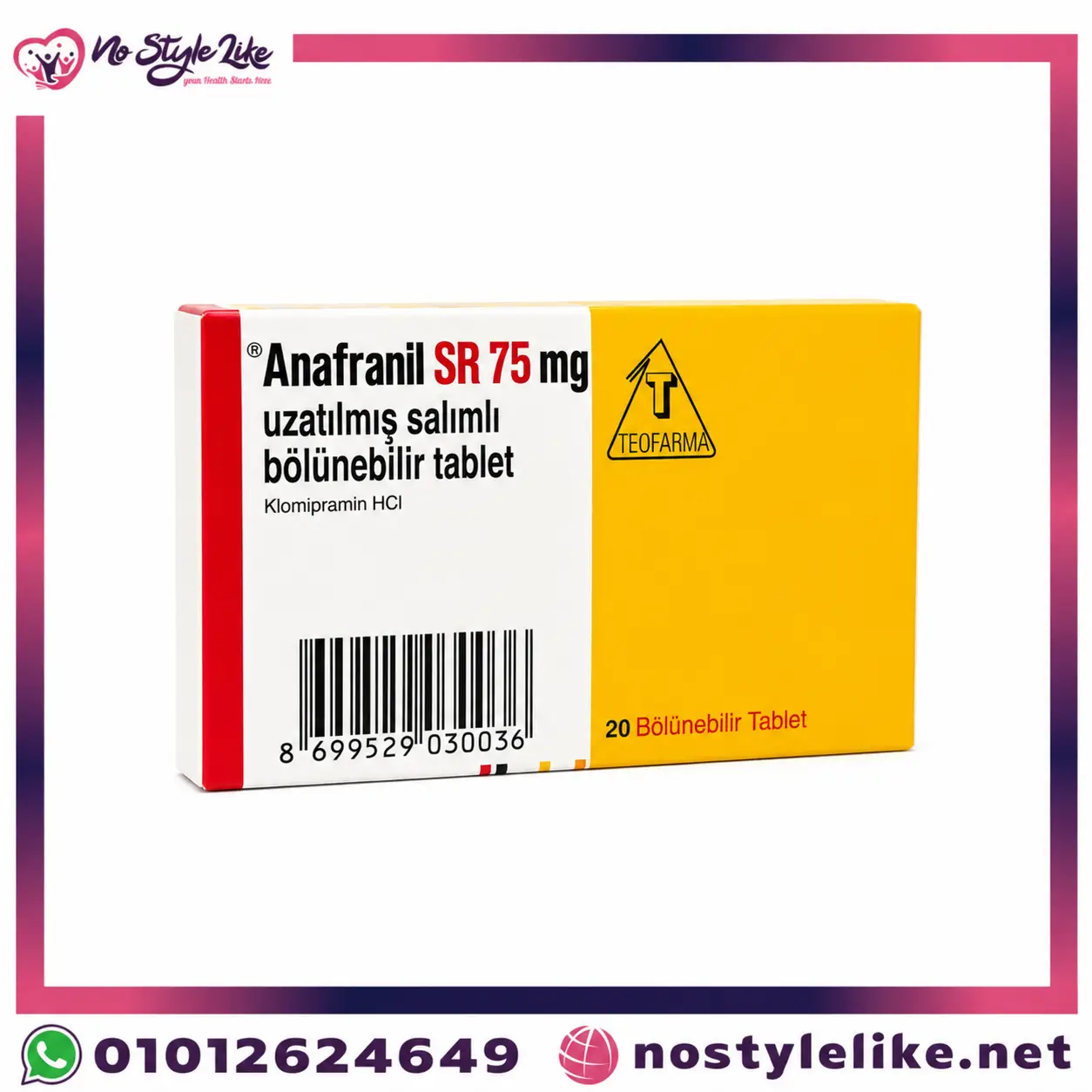
Anafranil 75 mg is a sustained-release tablet containing clomipramine hydrochloride, a tricyclic antidepressant. Doctors prescribe it for depression and obsessive-compulsive disorder, and it works by raising serotonin and noradrenaline activity in the brain. The usual adult starting dose is one tablet in the evening, then the doctor adjusts it. This medicine is prescription only — never start or stop it without medical supervision.
Key Facts About Anafranil 75 mg
Short description: Anafranil 75 mg by Novartis is the strongest available clomipramine strength in a sustained-release form. The active ingredient is released slowly across the day, which smooths out blood-level peaks and softens many of the side effects associated with immediate-release dosing. No Style Like dispenses it against a valid prescription, with free pharmacist consultation.
Table of Contents
- Introduction
- What Is Anafranil 75 mg?
- How Clomipramine Works in the Brain
- Main Benefits of Anafranil 75 mg
- Real-World Use Cases
- Who Is It Suitable For?
- Who Should Avoid It?
- Correct Use and Dosage
- Best Time to Take It
- Quick Common Questions
- Expected Time to Improvement
- Common Mistakes
- Myths vs Facts
- Drug Interactions
- Contraindications and Warnings
- Tests and Monitoring
- What to Take With It and What to Avoid
- Does It Affect Other Medicines?
- When to See a Doctor Urgently
- NSL Expert Tip
- Frequently Asked Questions
- Summary
Introduction
Depression and obsessive-compulsive disorder are not passing moods. They are medical conditions that change how neurotransmitters behave in specific brain circuits, and they affect sleep, appetite, concentration and the ability to get through an ordinary day. Because drug treatment demands consistency and monitoring, the choice of medicine and its dose belongs to the treating physician alone.
Anafranil 75 mg is one of the oldest and most extensively studied options in this field, and it still holds a special place in OCD treatment. Major references continue to regard clomipramine as an effective choice when selective serotonin reuptake inhibitors do not deliver an adequate response. This page explains its composition, mechanism, dosing and warnings in clear language, drawing on the official product information.
What Is Anafranil 75 mg?
Anafranil 75 mg is a sustained-release tablet made by the Swiss company Novartis. Each tablet contains 75 mg of clomipramine hydrochloride, a member of the tricyclic antidepressant family. Tricyclics predate the SSRIs by decades and remain in clinical use because their effectiveness is well documented.
The difference between the 75 mg strength and the 25 mg strength is not only quantity. The SR tablet is engineered to release clomipramine gradually in the digestive tract, producing steadier plasma levels across the day and reducing the peak concentration responsible for much of the dizziness and severe dry mouth some patients report.
The tablet is a Divitab, meaning it carries a score line so it can be halved when the doctor wants a 37.5 mg step. It must never be chewed, crushed or ground, because doing so destroys the sustained-release system and delivers the whole dose at once.
How Clomipramine Works in the Brain
Brain cells communicate through neurotransmitters released into the gap between them and then quickly reabsorbed. In depression and OCD, the activity of certain neurotransmitters — serotonin above all — is lower than it should be in particular circuits.
Clomipramine inhibits the reuptake of serotonin and noradrenaline at the nerve terminal, so the neurotransmitter stays longer in the synapse and the signal strengthens. Among tricyclics, clomipramine is the most strongly serotonergic, which explains its distinctive standing in OCD treatment.
The drug also acts on other receptors — antihistaminic, anticholinergic and alpha-adrenergic blocking — and those additional actions account for most side effects, including drowsiness, dry mouth, constipation and a drop in blood pressure on standing.
Crucially, the chemical change happens within hours while clinical improvement takes weeks, because the brain needs time to readjust receptor sensitivity. This is why the medicine should not be judged a failure after a few days.
Main Benefits of Anafranil 75 mg
- Documented efficacy in OCD: clomipramine is the benchmark against which newer OCD medicines are measured.
- Treatment of depressive episodes: it improves mood, drive and the ability to enjoy activity, and helps the sleep and appetite disturbance that come with it.
- Steadier drug levels: the sustained-release formulation reduces fluctuation compared with immediate-release tablets.
- Once-daily dosing: simpler long-term adherence, which is decisive in antidepressant treatment.
- Flexible titration: the score line lets the doctor step the dose up or down more finely.
- Evening sedation: useful for patients whose depression comes with insomnia.
These benefits only materialise inside a treatment plan supervised by a psychiatrist, usually alongside psychotherapy. In OCD in particular, combining medication with cognitive behavioural therapy outperforms either approach on its own.
Real-World Use Cases
Case one: a man in his forties with contamination obsessions and repeated handwashing consuming hours of his day. His doctor started low, titrated up to 75 mg in the evening, and added exposure and response prevention sessions. The meaningful response appeared around week six, not in the first week.
Case two: a woman with a moderate depressive episode, severe insomnia and loss of appetite. The evening dose improved her sleep within days, while mood improvement took about three weeks.
Case three: a patient over sixty with hypertension. Here the doctor started far below 75 mg using the 25 mg strength first, with an ECG before initiation, because older patients are more prone to dizziness and orthostatic hypotension.
These are illustrative examples only and are not a template for your own dose.
Who Is It Suitable For?
- Adults medically diagnosed with a depressive episode requiring drug treatment.
- Patients with obsessive-compulsive disorder, especially those with an inadequate response to SSRIs.
- People who need a stable long-term maintenance dose and prefer once-daily dosing.
- Patients whose doctor has decided to move from the 25 mg strength to a higher sustained-release dose.
The medicine is not intended for self-directed use, is not a treatment for ordinary stress or mild worry, and does not replace a specialist psychiatric assessment.
Who Should Avoid It?
- Anyone hypersensitive to clomipramine or to dibenzazepine-group tricyclic antidepressants.
- Anyone taking, or recently treated with, monoamine oxidase inhibitors (MAOIs) — a 21-day gap is required in both directions.
- Patients who have had a recent myocardial infarction.
- Patients with cardiac arrhythmias or congenital long QT syndrome.
- Patients with narrow-angle glaucoma.
- Anyone with acute urinary retention or significant prostatic enlargement with voiding difficulty.
- Patients with severe hepatic impairment.
- Anyone taking potent CYP2D6-inhibiting antiarrhythmics such as quinidine or propafenone.
- Pregnant or breastfeeding women, unless a doctor has explicitly weighed benefit against risk.
Correct Use and Dosage
The following doses are quoted from the official product information for education only. Your doctor alone decides your dose:
| Adult starting dose | 75 mg once daily, preferably in the evening |
| Titration | Increase by about 25 mg every few days to 100 to 150 mg during the first week |
| Maintenance dose | About 50 to 100 mg daily |
| Maximum dose | 250 mg daily in severe cases only, under close supervision |
| Elderly patients | Start at 10 mg daily and increase cautiously to 30 to 50 mg over about 10 days |
| Children and adolescents | Only on specialist decision; the 75 mg strength is not suitable for initiating therapy |
Practical rules: swallow the tablet whole, or halved at the score line, with a glass of water. Do not chew or crush it. It can be taken with or without food, and food helps if it causes nausea. Keep to the same time every day. If you miss a dose, take it as soon as you remember unless the next dose is near — never double up to catch up.
Stopping: do not stop abruptly even if you feel better. Sudden withdrawal can cause nausea, headache, dizziness, anxiety and disturbed sleep. Your doctor will taper the dose gradually over weeks.
Best Time to Take It
Anafranil 75 mg is usually taken in the evening before bed for two reasons: the sedating effect supports sleep instead of disrupting the day, and side effects such as dizziness and dry mouth pass while you are asleep. If you notice the opposite — insomnia after the dose — discuss moving it to the morning with your doctor.
Quick Common Questions
- Is it addictive? No, but stopping suddenly causes withdrawal symptoms, which is a different thing entirely from addiction.
- Does it cause weight gain? Increased appetite and weight gain are very common and can be managed with diet and activity.
- Can I drive? Not in the early phase, because of drowsiness and blurred vision. Wait until you know how you respond.
- Can I drink alcohol with it? No. Alcohol amplifies the central nervous system depressant effect.
Expected Time to Improvement
- Days 1 to 7: usually better sleep and some temporary side effects such as dry mouth and drowsiness, with no clear mood change yet.
- Weeks 2 to 4: mood, energy and appetite begin to improve in depressive episodes.
- Weeks 4 to 12: OCD response takes longer and may not be evident before week ten.
- After improvement: treatment usually continues for several further months to prevent relapse, at the doctor’s discretion.
These are approximate frames that vary with severity, dose and individual response.
Common Mistakes
- Stopping after two weeks on the assumption the medicine is not working, before the response window has passed.
- Crushing or chewing the tablet, which destroys the sustained-release mechanism.
- Raising the dose yourself when progress feels slow.
- Combining it with another antidepressant or a supplement such as St John’s wort without telling the doctor.
- Skipping an ECG despite a cardiac history.
- Stopping abruptly while travelling or after forgetting to refill.
- Driving or operating machinery in the first days.
Myths vs Facts
| Myth | Fact |
|---|---|
| Antidepressants change your personality | They readjust neurotransmitter activity; they do not build a new personality |
| The drug is addictive | It causes no craving or drug-seeking behaviour, but it does need a gradual taper |
| You can take it only when you feel bad | Its effect depends on steady blood levels, so daily consistency is essential |
| A higher dose means a faster result | Higher doses raise seizure and arrhythmia risk without speeding the response |
| Newer medicines are always better | In OCD, clomipramine remains one of the most powerful studied options |
Drug Interactions
- MAO inhibitors: strictly contraindicated, with a 21-day gap between the two medicines because of serotonin syndrome risk.
- SSRIs: fluvoxamine can raise clomipramine levels roughly fourfold; fluoxetine and paroxetine also increase exposure.
- Other serotonergic agents: SNRIs, lithium, buprenorphine and triptans all carry serotonin syndrome risk.
- Antiarrhythmics: quinidine and propafenone are contraindicated, and any QT-prolonging drug demands extreme caution.
- Terbinafine and cimetidine: raise clomipramine levels and may require a dose reduction.
- Rifampicin and enzyme-inducing anticonvulsants: reduce the drug’s effectiveness.
- Anticholinergics and antihistamines: compound dry mouth, constipation and urinary retention.
- CNS depressants and alcohol: intensify drowsiness and impair concentration.
- Cigarette smoking: roughly halves plasma concentrations.
Give your doctor and pharmacist a complete list of everything you take, including herbal products, supplements and painkillers.
Contraindications and Warnings
Important warning
Suicidal thoughts and behaviour may increase at the start of treatment or when the dose changes, particularly in children, adolescents and young adults. Monitor the patient closely during the first weeks and seek medical help immediately if mood deteriorates suddenly.
- Heart: the drug can prolong the QT interval and provoke arrhythmia. An ECG and monitoring are needed in cardiac disease, and low potassium must be corrected before starting.
- Epilepsy: it lowers the seizure threshold and is used with extreme caution in epilepsy or after head injury.
- Eyes and prostate: anticholinergic effects can raise eye pressure and impede urination.
- Liver and kidneys: assessment and dose adjustment are needed in moderate impairment.
- Bipolar disorder: it may trigger a manic switch in predisposed patients.
- Surgery and anaesthesia: tell the doctor before any operation.
- Pregnancy and breastfeeding: use only if the benefit outweighs the risk; the drug passes into breast milk.
- Sun exposure: photosensitivity is possible, so use sun protection.
Tests and Monitoring
- ECG: before starting and periodically for older patients, cardiac patients and anyone on higher doses.
- Potassium and sodium: low potassium raises arrhythmia risk, and low sodium is possible especially in the elderly.
- Liver function: in existing liver disease or if unexplained fatigue or jaundice appears.
- Full blood count: immediately if fever, sore throat or unusual mouth ulcers occur.
- Blood pressure, pulse and weight: simple routine monitoring at review visits.
- Thyroid function: when an organic cause of depression is suspected.
What to Take With It and What to Avoid
Helpful: adequate water and more fibre from vegetables, fruit and oats to counter constipation; sugar-free gum or frequent sips of water for dry mouth; regular balanced meals to steady appetite; moderate daily physical activity, which lifts mood and limits weight gain; and a consistent sleep schedule.
Avoid: alcohol entirely; excess caffeine, which worsens anxiety and insomnia; St John’s wort, 5-HTP and tryptophan supplements because of serotonin syndrome risk; standing up abruptly, to prevent dizziness; and prolonged unprotected sun exposure.
Does It Affect Other Medicines?
Yes. Clomipramine is metabolised through the liver enzymes CYP2D6, CYP1A2 and CYP3A4, so it both affects and is affected by many drugs. It can blunt the effect of some centrally acting antihypertensives, potentiate anticoagulants, amplify sedatives and antihistamines, and raise bleeding risk when combined with NSAIDs or aspirin alongside other serotonergic agents.
The practical rule: do not add or stop any medicine — including cold remedies, painkillers and allergy tablets — without checking with your pharmacist or doctor.
When to See a Doctor Urgently
- Thoughts of self-harm or a sudden, sharp deterioration in mood.
- Seizures or loss of consciousness.
- Severe palpitations, chest pain or fainting.
- High temperature with muscle rigidity, tremor, heavy sweating and confusion — possible signs of serotonin syndrome.
- Fever, severe sore throat or mouth ulcers, which may indicate a drop in white blood cells.
- Yellowing of the eyes or skin, or dark urine.
- Complete inability to pass urine, or severe eye pain with redness and sudden blurring.
- Hallucinations or marked confusion, particularly in older patients.
NSL Expert Tip
The commonest reason antidepressant treatment fails is not a weak medicine — it is stopping too early. The first two weeks are the hardest, because side effects arrive before the benefit does. Keep a simple daily note rating your sleep, mood and appetite from 1 to 10, and bring it to your follow-up visit. That small page helps your doctor fine-tune the dose far better than memory does, and it prevents a premature decision to quit.
Frequently Asked Questions
Does Anafranil 75 mg require a prescription?
Yes. It is a prescription-only medicine and should never be used without a diagnosis and medical follow-up.
What is the difference between Anafranil 25 mg and 75 mg?
The 25 mg strength is an immediate-release tablet used to start and titrate treatment, while the 75 mg sustained-release tablet is generally used as a maintenance dose once a suitable level has been reached.
Can the tablet be split?
Yes. It is a Divitab with a score line and can be halved, but it must not be chewed or crushed.
How long does Anafranil take to work?
Depression usually starts to improve within two to four weeks, while obsessive-compulsive disorder may need four to twelve weeks.
Does it cause weight gain?
Increased appetite and weight gain are very common, and can be limited with a controlled diet and regular physical activity.
What if I miss a dose?
Take it as soon as you remember. If the next dose is close, skip the missed one and never double the dose.
Can I stop it suddenly once I feel better?
No. Stopping must be gradual and supervised by your doctor to avoid withdrawal symptoms.
Does it affect sexual function?
It may cause erectile difficulty, delayed ejaculation or reduced libido. These are recognised effects worth raising with your doctor, since a dose adjustment can help.
Summary
Anafranil 75 mg by Novartis is a long-established treatment option for depression and obsessive-compulsive disorder, built on clomipramine in a sustained-release form that delivers steadier drug levels with a single daily dose. Its effectiveness is real and well documented, but it depends on adherence, patience through the response window and regular medical supervision, with particular attention to heart health, drug interactions and a gradual taper when stopping.
The product is available with an 08/2028 expiry date from No Style Like Pharmacy, with free pharmacist consultation and fast shipping across all Egyptian governorates. It is dispensed against a valid prescription.
Reviewed by the No Style Like Pharmacy content team. Medical disclaimer: this content is for general education and does not replace the official product leaflet or advice from a licensed doctor or pharmacist. Do not start, stop or change any medicine based on this page alone. For further information see MedlinePlus — Clomipramine and NHS — Clomipramine.


Reviews
There are no reviews yet.