


Collagen Sources: Bovine vs Marine vs Porcine vs Chicken in 6 Points
Collagen Sources: Why You Should Know Where Your Supplement Comes From
All collagen supplements come from animals, but they are not all the same. The source may be bovine, marine, porcine or chicken. Understanding collagen sources matters for several reasons: allergies, religious and dietary choices, and the type of collagen itself. This article explains the differences clearly.
1. Bovine Collagen
Extracted from cow hide and bones, bovine collagen is rich in Types I and III. It is one of the most widely used and affordable collagen sources and appears in skin, bone and joint supplements. Some people prefer collagen from grass-fed cattle.
2. Marine Collagen
Extracted from fish skin and scales, marine collagen is mainly Type I. Brands say its peptides are smaller, and it is popular with people who avoid red meat or pork. It is not suitable for people with fish allergy and is usually more expensive.
3. Porcine Collagen
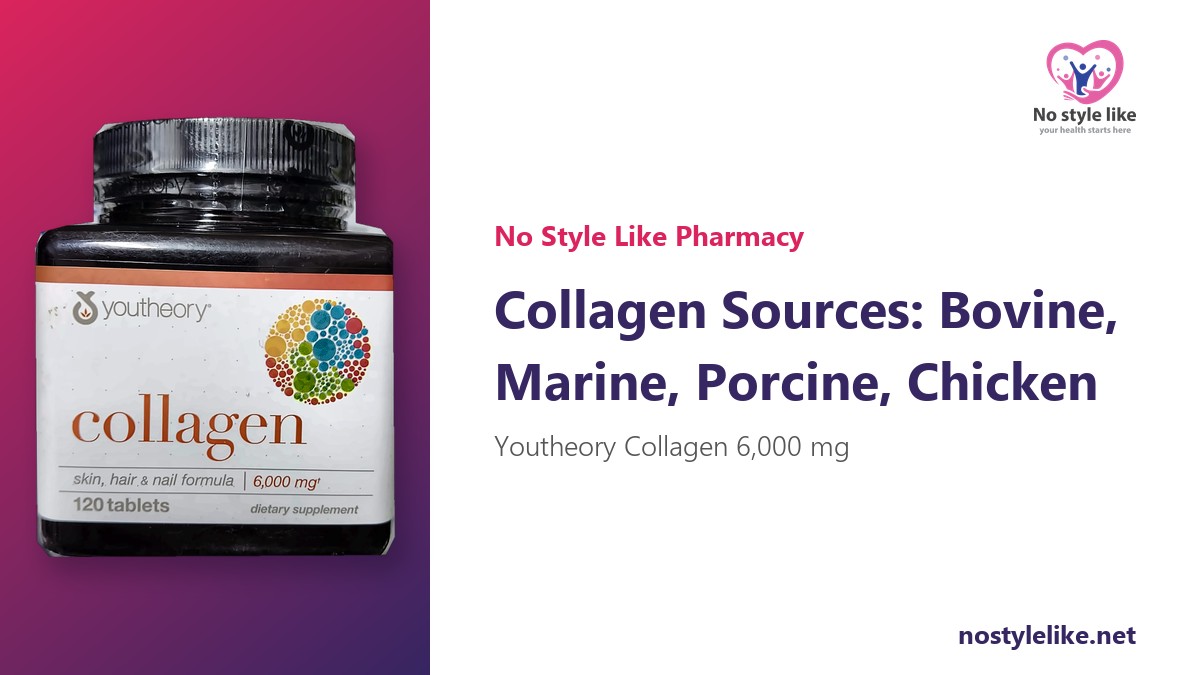
Extracted from pig skin, porcine collagen is structurally close to human collagen and contains Types I and III. It is common in some international products. Because many consumers in Egypt and the Arab world avoid pork, it is important to read the label or the brand’s website. For example, Youtheory states that the collagen in Youtheory Collagen 6,000 mg comes from bovine and/or porcine hide.
4. Chicken Collagen
Extracted from chicken sternum cartilage, this is the main source of Type II collagen used in joint supplements. Read more in our guide to types of collagen.
5. Eggshell Membrane
Eggshell membrane contains collagen and other compounds and is used in some joint supplements, but it is not suitable for people with egg allergy.
6. Is There Plant-Based Collagen?
There is no true collagen from plants. Products labelled as “vegan collagen boosters” contain nutrients that help the body make collagen, such as vitamin C and amino acids – they are not collagen themselves.
Collagen Sources Compared
| Source | Types | Notes |
|---|---|---|
| Bovine | I and III | Widely used and affordable |
| Marine | I | Not for fish allergy |
| Porcine | I and III | Avoided by many for religious reasons |
| Chicken | II | For joints |
Does the Source Affect Results?
There is no strong evidence that one source clearly beats another for skin results, as long as the collagen is hydrolyzed and the dose is adequate. The real differences between collagen sources lie in the collagen type, allergy suitability, religious and dietary considerations, and price.
How to Find Out the Collagen Source
- Read the ingredient list for words such as bovine, marine, fish or porcine.
- Check the allergen warnings on the label.
- If the source is not stated, check the brand’s website or ask your pharmacist.
- Look for halal certification if that matters to you.
Taking a minute to check collagen sources before you buy helps you avoid unwanted surprises later.
Collagen Sources FAQ
Which source is best for skin?
Bovine and marine are both rich in Type I; the choice depends on your preferences and allergies.
Does absorption differ?
The hydrolyzed form matters more for absorption than the source itself.
How much should I take?
Read our guide to collagen dosage.
Is there halal collagen?
Yes. Some bovine or marine collagen products carry halal certification – look for it on the label.
Does the taste differ by source?
Marine collagen powder can have a faint smell, while tablets show little difference.
Is marine collagen suitable during pregnancy?
Ask your doctor before taking any supplement during pregnancy.
Conclusion
Collagen sources differ in collagen type, price, religious suitability and allergy risk. Read the label carefully before buying, and ask us at No Style Like pharmacy which source suits you – whether you choose Youtheory Collagen or a marine alternative.
This article was reviewed by the No Style Like pharmacy content team. It is for general awareness only. Collagen supplements are dietary supplements, not medicines intended to diagnose or treat any disease, and this article does not replace advice from your doctor or pharmacist.
Confirm the collagen source before buying if you avoid certain animal products. Check the collagen source on the label if you have a fish allergy or avoid certain animal products, and ask your doctor during pregnancy and breastfeeding. For more information see The Nutrition Source collagen page from Harvard.