


Ginger for Digestion: 6 Facts About Benefits, Dose and Safety
Does Ginger for Digestion Really Work?
Many people reach for a warm cup of ginger tea after a heavy meal or when they feel bloated and full. But is ginger for digestion just a kitchen habit, or is there real science behind it? This guide covers 6 facts: how ginger works on the stomach, what the research shows, the doses that were studied, the capsules available, and the warning signs that mean you should see a doctor instead of relying on a supplement.
1. How Ginger for Digestion Works
Ginger root contains active compounds called gingerols and shogaols. Research suggests they may help the stomach muscles contract in a more regular rhythm, so food moves into the small intestine a little faster. This is called gastric emptying, and when it is slow, people often feel heavy, full too quickly or slightly nauseated after eating.
Keep in mind that ginger is a food and dietary supplement, not a medicine. Its effect is modest and varies from person to person. It does not heal stomach ulcers, it does not treat H. pylori infection, and it does not replace a proper diagnosis when symptoms keep coming back.
2. What the Research Says About Ginger for Digestion
The evidence on ginger for digestion is modest but encouraging. Small studies found that about 1.2 g of ginger powder taken before a meal sped up gastric emptying in people with functional dyspepsia, which is indigestion without an ulcer or other clear disease. However, these trials were small and short, so ginger cannot be called a proven treatment.
The stronger evidence for ginger is actually for nausea, which we explain in detail in ginger for nausea.
3. Symptoms Ginger May Help
- Feeling full quickly or heavy after meals.
- Slow digestion after rich or fatty food.
- Mild nausea linked to an upset stomach.
- Mild bloating in some people, although the evidence here is weaker.
If you also have a cold with a queasy stomach, our guide to cold vs flu treatment explains which symptoms need medicine and which need rest.
4. The Usual Dose of Ginger for Digestion
Most studies used between 1 and 1.5 g of ginger a day, usually split into two doses with food. There is no proven benefit from going higher, and larger doses make heartburn and belching more likely. Start with the dose on the label and do not exceed it without advice from a pharmacist or doctor.
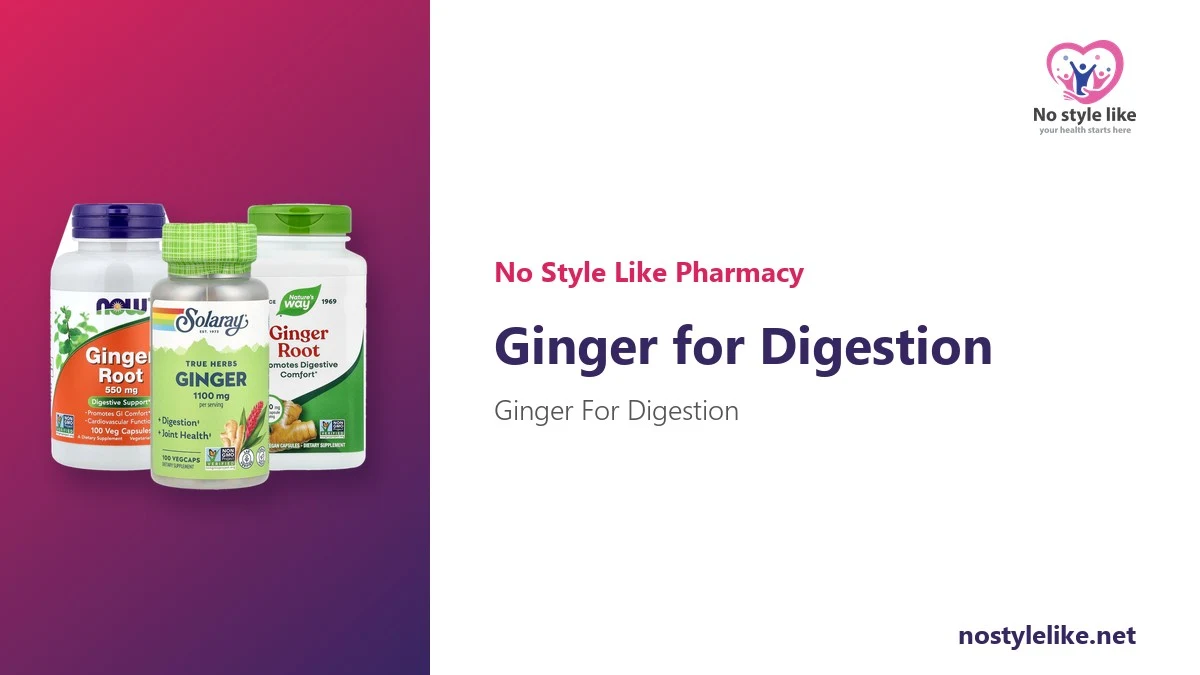
No Style Like pharmacy stocks ginger capsules from trusted brands. Here is a quick comparison:
| Product | Amount per serving | Directions | Pack |
|---|---|---|---|
| NOW Ginger Root 550 mg | 550 mg per capsule | 1 capsule daily | 100 veg capsules |
| Solaray Ginger 1100 mg | 1,100 mg per 2 capsules | 2 capsules daily with a meal | 100 VegCaps |
| Solaray Ginger 1100 mg (value size) | 1,100 mg per 2 capsules | 2 capsules daily with a meal | 180 VegCaps |
| Nature’s Way Ginger Root 1100 mg | 1.1 g per 2 capsules | 2 capsules daily with a full glass of water | 240 vegan capsules |
5. Choosing a Ginger Capsule
- For a gentle daily amount, NOW Ginger Root 550 mg is taken as 1 capsule daily.
- For an amount close to the studied range, Solaray Ginger 1100 mg (100 VegCaps) gives 1,100 mg in 2 capsules daily with a meal. The Solaray Ginger 180 VegCaps pack is the same formula for longer use.
- Nature’s Way Ginger Root 1100 mg provides 1.1 g in 2 capsules daily, taken with a full glass of water to avoid throat burning.
Taking capsules with food lowers the chance of stomach irritation, which matters most when you first try ginger for digestion.
6. When Ginger for Digestion Is Not Enough
Stop relying on ginger and see a doctor promptly if you notice any of these red flags:
- Vomiting blood or passing black stools.
- Severe abdominal pain, or pain that wakes you at night.
- Unexplained weight loss or difficulty swallowing.
- Persistent vomiting or signs of dehydration.
Ginger can also worsen heartburn in some people with reflux. Before you start, read about possible ginger supplement side effects and drug interactions.
Ginger for Digestion: Frequently Asked Questions
Should I take ginger before or after meals?
Capsules are best taken with a meal or straight after it, because this reduces heartburn and belching.
Is ginger tea the same as capsules?
Tea is a pleasant way to use ginger for digestion, but the amount of ginger in each cup varies. Capsules give a measured dose that is easier to track.
How long should I try ginger for digestion?
Try it for two to four weeks and keep a simple symptom diary. If your symptoms do not improve, see a doctor to find the cause.
Is it suitable for irritable bowel?
Some people find it soothing, but high doses can cause gas or diarrhoea, so start low.
Conclusion
Ginger for digestion is a natural option with modest evidence for easing fullness and slow stomach emptying, and the studied doses are about 1 to 1.5 g a day with food. It does not cure ulcers and it does not replace a doctor when warning signs appear. You can find Solaray Ginger, NOW Ginger Root and other options at No Style Like pharmacy.
This article was reviewed by the No Style Like pharmacy content team. It is for general awareness only and does not replace advice from your doctor or pharmacist.
Do not use ginger supplements instead of treatment for ulcers or reflux, and ask your doctor first if you take blood thinners or long-term medicines. For more information see the NCCIH ginger fact sheet.