


Ginger for Nausea: 5 Situations Where It Helps and the Safe Dose
Why Use Ginger for Nausea?
Nausea is one of the most unpleasant symptoms, whether it comes from pregnancy, travel, surgery or a stomach bug. Ginger for nausea is the most studied use of this root, and the evidence is stronger than for its digestive benefits. This guide covers 5 situations where ginger may help, how strong the evidence is in each, the usual dose, and when vomiting is a warning sign that needs a doctor.
How Ginger for Nausea Works
Gingerols and shogaols are thought to act on receptors in the gut that are linked to the feeling of nausea, and they may help the stomach empty more regularly. This is different from anti-sickness medicines that act directly on the brain, so the effect of ginger is gentler and usually slower.
1. Pregnancy Nausea: Only With Your Doctor’s Approval
Several studies show that ginger may ease morning sickness in early pregnancy, and some guidelines mention it as a non-drug option. Even so, do not start any supplement during pregnancy without your obstetrician’s approval, especially if you have had bleeding or are close to your due date. Severe vomiting that stops you from eating or drinking is a medical condition, known as hyperemesis gravidarum, and ginger alone is not enough.
2. Chemotherapy-Related Nausea
Research has looked at ginger for nausea during chemotherapy as an add-on to prescribed anti-sickness medicines, never as a replacement. Results are mixed, although some studies showed less nausea in the first day after treatment. Because cancer patients take many medicines, always check with the oncology team before adding any supplement.
3. Nausea After Surgery
For ginger for nausea after surgery, the results are mixed: some studies found a benefit and others found no clear difference. Importantly, ginger supplements should be stopped before any operation, at a time set by your surgeon, because ginger may affect blood clotting.
4. Motion Sickness
Evidence for motion sickness is also mixed, but many travellers find ginger for nausea on the road helpful. A dose can be taken about an hour before the journey, together with simple steps such as sitting in a stable seat and looking at the horizon.
5. Nausea With an Upset Stomach
When you feel queasy after a heavy meal or with indigestion, ginger may help settle the stomach. We cover this in ginger for digestion. If nausea comes with fever and body aches, our guide to cold vs flu treatment can help you understand the cause.
The Dose of Ginger for Nausea
Most studies used 1 to 1.5 g a day split into two or three doses. In pregnancy, doses were usually around 1 g a day under medical supervision. Never take more than the label recommends.
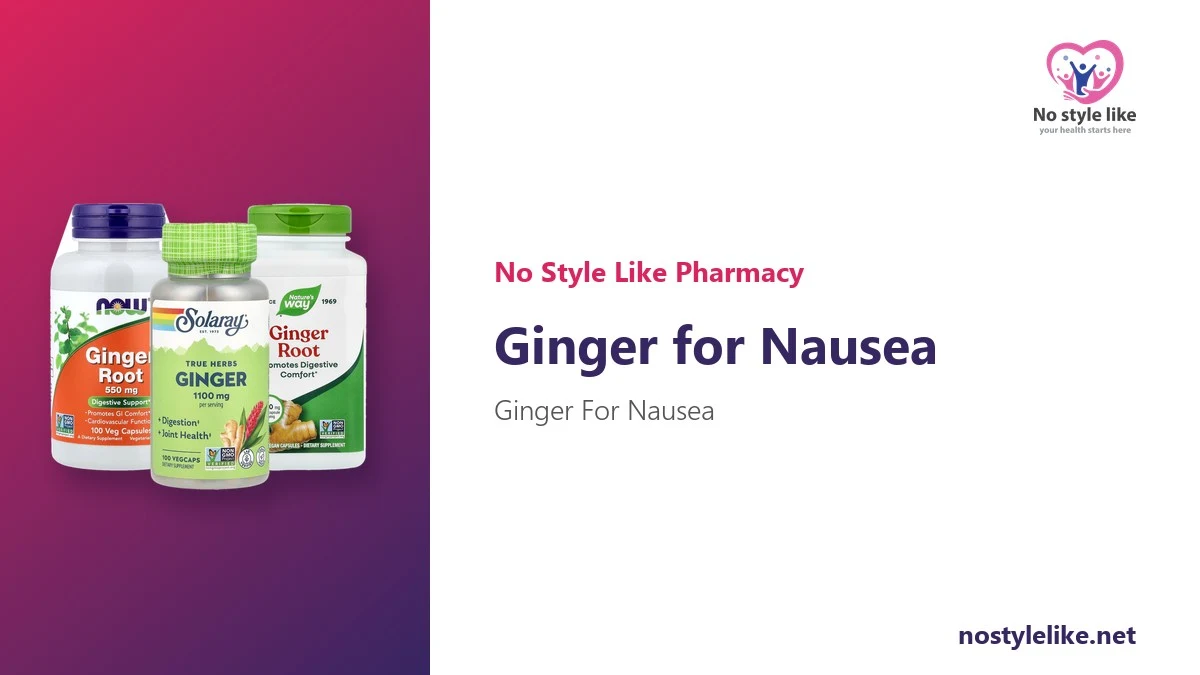
- NOW Ginger Root 550 mg: 1 capsule daily, a gentle starting dose.
- Solaray Ginger 1100 mg, 100 VegCaps: 2 capsules daily with a meal, giving 1,100 mg.
- Solaray Ginger 1100 mg, 180 VegCaps: the same formula in a larger pack that lasts 90 days.
- Nature’s Way Ginger Root 1100 mg: 2 capsules daily with a full glass of water, giving 1.1 g.
Taking capsules with food and water lowers the risk of heartburn, the most common complaint when people use ginger for nausea.
When Is Nausea a Red Flag?
- Persistent vomiting for more than a day, or being unable to keep fluids down.
- Signs of dehydration such as passing little urine, dizziness and a dry mouth.
- Vomiting blood or material that looks like coffee grounds.
- Severe abdominal pain, or a severe headache with vomiting.
- Unexplained weight loss.
In these cases do not rely on ginger for nausea; see a doctor straight away.
Ginger for Nausea: Frequently Asked Questions
How quickly does ginger work?
With ginger for nausea, some people feel better within about an hour, but the effect is usually milder and slower than prescribed anti-sickness medicines, and it varies with the cause.
Can children take it?
The capsules listed here are for adults. Do not give them to children unless a doctor advises it.
Can I combine it with an anti-sickness medicine?
Ask your doctor or pharmacist first, especially if you take other regular medicines.
Does it help period-related nausea?
It may ease nausea and cramps in some women, but evidence is limited and it is not a painkiller replacement.
Conclusion
Ginger for nausea is one of the best-supported uses of ginger, especially for pregnancy nausea with a doctor’s approval and as an add-on during chemotherapy, while evidence for motion sickness and nausea after surgery is mixed. The usual dose is 1 to 1.5 g a day. Before you start, read about ginger supplement side effects, and find Nature’s Way Ginger Root and other options at No Style Like pharmacy.
This article was reviewed by the No Style Like pharmacy content team. It is for general awareness only and does not replace advice from your doctor or pharmacist.
Pregnant women should only use ginger supplements with a doctor’s approval, and persistent vomiting or dehydration needs urgent medical care. For more information see the NCCIH ginger fact sheet.