


Selenium Benefits: 7 Evidence-Based Roles and Their Limits
What Is Selenium and Why Does Your Body Need It?
Selenium is a trace mineral your body needs in tiny amounts, measured in micrograms, yet it is built into about 25 important proteins called selenoproteins. The main selenium benefits come from these proteins: they power antioxidant enzymes inside cells, activate thyroid hormones and help the immune system work properly. Below we explain 7 evidence-based roles, and we are just as clear about what this mineral cannot do.
1. Selenium Benefits as an Antioxidant
Selenium is part of glutathione peroxidase, one of the body’s key defences against free radicals. This enzyme turns hydrogen peroxide and oxidised fats into harmless compounds, protecting cell membranes and DNA from damage. When selenium runs low, the enzyme works less well and cells face more oxidative stress, so this is one of the most basic selenium benefits.
2. Thyroid Support
The thyroid gland holds more selenium per gram than any other organ. Selenium forms the deiodinase enzymes that convert the relatively inactive hormone T4 into active T3, and it shields thyroid cells from the hydrogen peroxide produced while hormones are made. We cover this link in depth in our article on selenium and thyroid health.
3. Immune Function
Immune cells need selenium to respond efficiently, and low intake has been linked to weaker immune responses. However, these selenium benefits appear mainly when a deficiency is corrected. There is no strong evidence that extra selenium boosts immunity further in people who already get enough from food.
4. Fertility and Sperm Health
Selenium is needed to form sperm and help them move, and it is concentrated in the testes. Some studies show better sperm motility in men with low selenium, but results are inconsistent, and a supplement does not replace a proper fertility assessment.
5. Heart and Blood Vessels
Some observational studies link low selenium levels with a higher risk of heart disease. Yet trials that gave selenium supplements did not show fewer heart attacks or cardiac deaths. Selenium is therefore not a treatment for heart disease.
6. Do Selenium Benefits Include Cancer Prevention?
This is where most confusion lies. The large SELECT trial gave 200 mcg of selenium a day to more than 35,000 men and found no protection against prostate cancer. It also noted a possible small increase in the risk of type 2 diabetes. In short, cancer prevention is not among proven selenium benefits, so do not take selenium supplements to prevent cancer.
7. Correcting Deficiency in At-Risk Groups
The clearest selenium benefits are seen in people who are truly deficient, such as those on kidney dialysis, people with malabsorption conditions and people living in areas with selenium-poor soil. Deficiency is uncommon in people who eat a varied diet, and extra selenium benefits are unlikely for them, so do not assume you need a supplement without a reason.
Food Sources of Selenium
- Brazil nuts: a single nut can exceed 100 mcg, so one or two are plenty.
- Fish such as tuna and sardines, and other seafood.
- Eggs, poultry and meat.
- Grains and bread, depending on the soil they were grown in.
Adults need 55 mcg a day, and many people get the full selenium benefits from food alone. For exact amounts at every age, read our guide to selenium dosage.
When Might You Need a Selenium Supplement?
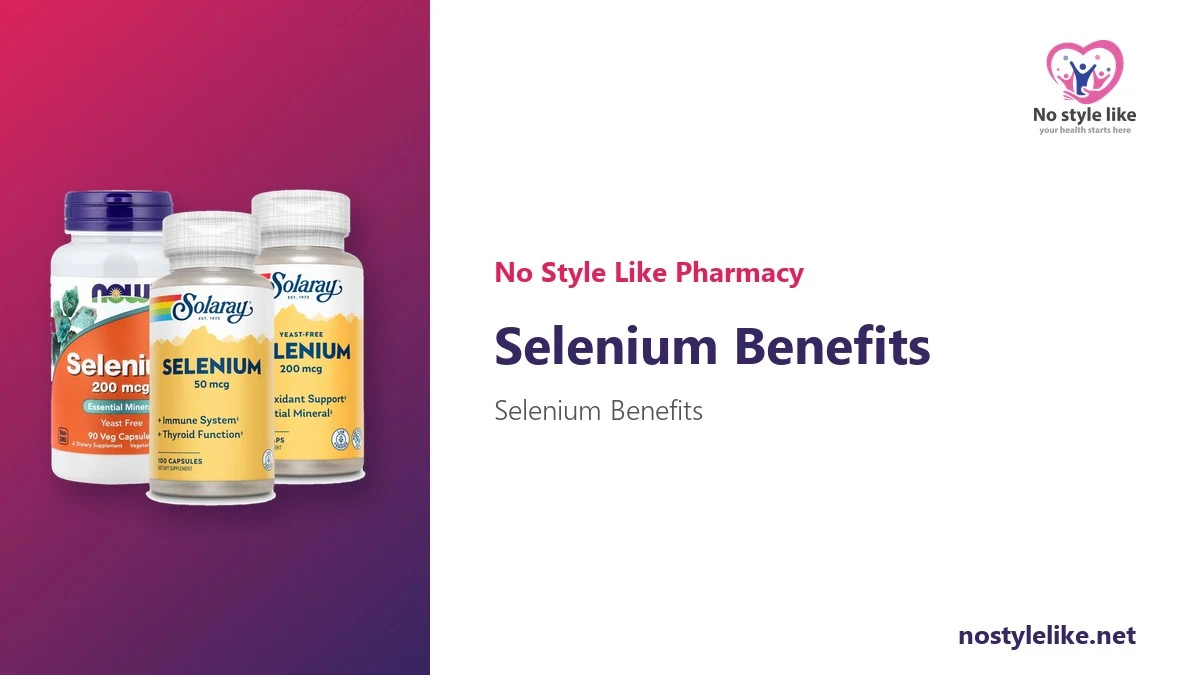
A doctor may suggest a supplement if your diet is poor, if you belong to an at-risk group, or in specific thyroid conditions. No Style Like Pharmacy stocks 3 options:
- Solaray Selenium 50 mcg: 1 capsule a day with a meal or glass of water, from selenium yeast, in a gelatin capsule, so it is not suitable for vegetarians or people avoiding yeast.
- NOW Selenium 200 mcg: 1 veg capsule a day with a meal, from L-selenomethionine, yeast free.
- Solaray Selenium 200 mcg: 1 VegCap a day with a meal or glass of water, from L-selenomethionine, yeast free.
The lower 50 mcg dose usually suits people who want gentle everyday support, while 200 mcg is typically used for a defined period with medical guidance.
The Limits of Selenium Benefits and the Risks of Too Much
The safe upper limit for adults is 400 mcg a day from all sources combined. Going above it for long periods can cause selenosis, with signs such as garlic breath, a metallic taste, hair loss, brittle nails, diarrhoea, skin rash and irritability. Do not stack several selenium products, and check how much your multivitamin contains.
Drug interactions are few, but talk to your doctor if you are having chemotherapy or have kidney disease.
Selenium as Part of Healthy Ageing
Selenium benefits are only one piece of a healthy lifestyle. A balanced diet, regular movement and good sleep matter far more than any single supplement. Our healthy aging guide brings these habits together in one place.
Frequently Asked Questions About Selenium Benefits
Is selenium good for hair?
A deficiency can affect hair, but too much selenium causes hair loss, so do not take it for hair without a clear reason.
Do I need a blood test first?
A blood selenium test is not routine. Doctors order it when deficiency or toxicity is suspected.
How long until selenium benefits show?
When correcting a deficiency, it usually takes several weeks to a few months, depending on the person.
Conclusion
Selenium benefits centre on antioxidant defence, thyroid hormone activation and immunity, and they are clearest when a deficiency exists. Selenium does not prevent cancer and does not replace treatment. Choose between Solaray 50 mcg, NOW 200 mcg and Solaray 200 mcg after talking to your pharmacist.
This article was reviewed by the No Style Like pharmacy content team. It is for general awareness only and does not replace advice from your doctor or pharmacist.
Do not exceed 400 mcg of selenium a day from all sources, and ask your doctor during pregnancy, breastfeeding or kidney disease. For more information see the NIH Office of Dietary Supplements selenium fact sheet.