


Kelp Benefits: 6 Realistic Ones and What Kelp Cannot Do
What Are the Real Kelp Benefits?
Kelp is a large brown seaweed from the Laminaria family that grows in cold ocean waters. Most of the real kelp benefits come from one nutrient: iodine, which the thyroid gland needs to make its hormones. Kelp also supplies small amounts of minerals and fibre. In this article we review 6 realistic kelp benefits, the limits of the evidence, and who should be careful before taking kelp.
1. A Natural Source of Iodine
The main kelp benefit is iodine. Adults need about 150 mcg a day, and the thyroid uses it to build the hormones T4 and T3. We explain the role of iodine in the gland in detail in iodine for thyroid, so we will not repeat it here. The key point is that kelp is only useful when your diet is short of iodine.
2. Support for Normal Thyroid Function When Intake Is Low
People who avoid iodised salt, eat no fish or dairy, or follow strict vegan diets may get too little iodine. For them, a measured kelp tablet can help close the gap. This does not mean kelp treats thyroid disease. Hypothyroidism, nodules and Graves’ disease need a doctor, not seaweed.
3. Small Amounts of Minerals
Whole kelp contains traces of calcium, magnesium, potassium and iron. In supplement doses of a few hundred milligrams, these amounts are small, so do not count on kelp as a mineral supplement. This is one of the more modest kelp benefits, and a balanced diet with vegetables, nuts and dairy gives far more of these minerals.
4. Fibre and Alginates
Kelp contains alginate, a soluble fibre studied for its effect on satiety and digestion. However, the amount in a tablet or capsule is tiny. Claims that kelp melts fat or speeds up a normal metabolism are not supported by good evidence.
5. A Plant-Based Option for Vegans
Vegans who do not use iodised salt are at higher risk of low iodine. A kelp tablet with a stated iodine amount on the label is a simple plant-based option, as long as the dose stays within safe limits.
6. Antioxidant Compounds
Brown seaweeds contain fucoxanthin and fucoidan, compounds studied in the laboratory for antioxidant effects. Human evidence is still limited, so treat these as possible kelp benefits rather than proven ones. Be cautious with websites that promise anti-cancer or detox kelp benefits, because such claims are not backed by reliable clinical trials.
Why Kelp Iodine Varies So Much
The iodine content of kelp depends on the species, the sea it grows in, the season and the processing. Some dried seaweeds contain many times the daily requirement in a single gram. That is why you should choose a product that states the iodine amount clearly. For dose details, read iodine dosage. Unmeasured kelp can turn kelp benefits into risks, because the dose you swallow is simply unknown.
Comparing the Kelp and Iodine Products
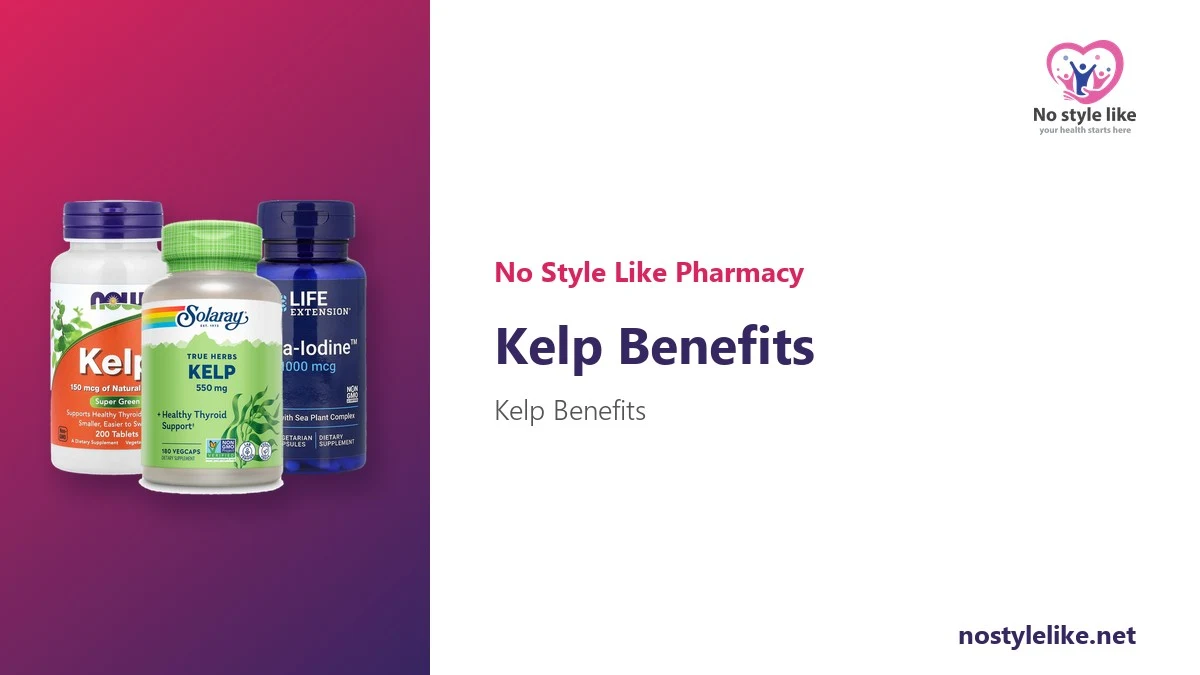
- NOW Kelp 150 mcg: each tablet gives 150 mcg of iodine (100% DV) from 30 mg of organic kelp. Take 1 tablet daily with a meal, for adults only.
- Solaray Kelp 550 mg: 550 mg of whole kelp per capsule plus 400 mcg of folic acid (680 mcg DFE). The label does not state the iodine amount. Take 1 capsule daily with a glass of water. Solaray advises against use with a hyperthyroid condition and against excessive or long-term use.
- Life Extension Sea-Iodine: 1,000 mcg of iodine (667% DV) per capsule from kelp, bladderwrack and potassium iodide. This is a high dose, close to the adult upper limit, and needs medical advice.
Who Should Not Seek Kelp Benefits Without a Doctor?
- People with Hashimoto’s thyroiditis, Graves’ disease or thyroid nodules.
- Anyone taking levothyroxine, antithyroid drugs, lithium or amiodarone.
- Pregnant and breastfeeding women, who should use a measured prenatal iodine source chosen with their doctor.
- People with kidney disease, because seaweed also contains potassium.
Seaweed can also absorb heavy metals such as arsenic from sea water, so choose reputable brands. Read too much iodine to learn the warning signs of excess.
Frequently Asked Questions About Kelp Benefits
Does kelp help with weight loss?
There is no reliable evidence that kelp causes weight loss. Taking extra iodine when you already have enough does not speed up a healthy thyroid.
Do I need kelp if I use iodised salt?
Most people in Egypt who use iodised salt and eat a varied diet get enough iodine. In that case, kelp benefits are small and extra iodine may add risk.
Can I take kelp with a multivitamin?
Check whether your multivitamin already contains iodine, then add up the total. Also read about selenium and thyroid health.
How long until I notice kelp benefits?
Kelp does not give a noticeable effect in healthy people. Its role is to correct a low intake, which only a doctor can judge with tests and a diet review.
Conclusion
The real kelp benefits are mainly about providing iodine when the diet lacks it, with small extras of minerals and fibre. Choose a product with a stated iodine amount, such as NOW Kelp 150 mcg, keep your total intake under the upper limit, and ask your doctor first if you have any thyroid condition.
This article was reviewed by the No Style Like pharmacy content team. It is for general awareness only and does not replace advice from your doctor or pharmacist.
Kelp is not a treatment for thyroid disease. Ask your doctor before use if you have a thyroid condition or take thyroid medicines. For more information see the NIH Office of Dietary Supplements iodine fact sheet.