


Betaine HCl: What It Is and When It Is Used – 8 Facts Before You Start
What Is Betaine HCl?
Betaine HCl (betaine hydrochloride) is a supplement that delivers hydrochloric acid to the stomach, so it works as a short-acting stomach acidifier. It is marketed to people with low stomach acid to support protein digestion. Below are 8 facts that will help you understand it before deciding whether it suits you.
1. It Is Not the Same as TMG
The two supplements are often confused. Betaine anhydrous, also called trimethylglycine or TMG, is mainly used to support homocysteine metabolism and does not acidify the stomach. The value of betaine HCl lies in the acid it releases. One cannot replace the other, so always read the label carefully.
2. How Betaine HCl Works in the Stomach
When the capsule dissolves, it releases acid and the stomach pH drops for a short time. Adequate acidity activates pepsin, the enzyme that starts breaking down protein, and helps the absorption of some nutrients such as iron and vitamin B12. That is why many products add pepsin to the same capsule.
3. What Does the Research Say?
The evidence is limited. The best-known study was small: healthy volunteers had their stomach acid lowered with a proton pump inhibitor, and a dose of betaine HCl re-acidified the stomach for only about one hour. This does not prove a long-term benefit for digestive symptoms, and no large clinical trials confirm one.
4. Who Might a Doctor Consider It For?
It may come up for someone with confirmed low stomach acid, such as some older adults or people with atrophic gastritis. However, bloating and indigestion overlap with many other conditions, so diagnosis comes first. Our digestive health guide covers the other common causes.
5. Betaine HCl Products at Our Pharmacy
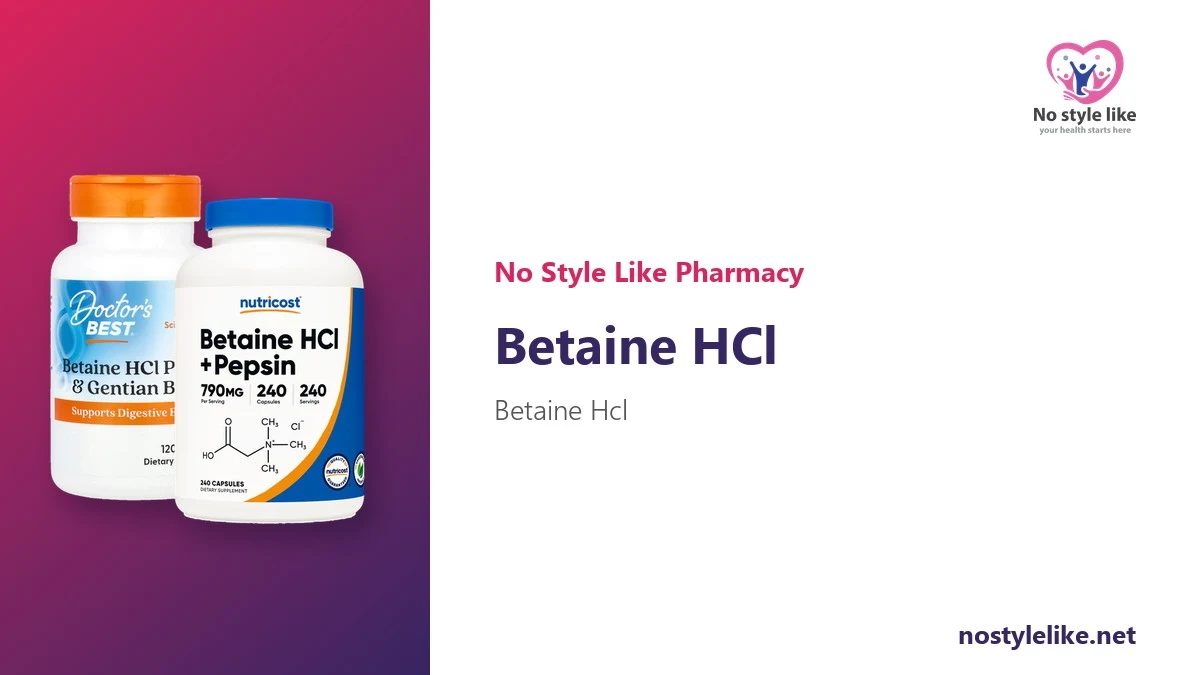
| Product | Per capsule | Label directions |
|---|---|---|
| Doctor’s Best Betaine HCl Pepsin and Gentian Bitters (120 capsules) | 650 mg betaine HCl, 250,000 FCC units pepsin, 20 mg gentian root | 1 capsule with a substantial protein meal, up to 3 times daily |
| Nutricost Betaine HCl + Pepsin 790 mg (240 plant-based capsules) | 650 mg betaine HCl and 140 mg pepsin | 1 capsule daily with 8-12 oz of water, adults 18+ |
The Doctor’s Best label advises avoiding it with kidney problems and consulting a doctor if pregnant, breastfeeding, or with a history of peptic ulcer or high blood pressure. Nutricost advises consulting a professional if pregnant, nursing, taking medication or living with a medical condition.
6. How to Take It Correctly
- Take it with food, never on an empty stomach.
- Link it to protein-rich meals, not light snacks.
- Do not exceed the dose printed on the label.
- Swallow the capsule whole with water; do not open it over food, because the acid irritates the mouth and esophagus.
- Do not combine two acidifying products on the same day.
7. Who Should Not Use It?
Avoid it with reflux or heartburn, gastritis, or a stomach or duodenal ulcer, and while taking anti-inflammatory painkillers such as aspirin or ibuprofen, or steroids. It also works against acid-reducing drugs such as proton pump inhibitors and H2 blockers, so never combine them without your doctor. Details are in our article on betaine HCl side effects.
8. A Warning About the Home Acid Challenge
A popular online test asks you to add capsules meal after meal until you feel burning. This “HCl challenge” is not a validated test and can cause serious irritation in someone with an undiagnosed ulcer. A proper diagnosis relies on gastroscopy, H. pylori testing and blood levels of vitamin B12 and iron.
How to Choose Between the Two Products
Both products contain the same 650 mg of betaine hydrochloride per capsule. Doctor’s Best adds gentian root, a bitter herb traditionally used to stimulate digestion, and its dose is tied to each protein meal. Nutricost offers vegetarian capsules, a larger count and a once-daily dose. The more important question is not which product, but whether you need one at all, and that is a decision for your doctor after proper testing.
Gentle Alternatives That Support Digestion
- Eat smaller meals and chew thoroughly.
- Limit heavy fatty foods and late dinners.
- Some herbs, such as ginger for digestion, may ease mild nausea.
- Keep a food and symptom diary to show your doctor.
Betaine HCl FAQ
Does it treat heartburn?
No. It can make heartburn worse, because heartburn is usually caused by acid reflux, not a lack of acid.
Can I take it with probiotics?
There is no known important interaction, but ask your pharmacist if you take other medicines.
When should I stop it?
Immediately if you feel burning, uncomfortable warmth or stomach pain, and then speak to your doctor.
Is it suitable for teenagers?
No. These products are labeled for adults only.
Conclusion
Betaine HCl is a short-acting stomach acidifier with limited evidence, and it is not suitable for people with heartburn, gastritis or ulcers. Start with a diagnosis, then discuss with your doctor whether it fits your situation. Both the Doctor’s Best and Nutricost products are available at No Style Like pharmacy.
This article was reviewed by the No Style Like pharmacy content team. It is for general awareness only and does not replace advice from your doctor or pharmacist.
Do not start any acidifying supplement if you have recurring stomach pain that has not been checked. For more information see the MedlinePlus gastritis page.