


Low Stomach Acid: 5 Causes, Symptoms and How It Is Properly Diagnosed
What Is Low Stomach Acid?
Low stomach acid, known medically as hypochlorhydria, is a condition in which the stomach produces less hydrochloric acid than it should. Acid is needed to break down protein, kill many microbes that arrive with food, and absorb iron and vitamin B12. Here we explain 5 main causes, the symptoms and how a proper diagnosis is made.
5 Common Causes of Low Stomach Acid
1. Aging
In some older adults the acid-producing cells of the stomach become less efficient, and acid output gradually falls.
2. Atrophic Gastritis
Here the stomach lining thins and loses its glands. The cause may be autoimmune, which also reduces intrinsic factor, the protein needed to absorb vitamin B12.
3. H. pylori Infection
A long-standing Helicobacter pylori infection can cause chronic inflammation that lowers acid production over time.
4. Long-Term Acid-Reducing Drugs
Proton pump inhibitors such as omeprazole lower acid on purpose, and taking them for years can keep acidity low. Never stop them on your own; review them with your doctor.
5. Stomach Surgery
Some weight-loss operations or partial removal of the stomach reduce the number of acid-producing cells. People who had these operations need lifelong monitoring of iron, vitamin B12 and calcium.
Symptoms of Low Stomach Acid
- Bloating, belching and feeling full for a long time after meals.
- Indigestion, especially after meat.
- Unexplained iron deficiency anemia.
- Low vitamin B12 with tingling or ongoing fatigue.
- Recurrent bowel upsets.
The problem is that these symptoms overlap with irritable bowel syndrome, peptic ulcer, food intolerances and even excess acid. Low stomach acid cannot be diagnosed from symptoms alone. Our digestive health guide describes the other possibilities.
How Is Low Stomach Acid Diagnosed?
- Gastroscopy: shows atrophic gastritis and allows biopsies.
- H. pylori tests: a breath test or a stool antigen test.
- Vitamin B12, iron and ferritin levels: to detect signs of poor absorption.
- Other tests chosen by your doctor depending on the case.
Why You Should Not Rely on the Home Acid Test
Some websites promote a test in which you keep adding betaine HCl capsules until you feel burning, assuming that no burning means a deficiency. This “HCl challenge” is not validated, its results are unreliable, and it can be dangerous for anyone with an undiagnosed ulcer or inflammation.
Treatment Starts With the Cause
- Treating H. pylori with the antibiotics your doctor prescribes.
- Replacing vitamin B12 and iron when a deficiency is confirmed.
- Reviewing the need for acid-reducing drugs instead of stopping them suddenly.
- Eating regular meals and chewing food well.
Practical Nutrition Tips
No diet cures low stomach acid on its own, but some habits ease symptoms. Eat smaller meals, chew slowly and avoid drinking large amounts of water with food. Include good sources of iron and vitamin B12 such as meat, eggs and legumes, keeping in mind that a confirmed deficiency may need supplements or injections chosen by your doctor. Note which foods trigger bloating so you can discuss them at your visit.
Where Do Betaine Supplements Fit?
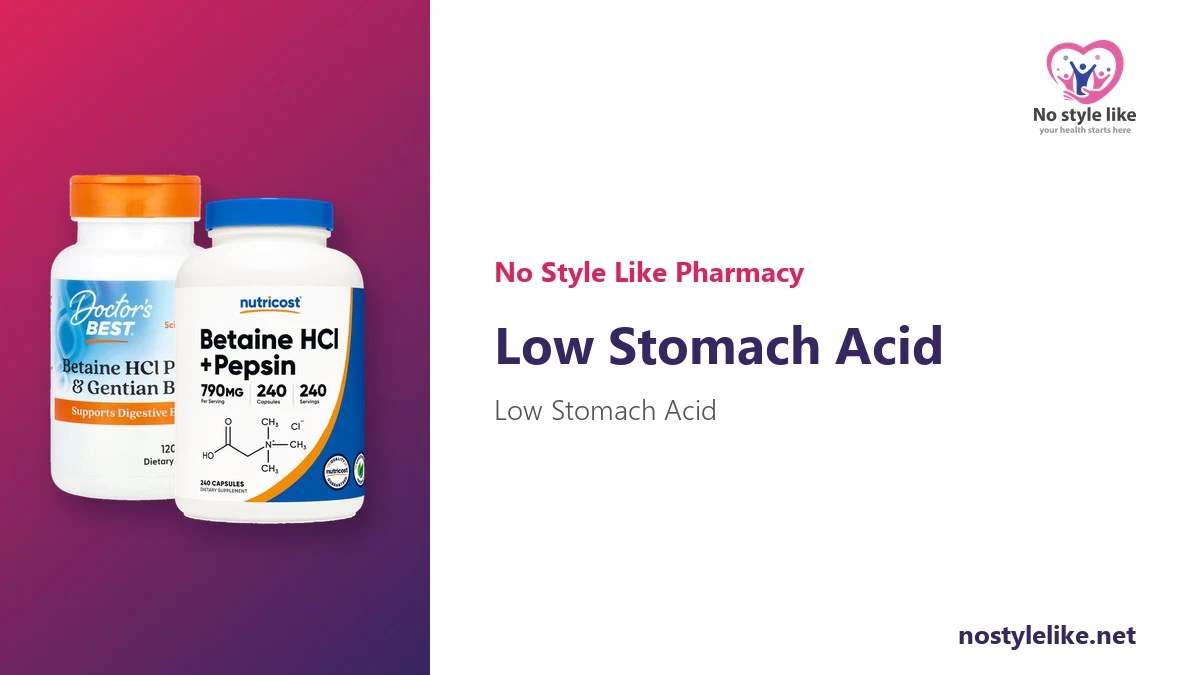
Some doctors suggest a betaine hydrochloride and pepsin supplement for selected patients with confirmed low stomach acid. The evidence is limited: one small study found it re-acidified the stomach for about an hour in people whose acid had been lowered by medication. Examples include Doctor’s Best Betaine HCl Pepsin and Gentian Bitters (650 mg betaine hydrochloride, 250,000 FCC units pepsin, 20 mg gentian; 1 capsule with a substantial protein meal up to 3 times daily) and Nutricost Betaine HCl + Pepsin (650 mg betaine hydrochloride and 140 mg pepsin; 1 capsule daily with water).
Do not use them with heartburn, ulcers or anti-inflammatory painkillers. Read about betaine side effects before trying one.
When to See a Doctor Urgently
- Vomiting blood or black, tarry stools.
- Difficulty swallowing or unexplained weight loss.
- Severe or persistent stomach pain.
- Severe anemia, or new digestive symptoms after age 50.
Frequently Asked Questions
Does low stomach acid cause heartburn?
This claim is common but not well proven. Most heartburn is caused by reflux and needs different treatment.
Do vinegar or lemon juice help?
There is no evidence that they do, and they can irritate an inflamed stomach.
Can low stomach acid be prevented?
Treating H. pylori early and reviewing long-term acid-reducing medicines regularly with your doctor both help.
Conclusion
Low stomach acid is a real condition, but it needs proper testing because its symptoms resemble many other problems. Treat the cause first and use acidifying supplements only after medical advice. For mild everyday discomfort, see our article on ginger for digestion.
This article was reviewed by the No Style Like pharmacy content team. It is for general awareness only and does not replace advice from your doctor or pharmacist.
Persistent stomach symptoms need a medical assessment rather than supplement trials. For more information see the MedlinePlus H. pylori page.