


Betaine HCl Side Effects: 6 Risky Situations and When to Stop at Once
Why Betaine HCl Side Effects Matter
Betaine hydrochloride delivers acid to the stomach, so most betaine HCl side effects come from extra acid on the lining of the stomach and esophagus. It is reasonably well tolerated by most healthy adults at label doses, but it can seriously harm people with certain conditions. Here we cover the common reactions, 6 risky situations and when to stop immediately.
Common Betaine HCl Side Effects
- Burning or a feeling of warmth in the stomach or chest.
- Heartburn or reflux after the capsule.
- Nausea or mild stomach pain.
- Irritation of the mouth and throat if the capsule is opened.
If you feel any burning or uncomfortable warmth, stop the supplement at once and do not try to get used to it. These signs do not mean your body is adjusting; they mean there is more acid than your stomach or esophagus can tolerate, and continuing can turn mild irritation into inflammation or an ulcer.
Betaine HCl Side Effects Table: 6 Risky Situations
| Situation | Why it is risky | What to do |
|---|---|---|
| GERD or heartburn | Extra acid further irritates the esophagus | Do not use it; treat reflux with your doctor |
| Gastritis | An inflamed lining is more sensitive to acid | Avoid it until a doctor assesses you |
| Peptic ulcer, current or past | May delay healing or increase pain and bleeding | Do not use without your doctor’s approval |
| NSAIDs, aspirin or steroids | These drugs weaken the stomach’s protective lining, and added acid multiplies the risk | Do not combine; ask your doctor or pharmacist |
| PPIs or H2 blockers | The supplement has the opposite effect to the medicine prescribed for you | Do not stop the drug or add the supplement without your doctor |
| Kidney disease, pregnancy, breastfeeding, high blood pressure | Label warnings and safety not well studied | Avoid with kidney problems; consult a doctor for the others |
These are the most important potential betaine HCl side effects, because the harm comes from putting acid on tissue that cannot cope with it.
Betaine HCl Side Effects and Drug Interactions
Besides painkillers and acid reducers, a change in stomach acidity can alter how some medicines are absorbed. Tell your doctor or pharmacist about everything you take before starting, especially heart, blood pressure and diabetes medicines. Never take it on an empty stomach, which makes betaine HCl side effects more likely.
The Risk of the Home Acid Challenge
Some people increase the number of capsules at each meal until they feel burning and call it a test. This “HCl challenge” is not validated and can expose someone with a silent ulcer to severe irritation or bleeding, among the most serious betaine HCl side effects. Low stomach acid is diagnosed with gastroscopy, H. pylori tests and vitamin B12 and iron levels.
Who Usually Tolerates It?
Most healthy adults have no problems when they take it with a full meal at the label dose. But tolerating it does not mean you need it, and it does not suit indigestion caused by reflux or irritable bowel syndrome. Children and anyone under 18 should not use it. If you notice a small improvement, do not raise the dose hoping for more, since that increases the chance of betaine HCl side effects without clear benefit.
How to Reduce Betaine HCl Side Effects Under Medical Supervision
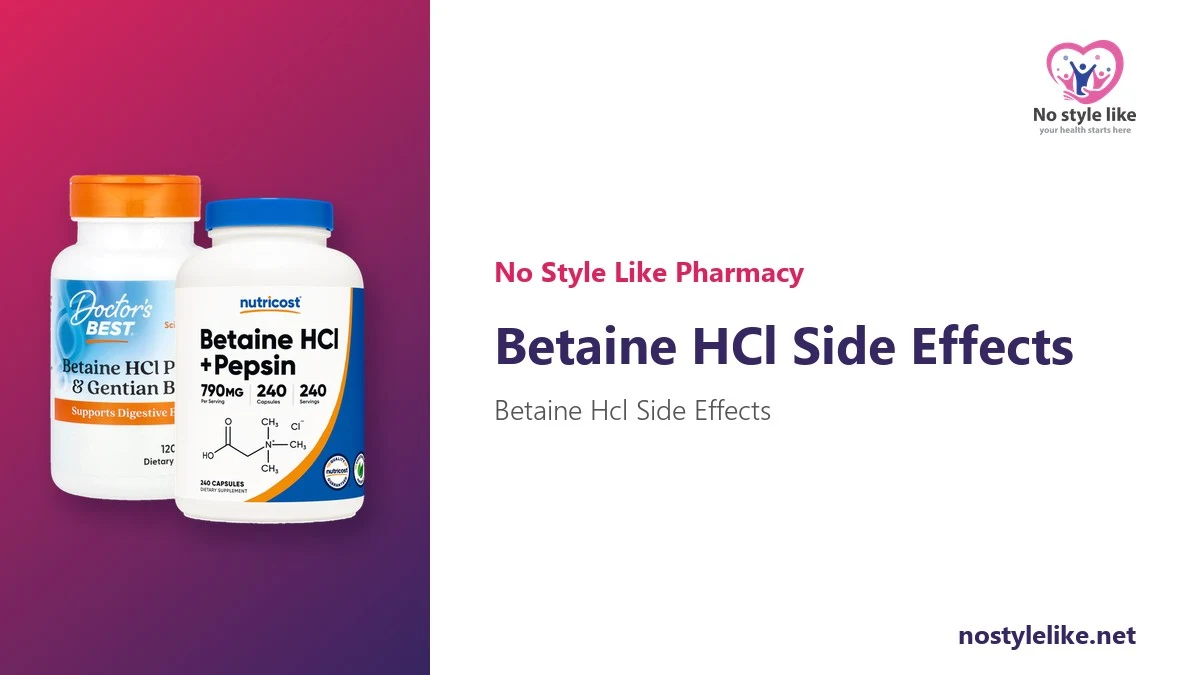
- Follow the label: Doctor’s Best Betaine HCl Pepsin and Gentian Bitters is 1 capsule (650 mg betaine hydrochloride, 250,000 FCC units pepsin, 20 mg gentian) with a substantial protein meal, up to 3 times daily.
- Nutricost Betaine HCl + Pepsin is 1 capsule daily (650 mg betaine hydrochloride and 140 mg pepsin) with 8-12 oz of water, for adults 18+.
- Swallow the capsule whole in the middle of the meal.
- Never combine two betaine products.
To understand the supplement itself and what the research says, read our betaine hydrochloride guide.
Red Flags: See a Doctor Immediately
- Severe stomach or chest pain.
- Vomiting blood or material that looks like coffee grounds, or black stools.
- Difficulty or pain when swallowing.
- Dizziness, fainting or sudden paleness.
FAQ About Betaine HCl Side Effects
Can it cause a stomach ulcer?
There is no evidence that it causes ulcers in healthy people, but it can worsen the pain of an existing ulcer and slow its healing.
Is burning a sign that it is working?
No. Burning means there is too much acid, and you should stop.
What should I do if I feel burning after a capsule?
Stop taking it and drink some water. If the pain continues, see your doctor. Our digestive health guide has more tips on stomach comfort.
Conclusion
Most betaine HCl side effects come from excess acid on a sensitive stomach or esophagus. Avoid it with heartburn, gastritis, ulcers, NSAIDs, steroids and acid-reducing drugs, stop at the first sign of burning, and talk to your doctor before you start.
This article was reviewed by the No Style Like pharmacy content team. It is for general awareness only and does not replace advice from your doctor or pharmacist.
If you take a long-term medicine or have a stomach condition, consult your doctor before any acidifying supplement. For more information see the MedlinePlus heartburn page.