


PMS Supplements: 5 Options and What the Evidence Says About Each
PMS Supplements: Do They Really Help?
Premenstrual syndrome (PMS) is a group of physical and emotional symptoms that appear in the week or two before a period and fade within a few days of it starting: bloating, breast tenderness, headache, irritability, mood swings and sugar cravings. Many women look for PMS supplements to ease these symptoms. Some PMS supplements have reasonable evidence, while others are mostly marketing. Here are 5 options and what research says about each.
Before You Choose PMS Supplements
Keep a daily symptom diary for at least two cycles to confirm that your symptoms really follow your cycle and are not present all month. Regular exercise, enough sleep and cutting back on salt, caffeine and sugar in the premenstrual days help a lot. If pain during the period itself is the main issue, the approach is different, and pain relievers or medical review may be needed.
1. Calcium: The Best-Supported of the PMS Supplements
In a relatively large trial, women took 1,200 mg of calcium carbonate daily, and their symptoms fell by about half compared with about a third on placebo, especially mood swings, bloating and pain. Count calcium from food and supplements together, as there is no need to exceed your daily requirement. Be careful if you have had kidney stones, and take it about four hours apart from iron or thyroid medicine.
2. Vitamin B6 and Its Upper Limit
Vitamin B6 is one of the most popular PMS supplements. Studies mostly used 50-100 mg a day and showed a modest improvement, mainly in emotional symptoms, although many trials were of low quality. Safety matters most here. The US tolerable upper limit for adults is 100 mg a day, and some European authorities have set a much lower safe level. Long-term high doses can damage peripheral nerves, causing numbness or tingling in the hands and feet. Remember to count the B6 in multivitamins and B-complex products too.
3. Magnesium
Magnesium is another common choice among PMS supplements. Small studies used 200-360 mg a day and reported less bloating and better mood in some women. The upper limit for magnesium from supplements is 350 mg a day for adults, and too much causes diarrhoea. People with kidney disease should only take it under medical supervision.
4. Evening Primrose Oil and Chasteberry
Despite its reputation among PMS supplements, evening primrose oil showed no clear benefit in most trials; read the details in evening primrose oil. Chasteberry (vitex) has more positive trials for breast tenderness and irritability, although their quality varies. It should not be used in pregnancy or while trying to conceive without a doctor, with dopamine-related medicines, or with hormone-sensitive conditions, and it may interfere with hormonal contraceptives.
| Supplement | Evidence | Safety note |
|---|---|---|
| Calcium | Best of the group | Kidney stones; separate from iron and thyroid medicine |
| Vitamin B6 | Modest | Do not exceed 100 mg a day |
| Magnesium | Limited | Diarrhoea; kidney disease |
| Evening primrose oil | Weak | Blood thinners and surgery |
| Chasteberry | Moderate, variable quality | Pregnancy and hormonal contraceptives |
5. When to See a Doctor: PMDD and Red Flags
Premenstrual dysphoric disorder (PMDD) is a severe form that affects a small share of women and causes depression, anger or anxiety strong enough to disrupt work and relationships. It is a medical condition with effective treatments, such as certain antidepressants or hormonal contraceptives prescribed by a doctor, and PMS supplements alone are not enough. See a doctor if you have:
- Thoughts of harming yourself; this is urgent.
- Very heavy bleeding, or bleeding between periods or after sex.
- Severe pain that does not respond to usual pain relievers.
- Symptoms that continue all month rather than only before your period.
- Irregular cycles with acne or excess hair growth, which may point to polycystic ovary syndrome; inositol research in this area is covered in inositol, CoQ10 and fertility evidence.
PMS Supplements and No Style Like Products
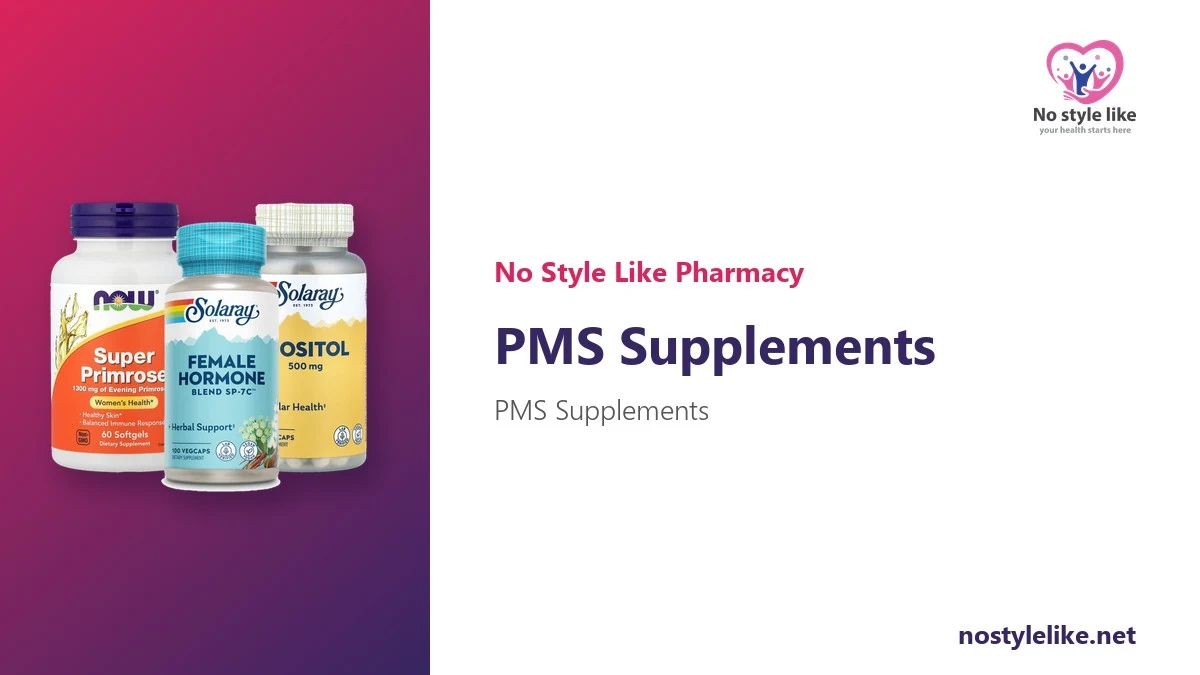
Among our women’s health products, evening primrose suits women who want to try it despite the weak evidence. The SP-7C blend is aimed mainly at midlife; it must not be used in pregnancy, while breastfeeding or with high blood pressure; read menopause herbs. Inositol is mainly studied in polycystic ovary syndrome, not in PMS. Products available:
- NOW Super Primrose 1300 mg: 1,300 mg of cold-pressed, hexane-free oil from Oenothera biennis seed per softgel (bovine gelatin), typically providing 8-10% GLA, about 104-130 mg; 60 softgels. Take 1 softgel 1 to 2 times daily with food. For adults only.
- Solaray Female Hormone Blend SP-7C: a 910 mg proprietary herbal blend per 2-VegCap serving with black cohosh, dong quai, passion flower, red raspberry leaf, fenugreek, licorice root, cramp bark, chamomile, saw palmetto, wild yam, butternut bark and kelp; 100 VegCaps. Take 2 VegCaps three times daily with a meal or a glass of water. Do not use if pregnant or nursing, or if you have high blood pressure (it contains licorice).
- Solaray Inositol 500 mg: 500 mg of inositol per VegCap, 100 VegCaps; 1 VegCap daily with a meal or a glass of water. PCOS studies mostly used 2-4 g of myo-inositol a day, so this is a much lower dose, and it is not a PCOS or fertility treatment on its own.
Frequently Asked Questions About PMS Supplements
When should I start taking PMS supplements?
In studies, calcium was taken daily throughout the month. Judge the result after two to three cycles.
Can I combine several PMS supplements?
Start with one option so you know its effect, and ask your pharmacist before combining.
Are PMS supplements suitable for teenagers?
Check with a doctor first; good nutrition and exercise are often enough.
Can the contraceptive pill help PMS?
Some hormonal contraceptives can reduce symptoms; this is a decision to make with your doctor.
Conclusion
Of all PMS supplements, calcium has the best evidence, followed by vitamin B6 as long as you stay at or below 100 mg a day, then magnesium and chasteberry, while evening primrose oil has weak support. Track your symptoms, start with lifestyle changes and see a doctor for severe symptoms or red flags. Find NOW Super Primrose and Solaray Inositol at No Style Like Pharmacy.
This article was reviewed by the No Style Like pharmacy content team. It is for general awareness only and does not replace advice from your doctor or pharmacist.
Supplements are not a treatment for PMDD or depression; see a doctor for severe symptoms. For more information see the MedlinePlus premenstrual syndrome page from the US National Library of Medicine.