


Description
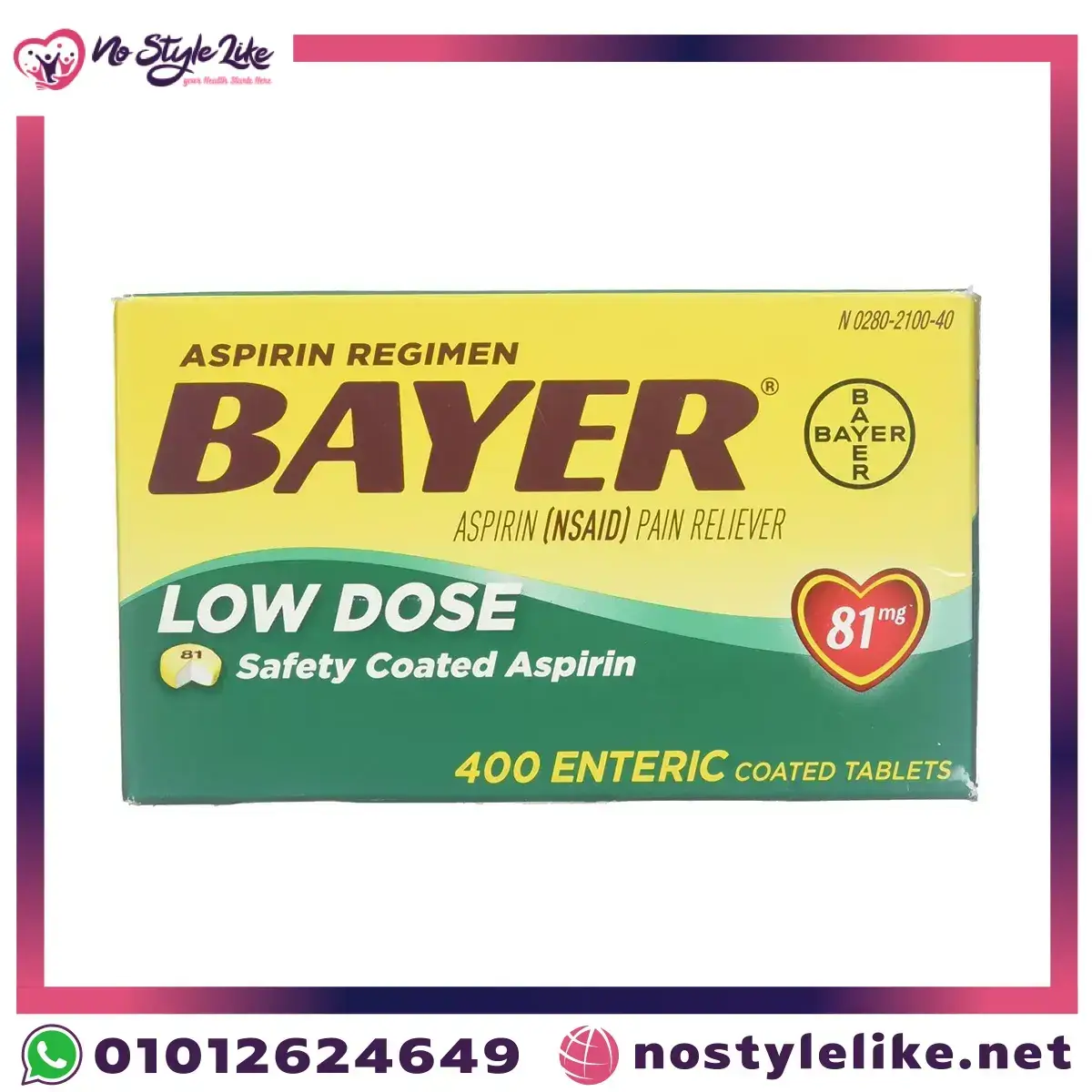
Bayer Aspirin 81 mg Low-Dose (400 Enteric-Coated Tablets)
Key Facts
| Detail | Information |
|---|---|
| Product | Bayer Aspirin 81 mg Low Dose |
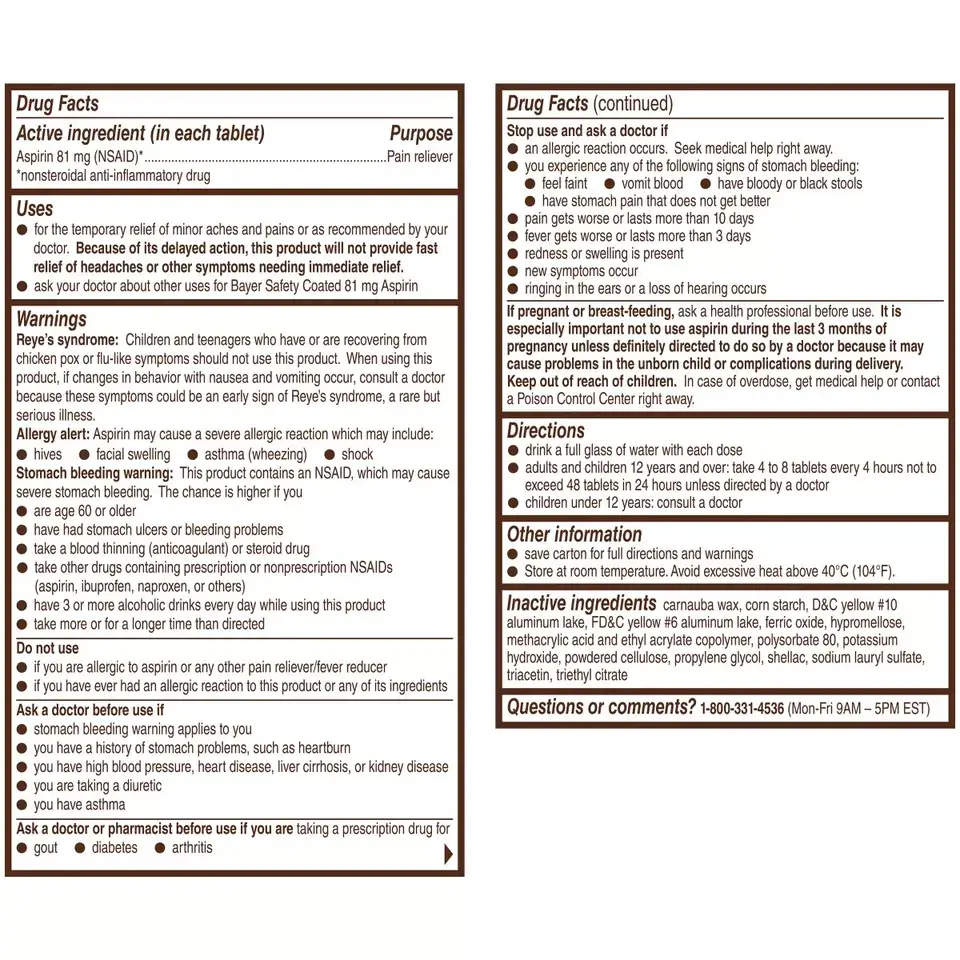
| Active ingredient | Acetylsalicylic acid (aspirin) 81 mg |
| Form | Enteric-coated tablets |
| Count | 400 tablets |
| Drug class | Antiplatelet / NSAID (low dose) |
| Main use | Doctor-advised prevention of heart attack & ischemic stroke |
| Brand | Bayer |
| Country of origin | USA |
| Free from | Caffeine and sodium |
| UPC | 312843555426 |
Short Description
Bayer Aspirin 81 mg is a low-dose, enteric-coated aspirin taken once daily as part of a doctor-recommended cardiovascular protection plan. Each pack contains 400 tablets, making it a practical long-term supply. The 81 mg strength is the standard “low dose” used for its antiplatelet effect — it helps keep platelets from clumping and forming clots, while the enteric coating helps protect the stomach lining.
Table of Contents
- Introduction
- What Is Bayer Aspirin 81 mg?
- How Does It Work?
- Main Benefits
- Real Use Cases
- Who Is It Best For?
- Who Should Avoid It?
- How to Use Correctly
- Best Time to Take It
- Common Questions Users Ask
- Expected Results Timeline
- Common Mistakes
- Myths vs Facts
- Drug Interactions
- Contraindications
- Tests You May Need
- What to Take It With
- Effect on Other Medications
- When to See a Doctor
- NSL Expert Tip
- FAQ
- Conclusion
Introduction
If your doctor has recommended a daily “baby aspirin,” this is the product they usually mean. Bayer Aspirin 81 mg is one of the most widely used low-dose aspirins for long-term heart and stroke protection. This page explains what it does, who it is for, how to take it, and — just as importantly — who should not take it without medical advice. The goal is to give you clear, trustworthy information you can act on.
What Is Bayer Aspirin 81 mg?
Bayer Aspirin 81 mg is a low-dose form of acetylsalicylic acid in an enteric-coated tablet. “Low dose” (81 mg) is the strength used for its blood-thinning, antiplatelet effect rather than for pain relief. The enteric coating means the tablet is designed to dissolve further along in the digestive tract, which can help reduce direct irritation to the stomach. Each bottle contains 400 tablets, giving a long supply for daily preventive use.
How Does It Work?
Aspirin works by blocking an enzyme called COX-1 inside platelets. This lowers the production of thromboxane A2, a substance that makes platelets stick together. With platelets less “sticky,” blood is less likely to form the clots that can block an artery and cause a heart attack or an ischemic stroke. Because this effect lasts for the life of each platelet (about 7–10 days), a small daily dose is enough to maintain protection.
Main Benefits
- Antiplatelet protection: helps prevent harmful blood clots in people at risk.
- Secondary prevention: commonly used for people who have already had a heart attack, ischemic stroke, stent, or bypass, when their doctor advises it.
- Stomach-friendlier design: the enteric coating aims to reduce direct stomach irritation compared with plain aspirin.
- Convenient supply: 400 tablets support consistent, long-term daily use.
- Caffeine- and sodium-free: a clean formulation for daily routines.
Real Use Cases
Typical situations where a doctor may prescribe low-dose aspirin include: after a heart attack to lower the risk of another one; after an ischemic stroke or a “mini-stroke” (TIA); after a coronary stent or bypass surgery; and for certain people with atrial fibrillation or established cardiovascular disease. It is also sometimes used, case by case, for selected adults aged 40–59 with higher cardiovascular risk — but only when a clinician decides the benefit outweighs the bleeding risk.
Who Is It Best For?
It is best suited to adults who have been specifically advised by a doctor to take daily low-dose aspirin — most often for secondary prevention (people who already have heart or vascular disease). If you fit this group and want a reliable, long-supply, enteric-coated option, Bayer Aspirin 81 mg is a strong everyday choice.
Who Should Avoid It?
- People with aspirin or NSAID allergy.
- Anyone with active stomach ulcers, recent gastrointestinal bleeding, or a bleeding disorder.
- People about to have surgery or a dental procedure (unless the doctor says to continue).
- Children and teenagers with viral illness (risk of Reye’s syndrome) — aspirin should not be given without medical direction.
- Adults 60+ starting aspirin purely for primary prevention: current guidance no longer routinely recommends this because bleeding risk can outweigh benefit. Talk to your doctor first.
How to Use Correctly
Take exactly as your doctor directs — typically one 81 mg tablet once daily. Swallow the enteric-coated tablet whole with a glass of water; do not crush or chew it, as this can undo the coating’s stomach protection. Take it at the same time each day to keep a steady routine, and do not stop suddenly without medical advice, especially if you have heart disease.
Best Time to Take It
Consistency matters more than the exact hour. Many people take it with the evening meal or at bedtime, which may help reduce stomach upset, but morning is also fine. The most important rule is to take it at the same time every day and with food or water. Follow whatever timing your doctor recommends for your situation.
Common Questions Users Ask
Is 81 mg the same as “baby aspirin”? Yes — 81 mg is the standard low dose often called baby aspirin.
Can I take it for a headache? It is meant for daily prevention, not as your go-to pain reliever. Use a proper analgesic for pain and ask your pharmacist.
Do I need it if I’m healthy? Not necessarily. Daily aspirin is a medical decision, not a routine supplement for everyone.
Expected Results Timeline
Aspirin’s antiplatelet effect begins within hours of the first dose and is fully established within a few days of regular use. However, its benefit — reduced long-term risk of clot-related events — is preventive and ongoing; it is not something you “feel.” Protection continues only while you keep taking it as prescribed.
Common Mistakes
- Crushing or chewing the enteric-coated tablet (removes stomach protection).
- Starting daily aspirin on your own without a doctor’s advice.
- Stopping suddenly after a cardiac event — this can raise clot risk.
- Combining it with other blood thinners or NSAIDs without medical guidance.
- Ignoring warning signs of bleeding (see “When to See a Doctor”).
Myths vs Facts
| Myth | Fact |
|---|---|
| “Everyone over 50 should take daily aspirin.” | Current guidance limits routine primary prevention; it’s an individual decision with your doctor. |
| “Enteric-coated aspirin can’t cause bleeding.” | The coating helps the stomach lining but does not remove the overall bleeding risk of aspirin. |
| “If one tablet helps, two help more.” | Higher doses raise bleeding risk without extra antiplatelet benefit. Stick to the prescribed dose. |
Drug Interactions
Tell your doctor about everything you take. Aspirin can interact with: other blood thinners (warfarin, clopidogrel, apixaban, rivaroxaban, heparin), other NSAIDs (ibuprofen, naproxen), certain antidepressants (SSRIs/SNRIs), corticosteroids, some diabetes and gout medicines, and methotrexate. These combinations can increase bleeding risk or change how the medicines work.
Contraindications
Do not use without medical advice if you have: aspirin/NSAID allergy, active peptic ulcer or GI bleeding, a bleeding or clotting disorder (e.g., hemophilia), severe liver or kidney disease, or uncontrolled severe hypertension. Aspirin is generally avoided in the third trimester of pregnancy unless a doctor prescribes it. Always confirm suitability with a clinician.
Tests You May Need
Your doctor may check blood pressure, kidney and liver function, and — if you are on other blood thinners — clotting parameters. People with a history of ulcers may be assessed for GI risk. Routine low-dose aspirin usually needs little monitoring, but any signs of bleeding should be evaluated promptly.
What to Take It With
Take the tablet with a full glass of water, ideally with or just after food to limit stomach upset. Limit alcohol, which adds to stomach-bleeding risk. There is no special diet required, but a heart-healthy eating pattern supports the overall goal of cardiovascular protection.
Effect on Other Medications
Low-dose aspirin can add to the blood-thinning effect of other anticoagulants and antiplatelets, and taking ibuprofen close to aspirin may blunt aspirin’s heart-protective action. If you need an occasional painkiller, ask your pharmacist how to space it or which option is safer alongside daily aspirin.
When to See a Doctor
Seek medical help if you notice: black or bloody stools, vomiting blood or “coffee-ground” material, unusual or prolonged bleeding, severe or persistent stomach pain, ringing in the ears, or signs of an allergic reaction (rash, swelling, trouble breathing). Also check in before any surgery or dental work, and before stopping the medicine.
NSL Expert Tip
Keep the bottle tightly closed in a cool, dry place, and set a daily phone reminder so you never double-dose or skip. If you ever miss a dose, take it when you remember the same day — but never take two at once to “catch up.” Consistency, not extra tablets, is what protects you.
Frequently Asked Questions
What is Bayer Aspirin 81 mg used for?
It is a low-dose aspirin used mainly to help prevent heart attacks and ischemic strokes in people whose doctor has recommended daily aspirin therapy, usually those with existing cardiovascular disease.
Should I chew or swallow the tablet?
Swallow it whole with water. Chewing or crushing an enteric-coated tablet removes its stomach-protective coating — unless a doctor tells you to chew one during a suspected heart attack emergency.
Is Bayer Aspirin 81 mg safe for daily use?
For the right person and at the prescribed dose it is widely used daily, but it carries a bleeding risk. It should be taken only on a doctor’s advice.
Can I take it with other pain relievers?
Not without guidance. Ibuprofen and other NSAIDs can interfere with aspirin or raise bleeding risk. Ask your pharmacist first.
How many tablets are in the pack?
This pack contains 400 enteric-coated tablets — a long-term supply for once-daily use.
Conclusion
Bayer Aspirin 81 mg is a trusted, enteric-coated, low-dose aspirin for doctor-directed heart and stroke prevention, backed by a generous 400-tablet supply. Used correctly — one tablet daily, swallowed whole, and only when your doctor recommends it — it is a simple, proven part of many cardiovascular protection plans. Order genuine Bayer Aspirin 81 mg today from No Style Like for reliable quality and fast delivery.
Reviewed by the No Style Like pharmacy content team. This information is for general educational purposes and is not a substitute for professional medical advice. Always consult your doctor or pharmacist before starting, changing, or stopping aspirin. Trusted references: USPSTF, MedlinePlus, and the Bayer manufacturer information.


Reviews
There are no reviews yet.