


Description
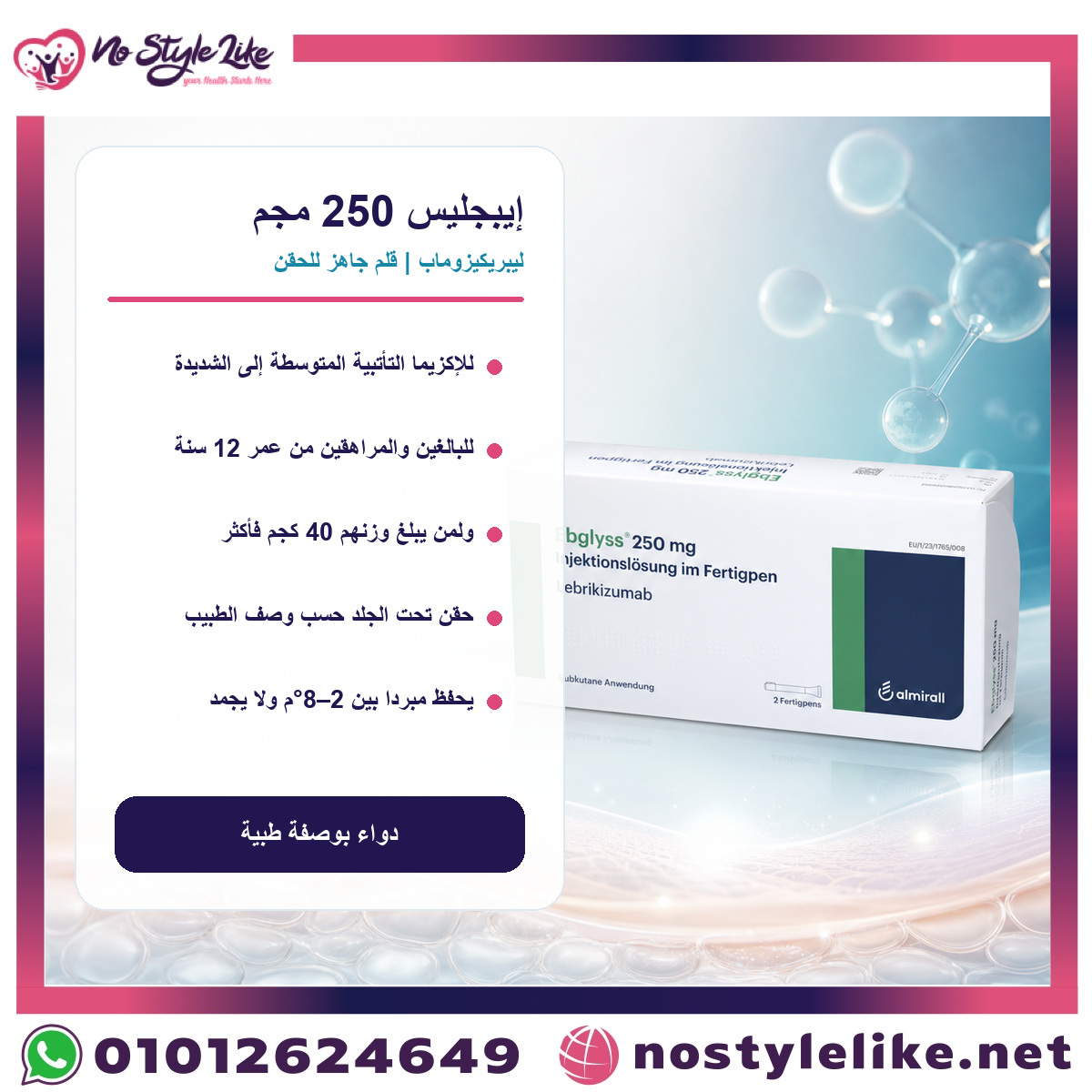
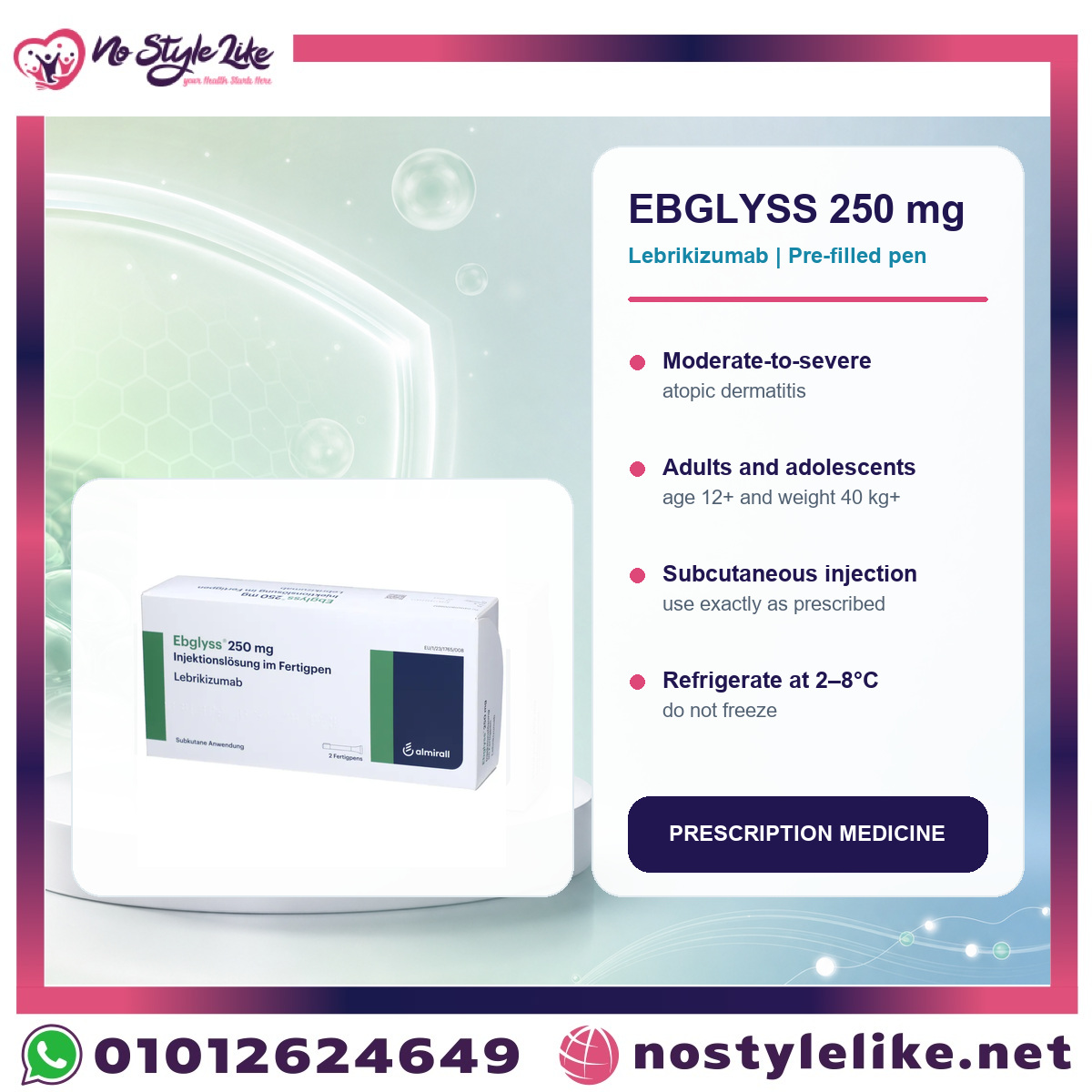
Ebglyss 250 mg is a prescription biologic medicine containing lebrikizumab in a single-use pre-filled pen. It is used for moderate-to-severe atopic dermatitis in adults and adolescents aged 12 years and older who weigh at least 40 kg and are candidates for systemic therapy. This guide explains the current dosing phases, seven essential safety checks, injection technique, eye-related warnings and refrigerator storage.
Quick answer: Each Ebglyss 250 mg pen contains 250 mg lebrikizumab in 2 mL solution for subcutaneous injection. Treatment begins with loading doses, continues every two weeks through the initial phase, and changes to every four weeks after an adequate clinical response. The exact schedule must always be set by the prescribing clinician.
Ebglyss 250 mg at a glance
Ebglyss 250 mg contains lebrikizumab, a humanised monoclonal antibody that binds to interleukin-13 (IL-13). IL-13 is an important driver of the inflammation involved in atopic dermatitis. Blocking this pathway can help reduce skin inflammation, itching and disease severity. It is a targeted biologic treatment; it is not a corticosteroid, antihistamine, antibiotic or general immune supplement.
| Active ingredient | Lebrikizumab |
|---|---|
| Strength | 250 mg in 2 mL (125 mg/mL) |
| Dosage form | Solution for injection in a single-use pre-filled pen |
| Route | Subcutaneous injection |
| Approved group | Adults and adolescents aged 12+ weighing at least 40 kg who are candidates for systemic therapy |
| Prescription status | Prescription medicine |
Ebglyss 250 mg may be used with or without topical corticosteroids. Topical calcineurin inhibitors may be used on problem areas such as the face, neck, skin folds and genital area when directed by a clinician. Do not start, stop or change another eczema medicine without medical advice.
Ebglyss 250 mg dosing schedule
The dosing schedule has separate loading, initial-treatment and maintenance phases. A single 250 mg pen does not equal the full loading dose. The current European product information gives the following standard schedule:
- Week 0: 500 mg, given as two 250 mg injections at different injection sites.
- Week 2: another 500 mg, again as two 250 mg injections at different sites.
- Weeks 4 to 16: 250 mg once every two weeks.
- After clinical response: the maintenance dose is 250 mg once every four weeks.
If there is only a partial response at week 16, the prescriber may continue Ebglyss 250 mg every two weeks until week 24. The official information says treatment discontinuation should be considered when there is no clinical response after 16 weeks. This is why an older claim that all patients can move to an every-eight-week schedule should not be followed.
If a scheduled injection is missed, administer it as soon as possible and then continue on the regularly planned day, unless the prescriber gives different instructions. Never double the dose to compensate for a missed injection. Record each injection date and the batch number from the carton.
7 essential safety checks before Ebglyss 250 mg
1. Confirm the patient and indication
The clinician should confirm moderate-to-severe atopic dermatitis, the need for systemic therapy, age and body weight. The authorised adolescent group starts at 12 years and requires a body weight of at least 40 kg. Ebglyss 250 mg should not be borrowed, shared or used for another skin condition.
2. Check allergy history
Do not use Ebglyss 250 mg in anyone with hypersensitivity to lebrikizumab or any excipient. Stop the injection and seek urgent medical help for symptoms of a serious allergic reaction, including difficulty breathing, facial or throat swelling, faintness or widespread hives.
3. Discuss eye symptoms
Conjunctivitis, allergic conjunctivitis and dry eye are among the most frequently reported adverse reactions. Keratitis and blepharitis are less common. Tell the prescriber about red, painful, itchy or dry eyes, discharge, light sensitivity or changes in vision. Persistent or unresolved conjunctivitis may require an ophthalmology examination.
4. Treat parasitic worm infection first
Patients with a known helminth infection should be treated before starting lebrikizumab. If an infection develops during treatment and does not respond to anti-helminth treatment, Ebglyss 250 mg may need to be paused until the infection resolves.
5. Review vaccination plans
Bring routine vaccinations up to date before treatment where possible. Live and live-attenuated vaccines should not be given at the same time as Ebglyss 250 mg. Non-live or inactivated vaccines may be permitted, but the timing should be agreed with the treating clinician.
6. Check pregnancy and breastfeeding
Human pregnancy data are limited, so the European product information recommends avoiding use during pregnancy as a precaution. During breastfeeding, the clinician and patient should decide whether to discontinue breastfeeding or discontinue treatment after weighing the benefit to the child and the benefit of therapy to the mother.
7. Inspect the pen and storage history
Before use, check the expiry date, carton seal, batch number and solution. The solution should be clear to opalescent and colourless to slightly yellow or slightly brown, without visible particles. Do not use a pen that has been frozen, damaged, overheated, expired, shaken vigorously or stored outside the permitted time.
How to use the Ebglyss 250 mg pre-filled pen
Ebglyss 250 mg is injected under the skin. A healthcare professional should provide training before self-injection. Read the package leaflet and device instructions every time a new pack is supplied because device details can differ between markets.
- Use the thigh or abdomen, avoiding the 5 cm area around the navel.
- A caregiver may inject into the back of the upper arm.
- Rotate the injection site for each dose.
- Do not inject into skin that is tender, bruised, red, hard, scarred or visibly damaged.
- When two injections are required for a loading dose, use two different sites.
- Use each pen once only and place it immediately in an approved sharps container.
Do not attempt to warm the pen with hot water, sunlight, a microwave or another heat source. Do not shake it. Follow the exact room-temperature waiting time stated in the leaflet supplied with the local pack.
Ebglyss 250 mg storage and travel rules
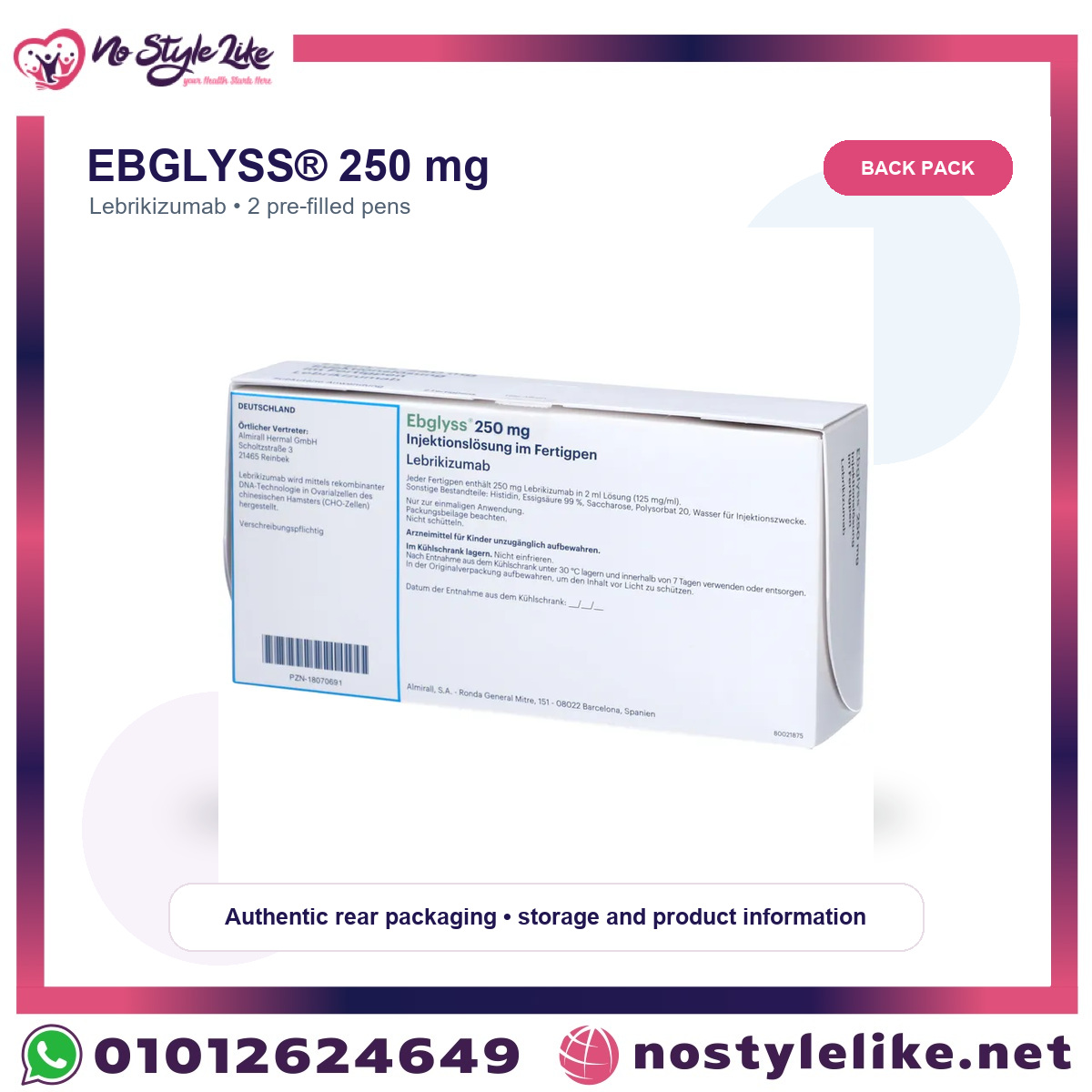
Keep Ebglyss 250 mg in a refrigerator at 2°C to 8°C and inside its original carton to protect it from light. Do not freeze. After removal from the refrigerator, the European pack may be stored below 30°C for up to seven days. Once stored outside the refrigerator, it should not be returned to refrigerated storage. Use it within the allowed period or discard it safely.
For travel, use an appropriate insulated medicine bag without placing the pen directly against ice packs. Keep the package dry, shaded and within the required temperature range. Carry the prescription and enough labelled medicine for the trip. Airline and border requirements can vary, so check them before travel.
Possible Ebglyss 250 mg side effects
Not everyone experiences side effects. According to current European product information, commonly reported reactions include conjunctivitis, injection-site reactions, allergic conjunctivitis and dry eye. Uncommon reactions include herpes zoster, eosinophilia, keratitis and blepharitis.
Contact the prescriber when eye symptoms are persistent, an injection-site reaction is severe, or new infection symptoms occur. Seek urgent care for a possible systemic hypersensitivity reaction. This summary is not a substitute for the complete package leaflet, which includes full frequency information and reporting instructions.
Clinical evidence and official references
In the pivotal studies reviewed by the European Medicines Agency, more patients receiving lebrikizumab achieved clear or almost clear skin and at least a 75% improvement in eczema severity than those receiving placebo at week 16. Results differed by study and by the use of topical corticosteroids, so percentages should not be interpreted as a guaranteed individual result.
For current authorised information, review the EMA Ebglyss assessment and product information and the current FDA prescribing information. You can also browse the No Style Like shop for other listed health products. Always follow the leaflet supplied with your own market pack.
Authenticity checklist for Ebglyss 250 mg
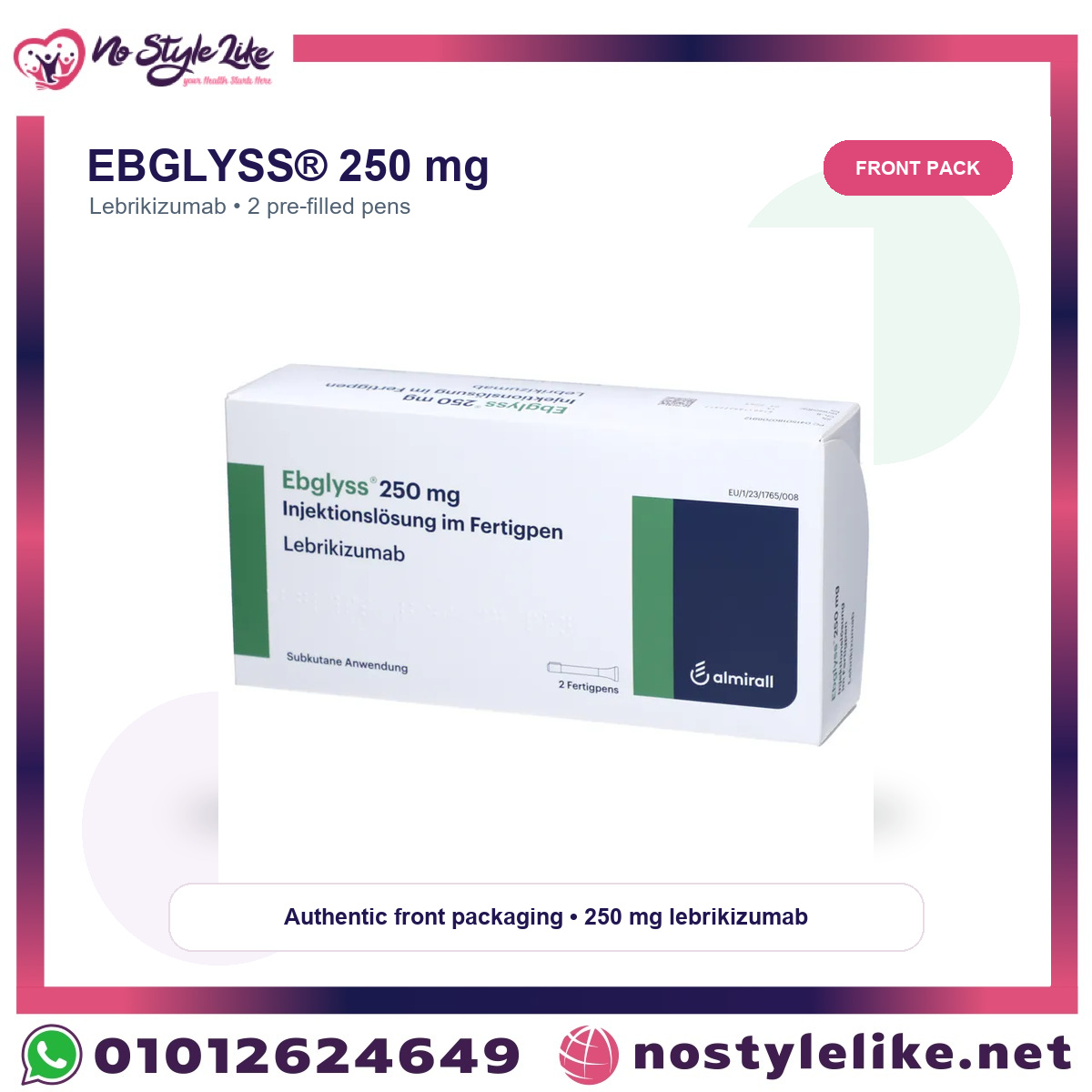
Before accepting a pack, compare the medicine name, strength, dosage form, manufacturer or local representative, pack quantity, serial or 2D code, batch number and expiry date. The photographed European carton on this page contains two pre-filled pens and carries German-language labelling. Packaging may vary by country and pack size. Market-specific packaging does not change the need for a valid prescription, cold-chain transport and professional verification.
Frequently asked questions
What is Ebglyss 250 mg used for?
It is used for moderate-to-severe atopic dermatitis in adults and adolescents aged 12 years and older who weigh at least 40 kg and are candidates for systemic therapy.
Is Ebglyss 250 mg injected every four weeks from the first dose?
No. Loading doses are given at weeks 0 and 2, followed by 250 mg every two weeks through the initial phase. Once an adequate clinical response is achieved, the maintenance schedule is normally every four weeks.
Can Ebglyss 250 mg be used with topical eczema treatment?
It may be used with or without topical corticosteroids. The prescriber may allow topical calcineurin inhibitors on selected sensitive areas. Follow the individual treatment plan.
What should I do if eye redness develops?
Tell the treating clinician, especially if redness, pain, discharge, light sensitivity, dryness or vision changes persist. An ophthalmology assessment may be needed.
Can a pen be returned to the refrigerator after room-temperature storage?
The current European information says not to return the pen to the refrigerator once it has been stored out of refrigeration. Keep it below 30°C and use or discard it within seven days.
Medical notice: Ebglyss 250 mg is a prescription medicine. This product page supports informed discussion and does not diagnose disease, replace the package leaflet or replace advice from a dermatologist, pharmacist or prescribing clinician.

Reviews
There are no reviews yet.