


Description
NOW TMG Betaine 1000 mg – 100 Tablets: A 23-Section Homocysteine and Methylation Guide
Quick answer:
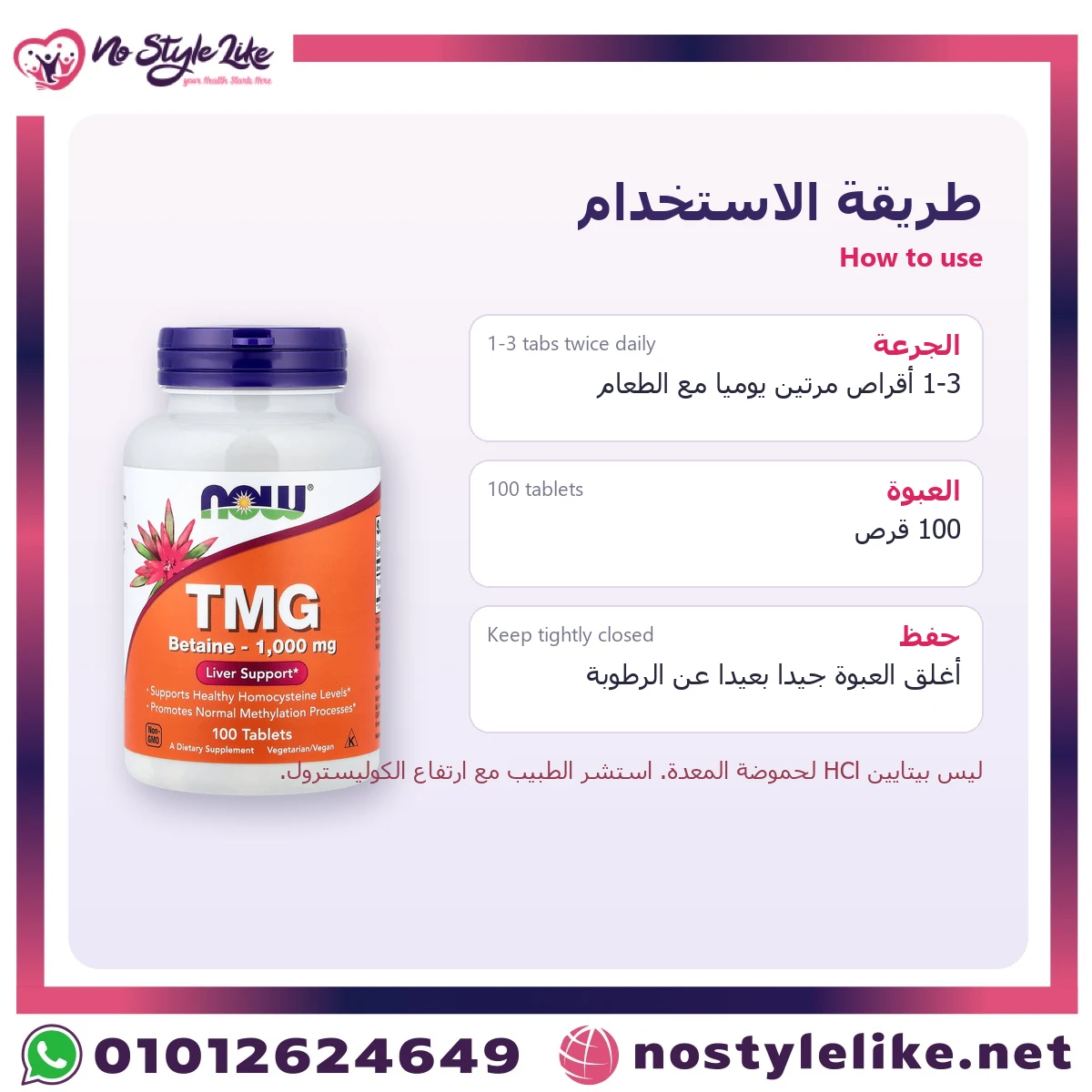
NOW TMG Betaine 1000 mg is a NOW Foods vegan tablet with 1,000 mg of trimethylglycine (betaine anhydrous), a methyl donor that helps convert homocysteine into methionine. Take 1 to 3 tablets twice daily with food. It is not betaine HCl, the stomach acid supplement; it may raise LDL cholesterol at higher doses; and high homocysteine needs a doctor to find the cause first.
Key Facts About NOW TMG Betaine 1000 mg
| Name | NOW TMG Betaine 1,000 mg – 100 Tablets |
| Manufacturer | NOW Foods (USA, family owned since 1968) |
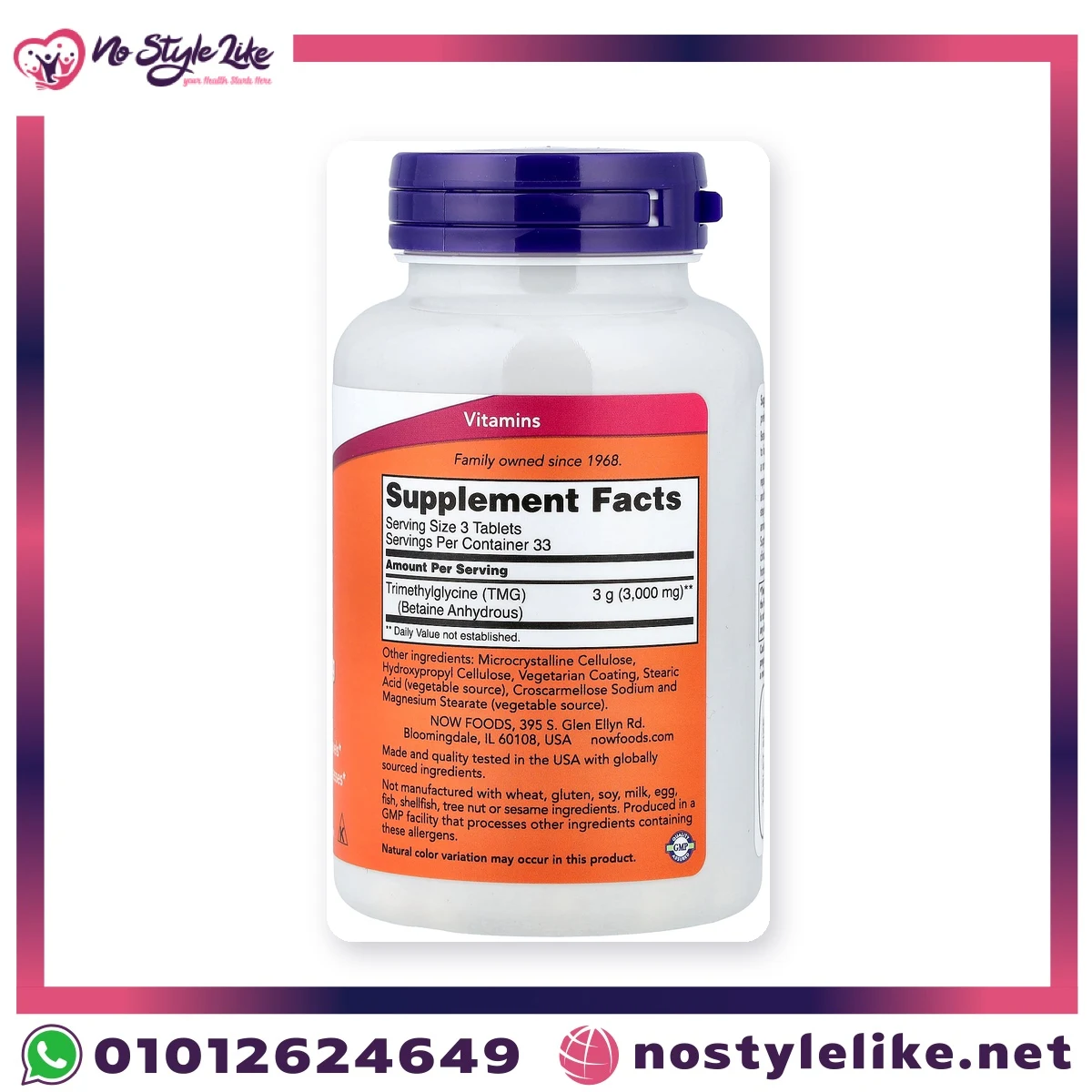
| Active ingredient | Trimethylglycine (TMG, betaine anhydrous) 1,000 mg per tablet; 3,000 mg per 3-tablet serving |
| Quantity | 100 tablets = about 33 servings |
| Form | Vegan tablets |
| Dose | 1 to 3 tablets twice daily, preferably with food |
| Expiry | Printed on the pack |
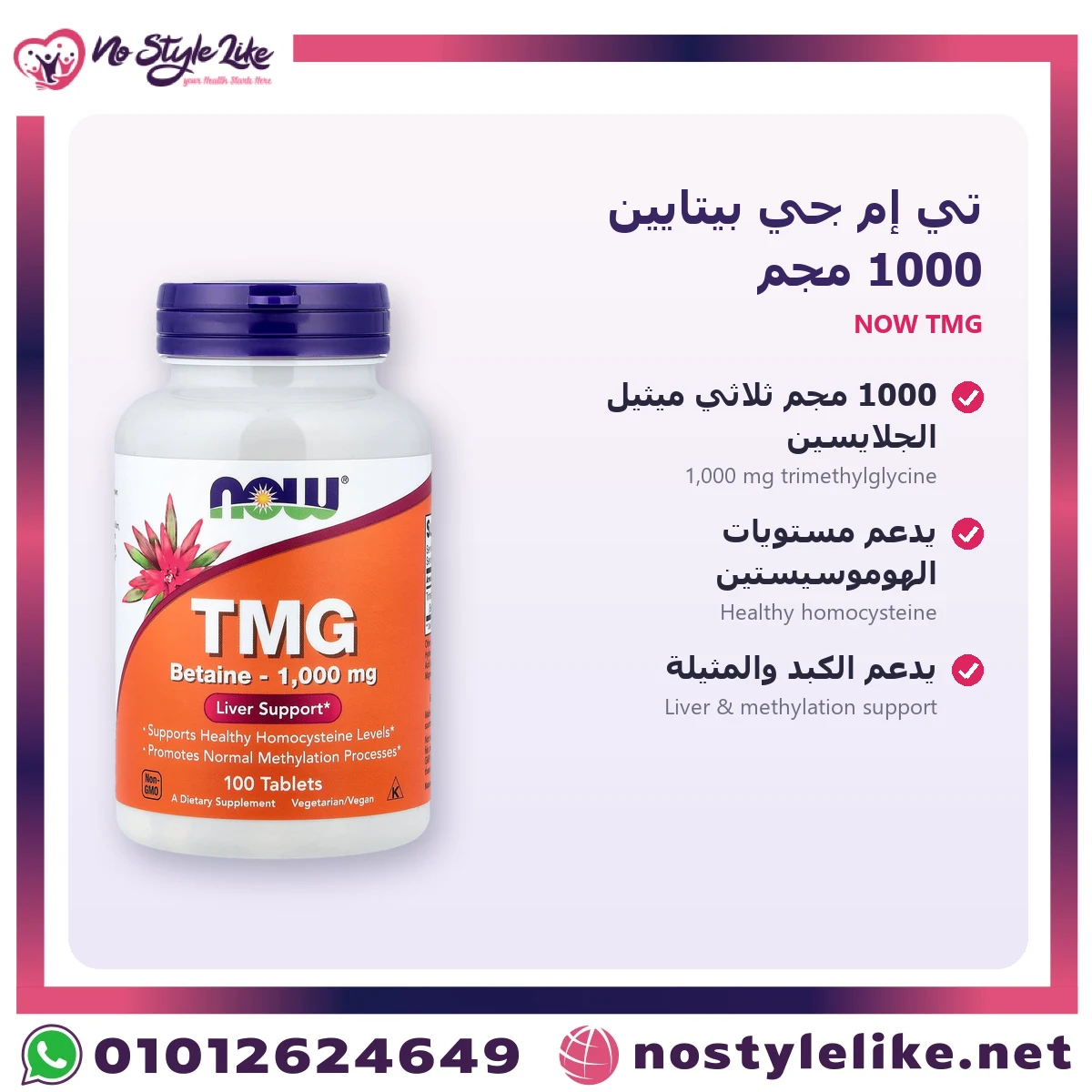
| Use | Supports healthy homocysteine levels, normal methylation and the liver |
Short description: Betaine anhydrous at 1,000 mg per tablet for homocysteine and methylation support, with lipid monitoring and dry storage.
On this page
- Introduction
- What is it?
- Not betaine HCl
- How it works
- Key benefits
- Real-life use cases
- Who is it for?
- Who should avoid it?
- How to use
- Best time
- When do results show?
- Common mistakes
- Myths and facts
- Side effects
- Drug interactions
- Warnings
- Useful checks
- What to pair it with
- Product comparison
- When to see a doctor
- NSL expert tip
- FAQ
- Conclusion
Introduction to NOW TMG Betaine 1000 mg
Homocysteine is an amino acid the body forms while processing methionine, and it should be recycled quickly. When it builds up in the blood, doctors link it with higher heart and blood vessel risk. NOW TMG Betaine 1000 mg was designed for exactly this chemical cycle: it supplies the methyl groups the liver needs to turn homocysteine back into methionine.
Before you buy, three points matter. This is not betaine HCl, the stomach acid supplement. It may raise LDL cholesterol at higher doses. And high homocysteine itself needs a medical search for the cause before any supplement.
What Is NOW TMG Betaine 1000 mg?
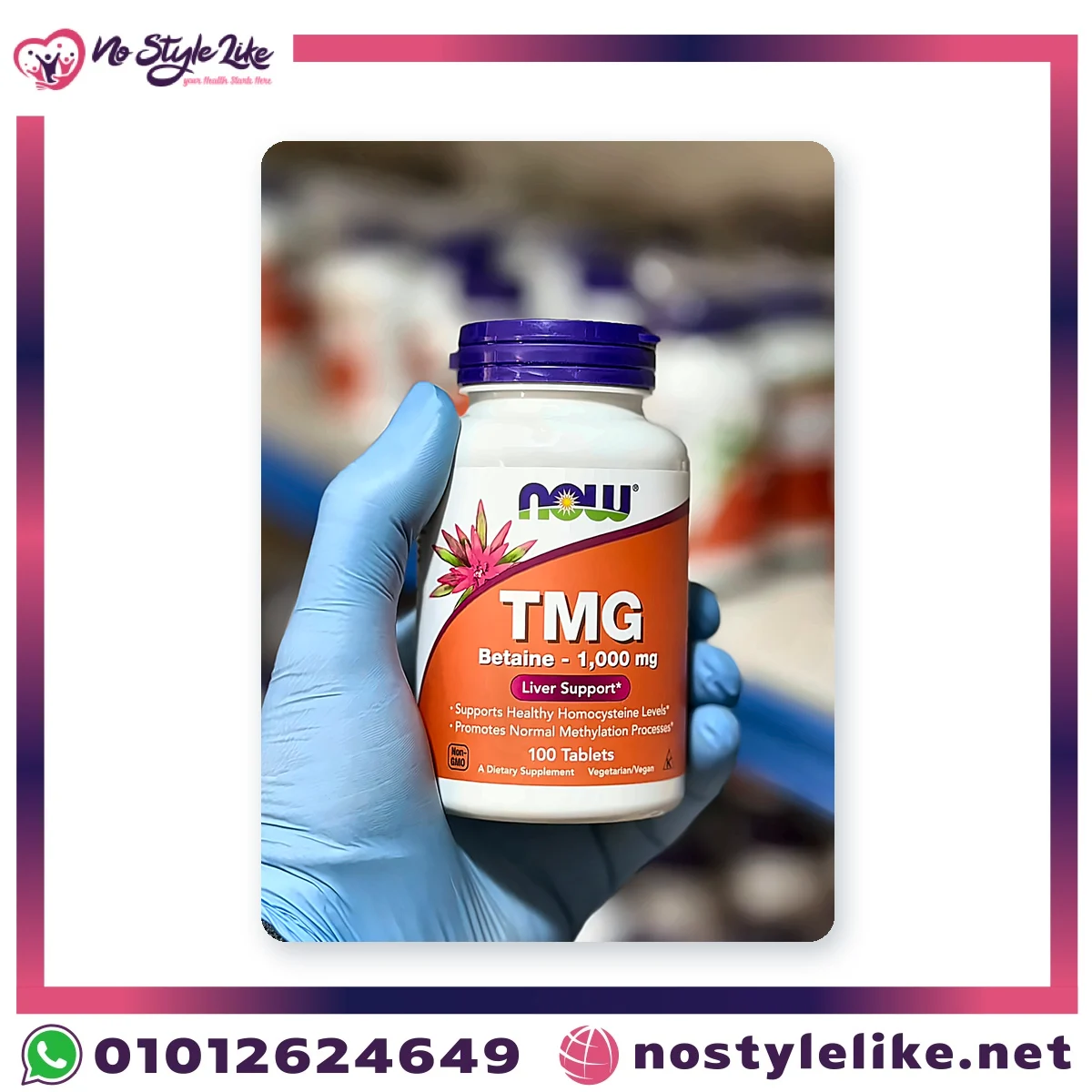
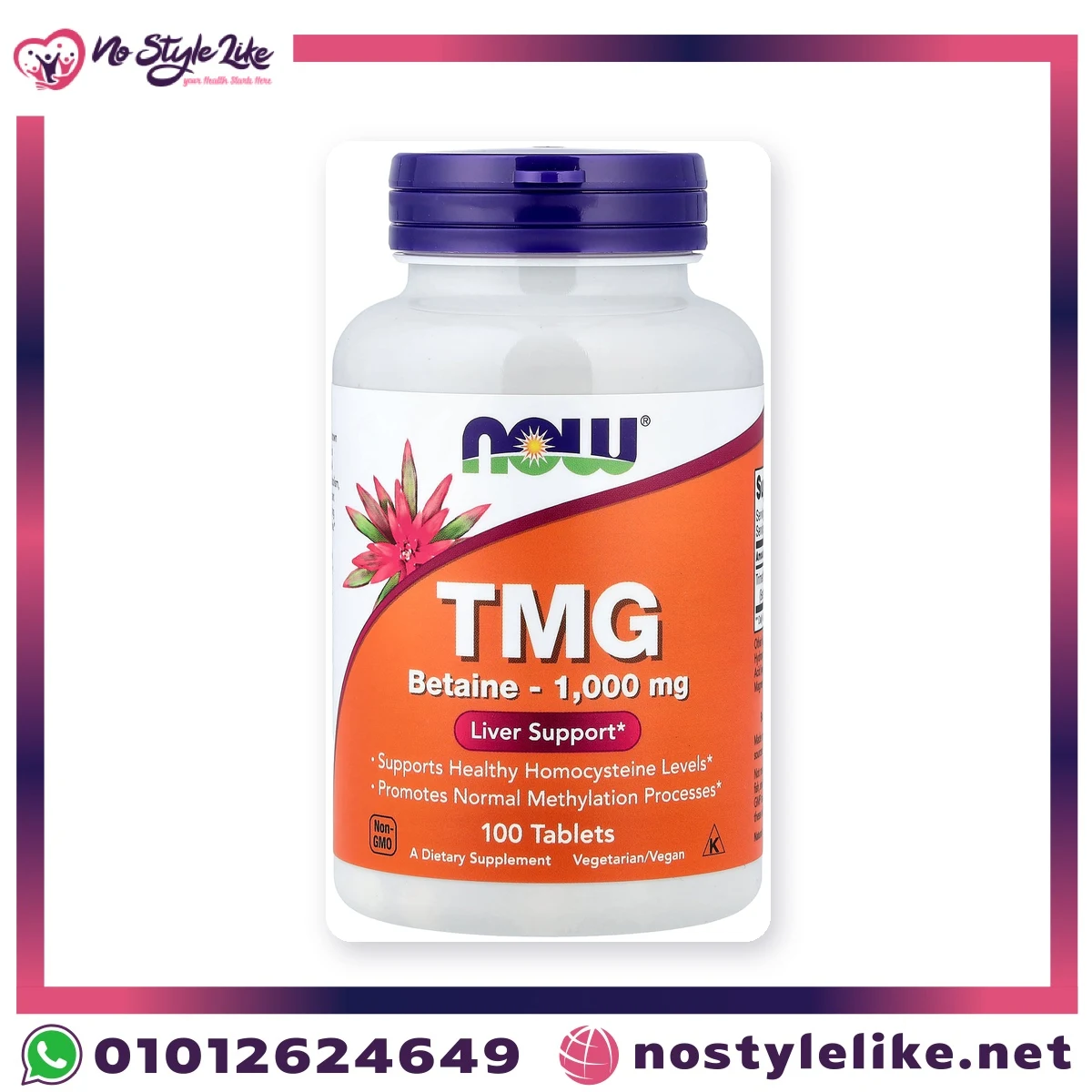
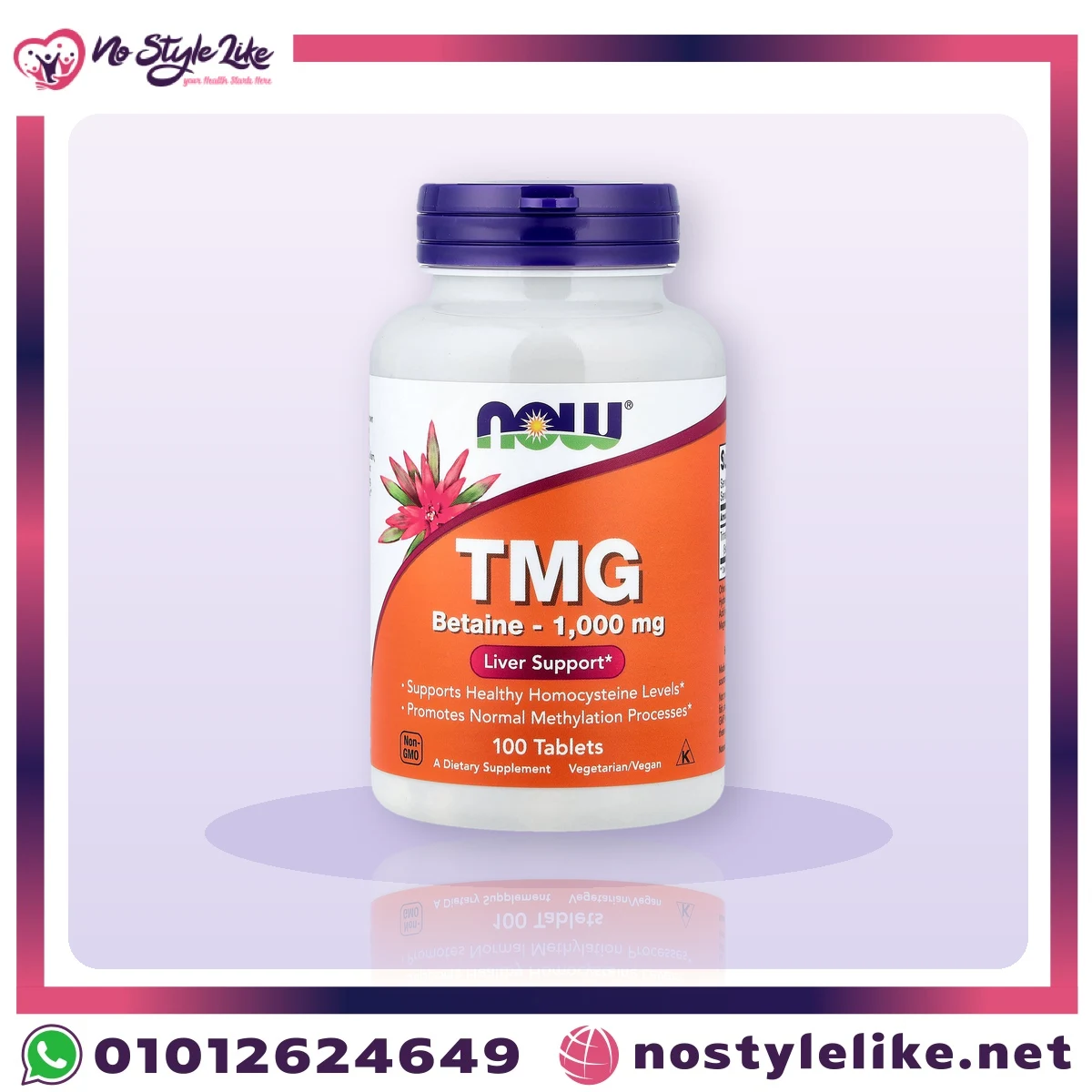
It is a supplement from NOW Foods, a US family-owned company since 1968. Each tablet contains 1,000 mg of trimethylglycine, also called betaine anhydrous. A serving of 3 tablets gives 3,000 mg, and the 100-tablet bottle holds about 33 servings. The tablets are vegan.
The front panel lists four claims: betaine 1,000 mg, liver support, supports healthy homocysteine levels, and promotes normal methylation processes. Betaine occurs naturally in beets, spinach, quinoa and wheat bran, but in far smaller amounts than a supplement dose.
Is NOW TMG Betaine 1000 mg the Same as Betaine HCl?
No, and this is the most important point on the page. Betaine HCl (betaine hydrochloride) is an acidic supplement taken with meals to support stomach acid and digestion, often paired with the enzyme pepsin. NOW TMG Betaine 1000 mg is non-acidic betaine anhydrous. Its job is to donate methyl groups inside the liver and kidneys; it does not raise stomach acid and does not replace digestive supplements.
So never swap one for the other. Someone looking for digestive support will get nothing from TMG, and someone aiming at homocysteine should not use betaine HCl, which can also irritate the stomach in people with ulcers or reflux.
How NOW TMG Betaine 1000 mg Works
A TMG molecule carries three methyl groups. In the liver and kidneys an enzyme called BHMT uses one of them to convert homocysteine into methionine, leaving dimethylglycine behind. This is a backup route that runs alongside the main pathway, which relies on folate and vitamin B12.
Vitamin B6 helps clear homocysteine in a different direction, into cysteine. That is why a shortage of any of these vitamins can raise homocysteine, and the fix is to replace the missing vitamin, not to rely on betaine alone. For a plain-language guide to the causes, read our article on high homocysteine.
Benefits of NOW TMG Betaine 1000 mg According to the Evidence
- Homocysteine: studies using roughly 4 to 6 g a day saw a moderate fall in fasting homocysteine.
- Methylation: it supports the supply of methyl groups needed for many chemical reactions.
- Liver: the front panel mentions liver support; most evidence here comes from animal work and small human studies.
- Exercise: limited research on strength and performance, with inconsistent results.
It is important to know that lowering homocysteine with supplements has not yet been shown to cut heart attacks or strokes. The supplement supports a number on a lab report; it does not treat heart disease.
Real-Life Use Cases
A man in his forties with high homocysteine on a blood test: before buying anything, his doctor ordered vitamin B12, folate, kidney and thyroid tests. They showed low B12, which was treated first; the doctor then added NOW TMG Betaine 1000 mg at a low dose, with a repeat test after two months and a lipid check.
A woman who bought TMG thinking it was for stomach acid: she actually wanted betaine HCl for indigestion. The pharmacist explained the difference and advised her to take the digestive complaint to her doctor first.
Who Is NOW TMG Betaine 1000 mg For?
- Adults whose doctor has advised homocysteine support after the cause was investigated.
- People who want to support methylation as part of a balanced diet.
- Vegans who prefer plant-friendly tablets.
- Anyone able to repeat lipid and homocysteine tests regularly.
Who Should Avoid It or Ask a Doctor First?
- Children; the label is for adults only.
- Pregnant or nursing women, before speaking to a doctor.
- People with high LDL cholesterol or heart disease, unless under medical follow-up.
- People with kidney or liver disease, or anyone on long-term medicines.
- People with inherited homocystinuria: for them betaine is a prescription treatment whose dose and monitoring are set by a specialist, not an everyday supplement.
How to Use NOW TMG Betaine 1000 mg
- Take 1 to 3 tablets twice a day, as the label directs.
- Take them with food to reduce stomach upset.
- Start with 1 tablet twice a day; higher doses are more closely linked with a rise in LDL cholesterol.
- Do not go above 6 tablets a day, the highest amount on the label.
- Close the bottle tightly straight after taking your tablets.
Best Time to Take NOW TMG Betaine 1000 mg
Taking NOW TMG Betaine 1000 mg with breakfast and with dinner is an easy routine that meets the with-food advice and spreads the dose across the day. No time of day has a proven edge; consistency matters more.
When Will You See Results?
You will not feel betaine working; its effect shows up on a lab report, not in how you feel. Studies measured homocysteine after several weeks, so many doctors repeat the test after 8 to 12 weeks, together with a lipid profile.
Common Mistakes
- Confusing TMG with betaine HCl and buying one instead of the other.
- Starting NOW TMG Betaine 1000 mg without knowing why homocysteine is high, such as low B12.
- Jumping to the top dose without checking cholesterol.
- Leaving the bottle open in a bathroom or kitchen; the tablets are very sensitive to moisture.
- Treating a lower lab number as guaranteed protection from heart disease.
Myths and Facts
Myth: NOW TMG Betaine 1000 mg helps digestion like betaine HCl. Fact: TMG is not acidic and does not support stomach acid.
Myth: the higher the dose, the better for the heart. Fact: high doses may raise LDL cholesterol, the opposite of the goal.
Myth: lowering homocysteine prevents clots. Fact: trials have not shown this so far.
Side Effects
Most people tolerate NOW TMG Betaine 1000 mg well, but these can happen:
- Nausea, stomach upset or diarrhea, especially at high doses or on an empty stomach.
- A rise in total and LDL cholesterol, which is noted on the product itself.
- Rarely, an unusual body odor in some people.
Drug Interactions
- Cholesterol medicines: high-dose betaine may work against part of their effect, so tell your doctor.
- Methotrexate, epilepsy medicines and some diabetes drugs such as metformin: these affect folate or B12 and therefore homocysteine, so your doctor needs the full picture.
- Other methylation supplements such as active folate and B12: combining them is possible, but with a clear medical plan.
Warnings
- For adults only; keep out of reach of children.
- Consult a doctor if pregnant or nursing, taking any medicine, or living with a medical condition.
- Very sensitive to moisture: keep the bottle tightly closed with the freshness packet inside, and do not keep tablets in a weekly pill organizer for long.
- Store NOW TMG Betaine 1000 mg in a cool, dry place after opening.
Useful Checks
High homocysteine is a marker, not a diagnosis. A proper medical workup usually covers vitamin B12, folate, vitamin B6, kidney function (creatinine), thyroid function and a review of your medicines. Before and during NOW TMG Betaine 1000 mg, a full lipid profile, especially LDL, is worth doing.
MedlinePlus – Homocysteine Test explains what the test means and how to prepare for it. For heart-friendly diet choices, see omega-3 for heart health.
What to Pair NOW TMG Betaine 1000 mg With
- Folate-rich foods such as leafy greens and legumes.
- Vitamin B12 sources such as meat, eggs and dairy, or a supplement chosen by your doctor if you are vegan.
- Quitting smoking and cutting back on alcohol and excess coffee.
- Regular activity and a diet that keeps blood fats in check.
If you are interested in other heart supplements, see nattokinase benefits and taurine benefits.
How NOW TMG Betaine 1000 mg Compares With Other Heart Products
| Product | Ingredient and dose | Role and key caution |
|---|---|---|
| NOW TMG Betaine 1000 mg | Betaine anhydrous (TMG) 1,000 mg per tablet, 1 to 3 tablets twice daily with food | Methyl donor for homocysteine support; may raise LDL at high doses |
| NOW Flush-Free Niacin 500 mg | Niacin 500 mg from inositol hexanicotinate, 1 capsule a day with a meal | Vitamin B3 in a non-flushing form; weak evidence for cholesterol |
| NOW Taurine 1000 mg | Free-form taurine 1,000 mg per capsule, 1 to 2 times daily between meals | Nerve, heart and eye support; caution with blood pressure drugs and diuretics |
| Nutricost Nattokinase 2000 FU | Nattokinase 100 mg (2,000 FU) per capsule, 1 capsule a day | Fibrinolytic enzyme; not with blood thinners or before surgery |
| Nutricost Vitamin K2 D3 | Vitamin K2 (MK-7) 100 mcg + D3 5,000 IU, 1 softgel a day with a fatty meal | High-dose D3 that needs a blood test; interacts with warfarin |
Betaine is the only product in this list aimed at homocysteine and methylation. Taurine focuses on nerves and the heart, niacin is vitamin B3, and nattokinase and vitamin K2 with D3 both carry cautions with blood thinners.
When to See a Doctor
- Before starting if you have high homocysteine, to find the cause.
- If LDL rises on a follow-up test.
- During pregnancy or breastfeeding, or with any chronic illness.
- With numbness, severe tiredness or anemia, which may point to low B12.
- With chest pain or signs of a stroke, which is an emergency.
NSL Expert Tip
From the No Style Like pharmacy team: do not buy NOW TMG Betaine 1000 mg on the strength of a homocysteine number alone. Find the cause first, because low B12 or folate is common and is treated differently. If your doctor chooses betaine, start at the lowest dose with food and repeat homocysteine and lipids after two to three months. And close the bottle straight away with the freshness packet inside, because moisture ruins these tablets.
NOW TMG Betaine 1000 mg FAQ
What is the difference between TMG and betaine HCl?
TMG is betaine anhydrous, a methyl donor for homocysteine support. Betaine HCl is an acidic supplement for stomach acid and digestion. Neither replaces the other.
How many tablets should I take?
1 to 3 tablets twice a day with food; starting low is best.
Does NOW TMG Betaine 1000 mg raise cholesterol?
It may raise LDL at higher doses, so a lipid test before and during use is sensible.
Does it replace vitamin B12 or folate?
No. If a vitamin shortage is the cause, it must be corrected first.
Why is there a small packet in the bottle?
It is a freshness packet that absorbs moisture. Leave it in, because the tablets are very moisture sensitive.
What is the expiry date?
The expiry date is printed on the pack.
Conclusion
NOW TMG Betaine 1000 mg gives 1,000 mg of betaine anhydrous per tablet, taken as 1 to 3 tablets twice daily with food, to support homocysteine and methylation. It is not betaine HCl, it may raise LDL cholesterol at higher doses, and high homocysteine needs a medical search for its cause. Keep the bottle closed with its freshness packet. Order it today from No Style Like Pharmacy with delivery across Egypt.
Reviewed by the No Style Like Pharmacy content team. This information is for educational purposes only.
Read the label and follow the pack or your doctor’s directions; this content does not replace medical advice. Learn more at MedlinePlus – Homocysteine Test.

Reviews
There are no reviews yet.