


Too Much Iodine: 7 Risks, Warning Signs and Who Is Most Sensitive
Why Too Much Iodine Is a Real Concern
Many people think that if iodine is good for the thyroid, more must be better. In fact, too much iodine can disturb the same gland it is meant to support. This often happens when people combine kelp, high-dose iodine capsules, multivitamins and iodised salt without adding up the total. Here are 7 risks of excess iodine and how to stay safe.
1. Too Much Iodine Can Cause Hypothyroidism
When the thyroid receives a large iodine load, it can temporarily slow hormone production. This protective response is called the Wolff-Chaikoff effect. Most healthy glands escape it within days, but in people with Hashimoto’s thyroiditis, older adults or those with a past thyroid problem, it may persist and cause an underactive thyroid. Read more in iodine for thyroid. Signs can include tiredness, feeling cold, dry skin, constipation and weight gain, which develop slowly and are easy to miss.
2. Too Much Iodine Can Also Cause Hyperthyroidism
In the opposite reaction, called the Jod-Basedow phenomenon, extra iodine gives fuel to overactive thyroid tissue. This is more likely in people with nodules, a long-standing goitre, latent Graves’ disease or older adults who lived in iodine-deficient areas. Symptoms include palpitations, weight loss, tremor and heat intolerance.
3. Goitre
Strange as it sounds, both low and very high iodine intake can enlarge the thyroid gland. A swelling in the front of the neck always needs a medical check. Long-term too much iodine from seaweed-rich diets has been linked to goitre in some coastal populations, which shows that more is not always better.
4. Thyroiditis
High iodine intake has been linked to inflammation of the thyroid and to worsening of autoimmune thyroid disease in susceptible people.
5. Other Effects of Too Much Iodine
- A metallic taste, mouth or throat burning and extra saliva.
- Stomach upset, nausea or diarrhoea.
- Skin rash or acne-like spots in some people.
- Very large overdoses are rare but can be serious and need emergency care.
6. Drug Interactions
- Levothyroxine: extra iodine can change thyroid function and make dose control harder.
- Antithyroid drugs such as methimazole: iodine may change their effect.
- Lithium: combining it with iodine may increase the risk of hypothyroidism.
- Amiodarone: it already contains a lot of iodine.
- Potassium-sparing diuretics and ACE inhibitors: potassium iodide may raise blood potassium.
7. Heavy Metals in Seaweed
Seaweeds can absorb arsenic and other heavy metals from sea water. Choose trusted brands and avoid large amounts of dried seaweed or several seaweed products at once.
How Too Much Iodine Happens in Practice
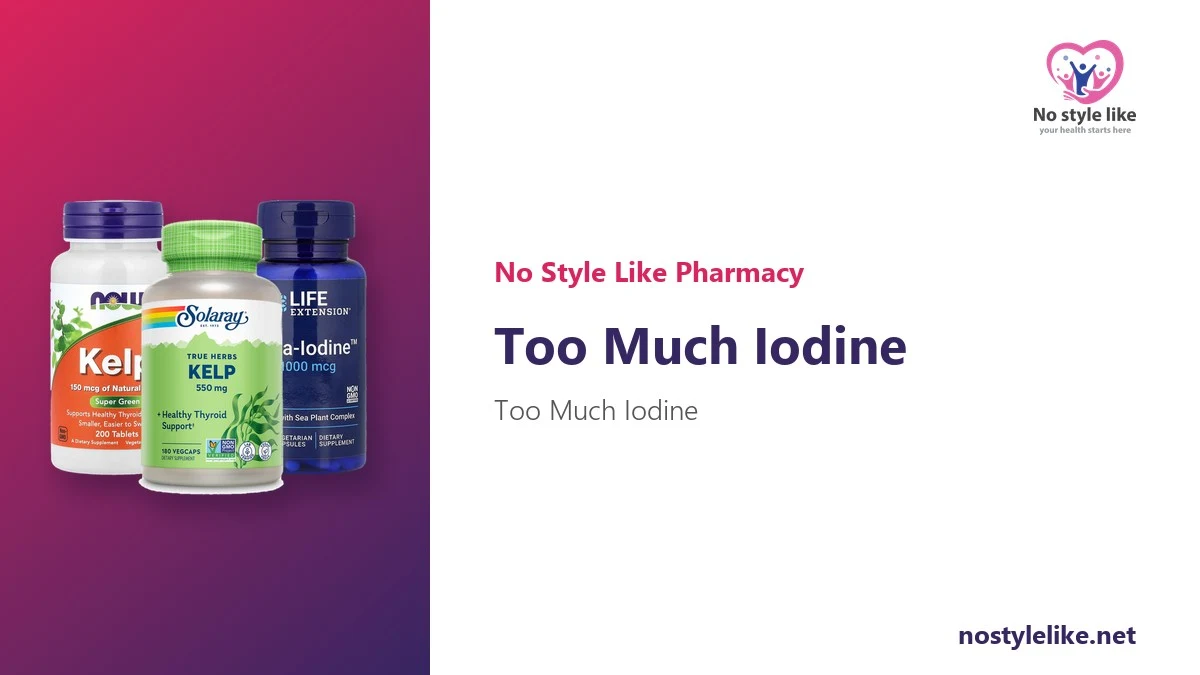
The adult upper limit is 1,100 mcg a day from all sources. For example, Life Extension Sea-Iodine gives 1,000 mcg per capsule, so adding food and iodised salt can take the total over the limit. Solaray Kelp 550 mg does not state its iodine amount, and Solaray warns against use with a hyperthyroid condition or for excessive or long-term use. A measured product such as NOW Kelp 150 mcg, at 150 mcg per tablet, is easier to keep within limits. Full numbers are in iodine dosage.
Who Is Most Sensitive to Too Much Iodine?
- People with Hashimoto’s thyroiditis or Graves’ disease.
- People with thyroid nodules or goitre.
- Older adults.
- Pregnant and breastfeeding women and newborns.
- Anyone on the medicines listed above.
When to See a Doctor
See a doctor if you notice palpitations, unexplained weight change, tiredness, feeling cold or hot, a neck swelling or a change in your voice after starting iodine or kelp. Stop the supplement and ask for thyroid function tests. Our article on selenium and thyroid also explains other nutrients that affect the gland.
Frequently Asked Questions About Too Much Iodine
Can food alone give too much iodine?
It is uncommon with a normal Egyptian diet, but eating a lot of dried seaweed can do it.
Are the effects of too much iodine permanent?
Often they improve after stopping the excess, but some people, especially those with autoimmune thyroid disease, may need treatment.
Is kelp safer than iodine tablets?
Not always, because kelp iodine varies. Read about kelp benefits to choose wisely.
Conclusion
Too much iodine can cause hypothyroidism, hyperthyroidism, goitre or thyroiditis, especially in people with Hashimoto’s, nodules, Graves’ disease and older adults. Keep your total under 1,100 mcg a day, add up all sources and talk to your doctor before taking high-dose iodine.
This article was reviewed by the No Style Like pharmacy content team. It is for general awareness only and does not replace advice from your doctor or pharmacist.
If you have a thyroid condition or take thyroid medicines, ask your doctor before using any iodine or kelp supplement. For more information see the NIH Office of Dietary Supplements iodine fact sheet.