


Low Potassium: 6 Symptoms, Causes, Diagnosis and Safe Treatment
What Is Low Potassium?
Low potassium, called hypokalaemia, means a blood level below about 3.5 mmol/L. Potassium is essential for muscle contraction, nerve signals and a steady heartbeat. A mild drop may cause no symptoms at all, while a severe one can need urgent hospital treatment.
6 Symptoms of Low Potassium
- General weakness and tiredness.
- Muscle cramps and spasms, especially in the legs.
- Palpitations or an irregular heartbeat.
- Constipation and bloating.
- Tingling or numbness in the hands and feet.
- In severe cases: muscle paralysis or dangerous heart rhythm problems.
These symptoms are not specific. Dehydration, stress or thyroid disease can cause similar complaints, so a deficiency cannot be diagnosed from symptoms alone; it needs a blood test and follow-up with a doctor.
Causes of Low Potassium
A diet low in potassium is rarely the only cause. Most often the body is losing it:
- Diuretics (water pills) such as furosemide and hydrochlorothiazide.
- Repeated vomiting or diarrhoea.
- Overuse of laxatives.
- Low magnesium, which makes potassium hard to correct.
- Some kidney and adrenal disorders, and high doses of certain asthma medicines.
How Is It Diagnosed?
A simple blood test as part of an electrolyte panel makes the diagnosis. Your doctor may also order an ECG, kidney function tests and a magnesium level, and sometimes a urine test to find where potassium is being lost. Do not start high-dose potassium on a suspicion of low potassium alone.
Treating Low Potassium Safely
True hypokalaemia is treated by a doctor, who may prescribe potassium salts at therapeutic doses by mouth, or intravenously in hospital for severe cases, while treating the cause, for example by adjusting a diuretic or replacing magnesium.
Over-the-counter potassium supplements in the US are capped at about 99 mg per tablet for safety. A tablet of NOW Potassium Gluconate gives 99 mg of elemental potassium from 619 mg of potassium gluconate, only 2% of the daily value. The label says 1 tablet 1 to 5 times daily in separate servings, with food and at least 8 oz of water. It is a small dietary top-up, not a treatment for confirmed low potassium.
The Opposite Danger: High Potassium
High blood potassium (hyperkalaemia) can be more dangerous than a deficiency because it can trigger a sudden heart rhythm problem. The risk rises with:
- Chronic kidney disease.
- ACE inhibitors such as captopril and ARBs such as losartan.
- Potassium-sparing diuretics such as spironolactone.
- NSAID painkillers such as ibuprofen and diclofenac.
- The antibiotic trimethoprim.
- Salt substitutes that contain potassium chloride.
Anyone taking these medicines, or living with diabetes, heart disease or kidney disease, should only use potassium supplements after talking to a doctor.
Food Sources of Potassium
Eating well is the best way to prevent low potassium. Adults need about 2,600 mg a day for women and 3,400 mg for men, and food is the main source:
| Food | Amount | Potassium (approx.) |
|---|---|---|
| Baked potato with skin | 1 medium | 900 mg |
| Cooked lentils or fava beans | 1 cup | 600 to 730 mg |
| Cooked molokhia (jute leaves) | 1 cup | 450 to 500 mg |
| Banana | 1 medium | 420 mg |
| Dates | About 5 large | 650 to 800 mg |
| Tomato | 1 medium | 290 mg |
Figures are approximate and vary with size and cooking method. Boiling vegetables in lots of water and throwing the water away removes some potassium. One baked potato provides about as much as 9 supplement tablets. Easy daily habits include adding a dish of beans or molokhia at lunch and choosing fresh fruit over sweetened juice.
Other Minerals and Low Potassium
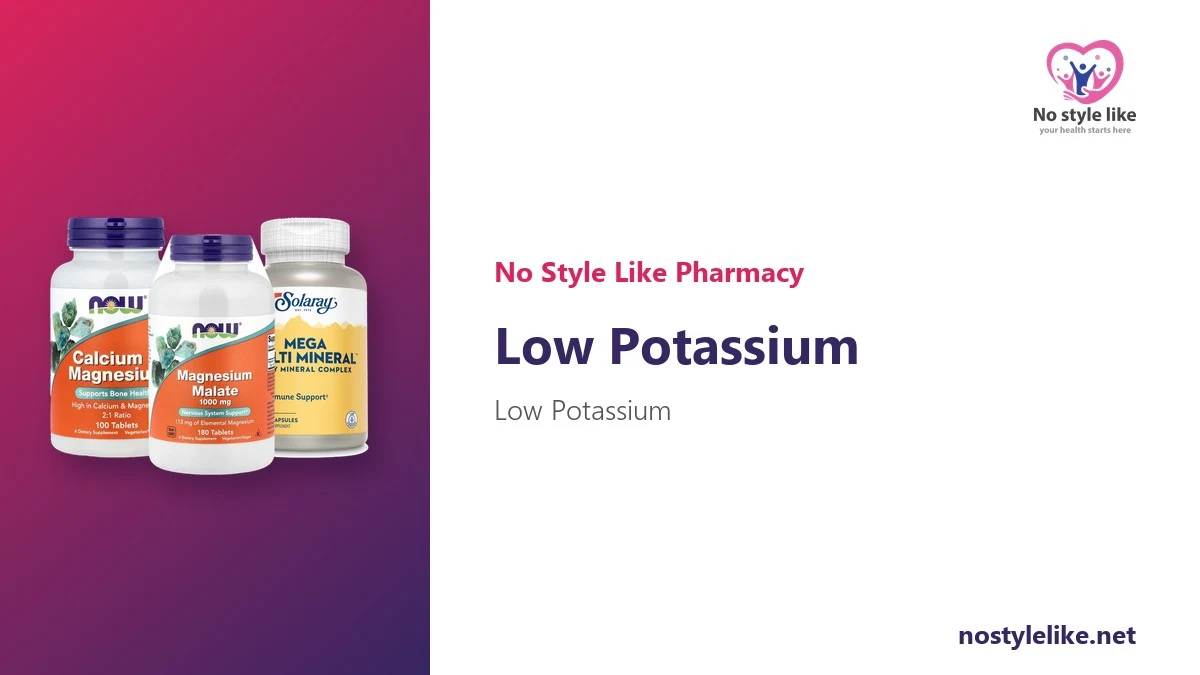
Magnesium matters when correcting a potassium deficit. If you need it, there is NOW Magnesium Malate; read magnesium malate and magnesium taurate. NOW Calcium & Magnesium is aimed at bone health; read calcium and magnesium. Solaray Mega Multi Mineral gives only 59 mg of potassium in 4 capsules, so it will not correct a deficiency.
When to Go to the Emergency Department
- Severe palpitations or fainting.
- Sudden, severe muscle weakness.
- Ongoing vomiting or diarrhoea with weakness.
Frequently Asked Questions About Low Potassium
Are bananas enough to fix low potassium?
They help with prevention and mild cases, but a confirmed deficiency needs treatment set by a doctor.
Can blood pressure medicines affect potassium?
Some diuretics lower it, while other blood pressure drugs raise it, so regular blood tests are needed.
Are night cramps a sign of a deficiency?
Not always. They have many other causes, and a blood test is the only way to know.
Conclusion
Low potassium is diagnosed with a blood test and treated by a doctor, who corrects the cause and replaces potassium at the right dose. Food is the main source, and 99 mg supplements are only a small top-up, with special caution for people with kidney disease or on medicines that raise potassium. You can find NOW Potassium Gluconate at No Style Like pharmacy.
This article was reviewed by the No Style Like pharmacy content team. It is for general awareness only and does not replace advice from your doctor or pharmacist.
Do not use potassium supplements with kidney disease or the medicines listed above without medical advice. For more information see the MedlinePlus page on low blood potassium.