


Nattokinase Benefits: 5 Evidence Points and Key Bleeding Risks
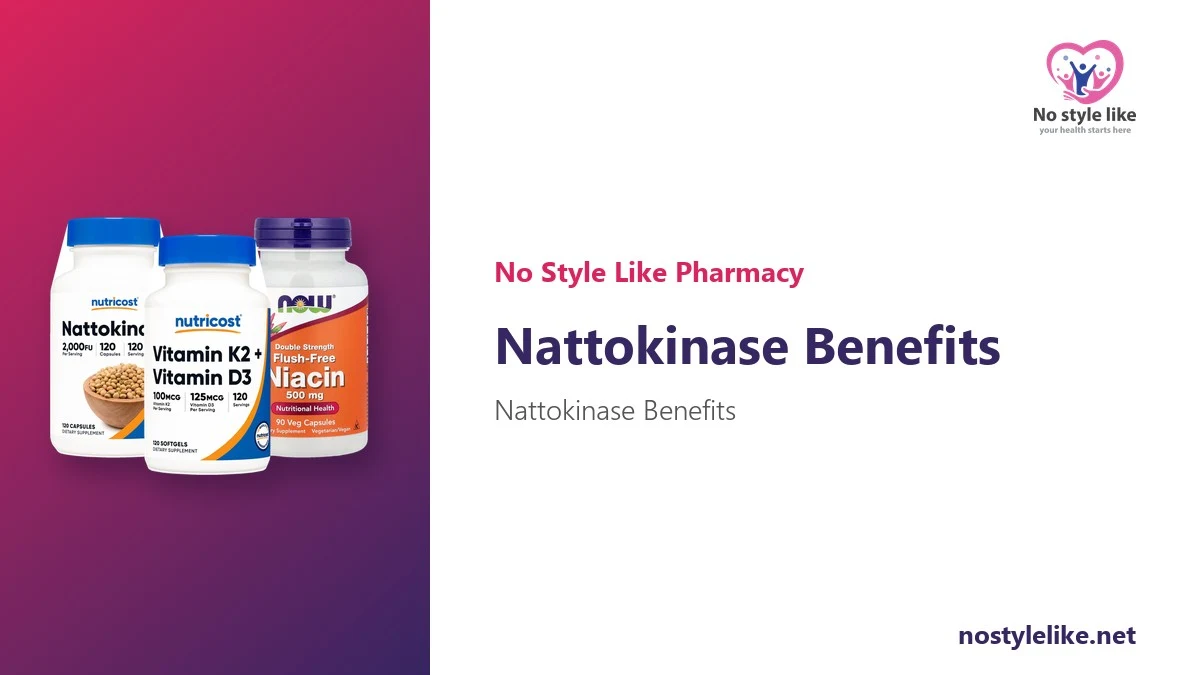
Nattokinase Benefits: What the Evidence Really Says
Nattokinase is an enzyme produced when soybeans are fermented with the bacterium Bacillus subtilis to make natto, a traditional Japanese food. It is promoted online for circulation, blood pressure and even “dissolving clots”. The real nattokinase benefits are far more limited, and the safety concerns are serious, because this enzyme affects how blood clots. This guide reviews the evidence and explains who must not take it.
What Is Nattokinase?
Nattokinase is a protein-digesting enzyme, and understanding how it works explains both the claimed nattokinase benefits and the risks. Its strength is measured in fibrinolytic units (FU), which describe its ability to break down fibrin, the protein mesh that holds a blood clot together. Nutricost Nattokinase 2000 FU provides 100 mg of nattokinase, equal to 2,000 FU, in each capsule. The label suggests 1 capsule daily with 250 to 350 ml of water, for healthy adults 18 and over. It is derived from soy and should be kept away from light.
5 Nattokinase Benefits Studied So Far
Most research is from lab work, animal studies and small, short human trials. Treat these nattokinase benefits as early signals, not proven effects.
- Fibrinolytic activity. In the lab, nattokinase breaks down fibrin directly and may affect factors that regulate clot breakdown. This is the basis of most claims.
- Blood clotting markers. Small human studies reported changes in markers such as fibrinogen and factor VII after single or repeated doses. Changes in a lab marker do not prove fewer clots or strokes.
- Blood pressure. A few small trials, mainly in people with high-normal or mild high blood pressure, reported modest drops over about 8 weeks. Results were not consistent across studies.
- Atherosclerosis. Some small studies suggested slower growth of artery plaque, but a larger US trial in healthy older adults found no meaningful effect on artery wall thickening over three years.
- Cholesterol. Data are mixed and weak, so this is not among the established nattokinase benefits.
In short, nattokinase benefits are plausible but unproven. Nattokinase is not a treatment for high blood pressure, heart disease, deep vein thrombosis, pulmonary embolism or stroke.
Safety First: Bleeding Risk and Who Must Avoid It
This is the most important section. Because nattokinase reduces the blood’s ability to form and keep clots, any nattokinase benefits must be weighed against bleeding risk.
- Anticoagulants: never combine it with warfarin, acenocoumarol (Sintrom), apixaban, rivaroxaban, dabigatran or heparin. The bleeding risk adds up.
- Antiplatelets: avoid it with aspirin, clopidogrel, ticagrelor or prasugrel unless your cardiologist agrees, which is rare.
- Painkillers: regular ibuprofen, diclofenac or other NSAIDs also raise bleeding risk.
- Surgery and dental procedures: stop it at least two weeks before planned surgery, a tooth extraction or an endoscopy with biopsy, and tell your surgeon.
- Bleeding disorders: avoid it with haemophilia, low platelets, a stomach ulcer, recent bleeding or a past brain bleed.
- Soy allergy, pregnancy and breastfeeding: do not use it.
Never use nattokinase to treat a suspected clot or stroke. Sudden weakness of one side, slurred speech, chest pain, breathlessness or a swollen painful leg need emergency care straight away. Stopping a prescribed blood thinner to switch to a supplement can be fatal.
Nattokinase, Vitamin K2 and Warfarin
Natto as a food is very rich in vitamin K2, which works against warfarin, while the purified enzyme acts in the opposite direction by thinning the blood. This is why people on warfarin should neither eat large amounts of natto nor take nattokinase. The same caution applies to Nutricost Vitamin K2 D3, which gives 100 mcg of K2 as MK-7 with 5,000 IU of D3 per softgel. Read more in vitamin K2 and warfarin.
How to Use the Product
| Item | Detail |
|---|---|
| Per capsule | Nattokinase 100 mg (2,000 FU) |
| Serving size | 1 capsule, 120 servings per bottle |
| How to take | 1 capsule daily with 250 to 350 ml of water |
| Contains | Soy |
| Who for | Healthy adults 18+ who take no blood thinners |
Kept to this dose, possible side effects still matter more than any nattokinase benefits. They include nosebleeds, easy bruising, bleeding gums and stomach upset. Stop it and see a doctor if you notice black stools, blood in urine or unusual bruising.
Nattokinase Benefits Within the Wider Heart Picture
Any nattokinase benefits are small next to the basics. Proven heart protection comes from controlling blood pressure, cholesterol and blood sugar, not smoking, and staying active. For diet-based support, see omega-3 for heart health. You can also read about high homocysteine and taurine benefits. Heart-related products available at No Style Like:
- Nutricost Nattokinase 2000 FU: 100 mg of nattokinase (2,000 fibrinolytic units) per capsule from fermented soybean; 1 capsule daily with water. Contains soy; not for people on blood thinners.
- NOW TMG Betaine 1000 mg: 1,000 mg of trimethylglycine (betaine anhydrous) per tablet; 1 to 3 tablets twice daily with food. Not the same as betaine HCl.
- NOW Taurine 1000 mg: 1,000 mg of free-form taurine per capsule; 1 capsule once or twice daily with water or juice, preferably between meals.
- Nutricost Vitamin K2 D3: 5,000 IU (125 mcg) of vitamin D3 plus 100 mcg of vitamin K2 as MK-7 per softgel; 1 softgel daily with a meal containing fat. Interferes with warfarin.
- NOW Flush-Free Niacin 500 mg: 500 mg niacin plus 122 mg inositol per capsule, from 549 mg inositol hexanicotinate; 1 capsule daily with a meal. Not a cholesterol treatment.
Do not stack several blood-affecting supplements together, and review any of them with your pharmacist if you take regular medicines.
Frequently Asked Questions About Nattokinase Benefits
Can nattokinase replace aspirin or my blood thinner?
No. Nattokinase benefits have not been tested against these medicines for preventing heart attacks or strokes, and combining them raises bleeding risk.
Does it dissolve existing clots?
There is no reliable human evidence for this, and it is not one of the nattokinase benefits shown in people. A suspected clot is a medical emergency.
Can I take it for high blood pressure?
Small studies showed modest effects at best. Keep taking your prescribed medicine and ask your doctor before adding anything.
Is eating natto the same?
Natto contains the enzyme but also large amounts of vitamin K2, so its effects differ from the supplement.
Conclusion
Nattokinase benefits rest on lab findings and small human studies of clotting markers and blood pressure, not on proof of fewer heart attacks or strokes. Its blood-thinning action makes it unsuitable with anticoagulants, antiplatelets, bleeding disorders or upcoming surgery. If you are a healthy adult and your doctor agrees, Nutricost Nattokinase is available at No Style Like Pharmacy.
This article was reviewed by the No Style Like pharmacy content team. It is for general awareness only and does not replace advice from your doctor or pharmacist.
Nattokinase is not a treatment for clots, stroke or heart disease, and must not be combined with blood thinners. For more information see the Memorial Sloan Kettering nattokinase monograph.