


High Homocysteine: 7 Causes, Testing and the Role of B Vitamins and TMG
What Does High Homocysteine Mean?
Homocysteine is an amino acid made in the body when it processes methionine, which comes from protein in food. Normally it is quickly recycled with the help of vitamin B12, folate, vitamin B6 and a compound called betaine. When this recycling slows, levels in the blood rise. High homocysteine is linked in observational studies with heart disease, stroke and blood clots, but as this guide explains, lowering the number has not clearly prevented those events.
How Homocysteine Is Recycled
The body clears homocysteine through two main routes. In the first, folate and vitamin B12 help add a methyl group to turn it back into methionine; betaine (TMG) can donate that methyl group through a second route, mainly in the liver and kidneys. In the third route, vitamin B6 helps convert it into cysteine. A shortage in any of these helpers can lead to high homocysteine.
7 Common Causes of High Homocysteine
- Vitamin B12 deficiency. Common in vegetarians, older adults, people with gastritis or after stomach surgery, and in long-term metformin or acid-reducing medicine users.
- Folate deficiency. Linked with low intake of leafy greens and legumes, heavy alcohol use and some medicines such as methotrexate.
- Vitamin B6 deficiency. Less common, but seen with poor diet and certain medicines.
- MTHFR gene variants. The common C677T variant can raise levels mainly when folate intake is low. Having the variant alone is not a disease.
- Kidney disease. Reduced kidney function is one of the strongest causes of high homocysteine.
- Hypothyroidism. An underactive thyroid can raise levels, which often fall with thyroid treatment.
- Lifestyle and medicines. Smoking, heavy coffee and alcohol intake, and drugs such as some anti-seizure medicines may contribute.
Rare inherited disorders such as homocystinuria cause very high levels from childhood and need specialist care.
Testing for High Homocysteine
A simple blood test measures total homocysteine, ideally after an overnight fast. Many labs consider about 5 to 15 micromoles per litre normal. If the result is raised, a doctor will usually check vitamin B12, folate, kidney function and thyroid tests to find the cause, because treating the cause matters more than the number itself.
| Level (micromol/L) | Usual interpretation |
|---|---|
| Below 15 | Generally normal (lab ranges vary) |
| 15 to 30 | Mildly raised, look for vitamin, kidney or thyroid causes |
| 30 to 100 | Moderately raised, needs medical review |
| Above 100 | Severe, may suggest an inherited disorder |
B Vitamins, TMG and High Homocysteine
When a deficiency is found, B12, folic acid and sometimes B6 lower homocysteine effectively, and correcting a B12 deficiency also protects the nerves and blood. Betaine is another option. NOW TMG Betaine 1000 mg provides 1,000 mg of trimethylglycine (betaine anhydrous) per tablet; the label suggests 1 to 3 tablets twice daily, preferably with food. TMG donates a methyl group that turns homocysteine into methionine. It is used as a medicine for homocystinuria, and in smaller amounts as a supplement.
Do not confuse TMG with betaine HCl, which is an acid supplement for digestion and does not serve this purpose. High doses of betaine may raise LDL cholesterol, so check your lipids if you take it long term. The tablets are very sensitive to moisture, so keep the bottle tightly closed with its freshness packet.
Does Lowering High Homocysteine Prevent Heart Attacks?
This is the key point. Several large randomized trials, including HOPE-2, NORVIT and VITATOPS, gave B vitamins to people with heart or vascular disease. Homocysteine fell, but heart attacks and overall heart events did not clearly decrease. Some analyses suggested a small reduction in stroke, mainly in regions without folic acid fortification. So high homocysteine looks more like a marker of risk than a proven target, and supplements are not a substitute for treating blood pressure, cholesterol, diabetes and smoking.
Other Heart Supplements and Where They Fit
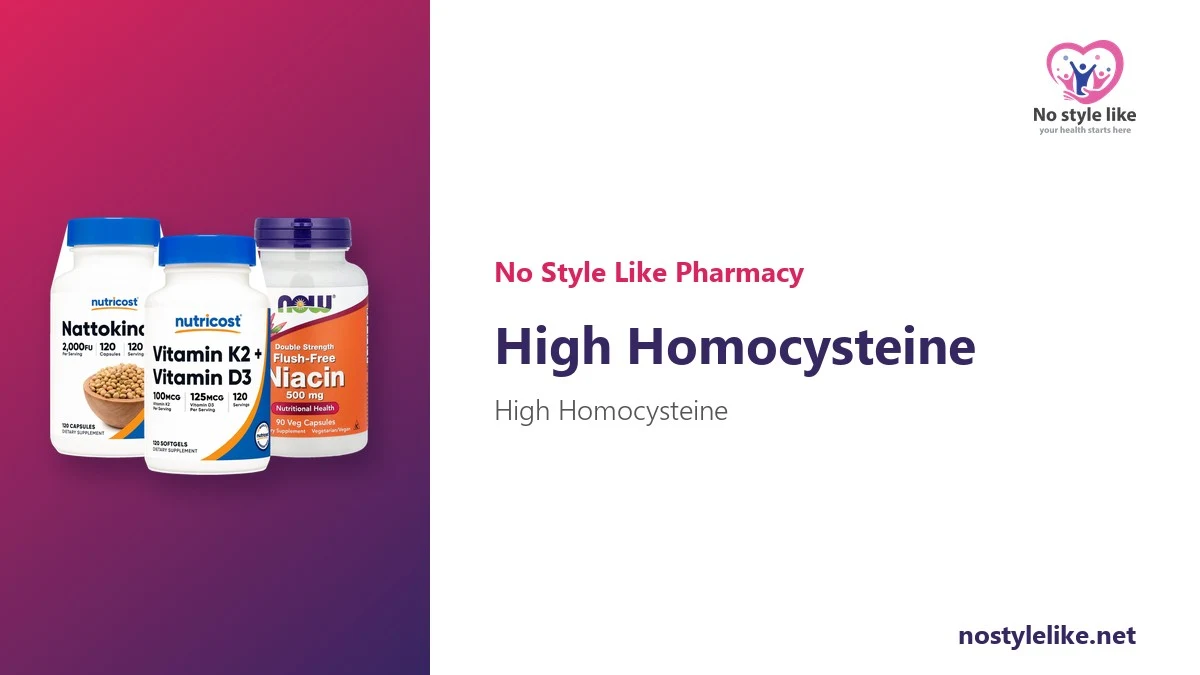
Some people with high homocysteine also ask about other heart supplements. Read nattokinase benefits for the safety issues of blood-thinning enzymes, and taurine benefits for the evidence on this amino acid. For cholesterol, see niacin vs niacinamide. Available at No Style Like:
- Nutricost Nattokinase 2000 FU: 100 mg of nattokinase (2,000 fibrinolytic units) per capsule from fermented soybean; 1 capsule daily with water. Contains soy; not for people on blood thinners.
- NOW TMG Betaine 1000 mg: 1,000 mg of trimethylglycine (betaine anhydrous) per tablet; 1 to 3 tablets twice daily with food. Not the same as betaine HCl.
- NOW Taurine 1000 mg: 1,000 mg of free-form taurine per capsule; 1 capsule once or twice daily with water or juice, preferably between meals.
- Nutricost Vitamin K2 D3: 5,000 IU (125 mcg) of vitamin D3 plus 100 mcg of vitamin K2 as MK-7 per softgel; 1 softgel daily with a meal containing fat. Interferes with warfarin.
- NOW Flush-Free Niacin 500 mg: 500 mg niacin plus 122 mg inositol per capsule, from 549 mg inositol hexanicotinate; 1 capsule daily with a meal. Not a cholesterol treatment.
Frequently Asked Questions About High Homocysteine
Should everyone test their homocysteine?
No. It is usually tested when B12 or folate deficiency is suspected, after unexplained clots, or in certain specialist settings.
Do I need methylfolate if I have an MTHFR variant?
Ordinary folic acid lowers homocysteine in most people with the variant. Ask your doctor before using high doses of any form.
Can high homocysteine be lowered with diet?
Eating leafy greens, legumes, eggs, fish and whole grains helps supply folate, B6, B12 and betaine.
Is TMG safe with kidney disease?
Ask your nephrologist first, as kidney disease changes how betaine and homocysteine are handled.
Conclusion
High homocysteine usually points to low B12, folate or B6, kidney disease, an underactive thyroid or genetic factors. A blood test and a search for the cause come first. B vitamins and TMG lower the level, but trials did not show clear protection from heart attacks, so focus on proven heart care too. NOW TMG Betaine is available at No Style Like Pharmacy.
This article was reviewed by the No Style Like pharmacy content team. It is for general awareness only and does not replace advice from your doctor or pharmacist.
Supplements do not replace treatment of blood pressure, cholesterol, diabetes or vitamin deficiencies diagnosed by your doctor. For more information see the MedlinePlus homocysteine test page.