


Calming Herbs: 6 Herbs for Stress and Sleep and What the Evidence Says
Calming Herbs: Why Are They So Popular?
Work pressure, exams and short nights push many people to look for calming herbs instead of medicines, on the assumption that natural always means safe. In reality, some calming herbs have modest scientific support, while others cause drowsiness or interact with medicines. Here we review 6 popular herbs, what the research actually says about them, and when a doctor is the better choice.
1. Valerian: The Best Known of the Calming Herbs
Valerian root has been used for centuries for sleeplessness and nervous tension. Some trials found a small improvement in how quickly people fall asleep and how well they sleep, while others found no difference from placebo, so the results are mixed, as with many calming herbs. It has a strong smell and can cause headache, dizziness or morning grogginess. Read the details in our article on valerian root.
2. Passion Flower
A few small trials suggest that passion flower may ease mild anxiety, but the studies are short and few in number, so they are not enough for a firm recommendation. It can cause sleepiness and dizziness, so do not combine it with sleeping pills.
3. Hops
Hops cones are best known from beer brewing and are often added to valerian in sleep blends. Evidence for hops on its own is weak, and most studies tested the combination rather than the single herb, which is typical of commercial calming herbs blends.
4. Chamomile
Chamomile tea is one of the most widely used calming herbs in homes everywhere. A small trial of chamomile extract showed a modest improvement in generalised anxiety symptoms. However, people allergic to ragweed, daisies, marigolds or other members of the daisy family may react to it.
5. Skullcap
American skullcap is a traditional herb for nervous tension, but the evidence behind it is very limited. Rare cases of liver injury have been reported with products containing skullcap, possibly because of contamination with other herbs. Stop it immediately if you notice yellow eyes, dark urine or upper abdominal pain.
6. Lemon Balm
Lemon balm (melissa) is often drunk as a soothing tea. Small studies suggest a slight improvement in mood and calmness, especially when combined with valerian, although most were short with few participants. It remains one of the gentlest calming herbs in taste.
| Herb | Evidence | Main caution |
|---|---|---|
| Valerian | Mixed for sleep | Morning grogginess; not with sleeping pills |
| Passion flower | Limited for mild anxiety | Drowsiness and dizziness |
| Hops | Weak alone | Drowsiness |
| Chamomile | Modest for anxiety | Daisy family allergy |
| Skullcap | Very weak | Rare liver reports |
| Lemon balm | Limited | Mild sleepiness |
Calming Herbs, Drowsiness and Driving
- Do not drive or operate machinery after taking them until you know how they affect you.
- Do not combine them with alcohol, sleeping pills, anxiety medicines such as benzodiazepines, or sedating antihistamines.
- Tell your surgeon and anaesthetist about them before any operation.
- If you take antidepressants, epilepsy medicines or other long-term treatments, ask your doctor or pharmacist first.
Pregnancy, Breastfeeding and Children
There is not enough safety data on most calming herbs during pregnancy and breastfeeding, so avoid them unless your doctor decides otherwise. The Solaray Nerve Blend label clearly says not to use it if pregnant and asks people with gallstones to consult a practitioner. Nursing mothers should ask their doctor, and herbal blends should not be given to children without a paediatrician.
When Do Anxiety or Insomnia Need a Doctor?
Calming herbs may suit passing stress or occasional trouble sleeping, but they are not a treatment for anxiety disorders or depression. See a doctor if:
- Insomnia or anxiety lasts more than two to four weeks, or affects your work or studies.
- You have panic attacks, a racing heart or shortness of breath.
- You feel persistently low, lose interest in things, or have thoughts of self-harm; in that case seek help straight away.
- You snore loudly or someone notices pauses in your breathing at night, which may be signs of sleep apnoea.
Cognitive behavioural therapy for insomnia, a regular sleep schedule and avoiding caffeine after mid-afternoon are among the most effective approaches. For another option often discussed for stress, read ashwagandha for stress.
Herbal Products in This Group
If you decide to try calming herbs after speaking to your pharmacist, read the label carefully and know what each product contains. Products in this group at No Style Like Pharmacy:
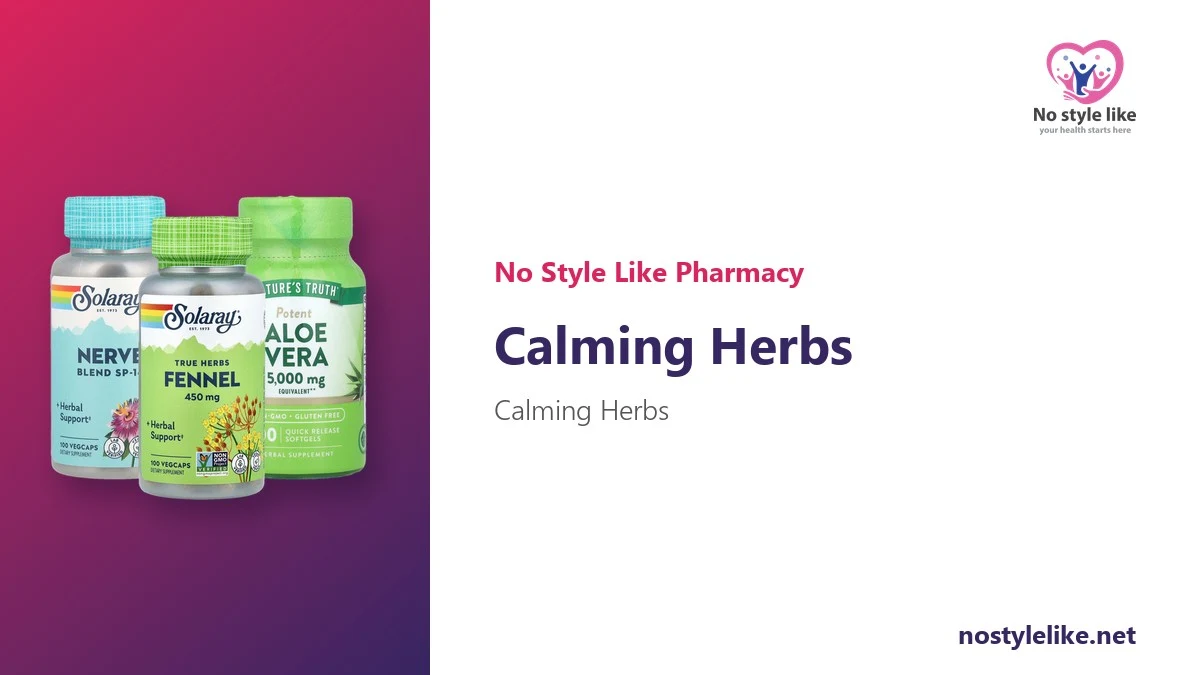
- Solaray Nerve Blend SP-14: an 880 mg proprietary herbal blend per 2-VegCap serving with valerian root, passion flower, wood betony, ginger root, hops cone, skullcap, chamomile and blessed thistle; the amount of each herb is not disclosed; 100 vegan VegCaps. Take 2 VegCaps twice daily with a meal or a glass of water. Do not use if pregnant, and talk to a practitioner first if you have gallstones.
- Solaray Fennel 450 mg: 450 mg of fennel (Foeniculum vulgare) seed per VegCap, 100 vegan, Non-GMO Project Verified VegCaps. Take 1 VegCap twice daily with a meal or a glass of water.
- Nature’s Truth Aloe Vera 5000 mg: each quick release softgel is equivalent to 5,000 mg of aloe vera, made from 25 mg of a 200:1 concentrate of fresh inner leaf gel; 100 softgels. For adults, take 1 softgel three times daily, preferably with meals. Not for people under 18; ask your doctor if pregnant, nursing or taking medicines.
Fennel and aloe are used for digestion rather than relaxation; read fennel seed benefits and aloe vera pills.
Frequently Asked Questions
Are calming herbs addictive?
They are not addictive in the way prescription sleeping pills can be, but relying on them every night can delay treatment of the real cause of poor sleep.
How quickly do they work?
Some people notice a difference within days, while in valerian studies improvement sometimes took two to four weeks.
Can I take calming herbs with anxiety medicines?
Not without your doctor’s approval, because drowsiness can increase dangerously.
Conclusion
Calming herbs such as valerian, chamomile and passion flower may help a little with passing stress, but the evidence is modest, and they can cause drowsiness and interact with medicines. Avoid them in pregnancy, never mix them with alcohol or sedatives, and see a doctor if anxiety or insomnia persists. You can find Solaray Nerve Blend SP-14 at No Style Like Pharmacy.
This article was reviewed by the No Style Like pharmacy content team. It is for general awareness only and does not replace advice from your doctor or pharmacist.
Herbs are not a treatment for anxiety disorders, depression or chronic insomnia, and should not be used in pregnancy. For more information see the NCCIH valerian fact sheet.