


Biotin and Acne: Can Biotin Cause Breakouts? 6 Facts and What to Do
Biotin and Acne: A Frequently Asked Question
Many people start biotin for their hair, then notice spots on their face or chin and wonder whether biotin is to blame. This article looks realistically at biotin and acne in 6 facts, and what to do if it happens to you.
1. What Does the Evidence Say?
There are no large studies proving that biotin causes acne. There are, however, individual case reports and observations from dermatologists of breakouts in some people taking high-dose biotin, which improved after they stopped. So a link is possible for some people, but it is not scientifically confirmed.
2. The Popular Theory: Competition With Vitamin B5
The body absorbs biotin and vitamin B5 (pantothenic acid) through the same transporter in the gut. The theory is that very high biotin doses might reduce B5 absorption, which is linked to the skin barrier. This remains a hypothesis that strong studies have not proven.
3. Not All Acne Is Caused by Biotin
Before blaming biotin, review the common causes:
- Hormonal changes and polycystic ovaries.
- Heavy cosmetics and creams.
- Whey protein used by athletes.
- High-sugar foods, and dairy for some people.
- Stress and poor sleep.
- Other supplements such as high-dose vitamin B12.
4. What to Do If Spots Appear
- Try stopping biotin for 4 to 6 weeks and watch for a difference.
- If your skin improves and you want to continue, discuss a lower dose with your doctor.
- Do not add high doses of vitamin B5 on your own – evidence for it is limited.
- Wash your face twice a day with a gentle cleanser and use a non-comedogenic moisturiser.
- See a dermatologist if spots are numerous, painful or leave marks.
5. Does the Dose Matter?
When it comes to biotin and acne, reports have mostly involved high doses such as 5,000 and 10,000 mcg. If your skin is sensitive, a lower dose may suit you better after talking to your doctor, especially since there is no evidence that higher doses work better for hair. Read biotin dosage and biotin 5000.
6. Biotin Deficiency Also Affects the Skin
Ironically, true biotin deficiency – which is rare – can cause a scaly rash around the eyes, nose and mouth along with hair loss. Biotin matters for skin; the possible problem is linked to very high doses, not to the vitamin itself.
Should You Stop Biotin Completely?
Not necessarily. Many people take biotin without any skin problems, and if you have no breakouts there is nothing to worry about. If spots do appear, a temporary break will show whether biotin and acne are connected in your case. Remember too that biotin affects some lab tests – read biotin and lab tests.
Biotin and Acne in Teenagers
Teenagers are naturally more prone to acne because of hormonal changes, and many high-dose biotin labels say they are for adults only. Teenagers should not take high-dose biotin without a doctor, and are better off focusing on daily skin care and a balanced diet, seeing a dermatologist early if spots are widespread.
Biotin and Acne FAQ
How soon do breakouts appear if biotin is the cause?
It varies, but they are usually noticed within weeks of starting.
Do they clear after stopping?
In published reports they usually improved within weeks of stopping.
Does biotin help oily skin?
There is no evidence that it reduces oil or spots.
Should I keep taking biotin for my nails despite spots?
Discuss a lower dose with your doctor, and see biotin for nails for the doses used in studies.
Is the link between biotin and acne the same for men and women?
Reports include both men and women; hormones, products and diet often play a bigger role in either case.
Conclusion
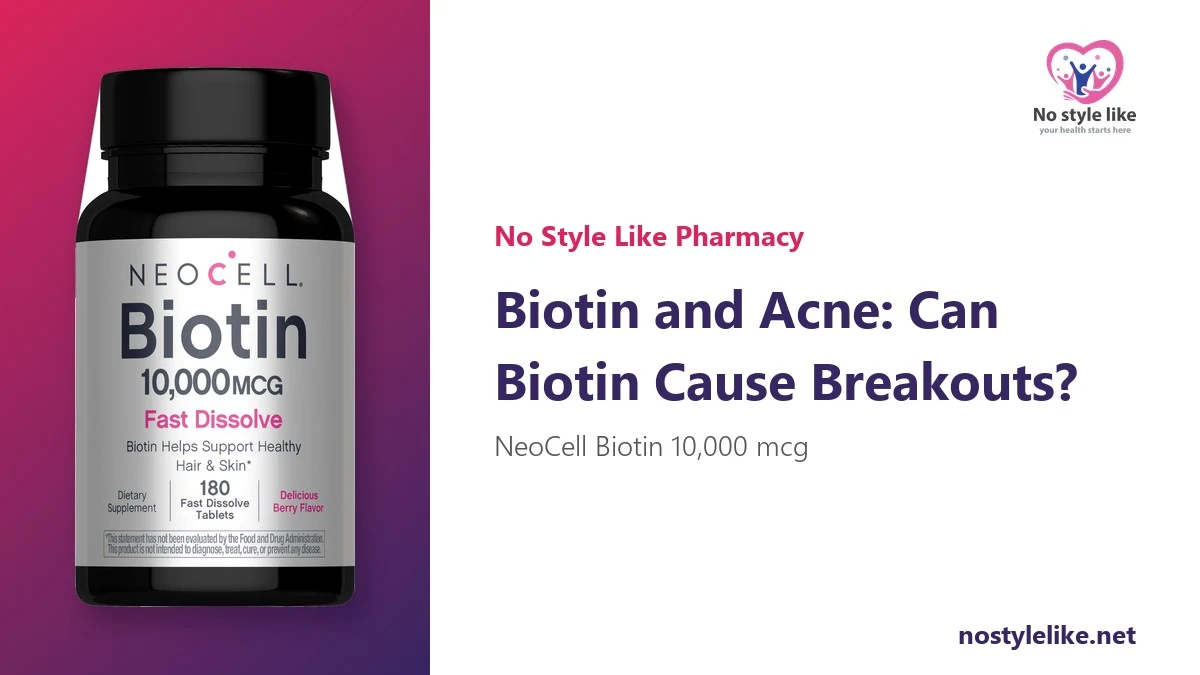
A link between biotin and acne is possible in some people taking high doses, but it is not scientifically proven. If spots appear, take a break, review other causes and see a dermatologist if needed. You can find NeoCell Biotin 10,000 mcg at No Style Like pharmacy.
This article was reviewed by the No Style Like pharmacy content team. It is for general awareness only. Biotin is a dietary supplement, not a medicine intended to diagnose or treat any disease, and this article does not replace medical advice.
If you develop severe or painful acne, see a dermatologist. Ask your doctor before use if you are pregnant or breastfeeding or live with a chronic condition. For more information see the NIH biotin fact sheet.