


Cat’s Claw for Arthritis: Does It Help OA and RA? 5 Facts
Does cat’s claw for arthritis really work?
Many people with osteoarthritis or rheumatoid arthritis look for a natural supplement that eases pain and reduces their reliance on painkillers. One of the best known options is cat’s claw for arthritis, made from the bark of the Amazonian vines Uncaria tomentosa and Uncaria guianensis. Here are 5 facts about what the research shows, how it is taken and when to avoid it.
1. Cat’s claw for arthritis of the knee
In a small clinical trial in people with knee osteoarthritis, participants took a U. guianensis extract for 4 weeks and reported less pain on activity than the placebo group, without major side effects. In other trials cat’s claw was combined with other herbs or supplements, which makes it hard to credit the result to cat’s claw alone.
The bottom line is that the evidence is encouraging but small and short, and it does not allow us to call cat’s claw a treatment for osteoarthritis. Building muscle strength and managing weight still matter more, and some people also ask about collagen for joints.
2. Cat’s claw for arthritis of the rheumatoid type
In a small trial of about 40 people with rheumatoid arthritis who stayed on their usual medicines, a U. tomentosa extract was added for several months, and a modest fall in the number of painful joints was seen. Larger trials have not yet confirmed this result.
More importantly, rheumatoid arthritis is an autoimmune disease that needs disease-modifying drugs to protect the joints from damage. Never stop any of these medicines, and only start cat’s claw for arthritis with the agreement of your rheumatologist, because it may affect the immune system.
3. How might cat’s claw for arthritis work?
Compounds in the bark are thought to lower some inflammatory messengers, such as TNF-alpha and prostaglandins, and to act as antioxidants. This mechanism is better established in the lab than in people, so expectations should stay modest.
The expected effect also depends on the extract. The positive osteoarthritis trial used U. guianensis, while the rheumatoid trial used a special U. tomentosa extract. Capsules sold in pharmacies usually contain the bark itself, so you cannot assume they will give exactly the same result as the trial products.
4. Label doses of cat’s claw for arthritis
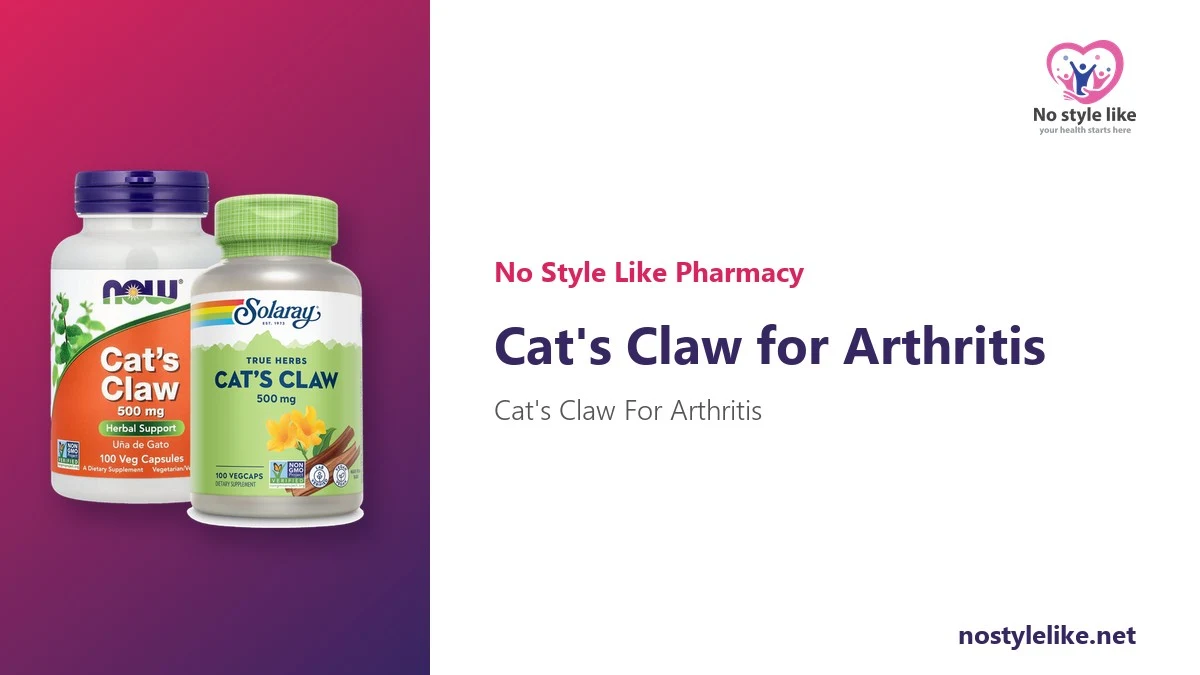
| Product | Content | Label directions |
|---|---|---|
| NOW Cat’s Claw 500 mg | 500 mg cat’s claw bark per capsule, 100 veg capsules | 2 capsules 2 to 3 times daily, preferably with food; adults only |
| Solaray Cat’s Claw 500 mg | 500 mg cat’s claw bark per capsule, 100 VegCaps | 1 VegCap three times daily with a meal or glass of water |
A bottle of NOW Cat’s Claw lasts about 16 to 25 days depending on how many doses you take, and a bottle of Solaray Cat’s Claw lasts about 33 days. It is sensible to judge cat’s claw for arthritis after 4 to 8 weeks; if the pain has not improved, there is no point in continuing. For its other uses, read cat’s claw benefits.
5. Who should avoid cat’s claw for arthritis?
- Pregnant or breastfeeding women and women trying to conceive.
- People with lupus, multiple sclerosis or other autoimmune diseases, unless their doctor agrees.
- Organ transplant recipients and anyone taking immunosuppressants.
- People on blood thinners or antiplatelet drugs.
- People on blood-pressure medicines, since it may lower blood pressure.
- Anyone with surgery planned within 2 weeks.
Full details on reactions and interactions are in cat’s claw side effects.
Fitting cat’s claw for arthritis into a complete plan
A supplement alone does not protect a joint; at best it is a helper. A better plan includes:
- Thigh-strengthening exercises guided by a physiotherapist.
- Losing excess weight to reduce the load on the knees.
- A suitable painkiller chosen by your doctor when needed.
- Regular rheumatology follow-up and inflammation blood tests in rheumatoid arthritis.
Tell your doctor about every supplement you take, because some interact with blood-pressure and blood-thinning medicines that are common in people with arthritis. Older adults can also read joint pain relief for seniors.
When to see a doctor
- A swollen, red or warm joint.
- Morning stiffness lasting more than 30 minutes.
- Pain in several joints on both sides of the body.
- Dizziness or unusual bruising while taking the supplement.
Frequently asked questions about cat’s claw for arthritis
Can I take it with glucosamine?
No direct interaction is known, but ask your pharmacist first, especially if you take blood thinners.
Can it replace painkillers?
It may reduce the need for them in some people, but do not stop your treatment without medical advice.
Does it help gout?
There is not enough evidence, and gout needs specific treatment from your doctor.
Conclusion
Cat’s claw for arthritis is a helper option with small trials showing some easing of knee osteoarthritis pain and modest add-on support in rheumatoid arthritis. It is not a replacement for rheumatology treatment. You can find NOW Cat’s Claw and Solaray Cat’s Claw at No Style Like pharmacy.
This article was reviewed by the No Style Like pharmacy content team. It is for general awareness only and does not replace advice from your doctor or pharmacist.
People with rheumatoid arthritis or other autoimmune diseases should ask their rheumatologist before any herbal supplement. For more information see the NCCIH cat’s claw page.