


DGL Licorice: What It Is and How It Differs From Regular Licorice – 7 Key Facts
What Is DGL Licorice?
DGL licorice is an extract of licorice root from which most of the glycyrrhizin has been removed. Glycyrrhizin is the compound behind licorice’s intense sweetness and behind most of its side effects. DGL stands for deglycyrrhizinated licorice. Here are 7 key facts to know before you try it.
1. Why Remove the Glycyrrhizin?
Glycyrrhizin blocks an enzyme in the kidney that normally inactivates cortisol. Active cortisol then behaves like the hormone aldosterone, so the body holds on to sodium and water and loses potassium. The result can be high blood pressure, low potassium, fluid retention and, in severe cases, heart rhythm problems. Doctors call this pseudo-hyperaldosteronism. In this product, glycyrrhizin is below 1%, so DGL licorice avoids most of this risk. Read the details in licorice and blood pressure.
2. What Is in the Nature’s Way Chewables?
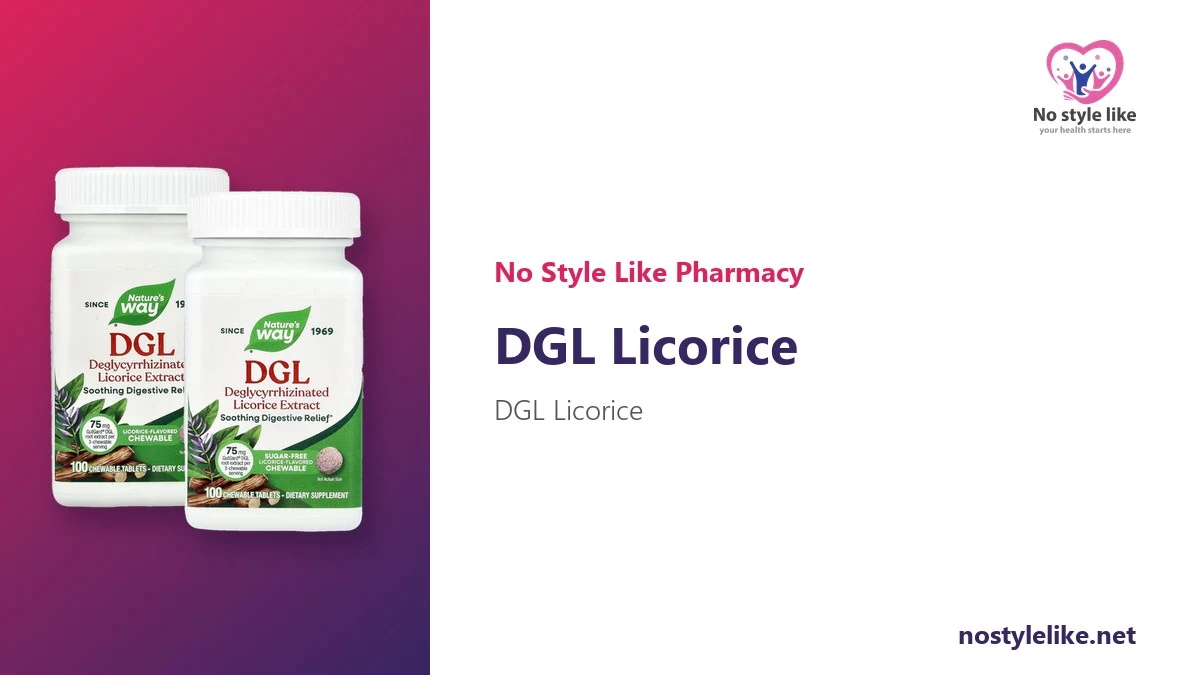
Each serving of 3 chewable tablets provides 75 mg of GutGard, a branded deglycyrrhizinated licorice root extract, plus 150 mg of the amino acid glycine. Each bottle holds 100 licorice-flavoured chewables, and both versions are gluten free and vegan.
| Version | Sweetened with | Per 3 tablets |
|---|---|---|
| Nature’s Way DGL Licorice (regular) | Fructose plus mannitol and sorbitol | 10 kcal, 1 g added sugar |
| Nature’s Way DGL Licorice Sugar-Free | Sorbitol and mannitol only | 5 kcal, 0 g sugar, 2 g sugar alcohol |
3. How to Take DGL Licorice
The label directions for adults are to chew 3 tablets after food in the morning and 3 tablets after food in the evening, which is 6 a day, so a bottle lasts about 16 days. Chew the tablets well rather than swallowing them whole, because the idea is for the extract to mix with saliva and coat the food pipe and stomach.
4. What Is It Usually Used For?
- Heartburn and functional dyspepsia (indigestion without an ulcer or other clear cause).
- General support for the stomach lining, as an add-on rather than an ulcer treatment.
- A gentler option for people who chew antacids very often.
The human evidence comes from small trials of the GutGard extract, and the benefit seen was modest. For the heartburn side of the story, see DGL for heartburn.
5. What Does the Science Honestly Say?
A handful of placebo-controlled trials found that GutGard may improve indigestion symptoms such as burning, fullness and bloating over a few weeks. These studies were small and short, so they are not enough to treat DGL licorice as a replacement for proton pump inhibitors (PPIs) or H2 blockers when a doctor prescribes them. Stomach ulcers also need testing for H. pylori and proper medical treatment.
6. Is DGL Licorice Safe?
Most adults tolerate it well. A tiny amount of glycyrrhizin remains, however, so check with a doctor or pharmacist first if you:
- Are pregnant or breastfeeding.
- Have high blood pressure, heart failure or kidney disease.
- Take diuretics, digoxin, steroids or other long-term medicines.
The sugar-free version suits people cutting down on sugar, but sugar alcohols can cause gas or loose stools in larger amounts.
7. When a Supplement Is Not Enough
See a doctor rather than self-treating if you notice any of these alarm symptoms:
- Black, tarry stools or vomiting blood.
- Difficulty or pain when swallowing, or unexplained weight loss.
- New digestive symptoms after the age of 55.
- Heartburn that persists for more than 2 to 3 weeks despite treatment.
These signs can point to a bleeding ulcer, a badly inflamed food pipe or another problem that needs an endoscopy or blood tests, so do not delay care by trying one supplement after another. Store the bottle tightly closed at room temperature, away from heat, direct sunlight and children.
DGL Licorice FAQ
Is it the same as a licorice drink or candy?
No. Licorice drinks and real licorice candy contain full glycyrrhizin, while DGL licorice has most of it removed.
Can I use it with Gaviscon?
Usually yes, spaced apart, but ask your pharmacist. See Gaviscon uses.
Regular or sugar-free?
The active ingredients are identical; only the sweetener differs. Choose sugar-free if you limit sugar.
Conclusion
DGL licorice is a gentle stomach supplement with the glycyrrhizin removed, so it avoids most of the blood pressure and potassium problems of regular licorice. Its evidence for heartburn is promising but modest, and it does not replace a proper diagnosis. You can find Nature’s Way DGL Licorice and the sugar-free version at No Style Like pharmacy.
This article was reviewed by the No Style Like pharmacy content team. It is for general awareness only and does not replace advice from your doctor or pharmacist.
Check with your doctor before use if you are pregnant, have heart or kidney disease or take regular medicines. For more information see the NCCIH licorice root page.