


Extended-Release Paracetamol: How Does It Work and Who Is It For? 6 Differences From Regular Paracetamol
What Is Extended-Release Paracetamol?
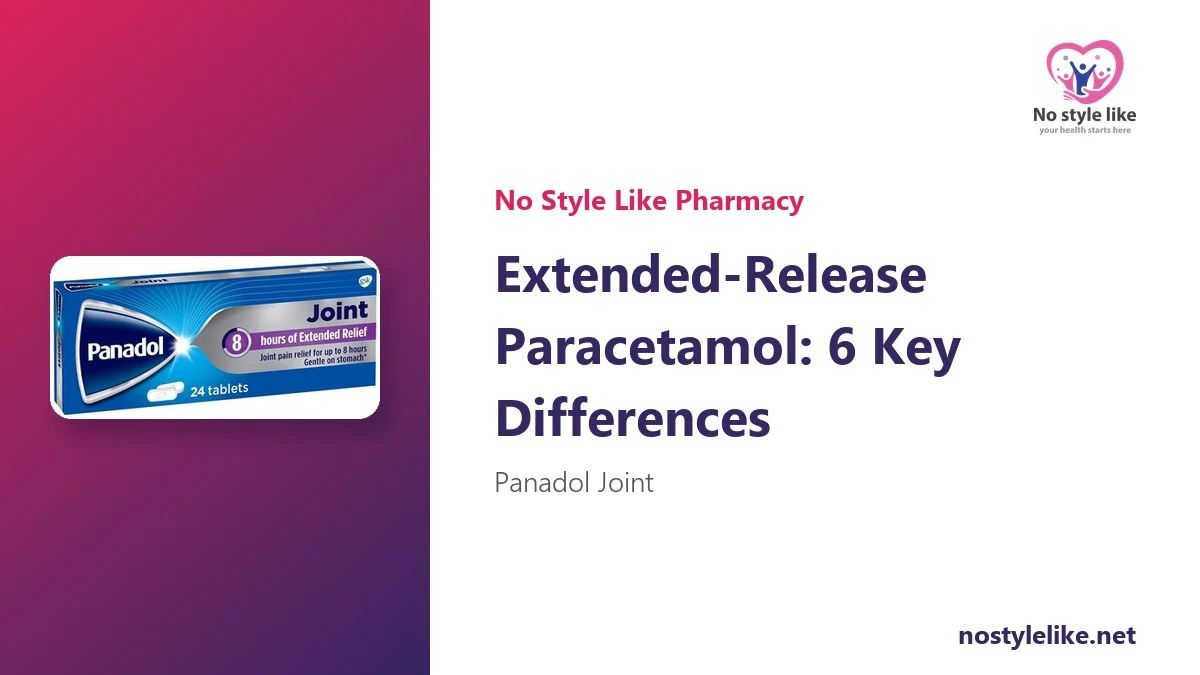
Paracetamol is one of the world’s best-known painkillers, but regular tablets last only about 4 to 6 hours. That is why extended-release paracetamol was developed, giving relief for up to 8 hours, as in Panadol Joint 665 mg. Here are 6 key differences from regular paracetamol.
1. The Tablet Has Two Layers
An extended-release paracetamol tablet has a fast layer with about 30% of the dose, which starts working in around half an hour, and a sustained layer with about 70%, which releases slowly over several hours. The result is steady relief without sharp peaks and dips.
2. Dose and Interval Are Different
| Item | Regular 500 mg | Extended 665 mg |
|---|---|---|
| Dose | 1 or 2 tablets | 2 tablets |
| Interval | Every 4 to 6 hours | Every 8 hours |
| Daily maximum | 8 tablets | 6 tablets |
In both cases the total stays at about 4 grams a day. For details, read Panadol Joint dosage.
3. Do Not Break or Chew It
Breaking an extended-release paracetamol tablet destroys the slow-release layer, so it loses its advantage. Swallow it whole with water. If you have trouble swallowing, ask your pharmacist about a suitable alternative.
4. Who Is Extended-Release Paracetamol For?
- People with knee or hip osteoarthritis who have pain throughout the day.
- People with chronic back pain.
- People who wake at night because of pain.
- People who need a stomach-friendly option instead of anti-inflammatory painkillers.
For a passing headache or sudden toothache, fast-acting regular paracetamol may be enough. Read Advil vs Panadol.
5. Safety for the Stomach and Blood Pressure
Paracetamol generally does not irritate the stomach or raise blood pressure the way ibuprofen and diclofenac can, so doctors often prefer it for older adults and people with high blood pressure or heart disease. Its main risk is to the liver when the dose is exceeded.
6. Overdose Is Harder to Assess
Because extended-release paracetamol is absorbed over a longer time, blood levels after an overdose may peak later, and doctors may need repeated measurements. Any overdose therefore needs emergency care right away.
Extended-Release Paracetamol and Night-Time Pain
Many people with osteoarthritis are woken in the middle of the night when a regular painkiller wears off. This is where extended-release paracetamol helps: an evening dose before bed covers most of the night, so sleep is less disturbed, and better sleep itself lowers pain sensitivity the next day.
Take the last dose about half an hour before bed, keeping 8 hours from the previous one. If night pain continues despite correct dosing, the cause of the pain may need a medical review.
Practical Tips
- Write dose times on the box or in your phone.
- Do not mix different Panadol products on the same day.
- See a doctor if you need painkillers for more than 10 days.
- Store tablets below 30 °C in their original pack.
For older adults, read joint pain relief for seniors.
How to Store Extended-Release Paracetamol
Keep the tablets in their original pack, away from moisture and heat, below 30 °C and out of the reach of children. Do not move them into pill boxes for long periods, because humidity can affect the sustained-release layer, and the original pack shows the dose and the expiry date.
Frequently Asked Questions About Extended-Release Paracetamol
Is it stronger than regular paracetamol?
Not stronger, but it lasts longer with fewer doses a day.
When does it start working?
Usually within 30 minutes, thanks to the fast layer.
Is it suitable in pregnancy?
Paracetamol is among the most commonly used painkillers in pregnancy, but only after asking your doctor.
Can I switch between regular and extended-release paracetamol?
Yes, but count every milligram from both toward the same daily maximum.
Conclusion
Extended-release paracetamol is a bilayer tablet that relieves pain for up to 8 hours at 2 tablets every 8 hours. It suits ongoing joint and back pain and must be swallowed whole. Find it in Panadol Joint at No Style Like Pharmacy.
This article was reviewed by the No Style Like pharmacy content team. It is for general awareness only and does not replace advice from your doctor or pharmacist.
If you take an overdose, go to the emergency department at once, even if you have no symptoms. For more information see the MedlinePlus acetaminophen page.