


Nettle for Prostate: Root or Leaf? 6 Facts You Should Know
What is the story behind nettle for prostate health?
Stinging nettle is an old herbal remedy, and it often appears in recipes and formulas sold as nettle for prostate support. But there is a detail many people miss: the trials in benign prostatic hyperplasia (BPH) mostly used extract of nettle root, while nettle leaf is traditionally used as a mild diuretic. These 6 facts explain the difference honestly and what you can realistically expect.
1. Get checked before trying nettle for prostate symptoms
Frequent urination, waking at night and a weak stream are lower urinary tract symptoms (LUTS) that need a medical evaluation first. This usually includes a PSA blood test, a digital rectal exam (DRE) and a urine test, because the same symptoms can come from BPH, infection, bladder problems or diabetes.
See a doctor quickly if you notice blood in the urine, urinary retention, fever with pain, or unexplained weight loss.
2. Nettle root is the part that was studied
Several trials tested nettle root extract on its own, and some found modest improvements in symptom scores and urine flow compared with placebo. The root has been studied even more in combinations with saw palmetto, and some of those trials reported results comparable to certain medicines. However, the number of trials is small and their quality varies.
For that reason nettle for prostate symptoms, in the form of root extract, is best described as an option with limited to moderate evidence, not a proven treatment, and there is no strong evidence that it shrinks the prostate.
3. Nettle leaf: why it differs from nettle for prostate trials
Nettle leaf is traditionally used to support the urinary tract and increase urine flow, which is why labels describe it as traditional urinary support. There are no good trials of nettle leaf for BPH specifically. If your goal is to ease enlarged prostate symptoms, it is worth knowing this difference before you buy. Being honest about it is more useful than a bold claim.
4. Nettle products available
| Product | Plant part | Amount | Dose |
|---|---|---|---|
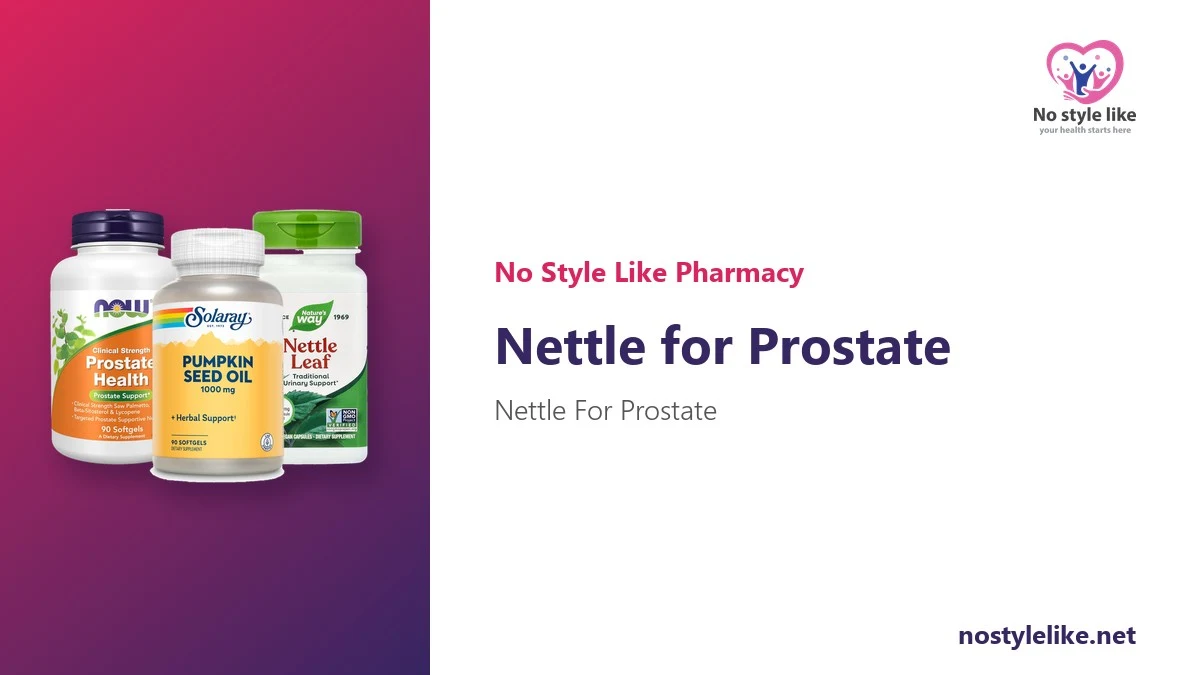
| Nature’s Way Nettle Leaf | Leaf | 870 mg per 2 capsules | 2 capsules twice daily |
| NOW Clinical Strength Prostate Health | Root, in a formula | 240 mg root extract | 3 softgels daily with food |
The Nature’s Way bottle contains 100 vegan capsules, so it lasts about 25 days at the label dose, and it should not be used if pregnant or nursing; consult a professional if you take any medications. NOW Prostate Health combines nettle root with saw palmetto 320 mg, phytosterols 850 mg and pumpkin seed oil 1,000 mg, which is closer to the combinations studied as nettle for prostate support. Read about pumpkin seed for prostate to complete the picture.
5. Interactions and safety
- Blood pressure medicines: nettle may lower blood pressure slightly.
- Diabetes medicines: nettle may lower blood sugar, so monitor your readings.
- Diuretics and lithium: the diuretic effect can increase fluid loss and change lithium levels.
- Warfarin: nettle leaf contains vitamin K, which may reduce its effect.
- Anticoagulants: formulas with saw palmetto, turmeric or green tea need extra caution. See saw palmetto side effects.
When people take nettle for prostate support, the most common side effects are mild stomach upset or sweating. Most importantly, never stop or delay prescribed alpha-blockers or 5-alpha-reductase inhibitors to try a herb.
6. How to use nettle for prostate symptoms sensibly
If BPH symptoms are your goal and your doctor agrees, the option closest to the evidence is nettle root, usually combined with saw palmetto. Nettle leaf may suit someone who wants traditional diuretic support, but avoid taking it in the evening so it does not add to night-time urination. Reassess after 8 to 12 weeks, and stop if nothing changes.
Who should avoid nettle for prostate use?
- Pregnant or breastfeeding women, as the leaf label states.
- People with kidney disease or on strong diuretics, unless supervised by a doctor.
- Anyone taking lithium or warfarin without monitoring.
- People allergic to plants of the nettle family.
Remember that a small improvement does not mean the problem is solved; regular follow-up with a urologist is still needed while using herbs.
FAQ about nettle for prostate symptoms
Does nettle leaf tea treat an enlarged prostate?
There is no evidence for that. It is a mild traditional diuretic, not a BPH treatment.
Can nettle be combined with saw palmetto?
Yes, this is the most studied combination, provided your doctor agrees and your medicines are reviewed.
Is nettle for prostate symptoms safe with blood pressure pills?
It may add to the blood pressure lowering effect, so ask your doctor and monitor your readings.
How long until it works?
In studies, results were usually assessed after weeks to months, so do not expect a quick effect.
Conclusion
The evidence on nettle for prostate symptoms mainly concerns the root, and it is limited and modest, while the leaf is a traditional diuretic. Get checked first, do not delay prescribed treatment, and watch for interactions with blood pressure and diabetes medicines, lithium and diuretics. For a full comparison read our guide to prostate supplements; nettle products are available at No Style Like pharmacy.
This article was reviewed by the No Style Like pharmacy content team. It is for general awareness only and does not replace advice from your doctor or pharmacist.
Ask your doctor before using nettle if you take blood pressure, diabetes, lithium or diuretic medicines. For more information see the NIDDK page on prostate enlargement.