
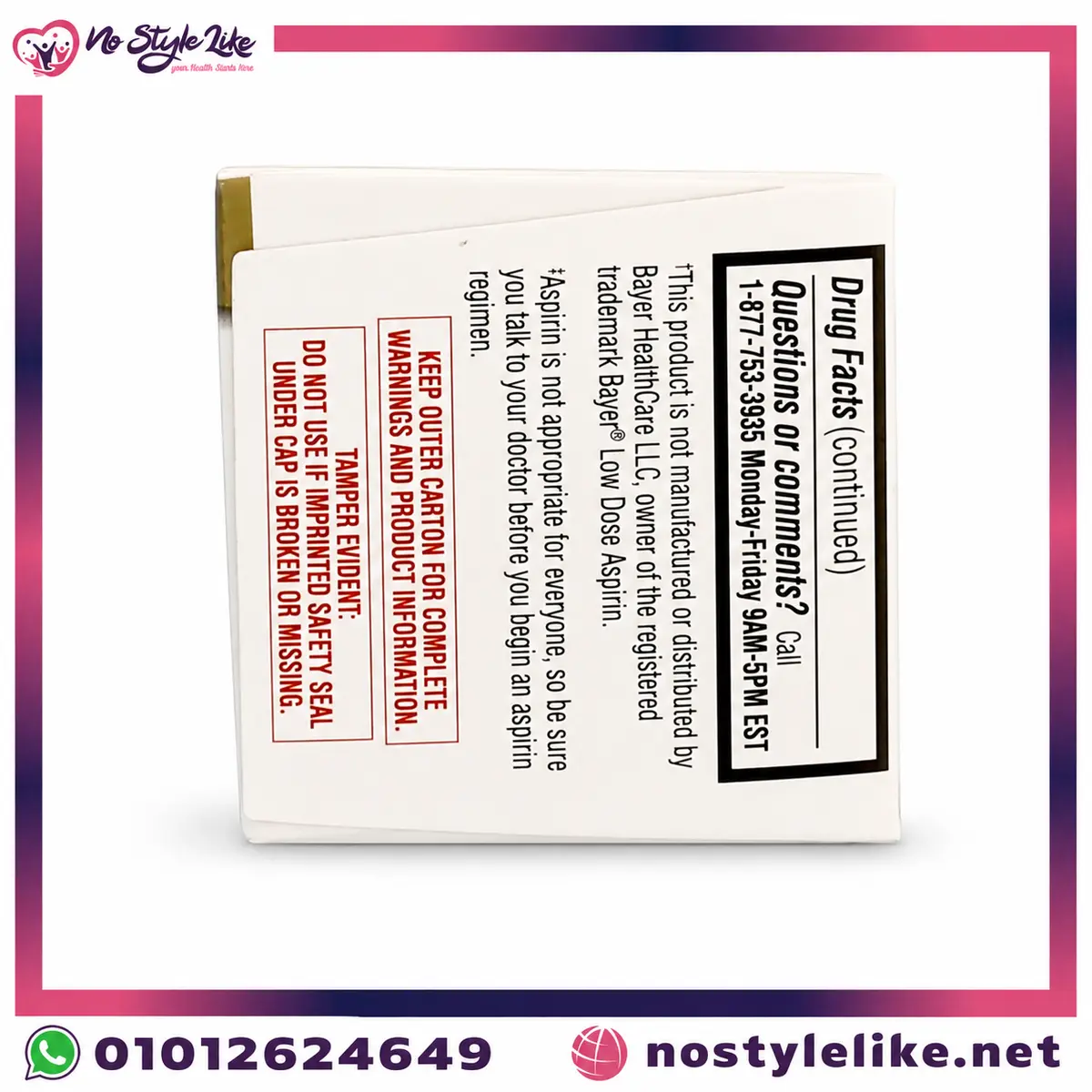

Description
Quick answer: Aspirin Low Dose 81 mg is used mainly as a blood thinner to help prevent heart attacks and strokes in specific people, under medical guidance — it is not really an everyday painkiller at this dose. Do not start taking it daily on your own, because the bleeding risk can outweigh the benefit, and never give aspirin to children or teenagers with a viral illness.
⚠️ Central safety rule: Do not start daily low-dose aspirin on your own. For many people, the risk of serious bleeding outweighs the benefit, so daily aspirin for prevention should only be taken if a doctor has advised it for you. Never give aspirin to children or teenagers, especially with a fever or viral illness, because of the risk of Reye’s syndrome, a rare but serious condition. Seek advice before use if you have ulcers, bleeding problems, asthma, or take other blood thinners.
Key facts about Aspirin Low Dose 81 mg
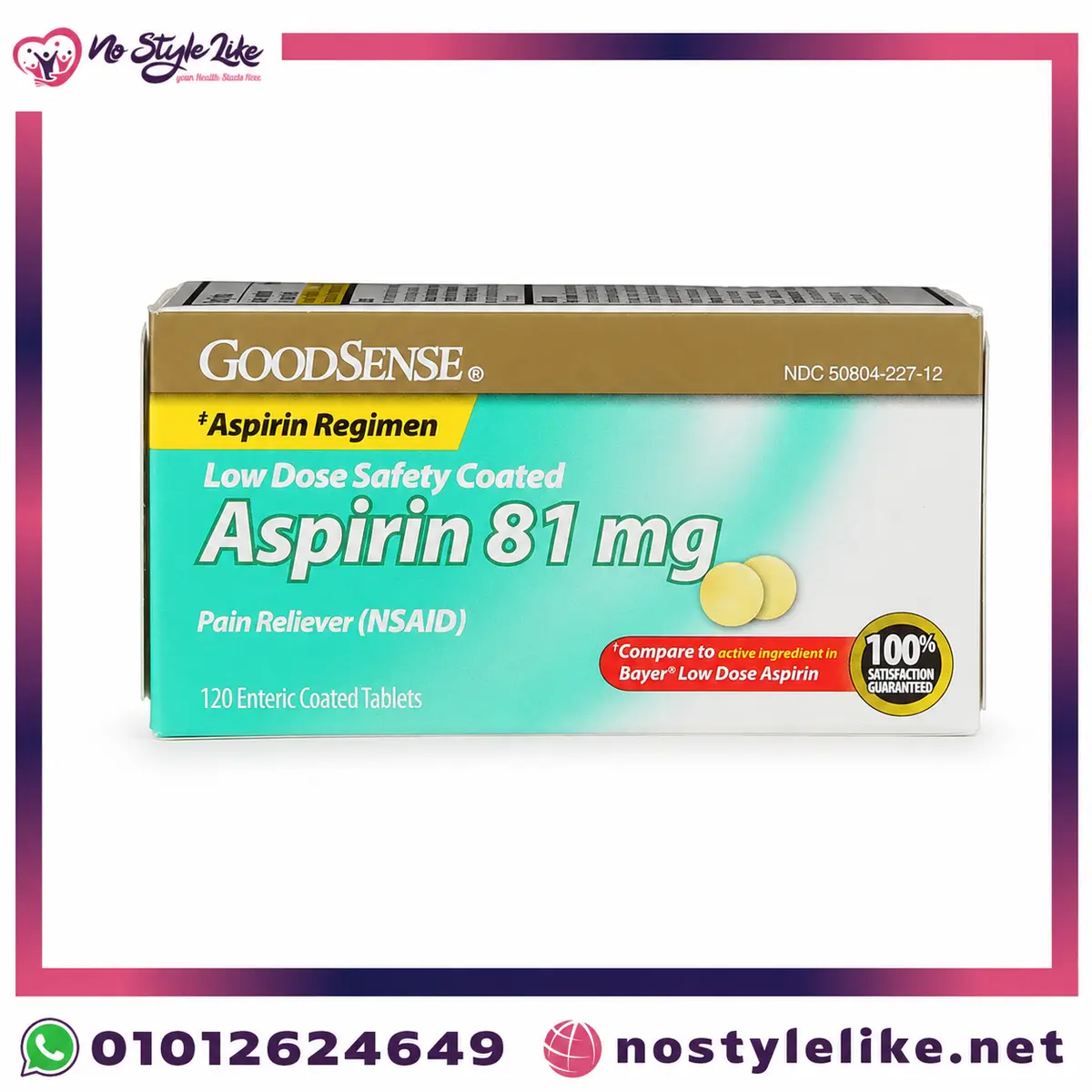
| Product | Aspirin Low Dose 81 mg, 120 tablets |
| Active ingredient | Aspirin (acetylsalicylic acid) |
| Main use | Antiplatelet — helping prevent clots in at-risk people |
| Key rule | Only take daily if a doctor has advised it for you |
| Children | Never give aspirin to children/teens with viral illness (Reye’s risk) |
| Status | Over-the-counter (OTC) — read the leaflet and seek advice |

What is Aspirin Low Dose 81 mg?
Aspirin Low Dose 81 mg is a low-strength form of aspirin, and Aspirin Low Dose is used differently from ordinary painkiller doses. While aspirin at higher doses can relieve pain and fever, this low dose is used mainly for a different purpose: as an antiplatelet, or blood-thinning, agent to help prevent the blood clots that cause heart attacks and strokes in certain at-risk people. It is a medicine with significant safety considerations, and it should be used thoughtfully and, for daily use, under medical guidance.
How Aspirin Low Dose works
Aspirin reduces the ability of small blood cells called platelets to clump together and form clots. At a low daily dose, this antiplatelet effect is the main action being used, helping to keep blood flowing in people who have, or are at high risk of, cardiovascular disease. This is quite different from taking aspirin occasionally for a headache, and it explains both the benefit and the bleeding risk.
What it is really used for
Despite packaging that may mention pain or fever, an 81 mg dose is generally too low to be an effective everyday painkiller. Its real role is cardiovascular protection — typically for people who have already had a heart attack, stroke or certain procedures, where doctors recommend it to reduce the risk of another event. Using it correctly means understanding this purpose rather than treating it as a general analgesic.
Why you should not start Aspirin Low Dose on your own
This is the most important point. For people who have not had a cardiovascular event, the picture has changed: research and guidelines now show that for many, the risk of serious bleeding from daily aspirin can outweigh any benefit. According to the MedlinePlus information on aspirin, the decision to take daily aspirin should be made with a doctor, who can weigh your personal risks and benefits. Do not simply start it because it is available over the counter.
The Reye’s syndrome warning for children
Aspirin must never be given to children or teenagers who have a fever or a viral illness such as flu or chickenpox, because it is linked to Reye’s syndrome, a rare but serious condition that can damage the liver and brain. For this reason, aspirin is not used for pain or fever in young people. Keep it well away from children, and use paracetamol or ibuprofen for their fever and pain instead, as advised by a pharmacist.
Bleeding and stomach risks
Because aspirin thins the blood and can irritate the stomach lining, its main risks are bleeding — including serious gastrointestinal bleeding — and stomach ulcers. Taking it with food can reduce stomach upset. Seek urgent medical help for signs of bleeding such as black or bloody stools, vomiting blood, unusual bruising, or blood in the urine. These risks are the reason daily use needs medical oversight.
Who should be cautious or avoid it
Do not take low-dose aspirin, or seek advice first, if you have a stomach ulcer or history of gastrointestinal bleeding, a bleeding disorder, severe liver or kidney disease, uncontrolled high blood pressure, or an aspirin allergy. Some people with asthma react to aspirin. Tell your doctor before any surgery or dental procedure, as aspirin may need to be managed around these.
Interactions to be aware of
Aspirin interacts with several medicines. Combining it with anticoagulants such as warfarin or DOACs, with other NSAIDs like ibuprofen, or with certain other drugs, increases bleeding risk. If you take any regular medication, check with a pharmacist or doctor before using low-dose aspirin, and do not add it to a blood-thinning regimen on your own.
Using it safely if prescribed
If a doctor has advised daily low-dose aspirin for you, take it consistently at the dose and timing they recommend, with food, and do not stop suddenly without advice, as stopping abruptly can carry its own risk in some people. Attend your reviews, report any bleeding or stomach symptoms, and keep a list of your medicines to avoid harmful combinations.
Expert note
Dr. Abdallah Fouad — Clinical Nutrition Specialist, 25+ years of experience: Low-dose aspirin is a genuinely valuable medicine for the right person — usually someone who has already had a heart attack or stroke — but it is not a harmless daily habit to start on your own. The bleeding risk is real, and for people without established cardiovascular disease, that risk now often outweighs the benefit, which is why this should be a decision made with your doctor. Two absolute rules: never give aspirin to a child or teenager with a viral illness because of Reye’s syndrome, and seek help immediately for any signs of bleeding. If a doctor has prescribed it for you, take it as directed and keep your reviews.
Frequently asked questions
Should I start taking low-dose aspirin daily?
Not on your own. For many people without established heart disease, the bleeding risk can outweigh the benefit, so daily aspirin should only be taken if a doctor has weighed your personal risks and advised it.
Is 81 mg aspirin a painkiller?
Not really. This low dose is generally too small to be an effective everyday painkiller; its main use is as a blood thinner to help prevent clots in at-risk people, usually under medical guidance.
Can children take aspirin?
No. Aspirin must never be given to children or teenagers with a fever or viral illness because of the risk of Reye’s syndrome, a rare but serious condition. Use paracetamol or ibuprofen for them as advised.
What are the main risks of low-dose aspirin?
Bleeding, including serious gastrointestinal bleeding, and stomach ulcers. Seek urgent help for black or bloody stools, vomiting blood, unusual bruising or blood in the urine. Taking it with food reduces stomach upset.
Who should avoid low-dose aspirin?
Seek advice first if you have ulcers or a history of GI bleeding, a bleeding disorder, severe liver or kidney disease, uncontrolled high blood pressure, an aspirin allergy, or take other blood thinners or NSAIDs.
References
- MedlinePlus — Aspirin: uses, precautions and bleeding risks.
- Guidance on aspirin for primary versus secondary cardiovascular prevention.
- Information on Reye’s syndrome and the avoidance of aspirin in children.
Bottom line
Aspirin Low Dose 81 mg is used mainly as a blood thinner to help prevent heart attacks and strokes in specific at-risk people, not as an everyday painkiller. Do not start it daily on your own, since the bleeding risk can outweigh the benefit — that decision belongs with your doctor. Never give aspirin to children or teenagers with a viral illness, take it with food if prescribed, and seek help immediately for any signs of bleeding.