


Description
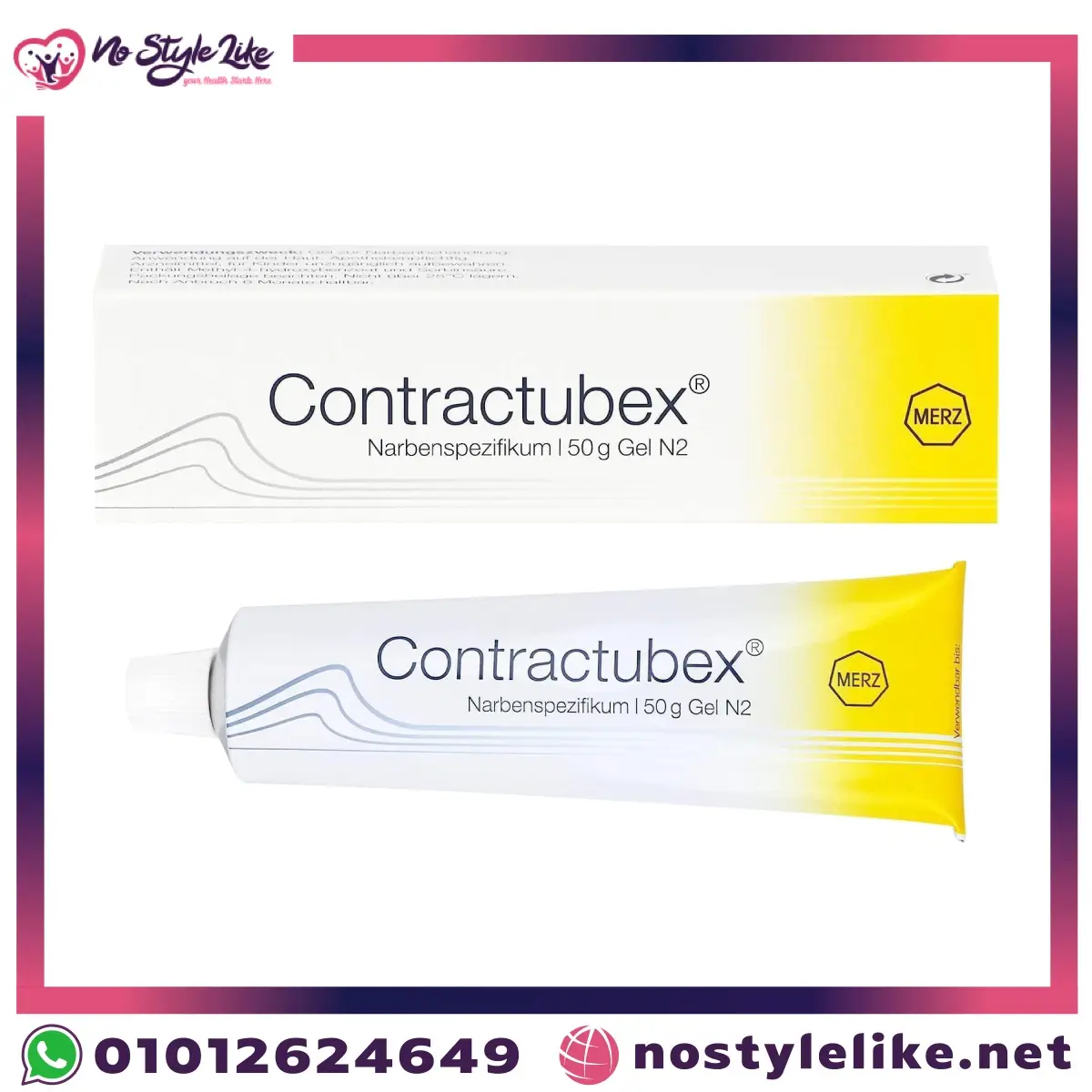
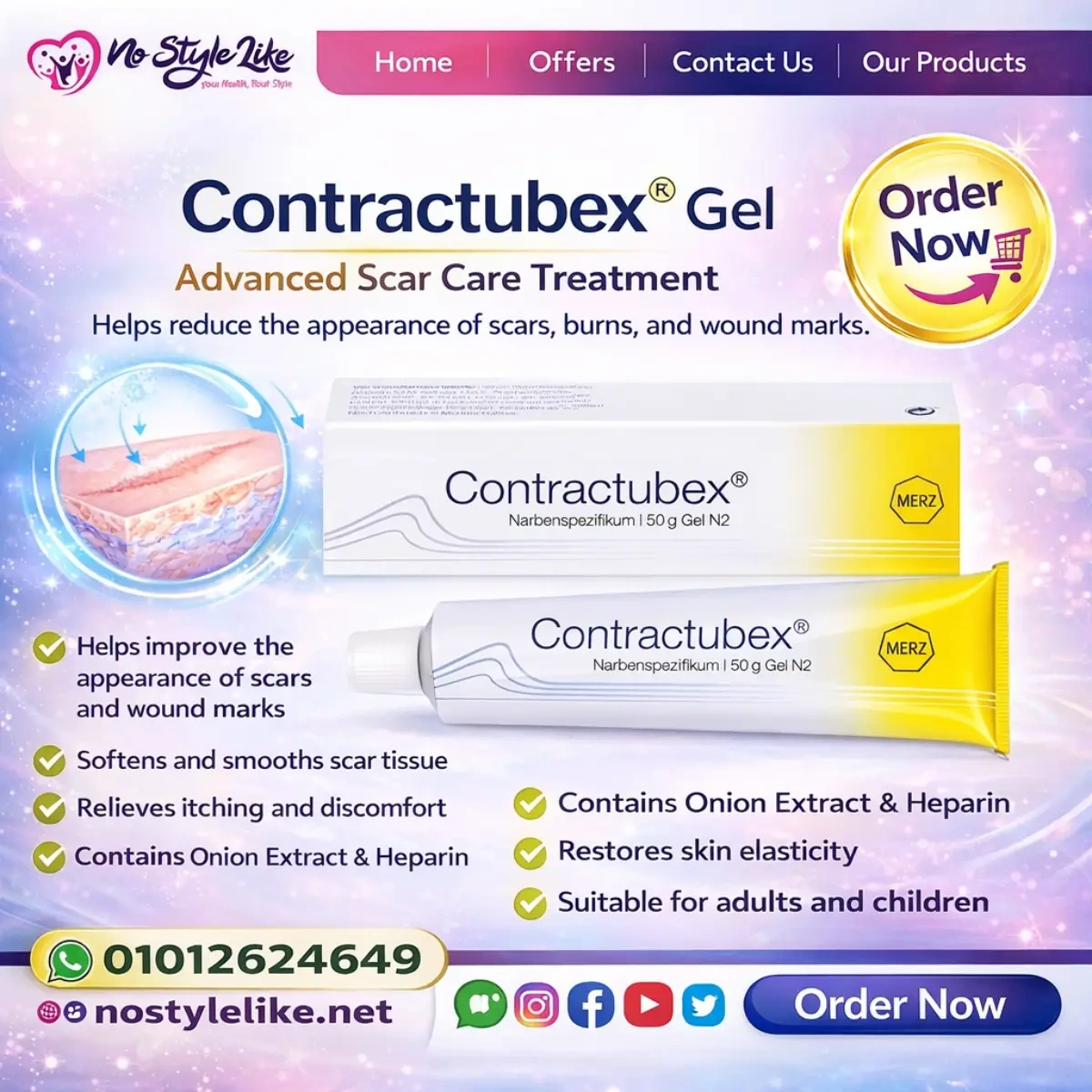
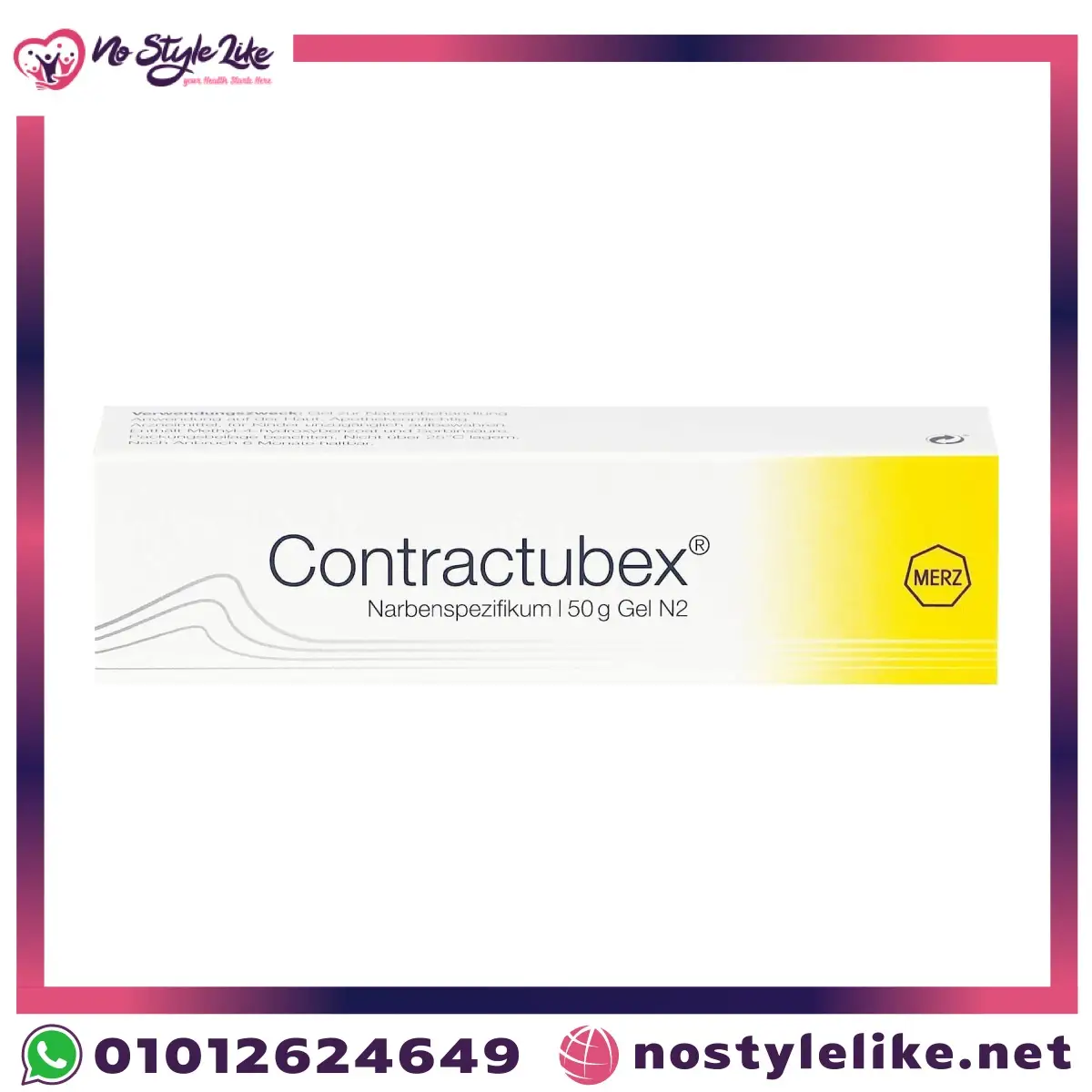
Contractubex Gel 50 g — The Original German Scar, Burn and Wound Mark Treatment
Quick Answer
Contractubex Gel is a German topical gel from Merz that combines three actives: onion extract (Allium cepae), heparin sodium and allantoin. It is used only after a wound has fully closed to improve the appearance of hypertrophic and keloid scars, burn marks, surgical scars and raised acne marks. Apply a small amount with a circular massage of 3 to 5 minutes, two to three times a day. Realistic duration is 3 months for a fresh scar and 3 to 6 months or longer for an older one. Never apply to open wounds, the eyes or mucous membranes.
Key Facts About Contractubex Gel
A scar is not only a cosmetic problem. When a wound heals, the body lays down collagen quickly and in a disorganised pattern, producing tissue that is thicker, firmer and less elastic than normal skin, and that sometimes pulls or itches. Contractubex Gel works precisely at that stage: it calms inflammation, softens the tissue, and reduces the chance that the scar becomes raised or turns keloid.
Table of Contents
- How Scars Form
- What Is Contractubex Gel?
- How Contractubex Gel Works — Ingredient by Ingredient
- Key Benefits
- Real-World Use Cases
- Who It Suits
- Who Should Avoid It
- How to Use It Correctly, Step by Step
- When to Start and Best Time of Day
- Why Our Price Is Higher Than the Pharmacy
- Expected Improvement Timeline
- Common Mistakes That Ruin Results
- Myths vs Facts
- Clinical Evidence
- Interactions With Other Products
- Contraindications and Warnings
- Side Effects
- Pregnancy, Breastfeeding and Children
- What to Combine It With
- When to See a Doctor
- Expert Tip From No Style Like
- Frequently Asked Questions
- Conclusion
How Scars Form
Any wound that breaks through the dermis leaves a mark. The body fills the gap with fibrous, collagen-rich tissue, but the collagen fibres in a scar sit in a random arrangement rather than the parallel alignment of healthy skin. The result is tissue that is less elastic, different in colour, and sometimes raised above the skin surface.
When collagen production overshoots, a hypertrophic scar appears — raised but still within the borders of the original wound. If it grows past those borders, it becomes a keloid, which is harder to treat and more likely to recur. At the other end sit atrophic scars, such as acne pits, caused by too little collagen rather than too much.
The golden window for intervention is the first 3 to 6 months after the wound closes, while the scar is still in its remodelling phase and responds to topical treatment. After a year or more the tissue has matured, so improvement is slower and smaller — though not impossible.
What Is Contractubex Gel?
Contractubex Gel is a German topical preparation made by Merz Pharmaceuticals. It has been on the international market for decades and is widely recommended in plastic surgery, general surgery and paediatrics. Its formula is a triple combination, and each active works on a different part of scar biology.
The gel is clear and fat-free, absorbs quickly and leaves no shine or greasy film, which makes it more practical for the face and other visible areas than heavy ointments.
One point deserves honesty: Contractubex is not a whitening cream and not a permanent scar remover. It improves scar texture, colour, height and flexibility to varying degrees depending on the age and type of the scar and on skin type. Any source promising complete scar erasure is selling an illusion.
How Contractubex Gel Works — Ingredient by Ingredient
Onion Extract (Extractum cepae) — 10 g per 100 g
Onion extract is rich in flavonoids such as quercetin and kaempferol. Its main role is to calm inflammation and moderate the overactivity of fibroblasts, the cells that secrete collagen. When fibroblast activity is regulated, the scar is less likely to thicken or protrude.
Heparin Sodium — 5,000 IU per 100 g
The heparin here is not acting as a systemic anticoagulant the way an injection would; the topical dose is far too low to affect blood clotting. Inside the gel it softens the fibrous tissue structure and binds water within the scar, keeping it hydrated — and sustained hydration is one of the best-established factors in scar improvement. It also has anti-inflammatory and anti-swelling effects.
Allantoin — 1 g per 100 g
Allantoin is a gentle keratolytic that loosens the hardened outer keratin layer, allowing the other two actives to penetrate deeper into the scar. It also soothes the itching that so often accompanies fresh scars, one of the most bothersome complaints patients report.
This triple combination is why the gel is described as working on three fronts at once: regulating collagen, hydrating and softening the tissue, and improving penetration while easing symptoms.
Key Benefits
- Reduces scar height and thickness, especially in fresh hypertrophic scars.
- Fades redness gradually over several weeks of consistent use.
- Soothes itching and tightness during the healing phase.
- Improves skin flexibility at the scar site, which matters a great deal near a joint.
- Prevention as well as treatment — starting early after wound closure lowers the chance of a raised scar forming at all.
- Face-friendly thanks to its light, non-greasy gel base.
- Usable in children from 1 year of age under medical supervision.
Real-World Use Cases
After a caesarean section: one of the most common uses. Starting after the stitches are removed and the wound has fully closed, combined with daily massage, helps flatten and de-redden the incision line over several months.
After superficial burns: once the skin has completely closed, the gel helps improve texture, flexibility and tightness.
Acne marks: most useful on raised or recently reddened marks. Deep ice-pick scars need other interventions such as subcision, laser or filler.
Cosmetic surgery scars: rhinoplasty, breast surgery or liposuction incisions — an early start makes a real difference to the final appearance.
Accident and laceration scars: particularly on the hand and forearm, where flexibility matters functionally.
Chickenpox and vaccination marks: early, regular use reduces how visible the mark remains.
Who It Suits
- Anyone with a fully healed scar from surgery, an accident or a burn.
- Hypertrophic and keloid scars, as an adjunct treatment.
- Patients who want early prevention after a planned operation.
- Children from 1 year of age under medical supervision.
- Fibrous contractures such as Dupuytren contracture, alongside massage and physiotherapy.
Who Should Avoid It
- Anyone with a known allergy to onion, heparin, allantoin, parabens or fragrance components.
- Open, infected or still-scabbed wounds — full closure must come first.
- The immediate eye area and mucous membranes (inside the nose, mouth or genital area).
- Children under 1 year of age.
- A scar that is changing rapidly, weeping or bleeding — that needs a doctor, not a gel.
How to Use It Correctly, Step by Step
- Wash the area with water and a mild cleanser and dry it thoroughly. The skin must be clean and dry.
- Take a small amount, about the size of a lentil, enough for roughly 2 cm of scar. More does not mean faster.
- Massage in circular motions for 3 to 5 minutes until fully absorbed. The massage itself is part of the treatment, not just a way to spread the gel.
- Repeat 2 to 3 times daily without gaps. Adults: 2 to 3 times. Children from 1 year: 1 to 2 times.
- For old, hardened scars: apply a thicker layer at night and cover it with a light dressing to increase penetration.
- Protect the scar from the sun with SPF 50, because ultraviolet light locks in dark scar pigmentation.
- Keep going — stopping after two weeks is the single most common reason treatment fails.
When to Start and Best Time of Day
When to start: only after the wound has fully closed, the stitches are out and any scab has fallen off — not before. Starting soon after closure gives the best results, because the scar is still remodelling.
Spreading the day: once in the morning after showering, once in the afternoon if possible, and once at night before bed. The night application matters most, because skin repair peaks during sleep and it is the natural moment to cover the scar with a dressing.
Around bathing: wait 10 to 15 minutes after a shower so the skin is completely dry before applying.
Why Our Price Is Higher Than the Pharmacy
A fair question, and here is the straight answer. What you find in Egyptian pharmacies for roughly 44 to 66 EGP is the locally produced 20 g tube, priced by the Egyptian Drug Authority. What we stock is the original German 50 g tube, imported directly, manufactured in Europe with the original labelling and batch numbering.
| Comparison | Local 20 g tube | Our German 50 g tube |
|---|---|---|
| Size | 20 g | 50 g — two and a half times more |
| Country of manufacture | Local production under licence | Germany — original Merz |
| Availability | Intermittent, frequently out of stock | Consistently in stock |
| How long it lasts | About 3 to 4 weeks for a medium scar | 2 to 3 months for the same scar |
| Support | Varies by pharmacy | Free pharmacist consultation included |
If the local tube is available near you and suits your needs, take it — the active ingredients are the same. We stock the large imported tube for people who cannot find it, or who need enough product to complete a long course without running out mid-treatment.
Expected Improvement Timeline
| Period | What to expect |
|---|---|
| First 2 weeks | Less itching and tightness, better hydration — no visible change in shape yet |
| 4 to 8 weeks | Redness begins to fade and the scar feels noticeably softer |
| 3 months | Clear improvement in height and texture for fresh scars |
| 6 months and beyond | Maximum expected benefit; older scars need the full period |
Results vary with the age, type and location of the scar, with skin type, and above all with how consistently the daily massage is done. Old keloid scars are the hardest and usually need additional medical treatment.
Common Mistakes That Ruin Results
- Starting on a wound that has not closed — this irritates the area and delays healing.
- Applying without massaging — the massage is an essential part of the therapy, not an optional extra.
- Stopping after two weeks because nothing has changed — visible change does not appear before 4 to 6 weeks.
- Using large amounts hoping to speed things up — the excess is wasted and the tube runs out early.
- Skipping sunscreen — a new scar pigments quickly in the sun, and that colour is hard to reverse later.
- Layering it with strong actives such as retinol or acids on the same spot at the same time.
- Expecting the scar to disappear — the goal is improvement, not erasure.
Myths vs Facts
| Myth | Fact |
|---|---|
| It removes scars permanently | It improves texture, colour and height but does not erase scar tissue |
| It is a skin-whitening cream | It is not a lightener; fading redness reflects scar improvement, not bleaching |
| The heparin thins your blood | The topical concentration is far too low to affect systemic clotting |
| Results appear within a week | The first visible change takes at least 4 to 6 weeks |
| It fixes every acne scar | Best on raised or red marks; deep pits need laser or subcision |
| It speeds up healing of an open wound | It is strictly contraindicated on open wounds |
Clinical Evidence
Contractubex is one of the few topical scar preparations backed by published studies, which is what separates it from unbranded creams:
- Large observational study (2013): 1,268 patients with fresh and older scars over 2 to 3 months; more than 80% of physicians and patients rated the improvement in scar condition and redness as good or very good.
- Randomised controlled trial (2006): 107 patients following laser tattoo removal; the treated group developed scarring less frequently than the control group.
- Paediatric study (1995): scars after thoracic surgery in children and adolescents, with 6 months of treatment and 6 months of follow-up, showed significantly less conspicuous scarring.
In fairness, most of this evidence is observational or from small samples, and the data on old keloid scars is far weaker than the data on fresh scars. Set your expectations accordingly.
Interactions With Other Products
Because the gel is applied topically, there are no known systemic drug interactions with medicines taken by mouth. On the skin itself, however, a few points matter:
- Topical corticosteroids: if your doctor has prescribed one for the scar, leave at least two hours between them rather than layering.
- Silicone sheets or gel: these pair well with Contractubex — gel during the day, silicone at night.
- Retinoids and acids (AHA/BHA): do not apply them to the same spot at the same time, to avoid irritation.
- Intralesional corticosteroid injections: ask your doctor before resuming immediately after an injection.
- Oral anticoagulants: topical use at this dose is not expected to affect blood clotting, but always tell your doctor everything you use.
Contraindications and Warnings
Important warnings before use
- Do not apply to open wounds, ulcerated skin or infected areas.
- Avoid contact with the eyes and mucous membranes; if contact occurs, rinse immediately with plenty of water.
- Contains methyl 4-hydroxybenzoate, which may cause allergic reactions, including delayed-type reactions.
- Contains sorbic acid, which may trigger local skin reactions such as contact dermatitis.
- Contains ethanol — avoid exposing a fresh scar to extreme cold or direct sun straight after application.
- Not recommended for children under 1 year of age.
- Store below 25 degrees Celsius and use within 6 months of opening.
Side Effects
Common: itching, local redness, visible dilation of small blood vessels, mild atrophy of the scar tissue.
Uncommon: darkening of the skin or local skin thinning with prolonged use.
Rare: contact dermatitis, urticaria, rash, burning sensation, swelling.
One useful note: the mild itching often reported during treatment usually reflects changes taking place in the scar tissue and is not in itself a reason to stop. But if the itching is severe, or a rash or clear swelling appears, stop and seek advice.
Pregnancy, Breastfeeding and Children
Pregnancy and breastfeeding: the European leaflet states that no risks are currently known for use during pregnancy and breastfeeding, which is why it is such a common choice for caesarean scars. Even so, check with your doctor before starting, and avoid applying it to the breast area immediately before feeding.
Children: suitable from 1 year of age, once or twice daily, under medical supervision. Not recommended below 1 year. Children have thinner, more absorbent skin, so a small amount is enough.
What to Combine It With
- SPF 50 sunscreen on the scar every day for at least a year — the single most valuable supporting step.
- Silicone sheets or gel at night — the topical treatment with the strongest evidence for hypertrophic scars.
- A gentle moisturiser on the surrounding skin to protect the skin barrier.
- Collagen-supporting nutrition: adequate protein, vitamin C and zinc. Browse the skin and collagen supplements at No Style Like.
- Avoid mechanical tension on the scar, using support strips after surgery if your doctor advises them.
When to See a Doctor
- The scar is growing and spreading beyond the borders of the original wound (possible keloid).
- Persistent pain or severe itching that does not settle.
- Increasing redness, warmth, swelling or discharge — signs of infection.
- The scar restricts joint movement or causes functional tightness.
- Three months of regular use with no improvement at all.
- A rash or allergic reaction after application.
- Any change in scar colour or bleeding from it.
Expert Tip From No Style Like
What makes the biggest difference with Contractubex is not the amount you use — it is the massage and the consistency. Set aside a fixed five minutes before bed, massage with your fingertips in circles under light pressure, then cover an older scar with a dressing. And apply sunscreen to the scar every morning, even indoors if you sit near a window. People who keep that routine for three months see a real difference; people who smear it on quickly and skip two days a week see nothing.
, 25+ years of experience
Frequently Asked Questions
Does Contractubex Gel remove scars permanently?
No. It improves how a scar looks in terms of colour, texture, height and flexibility, but it does not erase scar tissue. Any product promising complete removal is making a false claim.
Can it be used on the face?
Yes, once the wound has fully healed, avoiding the immediate eye area. Its light gel base suits oily and acne-prone skin better than ointments do.
When can I start after a caesarean section?
After the stitches are removed and the incision has fully closed and any scab has fallen off — usually two to three weeks, depending on your doctor’s assessment.
Is it safe during pregnancy and breastfeeding?
The European leaflet reports no currently known risks, but you should still check with your doctor before starting and avoid the breast area right before feeding.
Does it work on acne pits?
It works best on raised or recently reddened marks. Deep pits need interventions such as subcision, laser or filler.
How many times a day should I use it?
Adults, 2 to 3 times daily with a 3 to 5 minute massage. Children from 1 year, once or twice daily.
How long does a 50 g tube last?
For a medium-sized scar used twice daily, a tube lasts roughly two to three months on average. Once opened, it should be used within 6 months.
Can I use it with silicone sheets?
Yes, and it is one of the best combinations: gel with massage during the day, silicone at night.
Does the heparin in it affect blood clotting?
No. The topical concentration of 50 IU per gram is far below what would produce a systemic anticoagulant effect.
Why is your price higher than the pharmacy?
Because what we stock is the original imported German 50 g tube, not the locally priced 20 g one. See the price comparison section for the full breakdown.
Conclusion
Contractubex Gel is a well-studied topical option for improving the appearance of scars from surgery, burns and injuries, using a triple formula of onion extract, heparin and allantoin that targets inflammation, hydration and fibrous tissue softening. Success with it comes down to three things: starting as soon as the wound has healed, massaging daily, and continuing for at least three months while protecting the scar from the sun.
If you would like advice before buying, or you are unsure whether your scar is a good candidate, request the free pharmacist consultation from this product page. You can also browse the rest of our skin and scar care range at No Style Like.
Reviewed by the content team at No Style Like Pharmacy. The information on this page is for general educational purposes and does not replace the product leaflet or advice from a licensed doctor or pharmacist. Do not start or stop any treatment based on this page alone, especially during pregnancy or breastfeeding, for children, or if you have a medical condition. For further trusted information on scar treatment see the UK National Health Service (NHS).
Reviews
There are no reviews yet.