


Description
Feroglobin 30 Capsules (Vitabiotics) – Complete Iron Supplement Guide
Table of Contents
- Introduction
- What Is Feroglobin?
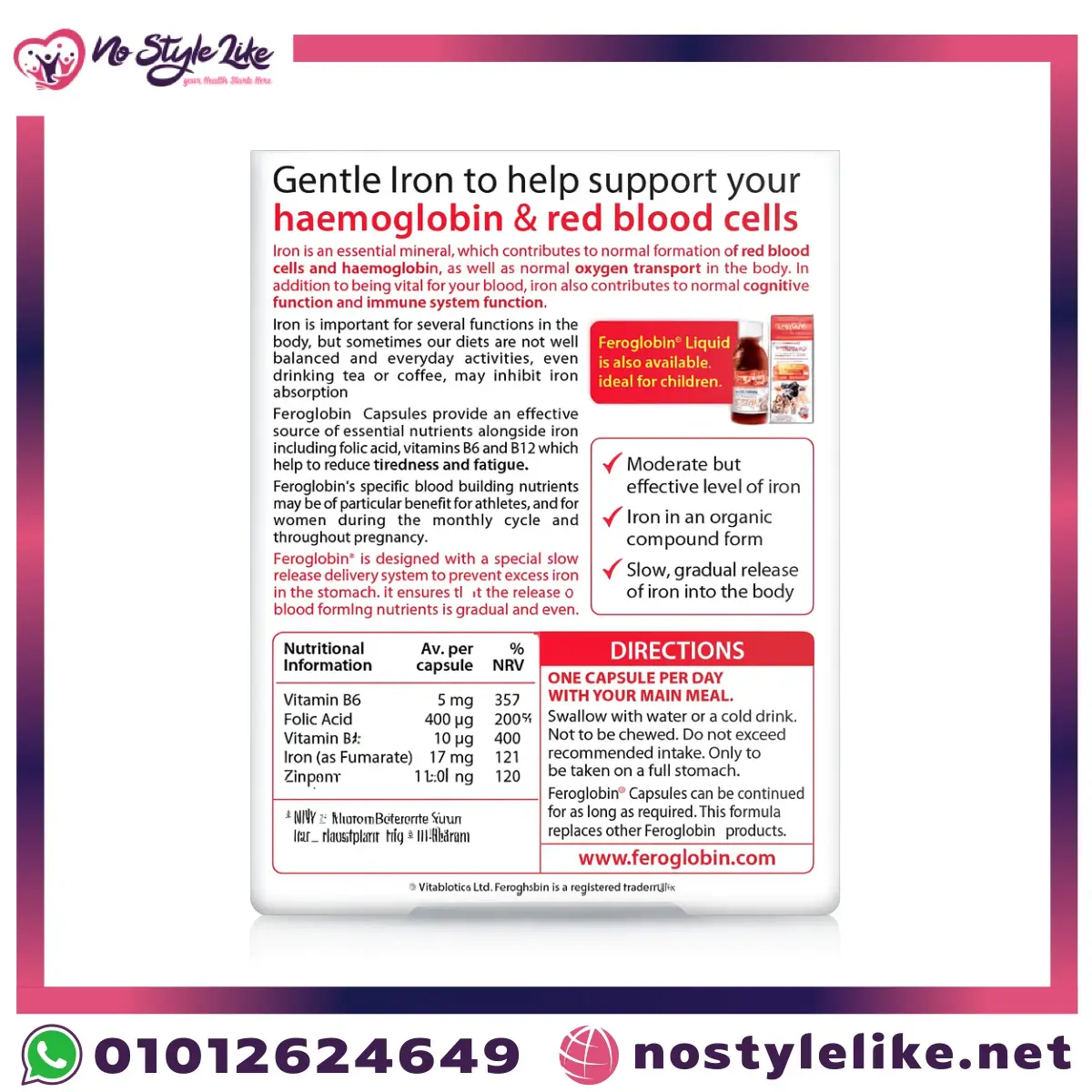
- Ingredients & Their Roles
- How Slow-Release Iron Works
- Main Benefits
- Real Use Cases
- Who Is It Best For?
- Who Should Avoid It?
- How to Use Correctly
- Best Time to Take
- Common Questions
- Expected Results Timeline
- Common Mistakes
- Myths vs Facts
- Drug Interactions
- Contraindications
- Required Tests
- What to Eat With It
- Effect on Other Medications
- When to See a Doctor
- NSL Expert Tip
- FAQ
- Conclusion
Introduction
Iron deficiency is the world’s most common nutritional deficiency, affecting an estimated 2 billion people globally. Women of childbearing age, pregnant women, athletes, and vegetarians are at highest risk. Symptoms often begin subtly — fatigue, pallor, breathlessness — before progressing to full iron-deficiency anaemia. Feroglobin by Vitabiotics addresses this with a balanced approach: slow-release iron to reduce digestive side effects, supported by carefully selected micronutrients that enhance absorption and support complete blood formation.
What Is Feroglobin?
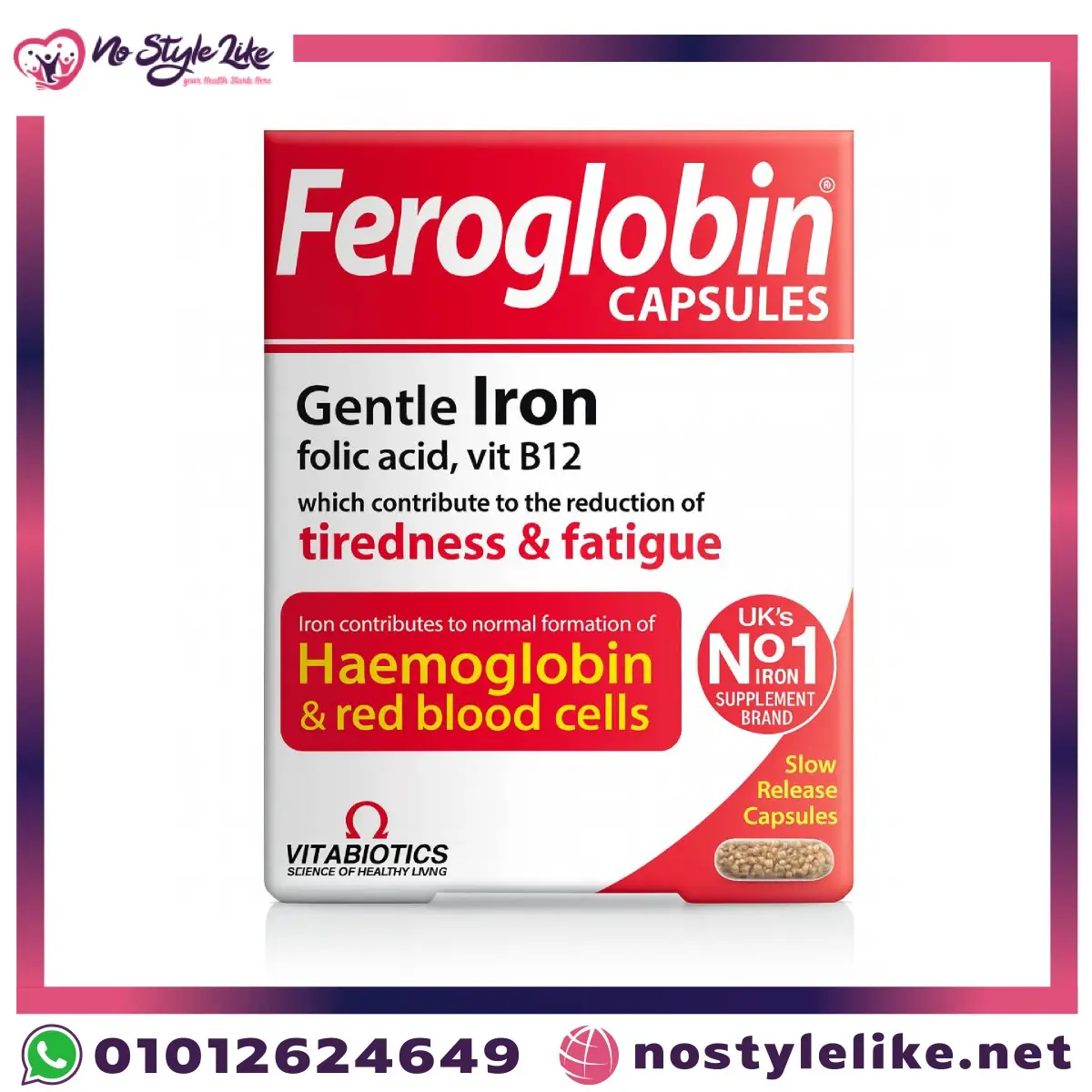
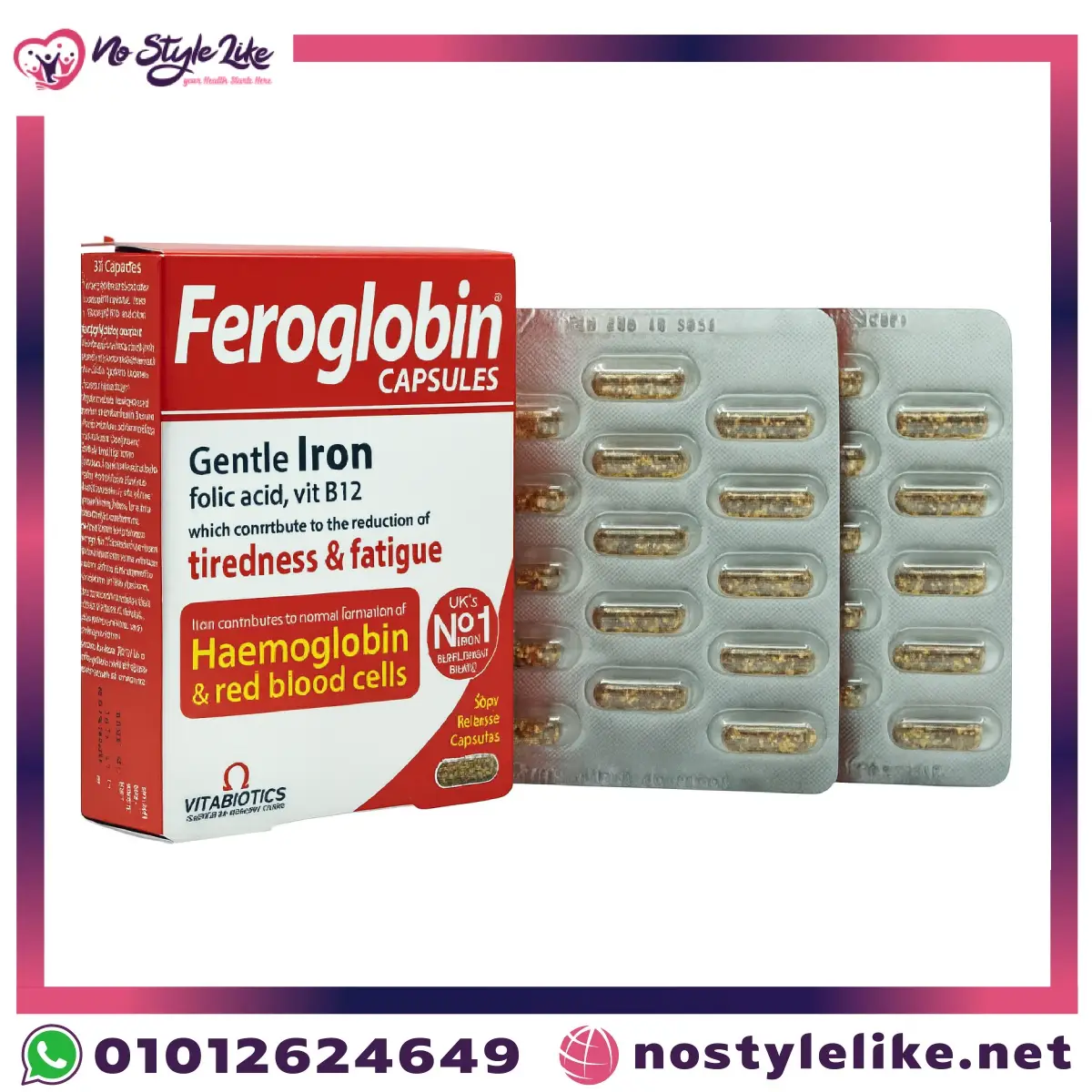
Feroglobin is a slow-release iron supplement produced by Vitabiotics — the UK’s No.1 iron supplement brand. Each box contains 30 capsules, with each capsule delivering a unique combination of iron (Ferrous Fumarate) alongside a spectrum of vitamins and minerals selected to support its absorption and enhance its effectiveness in blood formation.
What distinguishes it from standard iron supplements: the slow-release formula releases iron gradually throughout the digestive tract, significantly reducing the gastric irritation, nausea, and constipation commonly associated with conventional iron tablets.
Ingredients & Their Roles
| Ingredient | Role |
|---|---|
| Iron (Ferrous Fumarate) — slow-release | Haemoglobin & red blood cell formation; oxygen transport; reduces tiredness and fatigue |
| Folic Acid (B9) | Normal blood formation; essential in pregnancy for foetal cell development |
| Vitamin B12 (Cyanocobalamin) | Energy release; normal red blood cell formation; reduces fatigue |
| Vitamin B6 | Energy metabolism; normal immune function |
| Zinc | Immune function support; normal cognitive function |
| Copper | Normal iron transport in blood; connective tissue formation |
How Slow-Release Iron Works
Conventional iron supplements release iron rapidly in the digestive tract, causing irritation of the stomach and intestinal lining — the source of the nausea and constipation that lead many people to stop taking iron supplements.
Feroglobin’s slow-release formula releases iron gradually along the gastrointestinal tract, which:
- Significantly reduces gastric irritation and nausea
- Enables more stable, progressive absorption
- Improves daily compliance and consistency
- Reduces iron-associated constipation compared to immediate-release formulas
Main Benefits
- Supports normal haemoglobin formation and red blood cell production*
- Contributes to reducing tiredness and fatigue linked to iron deficiency*
- Supports normal immune system function*
- Essential in pregnancy for normal blood formation (Folic Acid)*
- Slow-release formula reduces the digestive discomfort of standard iron supplements
- Halal-certified capsule shell
- UK’s No.1 Iron Supplement brand (Vitabiotics)
*These benefits are supported by EFSA-approved health claims for iron, folic acid, vitamins B12 and B6, zinc, and copper.
Real Use Cases
| Situation | Suitable? | Note |
|---|---|---|
| Women of childbearing age with monthly blood loss | ✅ Yes | One of the most common and effective use cases |
| Pregnant women — supporting foetal blood formation | ✅ Yes, with medical supervision | Folic Acid is critically important in pregnancy |
| Vegetarians at risk of iron deficiency | ✅ Yes | Plant-based (non-haem) iron is less absorbed — supplement compensates |
| Athletes — particularly female endurance athletes | ✅ Yes | Intense exercise increases iron losses |
| Chronic fatigue with diagnosed iron deficiency | ✅ Yes | Addresses the cause, not just the symptom |
| Preventive use without confirmed deficiency | ⚠️ Caution | Consult doctor — excess iron is also harmful |
Who Is Feroglobin Best For?
- Women of childbearing age experiencing fatigue or pallor
- Pregnant women — under medical supervision
- Breastfeeding women
- Vegetarians and vegans
- Athletes, particularly female endurance athletes
- Older adults with reduced absorption capacity
- Those who experienced digestive discomfort with conventional iron supplements
Who Should Avoid Feroglobin?
- Hereditary haemochromatosis (iron overload disorder) — absolutely contraindicated
- Non-iron-deficiency anaemia (haemolytic, renal) — requires medical evaluation first
- Known allergy to any ingredient in the formula
- Children under 12 years — without medical supervision
- Epilepsy with high-dose folic acid concerns — consult your neurologist
How to Use Feroglobin Correctly
- Take one capsule daily with your main meal
- Swallow whole with a full glass of water — do NOT chew or crush (slow-release mechanism)
- Take with food to reduce gastric irritation
- Can be used long-term as required under medical supervision
- Store in a cool, dry place away from children
Best Time to Take Feroglobin
Optimal timing: with lunch or dinner — any main meal significantly reduces gastric irritation. Avoid taking with coffee, tea, or dairy products as these inhibit iron absorption. Taking alongside orange juice (Vitamin C) enhances absorption.
Common Questions Users Actually Ask
Does Feroglobin cause constipation?
The slow-release formula is specifically designed to reduce this common side effect of conventional iron. If mild constipation occurs, increase water intake and dietary fibre.
Is it suitable for pregnant women?
Feroglobin contains Folic Acid, which is critical in pregnancy. However, the dose and duration during pregnancy need medical supervision — do not start without consulting your doctor.
When will I notice improvement in energy levels?
Fatigue related to iron deficiency typically improves progressively over 4–8 weeks of regular use. However, full restoration of iron stores (ferritin) takes 3–6 months.
Can it be taken by children?
Feroglobin is formulated for adults. For children, consult a paediatrician for an age-appropriate iron supplement.
Expected Results Timeline
| Period | What to Realistically Expect |
|---|---|
| First 2 weeks | Iron building up — no noticeable change in most cases yet |
| 4–6 weeks | Beginning improvement in fatigue and energy with consistent use |
| 2–3 months | Measurable improvement in haemoglobin levels (visible on blood test) |
| 3–6 months | Full restoration of iron stores (ferritin) — depending on initial deficiency severity |
Blood test follow-up is essential to evaluate response and adjust duration accordingly.
Common Mistakes to Avoid
- Taking with coffee or tea: Tannins significantly inhibit iron absorption — separate by at least 2 hours
- Taking with dairy products: Calcium competes with iron for absorption
- Chewing or crushing the capsule: Destroys the slow-release mechanism and raises gastric irritation risk
- Stopping when you feel better: Haemoglobin improves before iron stores are fully restored — stopping early allows deficiency to return
- Taking without confirmed iron deficiency: Excess iron accumulates in organs and causes serious harm — confirm deficiency with a blood test first
Myths vs Facts
| Myth | Fact |
|---|---|
| “More iron means better blood.” | The body tightly regulates iron absorption. Excess iron accumulates in organs and causes serious damage. The right dose for your needs is what matters. |
| “All iron supplements cause severe constipation.” | This is far more common with immediate-release iron. Feroglobin’s slow-release formula is specifically designed to significantly reduce this effect. |
| “If you feel better, stop the supplement.” | Fatigue improves before iron stores are fully restored. Stopping early allows deficiency to return. |
| “Food alone is enough to treat iron deficiency.” | In moderate to severe deficiency, food alone rarely suffices to restore iron stores — supplementation is needed alongside healthy eating. |
Drug Interactions
| Drug / Substance | Potential Interaction | Recommendation |
|---|---|---|
| Thyroid medications (levothyroxine) | Iron impairs thyroid hormone absorption | Separate doses by 2–4 hours |
| Antacids | Significantly reduce iron absorption | Separate by at least 2 hours |
| Antibiotics (tetracycline, quinolones) | Iron reduces antibiotic effectiveness | Separate by 2–3 hours |
| Parkinson’s medications (levodopa, carbidopa) | Iron impairs their absorption | Separate by 2 hours |
| Calcium supplements or dairy | Competes with iron for absorption | Separate by 2 hours |
| Vitamin C (ascorbic acid) | Enhances iron absorption significantly | Take together — beneficial combination |
Source: NIH ODS – Iron
Contraindications
- Hereditary haemochromatosis — absolutely contraindicated
- Non-iron-deficiency anaemia — requires medical evaluation first
- Known allergy to any ingredient
- Children under 12 years — without medical supervision
- Epilepsy with high-dose folic acid concerns — consult neurologist
Required Tests Before & During Use
- Full Blood Count (CBC): Determines haemoglobin level and diagnoses anaemia
- Serum Ferritin: Most accurate measure of iron stores — essential before starting
- Serum Iron and TIBC: Confirms the cause of anaemia
- B12 and Folic Acid levels: Rules out other causes of anaemia
- Follow-up after 3 months: Evaluates response and determines whether to continue
What to Eat Alongside Feroglobin for Best Absorption
Enhances iron absorption — take alongside:
- Vitamin C sources — orange juice, strawberries, red peppers: take with or immediately after the capsule
- Red meat and poultry — haem iron enhances absorption of non-haem iron
Inhibits absorption — separate from the dose:
- Coffee and tea (tannins) — separate by 2 hours
- Dairy products (calcium) — separate by 2 hours
- Bran and whole grains (phytates) — separate by 1 hour
- Spinach and chocolate (oxalates) — separate by 1 hour
Effect of Feroglobin on Other Medications
- Iron forms complexes with some medications that reduce their absorption — the general principle: separate from any other medication by at least 2 hours
- If you take regular medications, inform your doctor before starting Feroglobin
- Pregnant women taking comprehensive prenatal vitamins containing iron — check with your doctor to avoid duplicate dosing
When to See a Doctor
- Severe fatigue, pallor, and persistent breathlessness — these are anaemia symptoms requiring evaluation
- Before use during pregnancy or breastfeeding
- If symptoms don’t improve after 6 weeks of regular use
- If you have any chronic condition or take regular medications
- If allergic symptoms appear (rash, itching, breathing difficulty)
NSL Expert Tip
Dr. Abdallah Fouad, Clinical Nutrition Specialist — 25+ years of experience:
“Feroglobin by Vitabiotics stands out for three things that make it a smart choice: the slow-release iron addresses the most common compliance barrier with iron supplements — digestive discomfort; the comprehensive blend with Folic Acid, B12, B6, and copper supports complete blood formation, not just iron levels; and the Halal-certified capsule shell matters for our patient population. My consistent advice: pay close attention to what you pair with Feroglobin — take it with orange juice or a Vitamin C-rich food, and keep coffee, tea, and dairy well separated from it. That simple adjustment meaningfully improves what you actually absorb.”
Frequently Asked Questions
Is Feroglobin suitable for pregnant women?
It contains Folic Acid, which is critical in pregnancy. However, dose and duration during pregnancy require medical supervision — consult your doctor before starting.
Is the capsule shell Halal?
Yes. Feroglobin by Vitabiotics comes in a Halal-certified capsule shell.
Can it be taken on an empty stomach?
Preferably with a meal to reduce gastric irritation. If you tolerate it well it can be taken on an empty stomach, but with a full glass of water.
How long should treatment last?
Depends on deficiency severity. Minimum typically 3 months. Your doctor determines the correct duration based on follow-up blood tests.
Can men take Feroglobin?
Yes. Although women are at higher risk of iron deficiency, men with confirmed deficiency on blood tests benefit equally.
What’s the difference between Feroglobin and standard iron?
Standard iron (e.g. ferrous sulphate) releases immediately, causing greater digestive irritation. Feroglobin’s slow-release formula reduces this effect while adding micronutrients that support complete blood formation.
Where can I buy authentic Feroglobin in Egypt?
Available through No Style Like store with guaranteed authentic sourcing and verified expiry dates.
Conclusion
Feroglobin by Vitabiotics represents a comprehensive approach to iron supplementation — combining slow-release iron with a targeted spectrum of supporting micronutrients in a single daily Halal-certified capsule. Those who benefit most: women of childbearing age, pregnant women, vegetarians, and athletes.
Realistic expectations: 4–6 weeks for initial fatigue improvement, 3–6 months for full iron store restoration. Daily consistency + avoiding absorption inhibitors + blood test monitoring = best results.
Related: Vitamins & Supplements · Women’s Health Products
Reviewed by: Dr. Abdallah Fouad, Clinical Nutrition Specialist — 25+ years of experience
Disclaimer: Dietary supplement, not a medicine. Consult your doctor before use if pregnant or managing a chronic condition. Source: NIH ODS – Iron
Reviews
There are no reviews yet.