


Description
Key facts
| Brand | Vitabiotics – Feroglobin |
|---|---|
| Type | Liquid food supplement |
| Age | 4–24 months |
| Size | One 30 ml bottle |
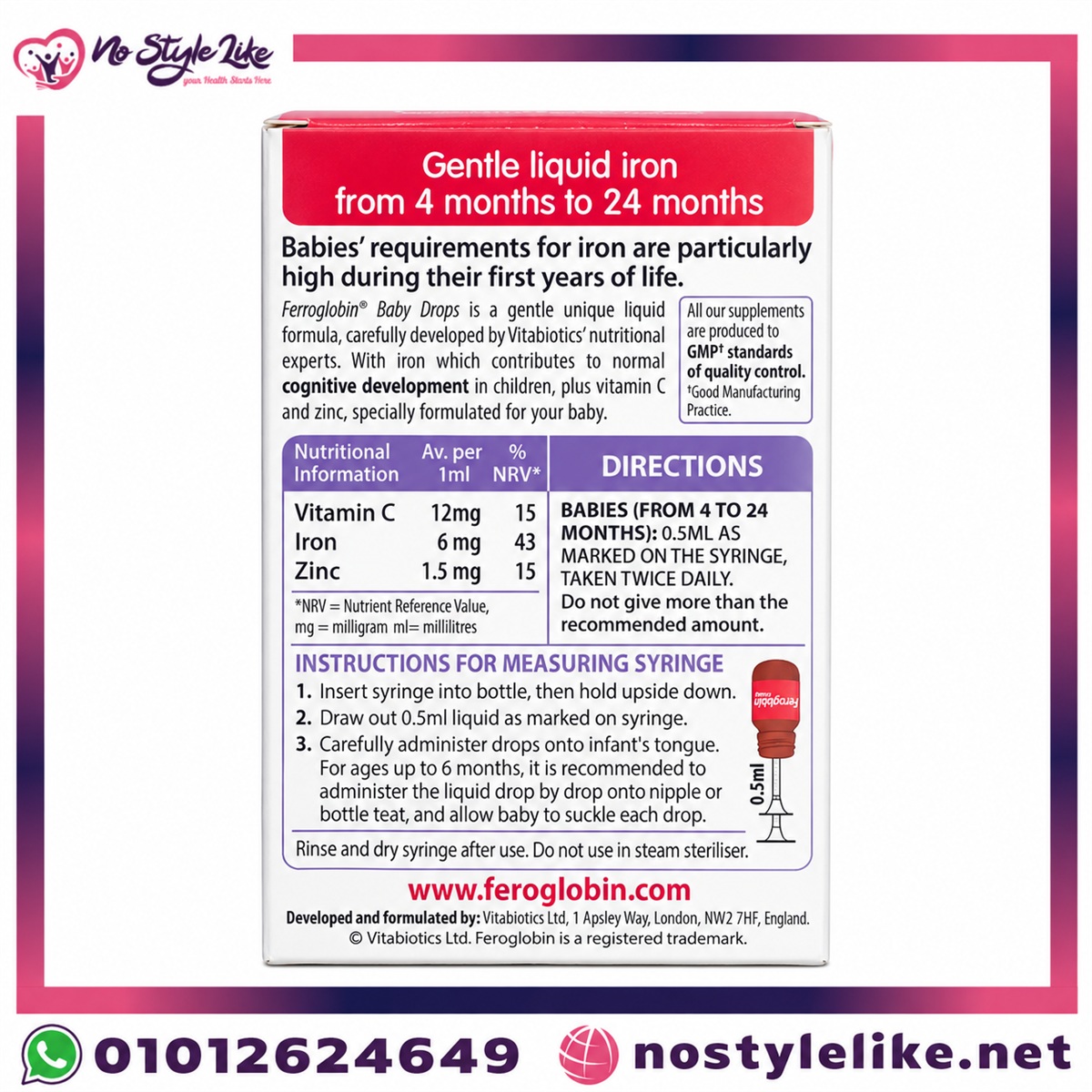
| Per 1 ml | Iron 6 mg; vitamin C 12 mg; zinc 1.5 mg |
| Flavour | Natural strawberry |
| Price | EGP 1225 |
| Availability | In stock |
Short description
Iron drops with three nutrients, measured with the supplied syringe. Check age, ingredients and current supplements before choosing.
Introduction
Choosing iron drops starts with your baby’s age and nutritional needs. This guide explains the formula, measurement and questions to discuss with your paediatrician before use.
What is Feroglobin Baby Drops?
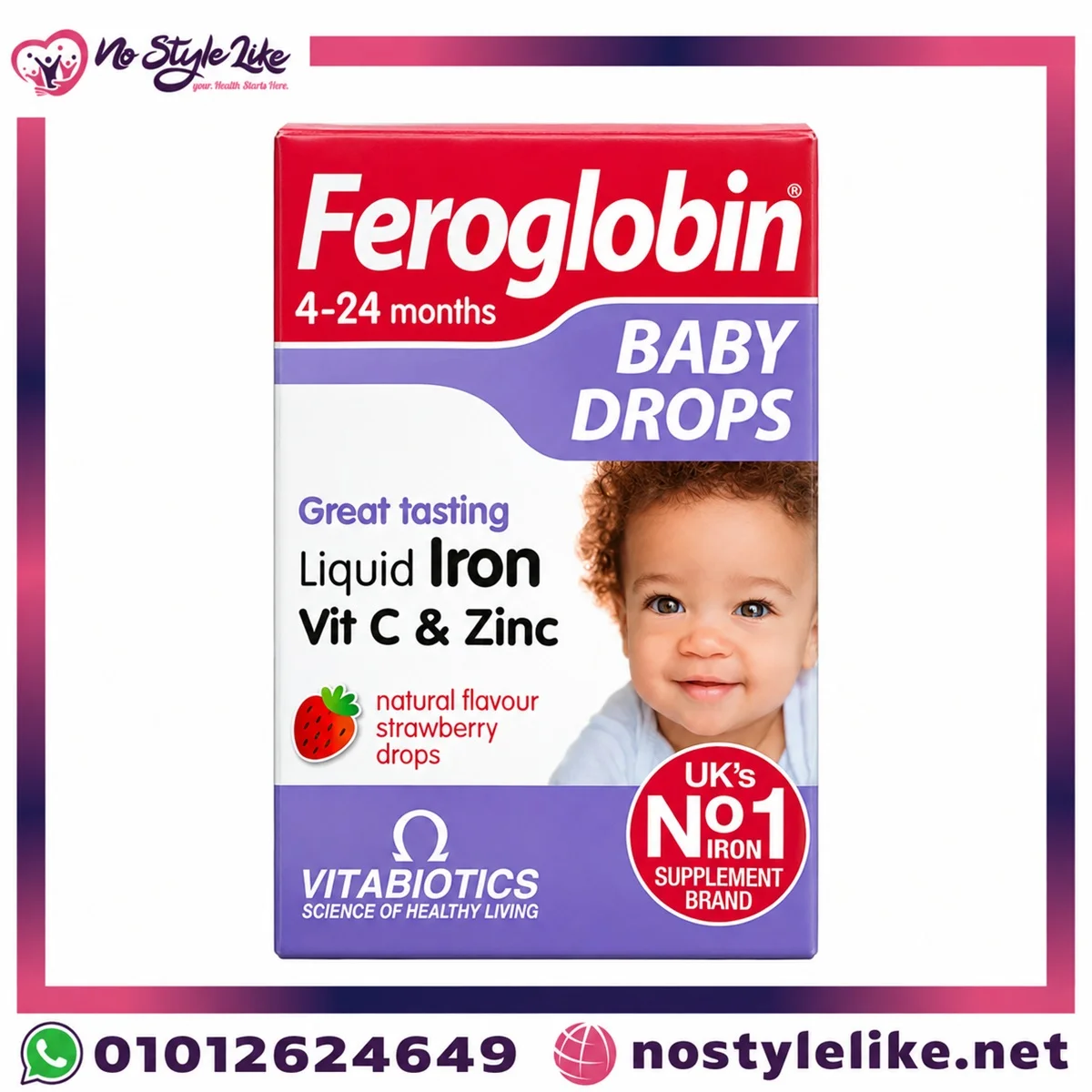
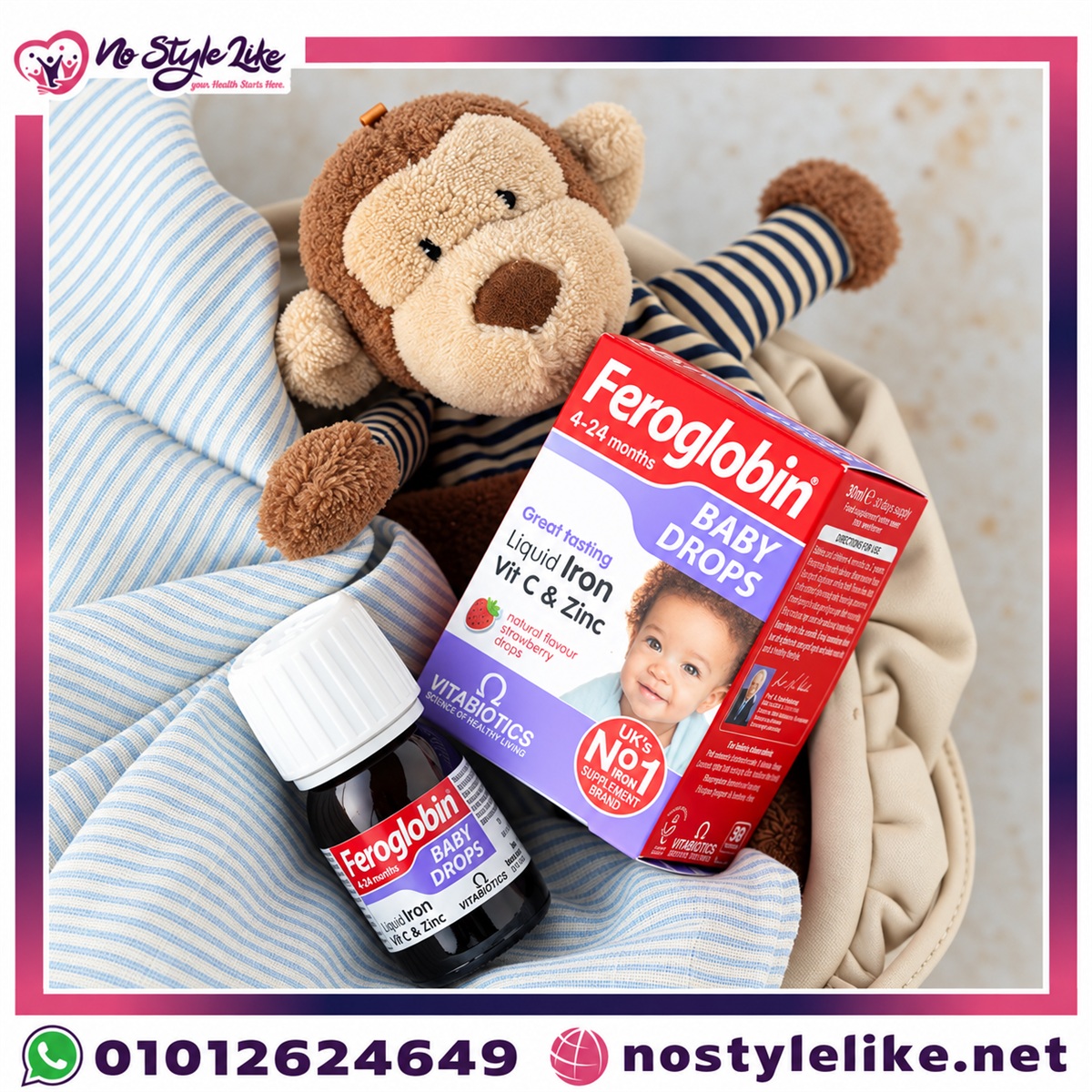
It is a liquid food supplement from Vitabiotics containing iron, vitamin C and zinc. The 30 ml bottle includes a graduated oral syringe and is labelled for ages 4–24 months. It does not replace milk feeds or food.
How does the formula work?
Iron contributes to normal cognitive development in children, while vitamin C increases iron absorption. These roles do not establish that a supplement increases intelligence or treats developmental delay; suitability depends on diet and health.
Main benefits and practical features
The formula supplies iron with two supporting nutrients in a measurable liquid. Practical features include natural strawberry flavour and an oral syringe. It is vegan friendly, gluten free and lactose free. These are formulation features, not a promise of a treatment outcome.
Real use cases
Parents may discuss this product when reviewing the iron in an age-appropriate child’s diet. A practical example is taking photos of current formula and supplement labels to the appointment so the clinician can check for duplication. These are illustrative situations, not customer testimonials or a recommendation for every baby.
Who is it best for?
It may suit a child aged 4–24 months when a clinician considers this supplement appropriate. Age alone does not establish a need. Discuss feeding, prematurity and existing treatment rather than applying one supplement plan to every child.
Who should avoid self-directed use?
Do not start it outside the labelled age range or alongside another iron-containing supplement. If your child is under medical supervision, has epilepsy or food allergies, ask a doctor or pharmacist to review the ingredients first.
How to use correctly
The label dose for ages 4–24 months is 0.5 ml twice daily; do not exceed it. Insert the syringe into the bottle, invert and draw liquid to the 0.5 ml mark. Administer gently. Up to 6 months, the manufacturer advises applying it drop by drop to the nipple or bottle teat, allowing the baby to suckle each drop. Rinse and dry the syringe; do not steam sterilise it. Follow the current pack and your child’s clinician.
Best time to use
The manufacturer suggests giving it just before a feed. Choose two memorable times without disrupting feeding. Ask a pharmacist about timing if your baby takes medicine; do not double the amount to make up for a missed dose.
Common questions before buying
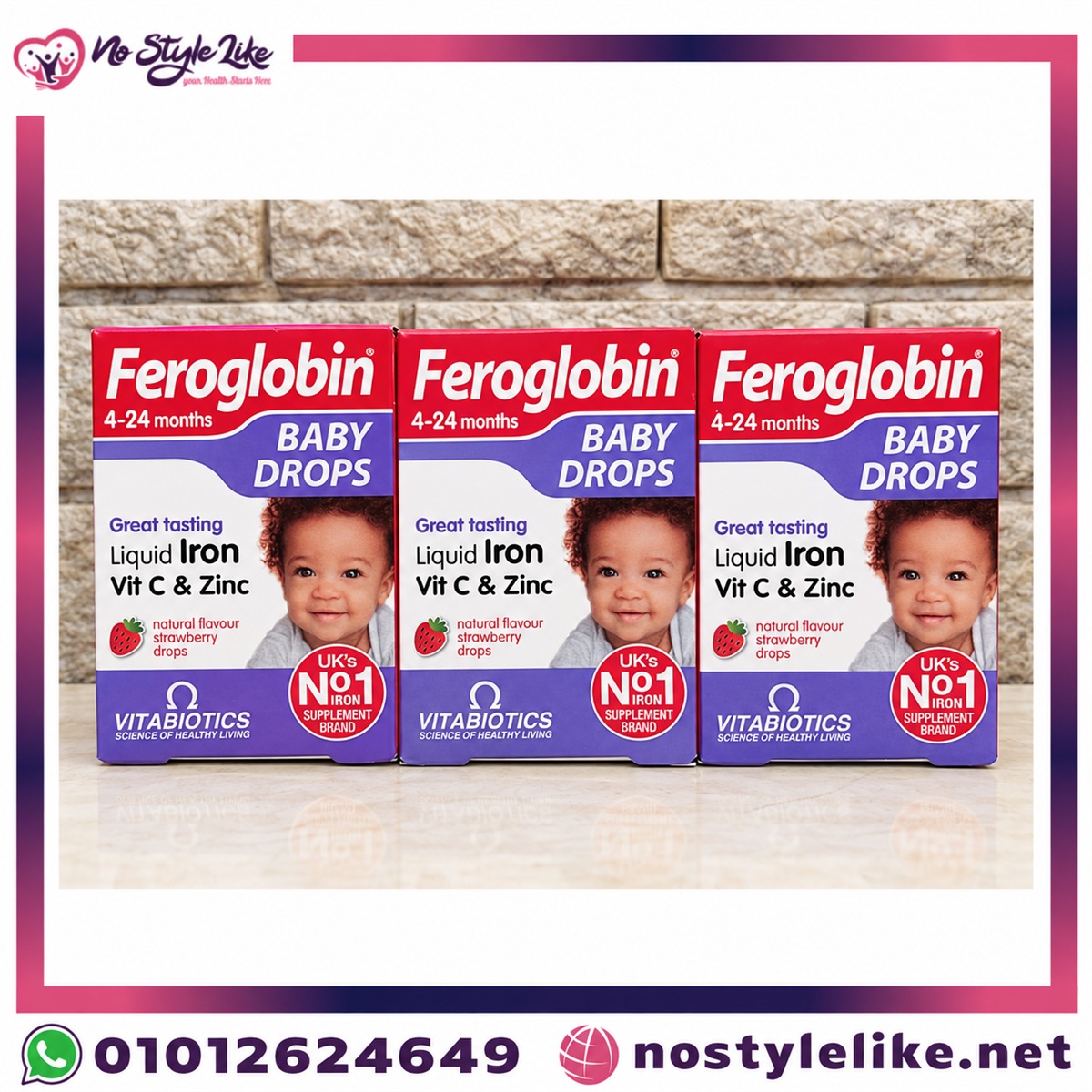
The displayed price is for one 30 ml bottle, even when a gallery photo shows several cartons. The labelled total is 1 ml per day, so a bottle provides approximately 30 days. Measure in millilitres using the syringe, not by counting drops or using a household spoon.
Expected results timeline
There is no guaranteed date for a noticeable change with this product. For confirmed deficiency, the clinician selects treatment and follow-up based on assessment. Appetite or activity alone cannot confirm restored iron stores. Do not increase the dose to accelerate results.
Common mistakes
Avoid confusing 0.5 ml with 5 ml, combining iron supplements and assuming every case of pallor is iron deficiency. A simple dose log can prevent accidental repeat dosing when more than one caregiver looks after your baby.
Myths versus facts
Natural flavour does not mean sugar free: the ingredients include glucose syrup and cane sugar. A supplement does not guarantee weight gain, and a higher iron dose is not automatically a better choice. Compare concentration and ingredients rather than relying on the product name.
Drug interactions
Iron can interact with medicines. One relevant example is levothyroxine, whose absorption may be reduced when taken with iron. Give the pharmacist a complete medicine and supplement list to determine suitability and spacing; do not stop prescribed treatment yourself.
Contraindications and precautions
Do not use it with a known allergy to an ingredient. A child with iron overload or haemochromatosis needs a clinician’s decision before receiving iron. The manufacturer notes that the production site may handle nuts. Do not use a bottle with a broken seal.
Are tests required?
Tests are not a condition of purchase, but may be appropriate when a clinician suspects anaemia or iron deficiency. A full blood count may be used first, with further testing if needed to identify the cause. Avoid repeated testing or interpreting results without clinical context.
What to eat alongside it
Once your baby is ready for complementary foods, discuss iron-rich options such as puréed meat, well-cooked mashed pulses and fortified cereals. Use age-appropriate textures alongside foods containing vitamin C. Do not introduce solids early just to give a supplement or replace milk feeds with it.
Effect of other medicines and supplements
Calcium supplements may affect iron absorption, and some acid-suppressing medicines may reduce absorption of non-haem iron. This is general iron guidance, not a complete interaction list for this product. Ask the pharmacist to review the actual regimen rather than applying one spacing rule to all medicines.
When to see a doctor
Arrange assessment if you suspect anaemia or notice persistent symptoms. If too much iron is swallowed, seek medical help immediately even without symptoms and keep the bottle available to identify its strength. Iron overdose can be dangerous in children.
NSL practical tip
Write the opening date on the bottle and keep one shared dose record. Store unopened below 25°C in a dry place; refrigerate after opening and use within 3 months as directed by the manufacturer. Keep out of children’s sight and reach. This is a practical organisation tip, not individual medical advice.
Conversational FAQ about Feroglobin Baby Drops
Is Feroglobin Baby Drops a treatment for anaemia?
It is a food supplement and should not replace clinician-led diagnosis and treatment of anaemia.
Can I give it before 4 months?
Do not use it on your own before the labelled age; ask a paediatrician for an appropriate plan.
Does Feroglobin Baby Drops contain vitamin D?
The listed formula contains iron, vitamin C and zinc; vitamin D is not included in the nutrient table.
Can I add another iron supplement?
No. The manufacturer advises against combining it with other iron-containing supplements. Consult the clinician if iron is already prescribed.
What is the pack size, and do the photos mean three bottles?
This listing is for one 30 ml bottle. A photo of multiple cartons is illustrative only.
Conclusion
Feroglobin Baby Drops combines iron, vitamin C and zinc for the age range shown on the pack. Use depends on your child’s needs, accurate measurement and a check of other supplements. The price is EGP 1225 for one 30 ml bottle.
Sources and authorship
Prepared with AI assistance for the No Style Like product page, using the pack label and sources below. Information updated 10 September 2026. The content and medical information have been reviewed and medically checked by the medical team at No Style Like Pharmacy.
- Vitabiotics: Feroglobin Baby Drops
- NIH Office of Dietary Supplements: Iron
- NHS: Iron deficiency anaemia
Medical disclaimer: this is general information about a food supplement, not a diagnosis or prescription. Discuss use and testing in children with a doctor or pharmacist.

Reviews
There are no reviews yet.