


Description
Table of Contents
- Introduction
- What Is Hydrocortisone-POS® Eye Ointment?
- Active Ingredient & Composition
- Ingredient Breakdown
- How Does It Work?
- Approved Uses
- Who Is It Best For?
- Who Should Avoid It? / Contraindications
- How to Use / Dosage
- Expected Results Timeline
- Common Questions Users Ask
- Common Mistakes
- Myths vs Facts
- Drug Interactions
- When to See a Doctor
- Tests & Monitoring Required
- How It Affects Other Medications
- Storage & Handling
- NSL Expert Tip
- FAQ (10 Questions & Answers)
- Conclusion
Introduction
Eye inflammation — whether from allergies, surgery, or autoimmune flare-ups — can cause significant discomfort, blurred vision, and disruption to daily life. While many patients reach for basic eye drops, moderate-to-severe ocular inflammation often requires a targeted anti-inflammatory agent that works directly at the site of the problem.
Hydrocortisone-POS® Eye Ointment 2.5% fills exactly this gap. Manufactured by URSAPHARM Arzneimittel GmbH — a German pharmaceutical company with over 50 years of specialization in ophthalmology — this sterile ointment delivers hydrocortisone acetate directly to inflamed ocular tissues. Clinical trials published in BMC Ophthalmology (2014) have confirmed that the 2.5% concentration achieves clinically relevant improvement in approximately 73.5 hours, making it one of the most effective concentrations available for acute non-infectious eye inflammation.
In this comprehensive guide, we cover everything you need to know before using Hydrocortisone-POS® — from mechanism of action and approved indications, to contraindications, drug interactions, and monitoring requirements.
What Is Hydrocortisone-POS® Eye Ointment?
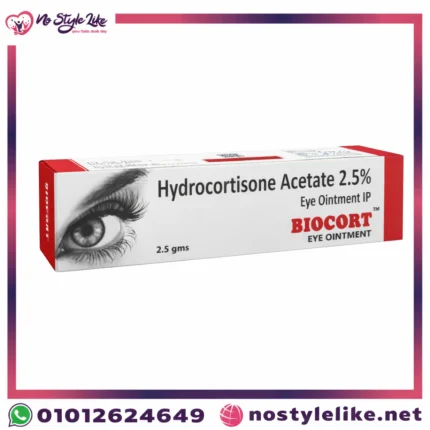
Hydrocortisone-POS® is a sterile ophthalmic ointment containing 2.5% hydrocortisone acetate as the active pharmaceutical ingredient. Hydrocortisone is a naturally occurring glucocorticoid hormone (cortisol) that, when applied topically to the eye, suppresses local inflammatory responses without the systemic side effects associated with oral corticosteroids.
The ointment is formulated in a petrolatum-based vehicle that provides prolonged contact time with the ocular surface — making it particularly useful as a nighttime application when blurred vision from the ointment base is less of a concern. The product is classified as a low-potency ophthalmic corticosteroid, meaning it carries a lower risk of the serious ocular side effects (such as glaucoma and cataracts) associated with more potent steroids like dexamethasone or prednisolone, while still providing effective anti-inflammatory action.
URSAPHARM Arzneimittel GmbH, headquartered in Saarbrücken, Germany, has been a global leader in ophthalmic pharmaceutical manufacturing since 1974. Their POS® line of eye ointments is well-established across Europe, Russia, the Middle East, and now available in Egypt through specialized importers.
Registration Number: ЛП-001902/09
GTIN: 04031626100439
Active Ingredient & Composition
The product packaging lists the following composition:
| Component | Per 1 g Ointment | Role |
|---|---|---|
| Hydrocortisone Acetate | 25 mg (2.5%) | Active — corticosteroid anti-inflammatory |
| White Petrolatum (Vaseline) | q.s. to 1 g | Ointment base — prolongs contact time |
| Liquid Paraffin | q.s. | Viscosity modifier — improves spreadability |
Note: The formulation is preservative-free in the ointment base, which reduces the risk of preservative-related irritation common with eye drop preparations.
Ingredient-by-Ingredient Breakdown
| Ingredient | Concentration | Role / Mechanism |
|---|---|---|
| Hydrocortisone Acetate | 25 mg/g (2.5%) | Stabilizes leukocyte lysosomal membranes, preventing release of destructive acid hydrolases. Inhibits phospholipase A2 → reduces prostaglandin and leukotriene synthesis → decreases swelling, redness, itching, and pain. Low-potency steroid with favorable ocular safety profile. |
| White Petrolatum | Vehicle base | Occlusive, inert ointment base. Provides a protective layer over the eye surface, extending drug contact time and offering additional lubrication for dry eyes. |
| Liquid Paraffin | Vehicle component | Adjusts ointment viscosity for easier application. Helps the ointment spread evenly across the conjunctival sac. |
How Does It Work?
Hydrocortisone acetate is a glucocorticoid that works at the cellular level to suppress inflammation. When applied to the eye:
- Membrane Stabilization: It stabilizes the membranes of leukocyte lysosomes, preventing the release of destructive enzymes (acid hydrolases) that would otherwise damage surrounding tissue.
- Prostaglandin Inhibition: It inhibits the enzyme phospholipase A2, which blocks the production of arachidonic acid — the precursor to prostaglandins and leukotrienes. These are the key chemical mediators responsible for swelling, redness, heat, and pain in inflammation.
- Vasoconstriction: It causes mild vasoconstriction of the small blood vessels in the conjunctiva, reducing redness and fluid leakage (edema).
- Immune Suppression (local): It reduces the migration of white blood cells (leukocytes) to the site of inflammation and decreases capillary permeability, limiting the inflammatory cascade.
Because hydrocortisone is a naturally occurring hormone (cortisol) and is classified as a low-potency corticosteroid, it achieves effective anti-inflammatory action with a lower risk of the serious ocular side effects (elevated intraocular pressure, posterior subcapsular cataracts) that are more commonly seen with high-potency ophthalmic steroids such as dexamethasone or prednisolone acetate.
The ointment formulation provides extended drug release compared to eye drops — typically maintaining therapeutic contact with the ocular surface for 6–8 hours, making it ideal for overnight use.
Approved / Stated Uses
Hydrocortisone-POS® Eye Ointment 2.5% is indicated for the treatment of:
- Allergic conjunctivitis — seasonal and perennial
- Acute and chronic iritis and iridocyclitis
- Blepharitis (inflammation of the eyelid margins) — non-infectious forms
- Uveitis and chorioretinitis
- Sympathetic ophthalmia
- Post-operative ocular irritation — following eye surgery
- Restoration of corneal transparency after keratitis
- Suppression of corneal neovascularization — preventing abnormal blood vessel growth on the cornea
- Non-infectious inflammation of the ocular surface and adnexa
Important: This medication treats inflammation only. It does NOT treat the underlying cause of infection. If a bacterial, viral, or fungal infection is present, appropriate antimicrobial therapy must be started FIRST or concurrently as directed by your ophthalmologist.
Who Is It Best For?
Hydrocortisone-POS® is best suited for:
- Adults and adolescents with acute non-infectious eye inflammation causing redness, swelling, and discomfort
- Patients with allergic conjunctivitis who have not responded adequately to antihistamine eye drops alone
- Post-operative patients needing short-term anti-inflammatory control following cataract surgery, LASIK, or other ocular procedures
- Patients with chronic blepharitis who need periodic anti-inflammatory therapy as part of an eyelid hygiene regimen
- Patients who prefer an ointment formulation (e.g., for nighttime use) rather than eye drops
- Patients for whom a low-potency corticosteroid is considered appropriate by their ophthalmologist — reducing risk compared to stronger steroids
Who Should Avoid It? / Contraindications
⚠ Do NOT Use Hydrocortisone-POS® If You Have:
- Epithelial herpetic keratitis (dendritic ulcer) or any other viral disease of the cornea or conjunctiva — corticosteroids can worsen herpes simplex eye infections dramatically
- Bacterial eye infections without concurrent antibiotic coverage — steroids suppress immunity and can allow infection to spread
- Fungal infections of the eye — corticosteroids can exacerbate mycotic infections
- Ocular tuberculosis
- Corneal wounds or ulcerative lesions — steroids delay wound healing and may cause corneal perforation
- Open-angle or closed-angle glaucoma (uncontrolled) — corticosteroids can raise intraocular pressure
- Known hypersensitivity to hydrocortisone or any excipient in the formulation
Use With Caution In:
- Pregnant women — only if the potential benefit justifies the potential risk to the fetus (Category C)
- Breastfeeding mothers — insufficient data on excretion into breast milk from ophthalmic application
- Children — safety and effectiveness have not been fully established; use only under strict medical supervision
- Patients with a history of elevated intraocular pressure (IOP) or steroid-responsive glaucoma
- Contact lens wearers — remove lenses before application; wait at least 15 minutes before reinsertion
How to Use / Dosage
As directed by your physician only. The following are general guidelines from the manufacturer — your ophthalmologist may adjust the dose based on your condition:
- Wash your hands thoroughly before use.
- Tilt your head back and gently pull down the lower eyelid to create a small pocket.
- Apply a thin strip (approximately 1 cm) of ointment into the lower conjunctival sac.
- Close your eye gently and roll your eyeball in all directions to distribute the ointment evenly.
- Wipe away any excess ointment from around the eye with a clean tissue.
- Do not touch the tube tip to the eye or any surface to maintain sterility.
Typical Dosing: Apply 2–3 times daily, or as directed by your physician. Many physicians recommend a primary application at bedtime due to the temporary blurred vision caused by the ointment base.
Duration of Treatment: Typically 1–2 weeks for acute conditions. Do NOT use continuously for longer than 10–14 days without medical reassessment. Prolonged use increases the risk of elevated intraocular pressure and posterior subcapsular cataracts.
Tapering: When discontinuing after more than a few days of use, your doctor may gradually reduce the frequency rather than stopping abruptly, to prevent rebound inflammation.
Expected Results Timeline
| Period | What to Expect |
|---|---|
| First 24 hours | Initial reduction in itching and discomfort. Some patients notice decreased redness. Temporary blurred vision for 15–30 minutes after application is normal. |
| 48–72 hours | Clinically significant improvement. A clinical trial showed 50% reduction in signs and symptoms within approximately 73.5 hours with the 2.5% concentration. |
| Day 5–7 | Most acute inflammatory symptoms should be substantially resolved. Swelling, redness, and discharge markedly reduced. |
| Day 10–14 | Complete healing expected in most cases. Medical reassessment recommended. If symptoms persist, the diagnosis should be re-evaluated. |
Common Questions Users Ask
Is Hydrocortisone-POS® the same as skin hydrocortisone cream?
No. While both contain hydrocortisone, the ophthalmic ointment is manufactured under sterile conditions specifically for eye use. Skin creams contain preservatives and other ingredients that can irritate or damage the eye. Never use a skin hydrocortisone product in your eyes.
Can I use this ointment with my contact lenses?
Remove contact lenses before application. The ointment base (petrolatum) can coat and damage soft contact lenses. Wait at least 15 minutes — though many ophthalmologists recommend removing lenses for the entire duration of treatment.
Will it blur my vision?
Yes, temporarily. The petrolatum base causes a film over the eye that blurs vision for 15–30 minutes after application. This is why nighttime application is often recommended. Do not drive or operate machinery immediately after applying the ointment.
Can I use Hydrocortisone-POS® for pink eye (conjunctivitis)?
Only if your ophthalmologist determines the conjunctivitis is allergic or non-infectious in nature. Using corticosteroids on bacterial or viral conjunctivitis without appropriate antimicrobial coverage can be dangerous — it can suppress the immune response while the infection spreads, potentially causing serious damage.
Is it safe during pregnancy?
Corticosteroids are classified as Pregnancy Category C — meaning animal studies have shown teratogenic effects, but there are no adequate studies in pregnant women. Use during pregnancy only if clearly needed and prescribed by your doctor after weighing benefits against risks.
Common Mistakes
- Using without a prescription: Some patients self-medicate based on previous experience. Each episode of eye inflammation may have a different cause — bacterial, viral, allergic — and using a steroid on an infection can be sight-threatening.
- Applying too much ointment: A thin strip (about 1 cm) is sufficient. Excess ointment does not speed recovery and increases blurred vision duration.
- Continuing beyond 14 days without medical review: Prolonged unsupervised use can silently raise intraocular pressure, leading to steroid-induced glaucoma.
- Touching the tube tip to the eye: This contaminates the ointment and breaks sterility. Hold the tube above the eye and squeeze gently.
- Using with contact lenses in place: The petrolatum base damages soft lenses and traps the drug under the lens.
- Stopping abruptly after prolonged use: This can cause rebound inflammation. Taper as directed by your physician.
- Using on both eyes when only one is affected: Unless prescribed for both eyes, limit application to the affected eye only to minimize unnecessary steroid exposure.
Myths vs Facts
| Myth | Fact |
|---|---|
| “Eye ointments are less effective than eye drops” | Ointments actually provide longer contact time and sustained drug release, making them more effective for nighttime use and severe inflammation. |
| “Hydrocortisone is too weak for eye inflammation” | Clinical trials confirm that 2.5% hydrocortisone achieves clinically relevant improvement within 73.5 hours. Its lower potency actually reduces risk of serious side effects while maintaining efficacy. |
| “I can use leftover ointment from a previous tube” | Once opened, ophthalmic ointments should be discarded after 28 days (or per manufacturer instructions) due to contamination risk. Never use an expired or previously opened tube. |
| “Steroid eye ointments always cause cataracts” | Posterior subcapsular cataracts are associated with prolonged use (weeks to months) of potent steroids. Short-term use (1–2 weeks) of a low-potency steroid like hydrocortisone carries minimal cataract risk. |
| “Any redness in the eye needs steroid treatment” | Many causes of red eyes (dry eye, viral infection, foreign body) should NOT be treated with steroids. A correct diagnosis from an ophthalmologist is essential before starting treatment. |
Drug Interactions / Interactions to Be Aware Of
While ophthalmic corticosteroids have limited systemic absorption, the following interactions should be considered — especially with concurrent eye medications or systemic drugs:
| Drug / Substance | Risk / Interaction |
|---|---|
| Other ophthalmic medications (eye drops) | Wait at least 5–10 minutes between different eye medications. Apply drops BEFORE ointments — ointments create a barrier that blocks drop absorption. |
| CYP3A4 inhibitors (ketoconazole, itraconazole, ritonavir) | May increase systemic hydrocortisone levels if significant absorption occurs. Risk is low with ophthalmic use but caution is advised with prolonged treatment. |
| Anticholinergic eye drops (atropine, cyclopentolate) | Concurrent use with corticosteroids may increase the risk of elevated intraocular pressure. Monitor IOP closely. |
| NSAIDs (oral or topical ophthalmic — e.g., diclofenac eye drops) | Combined use with corticosteroids may increase the risk of corneal healing problems. Use under strict medical supervision. |
| Live vaccines | Systemic corticosteroids reduce vaccine efficacy. Ophthalmic doses are unlikely to reach immunosuppressive levels, but caution is warranted with prolonged use. |
| Diabetes medications (insulin, oral hypoglycemics) | Systemic absorption of corticosteroids can raise blood glucose. Risk is minimal with short-term ophthalmic use but diabetic patients should monitor blood sugar. |
| Glaucoma medications (timolol, latanoprost, brimonidine) | Corticosteroids can counteract the IOP-lowering effect of glaucoma medications. Concurrent use requires close IOP monitoring by an ophthalmologist. |
When to See a Doctor / Seek Medical Advice
Seek immediate medical attention if you experience:
- Sudden severe eye pain or headache
- Sudden vision loss or significant worsening of vision
- Seeing halos around lights (possible sign of elevated IOP)
- Eye discharge that becomes thick, yellow, or green (sign of bacterial infection)
- Worsening redness or swelling despite 48+ hours of treatment
- Development of new eye symptoms such as photophobia (light sensitivity) or floaters
- Signs of allergic reaction: severe swelling of eyelids, difficulty breathing, rash
Additionally, contact your ophthalmologist if:
- Symptoms do not improve within 5–7 days of treatment
- You need to use the ointment for more than 14 days
- You accidentally use the ointment in an eye with a known or suspected infection
- You are pregnant or become pregnant while using this medication
Tests & Monitoring Required
Because this is a corticosteroid applied to the eye, your ophthalmologist should perform the following monitoring:
| Test / Assessment | When | Purpose |
|---|---|---|
| Intraocular Pressure (IOP) measurement | Before treatment and at each follow-up visit | Detect steroid-induced elevation of IOP (risk for glaucoma) |
| Slit-lamp examination | Before and during treatment | Assess corneal integrity; rule out herpetic keratitis (dendritic ulcer) before starting steroids |
| Fluorescein staining | Before treatment | Detect corneal ulcers or epithelial defects (contraindications) |
| Visual acuity | Before and after treatment course | Document baseline and monitor for cataracts or other complications |
| Lens clarity assessment | If treatment exceeds 2 weeks | Monitor for posterior subcapsular cataract formation with prolonged use |
How It Affects Other Medications
Hydrocortisone-POS® is applied topically to the eye, so systemic interactions are generally minimal. However, when used concurrently with other ophthalmic medications, the following considerations apply:
- Order of application matters: If you use multiple eye medications, always apply eye drops FIRST, wait 5–10 minutes, and apply the ointment LAST. Ointments form an oily layer that prevents subsequent drops from being absorbed.
- Combination with antibiotic eye drops: Often prescribed together (steroid + antibiotic) for infected inflammatory conditions. This is a common and appropriate combination — follow your doctor’s specific instructions for timing.
- Artificial tears / lubricant eye drops: Can be used concurrently but apply lubricant drops at least 10 minutes before the ointment.
- Anti-glaucoma drops: If you are on glaucoma medications, inform your ophthalmologist before starting Hydrocortisone-POS® — steroids can increase IOP and counteract the effect of your glaucoma treatment.
Storage & Handling
- Temperature: Store at a temperature not exceeding 25°C (77°F) — as printed on the packaging.
- Light protection: Keep protected from direct light. Store in the original carton.
- Keep out of reach of children.
- After opening: Use within 28 days unless otherwise specified by the manufacturer. Discard any remaining ointment after this period.
- Do not freeze.
- Do not use if the tube seal is broken or the tube shows signs of tampering.
- Sterility: The product is sterile. Do not touch the tube tip to any surface, including the eye. Replace the cap tightly after each use.
💡 NSL Expert Tip :
“As a pharmacist and clinical nutrition specialist with over 25 years of experience, I always advise my patients: never self-prescribe a corticosteroid eye ointment. The most common mistake I see is patients who had successful treatment for allergic conjunctivitis and then re-use the same tube months later for what turns out to be a viral infection — this can lead to corneal ulceration and permanent vision damage. Always get a fresh ophthalmologist assessment for each new episode of eye inflammation. Hydrocortisone-POS® is an excellent, well-tolerated product from a trusted German manufacturer, but like any steroid, its safety depends entirely on correct diagnosis and short-term, supervised use.”
Frequently Asked Questions (FAQ)
1. What is Hydrocortisone-POS® Eye Ointment 2.5% used for?
It is used to treat non-infectious inflammation of the eye and surrounding structures, including allergic conjunctivitis, blepharitis, iritis, post-operative eye irritation, and uveitis. It is a prescription medication that must be used under physician supervision.
2. How long does it take Hydrocortisone-POS® to work?
Clinical studies show significant improvement within 48–73.5 hours (approximately 3 days). Initial relief from itching and discomfort may be noticed within 24 hours.
3. Can I use Hydrocortisone-POS® for a stye (hordeolum)?
Styes are bacterial infections and require antibiotic treatment. A corticosteroid alone is not appropriate. However, your doctor may prescribe a combination of antibiotic + steroid if there is significant surrounding inflammation.
4. Is this ointment safe for children?
Safety and effectiveness in pediatric patients have not been fully established. It can be used in children only under strict ophthalmologist supervision and for short durations.
5. Can I use Hydrocortisone-POS® for dry eyes?
This is not a dry eye treatment. If dry eyes are accompanied by inflammation (as in some autoimmune conditions), your doctor might prescribe it short-term, but standard dry eye treatment involves lubricant eye drops or ointments (such as URSAPHARM’s own HYLO® range).
6. What happens if I use it for more than 2 weeks?
Prolonged use of any ophthalmic corticosteroid — even a low-potency one like hydrocortisone — can lead to elevated intraocular pressure (steroid-induced glaucoma), posterior subcapsular cataracts, and increased susceptibility to secondary eye infections. Never exceed the prescribed duration.
7. Can I drive after applying the ointment?
No. The ointment causes temporary blurred vision for 15–30 minutes after application. Do not drive or operate machinery until your vision clears.
8. Is Hydrocortisone-POS® available over the counter in Egypt?
Ophthalmic corticosteroids are prescription medications and should not be purchased or used without a physician’s prescription.
9. How is Hydrocortisone-POS® different from Prednisolone or Dexamethasone eye drops?
Hydrocortisone is a low-potency corticosteroid compared to prednisolone (moderate) and dexamethasone (high potency). This means it carries a lower risk of side effects like elevated IOP and cataracts, while still being effective for mild-to-moderate inflammation. Your ophthalmologist selects the appropriate potency based on the severity of your condition.
10. Where is Hydrocortisone-POS® manufactured?
It is manufactured by URSAPHARM Arzneimittel GmbH in Saarbrücken, Germany — one of Europe’s leading ophthalmic pharmaceutical companies, established in 1974. The product meets the highest German and EU pharmaceutical quality standards.
Conclusion
Hydrocortisone-POS® Eye Ointment 2.5% is a well-established, clinically proven, sterile ophthalmic corticosteroid from a trusted German manufacturer. It provides effective anti-inflammatory relief for a wide range of non-infectious eye conditions — from allergic conjunctivitis and blepharitis to post-operative inflammation — with a favorable safety profile compared to higher-potency steroids.
The key to safe use is proper medical supervision: always get a correct diagnosis before using any steroid eye preparation, follow the prescribed duration, and attend all recommended follow-up appointments for intraocular pressure monitoring.
For more information on eye care products and imported pharmaceuticals, explore our full range:
Reviewed by: Dr. Abdallah Fouad, Clinical Nutrition Specialist — 25+ years of experience
Medical Disclaimer: This content is provided for informational and educational purposes only and does not constitute medical advice. Hydrocortisone-POS® Eye Ointment 2.5% is a prescription medication that must be used only under the supervision of a licensed ophthalmologist or physician. Do not use this product for self-diagnosis or self-treatment. The information provided is based on the manufacturer’s data, published clinical studies (Sergiyenko et al., BMC Ophthalmology 2014, 14:64 — PubMed Central), and standard pharmacological references including MedlinePlus — Hydrocortisone Ophthalmic. Always consult your healthcare provider before starting, changing, or stopping any medication. No Style Like (nostylelike.net) is not responsible for any adverse effects resulting from the misuse of this information.
Reviews
There are no reviews yet.