


Description
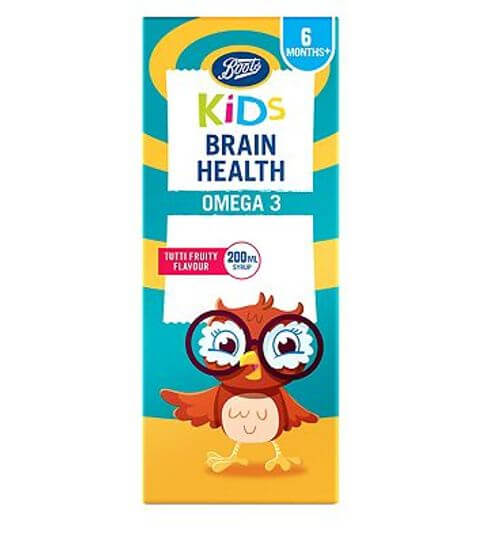
omega 3 liquid kids is available at No Style Like. Below you will find full details on its benefits, uses, dosage, and important precautions.
Quick Answer
Omega 3 Liquid Kids is a child-friendly liquid fish oil supplement delivering the essential fatty acids DHA and EPA that growing brains genuinely need. DHA is a structural building block of brain and eye tissue, and because children’s bodies cannot produce it in sufficient amounts, dietary intake matters. A pleasant-tasting omega 3 liquid for kids solves the biggest practical problem — most children will not swallow fish oil capsules or eat oily fish twice a week.
Key Facts Table
| Product | Omega 3 Liquid Kids — Brain Health Formula |
|---|---|
| Key Actives | DHA and EPA omega-3 fatty acids from fish oil |
| Form | Flavored oral liquid (no capsules to swallow) |
| Main Benefits | Brain development, visual function, focus support |
| Typical Age | Children from 1 year (per label / pediatrician advice) |
| How Given | By spoon or mixed into food, once daily |
| Storage | Cool place; refrigerate after opening; locked away from children |
What Is Omega 3 Liquid Kids?
Omega 3 liquid kids is a purified fish oil supplement formulated specifically for children, with a palatable flavor that masks the fishy taste adults tolerate but children reject. Each daily serving supplies docosahexaenoic acid (DHA) and eicosapentaenoic acid (EPA) — the two long-chain omega-3 fatty acids most concentrated in the human brain and retina. The liquid format allows flexible, gradual dosing and can be mixed into yogurt, juice, or smoothies for picky eaters.
Why DHA Matters for a Child’s Brain
DHA makes up a significant share of the fatty acids in brain gray matter and the retina of the eye. The brain grows most rapidly from birth through early childhood, and this construction requires a continuous DHA supply. Multiple studies associate adequate childhood omega-3 intake with healthy cognitive development and visual acuity. The catch: the richest natural sources are oily fish like salmon, sardines, and mackerel — foods most Egyptian children eat rarely, if ever. That gap is exactly what an omega 3 liquid for kids is designed to fill.
Evidence-Based Benefits — What Is and Isn’t Proven
In fairness to parents, here is the honest picture. Well supported: DHA’s structural role in brain and eye development, and correction of low omega-3 status in children who eat little fish. Promising but mixed: studies on attention and focus show some benefit in children with low baseline omega-3 levels or attention difficulties, while results in well-nourished children are inconsistent. Not supported: claims that omega-3 raises IQ in healthy children with adequate diets. Omega 3 liquid kids supplements are best understood as insurance for children who do not eat oily fish regularly, not as an intelligence booster.
How to Give Omega 3 Liquid Kids
Give the labeled daily dose once per day with a meal containing some fat — this improves absorption and reduces any aftertaste or reflux. It can be given directly by spoon or stirred into cold foods such as yogurt or a smoothie. Never add it to hot food or drinks, as heat degrades the delicate fatty acids. Start with half the dose for the first three or four days if your child has a sensitive stomach, then move to the full dose.
Dosage Guidance by Age
Follow the product label first, and your pediatrician’s advice above all. General expert guidance suggests children aged 1–3 years need roughly 700 mg of total omega-3s daily, ages 4–8 around 900 mg, and ages 9–13 approximately 1000–1200 mg, with DHA forming a meaningful share. Days when your child eats oily fish, the supplement can be skipped.
⚠️ Storage & Safety Warning
Store this bottle locked away, on a high shelf, out of the sight and reach of children. Flavored liquid supplements taste like treats to young children, and drinking a large amount can cause vomiting, diarrhea, and — because of added vitamins in some formulas — potential overdose. Refrigerate after opening to keep the oil fresh and discard it if it develops a strong fishy or rancid smell, which signals oxidation. If your child swallows a large quantity, contact a poison control center or seek medical care immediately with the bottle in hand.
Side Effects
Omega-3 supplements are well tolerated by most children. The most common complaints are mild: fishy burps, soft stools, or slight stomach upset in the first week — usually resolved by giving the dose with food. True fish allergy is a firm contraindication; children allergic to fish or shellfish should not use fish-derived omega 3 liquid kids products and should ask a doctor about algae-based DHA alternatives.
Interactions & Precautions
At standard children’s doses, interactions are rare. High doses of omega-3 have a mild blood-thinning effect, so mention the supplement to your doctor if your child takes anticoagulant medication, has a bleeding disorder, or is scheduled for surgery. Children with chronic medical conditions should use any supplement only under pediatric supervision.
Omega 3 Liquid vs. Gummies vs. Capsules
Liquid wins for younger children: precise adjustable dosing, no choking hazard, and typically higher DHA per serving than gummies, which sacrifice potency for candy-like texture and often add sugar. Capsules suit older children who can swallow them, usually at lower cost per dose. For the 1–8 age range where brain growth is fastest, a quality omega 3 liquid for kids is generally the most practical format.
Signs Your Child May Benefit Most
Consider supplementation particularly if your child eats oily fish less than once weekly, is a highly selective eater, has dry skin or brittle nails alongside a low-fat diet, or if your pediatrician has raised concerns about attention or learning alongside dietary gaps. None of these signs replaces medical evaluation — they simply identify children most likely to have low omega-3 intake.
Expert Note — Dr. Abdallah Fouad
“In my 25+ years in clinical nutrition, omega-3 is one of the few children’s supplements I recommend with genuine confidence — but only for the right reason. If a child eats salmon or sardines twice a week, the supplement adds little. For the majority who don’t, a daily DHA-rich liquid quietly covers one of the most important nutritional bases of childhood. Give it with breakfast, keep the bottle refrigerated and locked away, and be patient — nutritional benefits build over months, not days.”
Dr. Abdallah Fouad — Clinical Nutrition Specialist, 25+ years of experience
Frequently Asked Questions
At what age can my child start omega 3 liquid?
Most children’s liquid formulas are suitable from 12 months. Always confirm the age range on your specific product’s label and check with your pediatrician for children under two.
Will omega 3 improve my child’s focus at school?
Evidence is strongest for children with low omega-3 intake or existing attention difficulties. In well-nourished children, effects on focus are modest and inconsistent — set realistic expectations.
What if my child hates the taste?
Mix the dose into cold yogurt, a fruit smoothie, or juice. Never heat it. Chilling the bottle in the refrigerator also softens the flavor considerably.
Can omega 3 liquid kids be given alongside a multivitamin?
Usually yes, since most multivitamins contain little or no omega-3. Check that the combined vitamin A and D from both products stays within age limits, and confirm with your pharmacist.
How long until we see benefits?
Omega-3 levels in cell membranes rise gradually. Allow 8–12 weeks of consistent daily use before judging any effect — this is a long-term nutritional investment.
References
NIH Office of Dietary Supplements — Omega-3 Fatty Acids Fact Sheet; EFSA opinions on DHA and child development claims; published pediatric reviews on omega-3 supplementation and cognitive outcomes.
Bottom Line
Omega 3 liquid kids is a legitimately useful supplement for the many children who rarely eat oily fish, supplying the DHA their developing brains and eyes are built from. Choose it for steady nutritional coverage rather than dramatic promises, give it daily with food, and store it refrigerated and firmly out of your child’s reach.
Related Products & Useful Resources
You may also like related products such as Efamol Brain Omega 3 Syrup for Focus � , Fusion Plus Mesotherapy injection: You G from our store.
For more trusted medical information, refer to MedlinePlus. Always consult your doctor or pharmacist before use.


Reviews
There are no reviews yet.