


Description
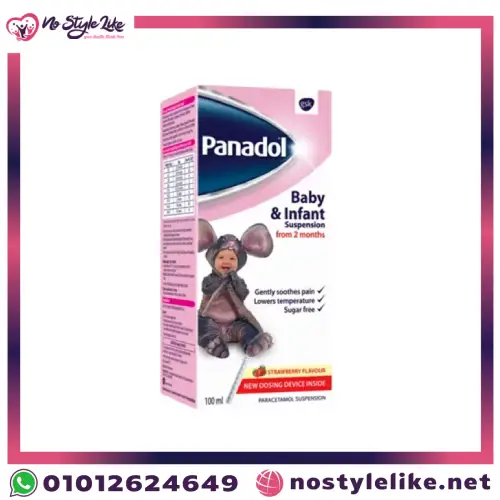
Panadol Infants Syrup (Paracetamol) 100 ml — Fever & Pain Relief
Key Facts
| Detail | Information |
|---|---|
| Product | Panadol Infants Syrup (suspension) 100 ml |
| Active ingredient | Paracetamol 120 mg per 5 ml |
| Brand | Panadol |
| Form | Oral suspension (syrup) |
| Main use | Fever reduction & mild-to-moderate pain |
| Age range | Infants & children (from 2 months, per the label) |
| Dosing | By child’s weight and age, using the enclosed device |
| Maximum | 4 doses in 24 hours (at least 4 hours apart) |
Short Description
Panadol Infants is a gentle paracetamol suspension that helps lower fever and relieve mild aches and pains in babies and children. It has a child-friendly taste, comes with a dosing syringe for accuracy, and is aspirin-free. This 100 ml bottle is a practical size for home use, with the dose set by your child’s weight and age as shown on the label.
Table of Contents
- Introduction
- What Is Panadol Infants?
- How Does It Work?
- Main Benefits
- Real Use Cases
- Who Is It Best For?
- When Not to Use It
- How to Use Correctly
- Timing and How Often
- Common Questions Parents Ask
- Expected Results Timeline
- Common Mistakes
- Myths vs Facts
- Drug Interactions
- Contraindications & Warnings
- Signs Your Child Needs a Doctor
- What to Give It With
- Effect on Other Medications
- When to See a Doctor Urgently
- NSL Expert Tip
- FAQ
- Conclusion
Introduction
A child’s fever is one of the most worrying moments for any parent, and Panadol Infants is one of the most widely used options for gently lowering fever and easing discomfort. It contains paracetamol, a pain reliever and fever reducer well known for being suitable for children when given at the correct, weight-based dose. This page explains what it is, how it works, how to give it safely, and — most importantly — when a fever is a situation that needs a doctor right away.
What Is Panadol Infants?
Panadol Infants is an oral suspension containing paracetamol 120 mg per 5 ml. It is used to reduce fever and relieve mild-to-moderate pain in babies and children. Unlike aspirin — which is not given to children except under medical direction — paracetamol is the preferred first choice for childhood fever and pain.
How Does Panadol Infants Work?
Paracetamol works mainly in the brain, where it reduces the signals that raise body temperature and carry pain. This helps bring down a high temperature and ease discomfort, without the strong anti-inflammatory (and stomach-irritating) action of NSAIDs. Because it works gently, it suits small children’s bodies when given at the right dose for their weight.
Main Benefits
- Reduces fever: helps lower temperature from colds, infections, and after vaccinations.
- Gentle pain relief: eases teething pain, sore throat, and minor aches.
- Easy to give: a pleasant-tasting syrup with a syringe for accurate dosing.
- Gentle on the tummy: not an NSAID, so it suits most children.
- Aspirin-free: the recommended first choice for children’s fever.
Real Use Cases
Parents reach for Panadol Infants for the fever of colds and flu, teething discomfort, fever or pain after vaccinations, a mild sore throat or earache, and minor body aches. It is a staple in the home medicine cabinet to help a child rest and sleep through a mild illness — always alongside watching how the child is doing.
Who Is It Best For?
It suits babies and children within the age range on the pack (usually from 2 months of age) who have a fever or mild pain. The dose is based on the child’s weight and age. Newborns and infants younger than the stated age should only be given it on a doctor’s advice.
When Not to Use It
- If your child is already taking another product that contains paracetamol (overdose risk).
- If there is a known allergy to paracetamol.
- In newborns or infants under the age stated on the pack, unless a doctor prescribes it.
- In a child with liver disease, except under medical direction.
- Do not give with other paracetamol-containing medicines at the same time.
How to Use Correctly
Shake the bottle well and give the dose based on your child’s weight and age as shown on the pack/leaflet, using only the enclosed syringe or measuring device (not a household spoon). Do not give more than 4 doses in 24 hours, and leave at least 4 hours between doses. Do not use for more than 3 days without seeing a doctor, and never exceed the recommended dose.
Timing and How Often
Give a dose when the fever or pain begins, then repeat only as needed, keeping at least 4 hours between doses and no more than 4 doses a day. There is no need to give it on a fixed schedule if your child is comfortable. Sometimes just as important as medicine are rest, plenty of fluids, and light clothing to help bring a temperature down.
Common Questions Parents Ask
Is paracetamol the same as Panadol? Yes — Panadol is a brand of paracetamol.
Should I dose by age or weight? Weight is more accurate; follow the chart on the pack and ask your pharmacist if unsure.
Can I give it with ibuprofen? A doctor may alternate the two, but do not combine them on your own — ask first.
Expected Results Timeline
Paracetamol usually begins to lower fever and ease pain within about 30 to 60 minutes, and the effect typically lasts 4 to 6 hours. If your child’s temperature does not come down, the pain returns quickly despite a correct dose, or the child seems more unwell, see a doctor rather than giving extra medicine.
Common Mistakes
- Using a household spoon instead of the enclosed syringe (an inaccurate dose).
- Giving an extra dose to “bring the fever down faster” — an overdose risk to the liver.
- Combining it with a cold remedy or other paracetamol product unknowingly.
- Dosing by age only while ignoring the child’s weight.
- Continuing for more than 3 days without seeing a doctor.
Myths vs Facts
| Myth | Fact |
|---|---|
| “A bigger dose lowers fever faster.” | Exceeding the dose does not help and can seriously harm a child’s liver. |
| “Every fever needs medicine straight away.” | How the child looks and feels matters most; medicine is for easing discomfort, not chasing a number. |
| “Panadol and aspirin are similar for kids.” | Aspirin is not given to children except on medical advice; paracetamol is first choice. |
Drug Interactions
Tell your pharmacist or doctor everything your child takes. The key point is not to combine it with any other product that contains paracetamol (many children’s cold medicines do) to avoid an accidental overdose. Paracetamol can also interact with a few medicines, such as blood thinners with regular use — so check with a doctor if your child is on regular medication.
Contraindications & Warnings
Important: paracetamol can cause serious liver harm if the dose is exceeded or if it is combined with other paracetamol products. Do not give it if your child takes another paracetamol medicine, or is allergic to it. Use with caution and medical advice in liver or kidney problems, and in infants below the age stated on the pack. Keep the bottle out of reach of children — an overdose can be dangerous — and if too much is taken, get medical help immediately even if the child seems well.
Signs Your Child Needs a Doctor
A child’s fever is usually managed at home, but some situations need medical assessment. See a doctor if the fever lasts more than 3 days, is very high, or comes with a rash, a stiff neck, breathing difficulty, extreme drowsiness, refusal to feed or drink, or signs of dehydration. A baby under 3 months with a fever needs prompt medical assessment.
What to Give It With
Panadol Infants can be given with or without food. Shake the bottle before each dose, and encourage your child to keep drinking fluids to stay hydrated during a fever. No special diet is needed, but the most important rule is: do not combine it with any other product containing paracetamol.
Effect on Other Medications
Paracetamol is found in many children’s cold and flu medicines, which is exactly why accidental overdose can happen when products are combined without checking. Before adding any new medicine for your child, read its label for “paracetamol” or “acetaminophen,” and ask your pharmacist so the total daily amount stays safe.
When to See a Doctor Urgently
Seek urgent care if your child is under 3 months old with a fever, or shows warning signs such as: difficulty breathing, a stiff neck, a rash that does not fade under pressure, seizures, extreme drowsiness or difficulty waking, refusal to drink or signs of dehydration, or a fever that will not come down or lasts more than 3 days. Get immediate help for any allergic reaction (rash, swelling, trouble breathing) or a suspected overdose.
NSL Expert Tip
Keep a small note of your child’s current weight and the time of the last dose, so you always give the right amount and never repeat it too soon. Use only the enclosed syringe, shake the bottle well, and store it out of children’s reach. Remember that hydration and rest matter as much as the medicine — which is there to ease your child’s discomfort, not to chase a number on the thermometer.
Frequently Asked Questions
What is Panadol Infants used for?
It is a paracetamol fever reducer and pain reliever for babies and children, for fever and mild-to-moderate pain.
How do I work out my child’s dose?
By the child’s weight and age as shown on the pack/leaflet, using only the enclosed syringe.
How often can it be given?
Up to 4 doses in 24 hours, at least 4 hours apart, and not for more than 3 days without a doctor.
Can it be given to a baby under 2 months?
No — only on a doctor’s prescription and direction.
What if my child takes too much?
Get medical help immediately, even if the child seems fine, because a paracetamol overdose is dangerous to the liver.
Conclusion
Panadol Infants is a trusted, gentle way to lower your child’s fever and ease mild pain when given at the correct weight- and age-based dose. By using the enclosed syringe, sticking to the maximum number of doses, and seeing a doctor at any warning sign, it is a safe staple for every family’s medicine cabinet. Order genuine Panadol Infants from No Style Like for trusted quality and fast delivery.
Reviewed by the No Style Like pharmacy content team. This information is educational and is not a substitute for professional medical advice. Always read the label, dose by your child’s weight, never exceed the dose, and consult a doctor or pharmacist — especially for young infants or a fever that does not settle. Trusted reference: NHS — Paracetamol for children.




Reviews
There are no reviews yet.