


Description
Parsabiv etelcalcetide: quick answer
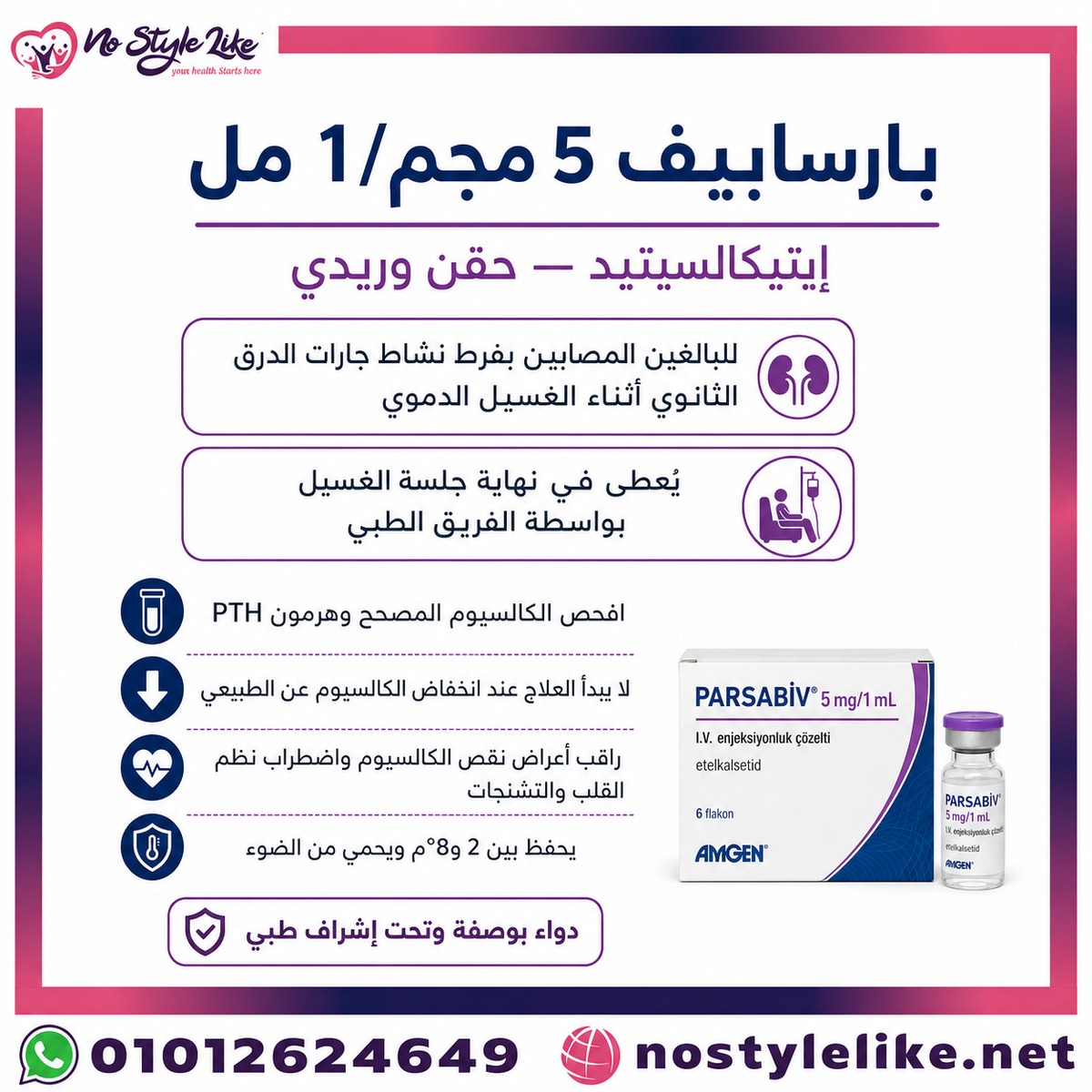
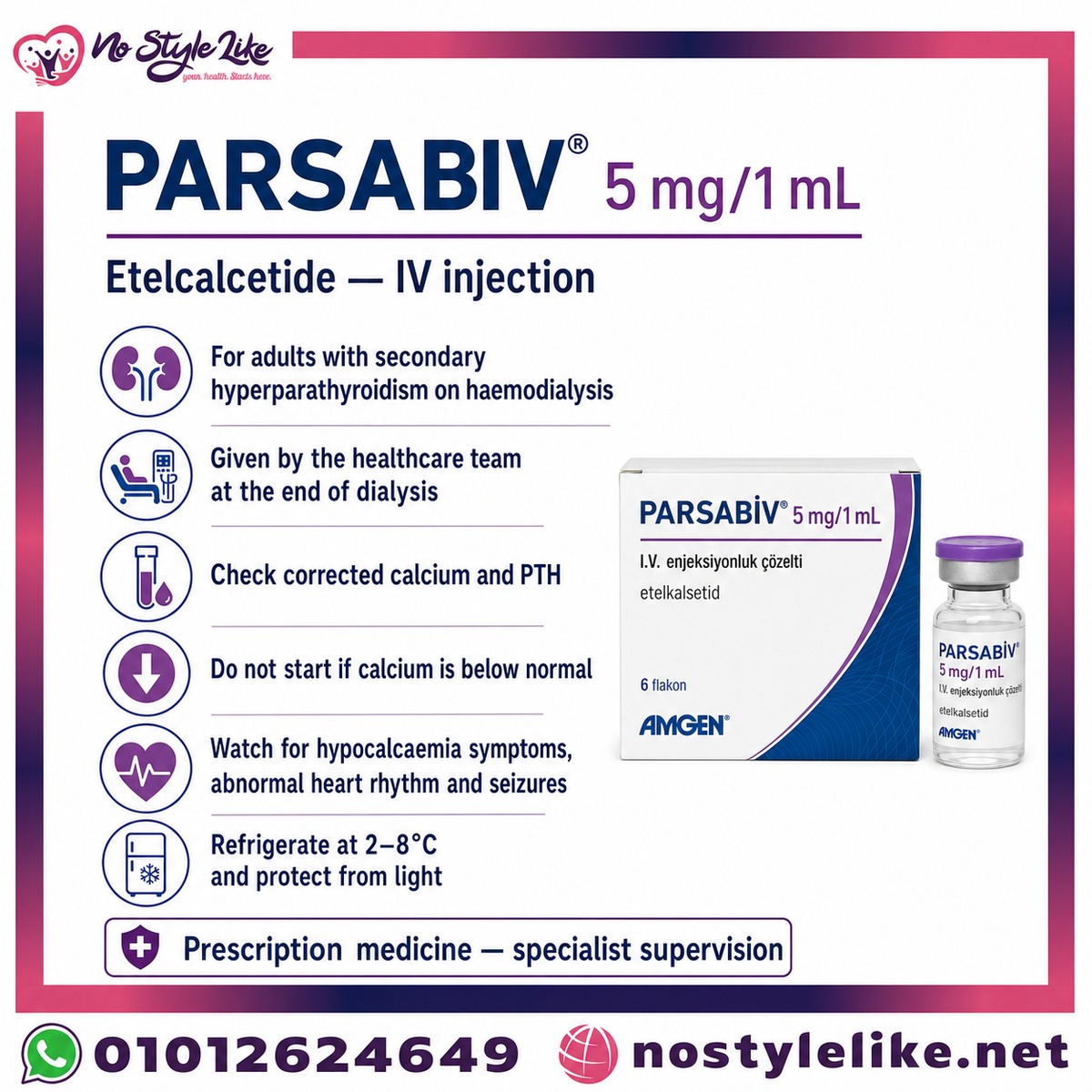
Parsabiv etelcalcetide 5 mg/1 mL is an intravenous calcimimetic used in adults with chronic kidney disease who are receiving haemodialysis and have secondary hyperparathyroidism. A trained dialysis professional gives the medicine three times weekly at the end of haemodialysis. Its main treatment goal is to reduce parathyroid hormone (PTH); serum calcium may also fall, so corrected calcium must be checked before treatment and monitored closely. Parsabiv is prescription-only and must never be self-injected at home.
Key facts about Parsabiv etelcalcetide
| Item | Verified information |
|---|---|
| Active ingredient | Etelcalcetide, presented as etelcalcetide hydrochloride |
| Pack shown | Six single-dose vials; each 1 mL vial contains 5 mg |
| Route | Intravenous injection by a healthcare professional |
| Indication | Secondary hyperparathyroidism in adults with chronic kidney disease on haemodialysis |
| Usual starting schedule | 5 mg three times weekly at the end of haemodialysis |
| Dose range | Individualised according to PTH and corrected calcium; up to 15 mg three times weekly |
| Storage | Refrigerate at 2–8°C, protect from light and do not freeze |
7 critical calcium safety checks
- Confirm the indication. Parsabiv etelcalcetide is intended for adult haemodialysis patients with secondary hyperparathyroidism. It is not a general calcium treatment and does not cure chronic kidney disease.
- Check corrected serum calcium before starting. Treatment must not begin when corrected calcium is below the lower limit of normal.
- Recheck calcium after starting or changing the dose. The care team normally checks corrected calcium within one week after initiation or dose adjustment, then regularly according to the dialysis protocol.
- Follow PTH, calcium and phosphate together. The dose is individualised from laboratory results and the overall CKD-mineral and bone disorder plan.
- Report symptoms of low calcium immediately. Tingling around the mouth or fingers, muscle pain, cramps, spasms, confusion or seizures can signal clinically important hypocalcaemia.
- Review heart-rhythm and seizure risks. Severe hypocalcaemia can prolong the QT interval and trigger ventricular arrhythmia or lower the seizure threshold.
- Keep administration and cold chain controlled. Only dialysis staff should administer the dose. Keep unopened vials at 2–8°C in the original package, protected from light, and never freeze them.
What is Parsabiv etelcalcetide?
Parsabiv is the brand name of etelcalcetide, a synthetic peptide calcimimetic developed by Amgen. It activates the calcium-sensing receptor on parathyroid cells. This makes the gland respond more strongly to extracellular calcium and reduces PTH secretion. The medicine is designed for administration in the dialysis unit, removing the need for another daily oral tablet while keeping every dose under professional supervision.
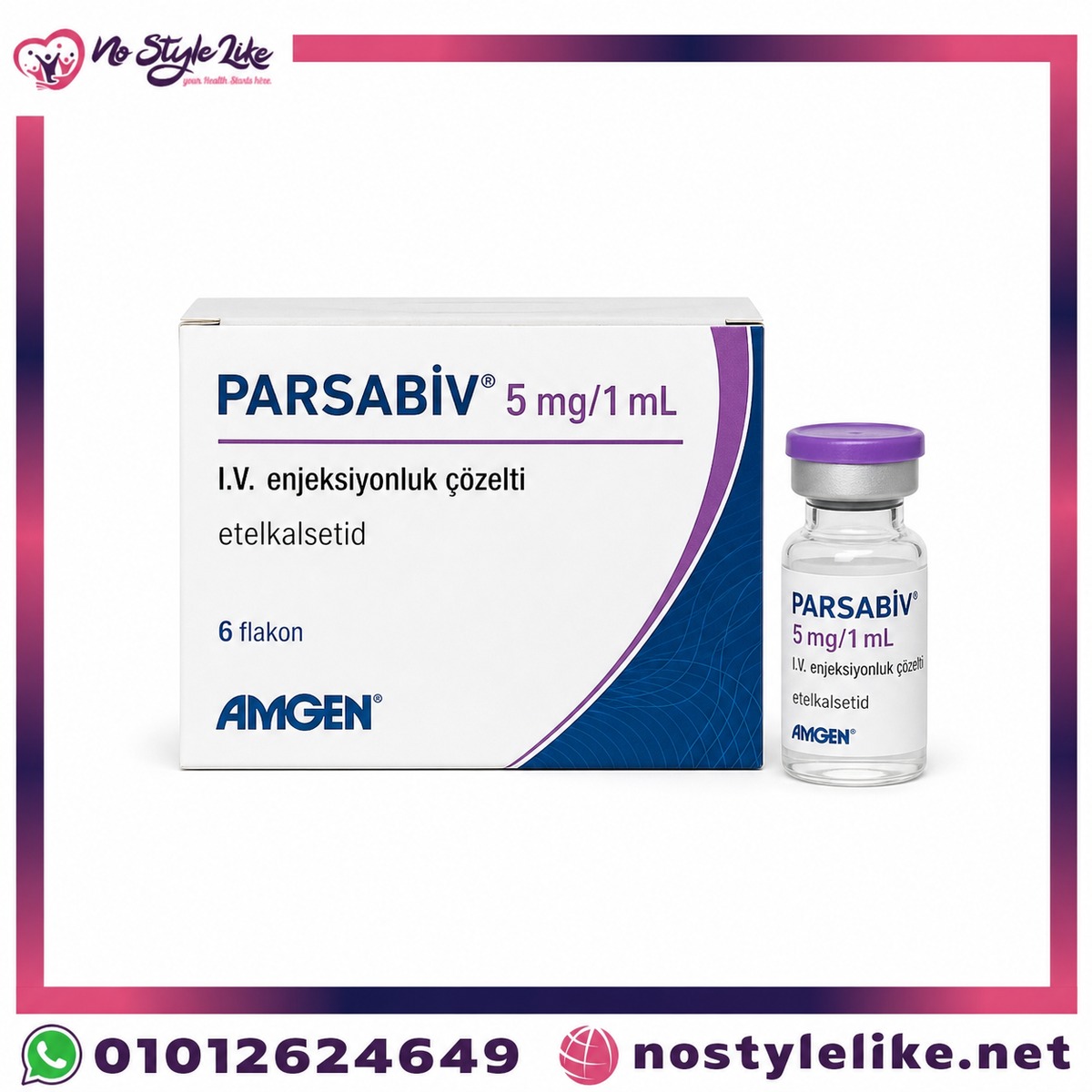
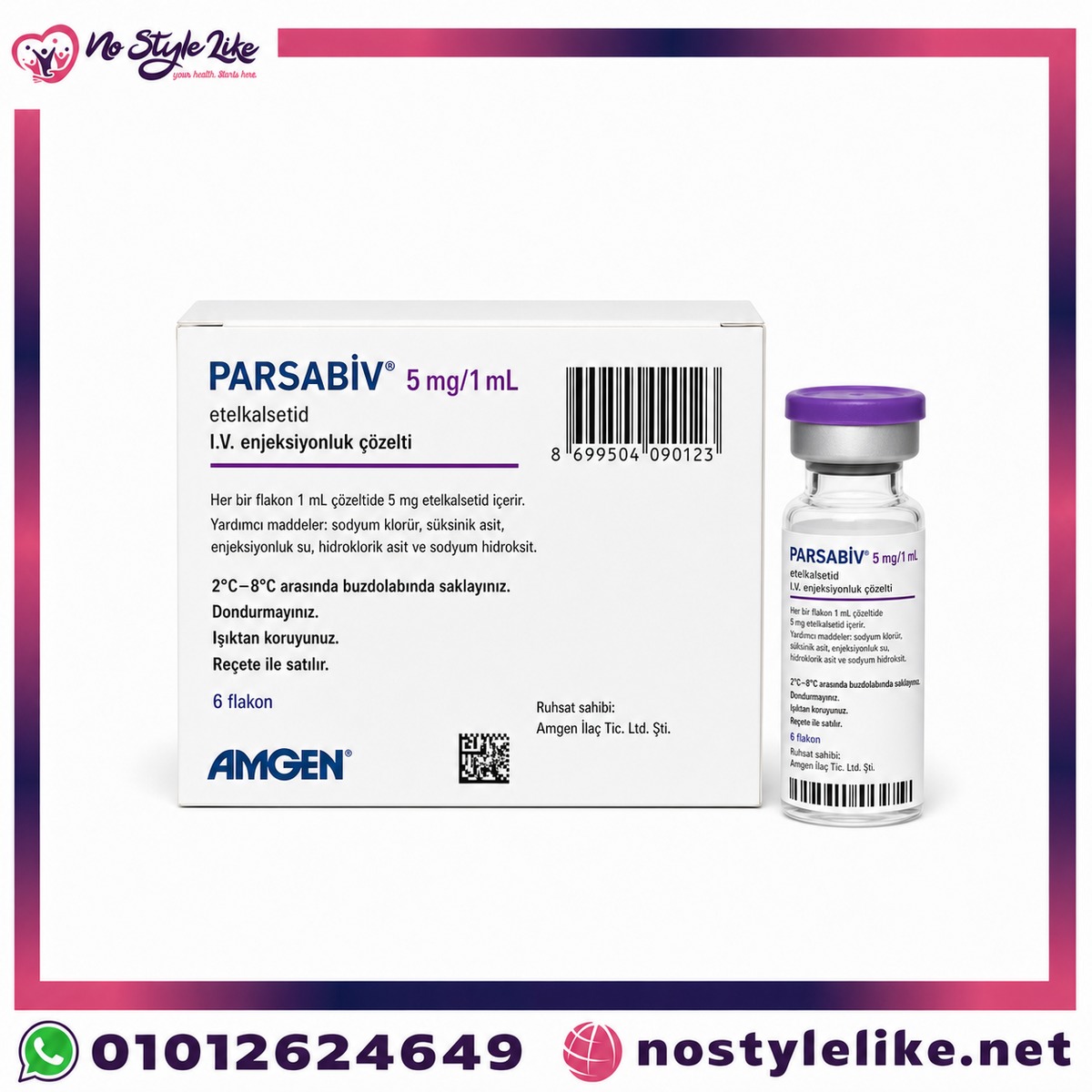
The Turkish product pictured on this page is labelled PARSABİV 5 mg/1 mL, intravenous solution, etelcalcetide, six vials. Packaging may change, so always verify the strength, batch, expiry date and storage condition on the supplied pack before use.
Why secondary hyperparathyroidism matters
Chronic kidney disease changes phosphate removal, vitamin D activation and calcium balance. The parathyroid glands may respond by producing too much PTH. Over time, uncontrolled secondary hyperparathyroidism can contribute to bone pain, fractures and abnormal mineral deposition. Parsabiv etelcalcetide is one part of a wider plan that may also include dialysis optimisation, dietary advice, phosphate binders and vitamin D therapy.
The aim is not to push PTH or calcium as low as possible. The clinical team works toward an individual target while avoiding hypocalcaemia, excessive PTH suppression and adynamic bone disease.
Who may receive Parsabiv?
Appropriate patients are adults with confirmed secondary hyperparathyroidism who are on maintenance haemodialysis. Selection is based on recent intact PTH, corrected serum calcium, phosphate, symptoms, previous treatment and the nephrologist’s assessment. Evidence is limited outside this population, so Parsabiv etelcalcetide is not routinely used for patients who are not receiving haemodialysis.
Who should not start it?
- Anyone with hypersensitivity to etelcalcetide or an excipient.
- Anyone whose corrected serum calcium is below the lower limit of normal.
- Patients outside the approved haemodialysis indication unless a specialist has a justified, documented plan.
Pregnancy, breastfeeding, seizure history, heart-rhythm disorders and medicines that lower calcium require a specialist review. This page cannot determine whether the product is suitable for an individual patient.
Parsabiv etelcalcetide dose and administration
The usual starting dose is 5 mg intravenously three times per week. The dialysis professional generally injects it into the venous return line of the dialysis circuit at the end of haemodialysis during rinse-back, or intravenously after rinse-back. The vial is single use. The medicine is not for oral, intramuscular or subcutaneous administration.
Dose titration is based on PTH and corrected calcium. Prescribers may increase the dose in 2.5 mg or 5 mg steps, commonly no more frequently than every four weeks, up to 15 mg three times weekly. A low calcium result, symptoms or an excessive fall in PTH may require dose reduction, temporary withholding, calcium-containing therapy, vitamin D adjustment or another clinician-directed action.
Never copy a dose from another patient and never administer Parsabiv at home. If a dialysis session is missed, the patient should contact the dialysis unit; no extra or double dose should be improvised.
Laboratory monitoring
Corrected serum calcium should be assessed before the first dose. It is commonly checked within one week after initiation or a dose change and at regular intervals once stable. PTH is checked after initiation and dose adjustments, then periodically. Phosphate, magnesium, albumin and other CKD-mineral and bone disorder markers may also be reviewed.
Laboratory timing can vary by local protocol and patient risk. The nephrology team may monitor more frequently when calcium is near the lower limit, symptoms occur, the dose changes or another calcium-lowering medicine is introduced.
Important side effects and warning signs
The most important predictable risk is hypocalcaemia. Symptoms can include numbness or tingling, muscle aches, cramps or spasms. Severe cases may cause laryngospasm, seizures, QT prolongation or dangerous ventricular arrhythmia. These symptoms require prompt assessment by the dialysis team; seizures, fainting, breathing difficulty or an irregular heartbeat require urgent medical care.
Other reported effects include nausea, vomiting, diarrhoea and muscle spasms. Allergic reactions are possible. Patients should report any new or worsening symptom rather than assuming it is caused by dialysis.
Interactions and treatment coordination
Extra caution is needed with medicines that lower serum calcium. Cinacalcet and Parsabiv etelcalcetide should not be taken together without a specialist transition plan because the combined effect can increase hypocalcaemia risk. Vitamin D analogues, calcium supplements and calcium-based phosphate binders may be adjusted to maintain safe mineral balance.
Clinicians also consider medicines affected by QT prolongation or narrow therapeutic margins. A complete medicine list, including non-prescription supplements, should be reviewed by the nephrology team.
Storage and transport from Turkey
Store unopened Parsabiv vials in a refrigerator at 2–8°C in the original carton to protect them from light. Do not freeze. A medicine that has frozen, overheated, become discoloured, contains particles, has a damaged seal or is past its expiry date should not be used. Cold-chain transport must be managed by a qualified supplier and verified on receipt.
For other specialist products, browse our Specialized Medicines category. Availability does not replace the prescription, clinical assessment or administration requirements.
Official medical references
Read the European Medicines Agency Parsabiv overview and the Turkish Amgen patient leaflet. These official sources support the approved indication, vial strength, dialysis-unit administration, calcium monitoring and storage instructions.
Frequently asked questions
Can Parsabiv be injected at home?
No. Parsabiv etelcalcetide is administered intravenously by trained healthcare staff in connection with haemodialysis.
Does it replace phosphate binders or vitamin D?
Not automatically. Those treatments address different parts of CKD-mineral and bone disorder and may be continued or adjusted by the nephrologist.
Why is calcium checked so often?
Etelcalcetide can lower calcium. Early detection allows the team to adjust the dose or supporting treatment before serious symptoms develop.
Is Parsabiv a cure for kidney failure?
No. It manages secondary hyperparathyroidism in eligible haemodialysis patients; it does not restore kidney function.
Clinical takeaway
Parsabiv etelcalcetide offers supervised three-times-weekly PTH control for adults on haemodialysis, but safe use depends on corrected calcium, PTH and phosphate monitoring. Confirm the 5 mg/1 mL strength, keep the product refrigerated at 2–8°C, and follow the dialysis team’s exact prescription. Do not start, stop or change the dose without the treating nephrologist.
Medical disclaimer: This educational product information does not replace diagnosis, a prescription or advice from a nephrologist. In an emergency, contact local emergency services.

Reviews
There are no reviews yet.