


Description
NOW Potassium Plus Iodine (Potassium Iodine): A Guide to Electrolyte and Thyroid Support
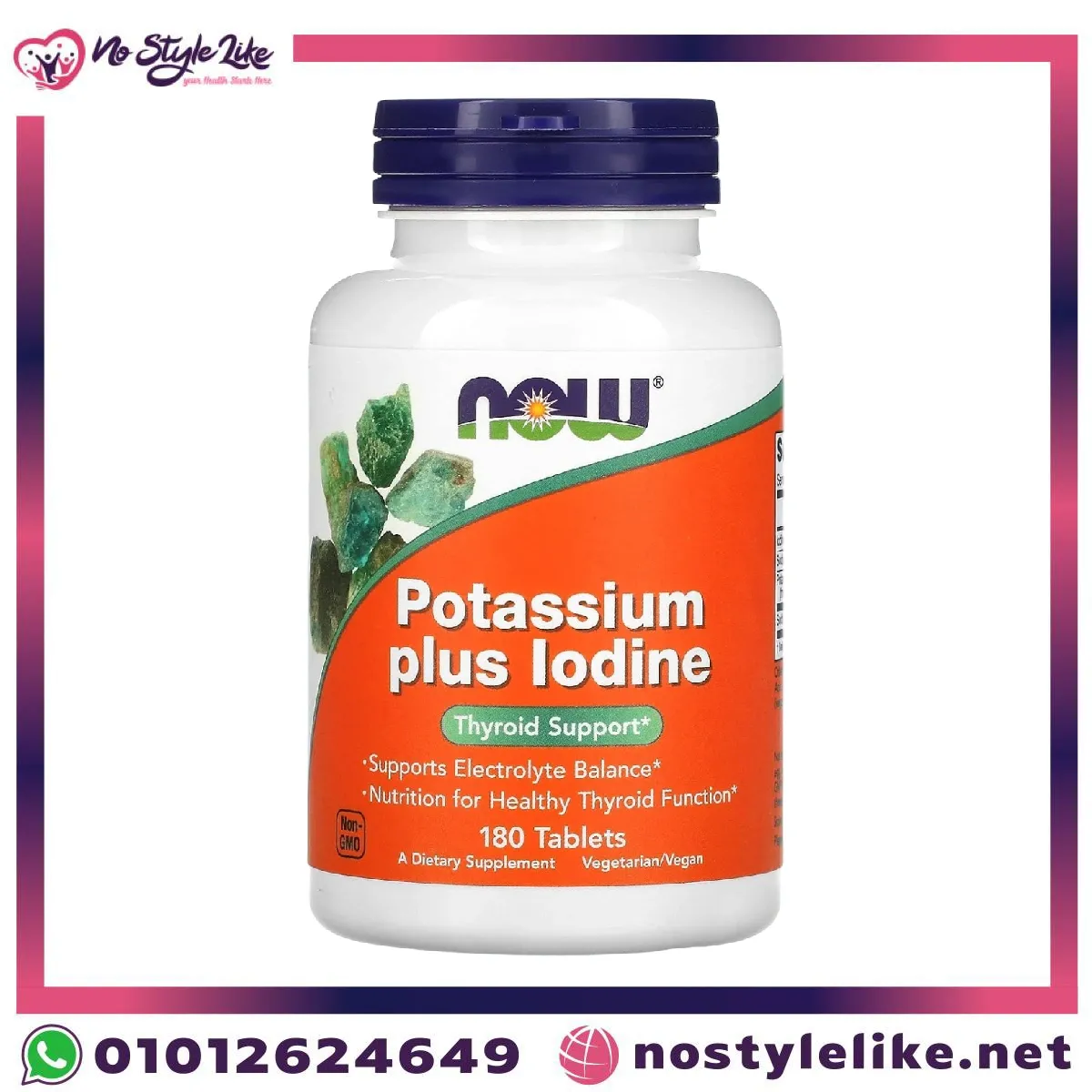
Key Facts About Potassium Iodine
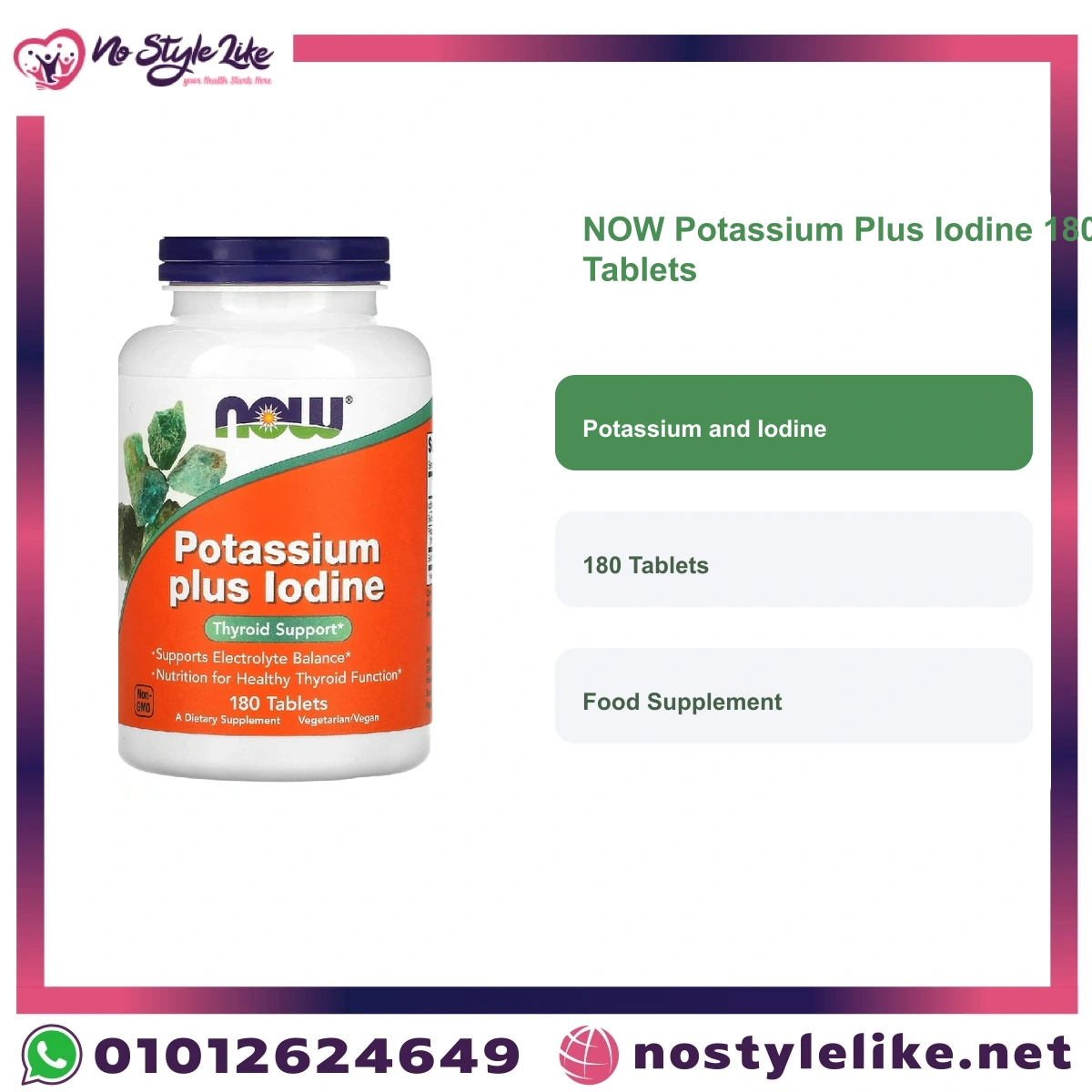
Short description: NOW Potassium Plus Iodine, 180 tablets, is a dietary supplement combining potassium as an electrolyte with thyroid-supporting iodine at a moderate nutritional dose. One tablet daily with a meal, and it is best to consult a doctor before starting, especially with existing conditions or medications.
Table of Contents
- Introduction
- What Is Potassium Iodine?
- The Ingredients and the Role of Each Mineral
- Benefits of Iodine and Potassium for the Body
- Who Might It Suit?
- How to Use It and Dosage
- Iodine: The Balance Between Too Little and Too Much
- Who Should Consult a Doctor First?
- Safety Warnings
- Drug Interactions
- Tests and Monitoring
- What to Take Alongside It
- Common Mistakes
- Myths and Facts
- When to See a Doctor
- NSL Expert Tip
- Frequently Asked Questions
- Conclusion
Introduction
Iodine and potassium are two essential minerals the body needs in specific amounts; iodine is necessary to make thyroid hormones that regulate metabolism and energy, and potassium is an important electrolyte for fluid balance and the function of muscles and nerves. NOW Potassium Plus Iodine (Potassium Iodine) provides both minerals together in a single tablet at a moderate nutritional dose. In this guide we explain its ingredients and the role of each element, and when it might be suitable, while stressing that it is a dietary supplement to be used in moderation and with a doctor’s advice when needed.
What Is Potassium Iodine?
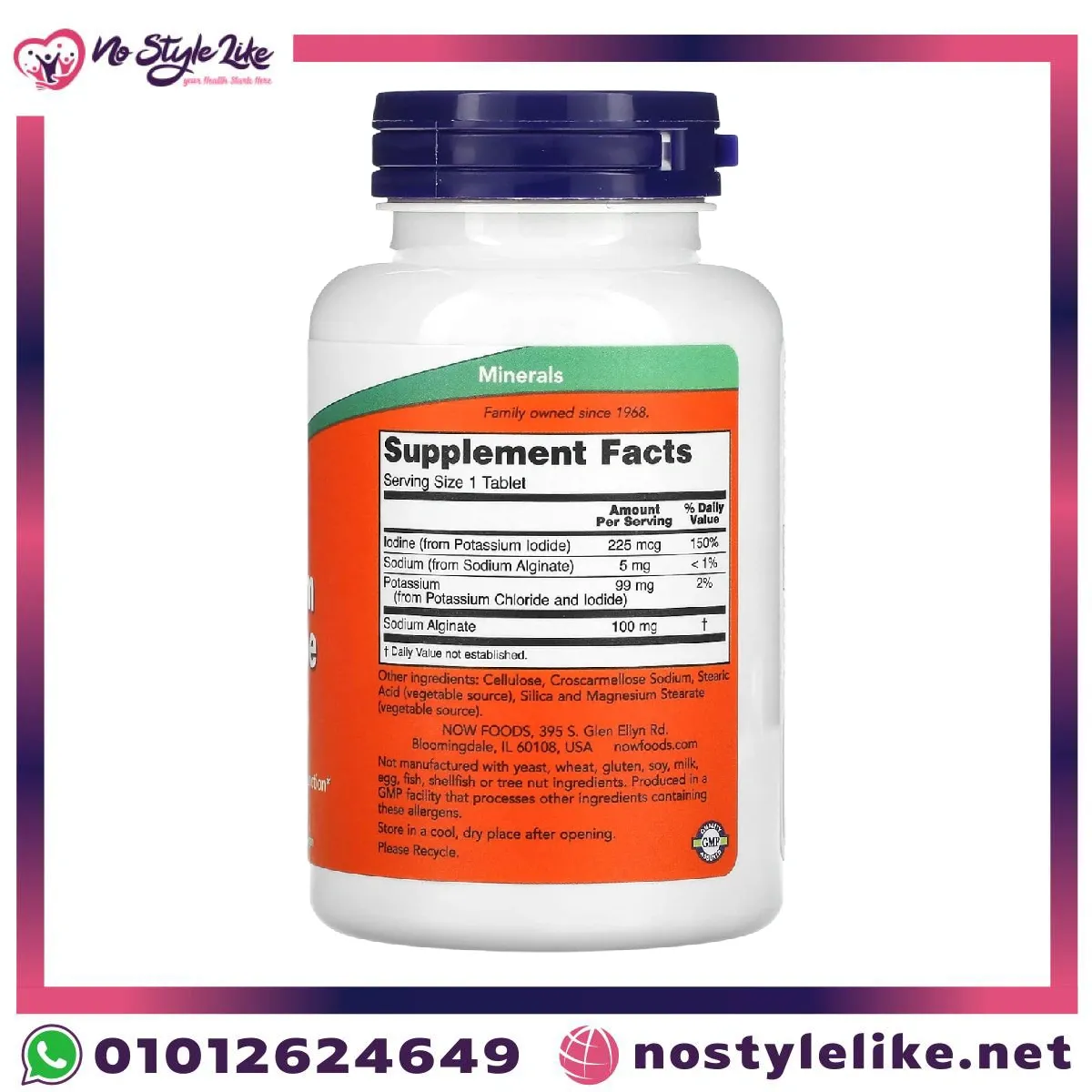
NOW Potassium Plus Iodine is a dietary supplement from the American company NOW Foods; the pack contains 180 tablets. Each tablet combines iodine at 225 mcg (derived from potassium iodide) and potassium at 99 mg, plus sodium alginate. It is classified as a mineral supplement intended to support electrolyte balance and provide the iodine needed for thyroid function, and it is not a medicine for treating a specific disease.
The Ingredients and the Role of Each Mineral
Iodine 225 mcg: an essential element the thyroid uses to produce the hormones thyroxine (T4) and triiodothyronine (T3), which regulate metabolism, growth and energy production. The body does not make iodine, so it relies on food or supplements.
Potassium 99 mg: a major electrolyte that contributes to fluid balance inside and outside cells, to nerve transmission, and to muscle contraction including the heart muscle. The dose here is a moderate nutritional amount that complements what comes from food.
Sodium alginate: a substance derived from seaweed used as a supporting agent in the formula.
Benefits of Iodine and Potassium for the Body
Iodine contributes to normal thyroid function and the production of its hormones, which affect metabolism, energy, growth and nervous system functions. Potassium contributes to maintaining electrolyte balance, normal blood pressure, and muscle and nerve function. Providing these two minerals within a balanced diet supports these normal functions. It is important to understand that the supplement complements the diet and does not treat thyroid diseases, which require medical diagnosis and treatment.
Who Might It Suit?
This Potassium Iodine supplement may suit people who want to support their iodine and potassium intake within a balanced diet, especially those whose diet may be low in iodine. However, the need is individual; many people get enough from food and iodised salt. So it is best to determine the need in consultation with a doctor or dietitian, rather than using it randomly, because iodine is a double-edged sword for the thyroid.
How to Use It and Dosage
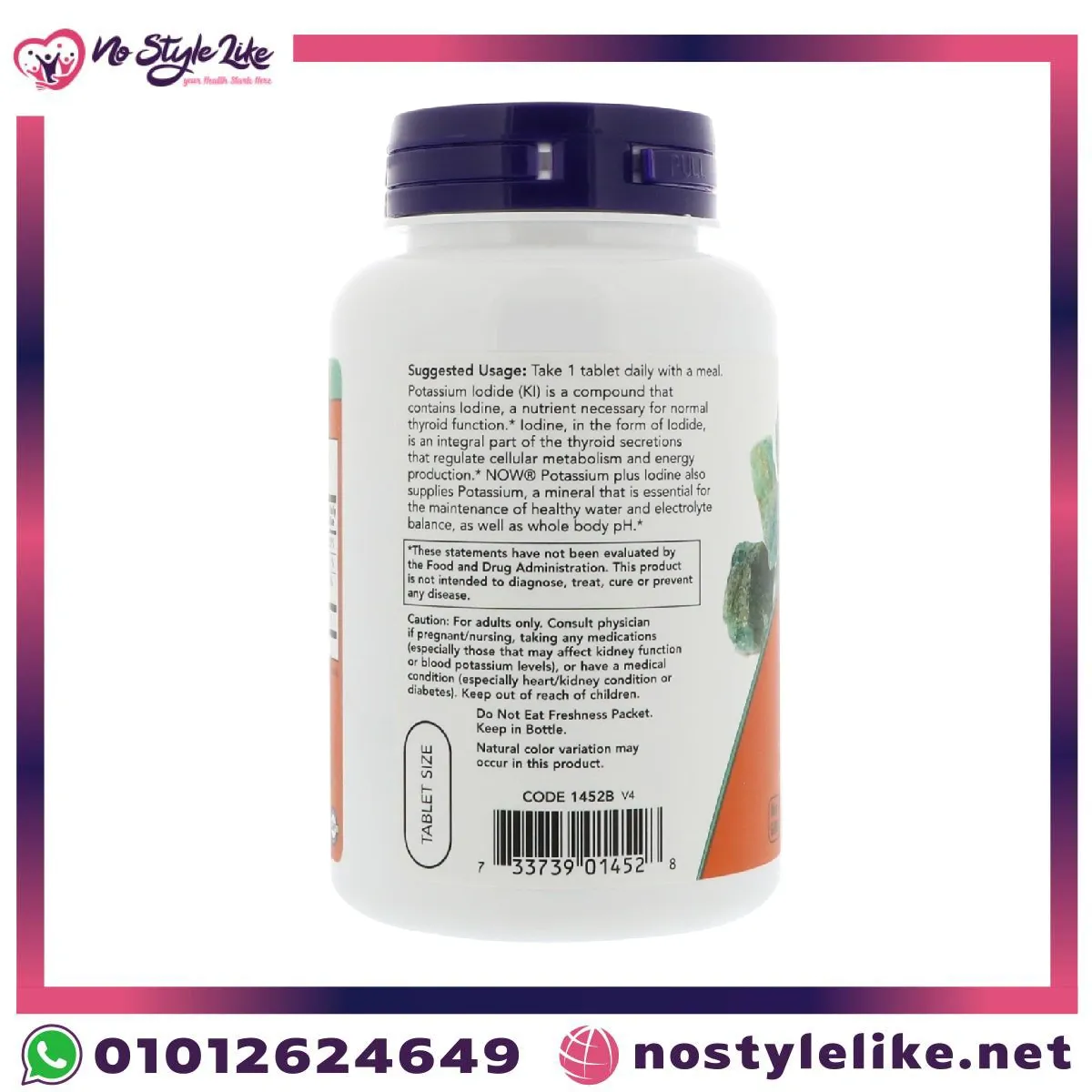
The usual dose is one tablet daily with a meal to improve digestive tolerance, or as advised by a doctor. Do not exceed the dose recommended on the pack, and do not use more than one iodine-containing supplement at the same time to avoid exceeding the upper safe limit of iodine. Stick to regular, moderate use, and keep the pack out of the reach of children in a cool, dry place.
Iodine: The Balance Between Too Little and Too Much
Iodine is a clear example of the importance of moderation; both a deficiency and an excess can cause thyroid problems. Chronic deficiency can lead to an enlarged, underactive thyroid, while excess can stimulate or suppress the thyroid in some people, especially those with autoimmune thyroid disease or nodules. So the moderate iodine dose in the supplement is enough to support normal function without excess, and a doctor’s assessment remains important for anyone with a thyroid condition.
Who Should Consult a Doctor First?
You should consult a doctor before use if you have: a thyroid condition (overactive or underactive thyroid, Hashimoto’s thyroiditis, nodules or goitre), kidney disease or high blood potassium, are taking medicines that affect potassium or the thyroid, are pregnant or breastfeeding, or have a sensitivity to iodine or any ingredient. These groups need an individual assessment before adding iodine or potassium.
Safety Warnings
Although the dose is a moderate nutritional amount, it should not be exceeded and multiple iodine sources should not be combined. Stop use and consult a doctor if unusual symptoms appear such as a rapid or pounding heartbeat, a marked change in weight or energy, swelling in the neck, a skin rash, persistent digestive upset, or muscle weakness. People with kidney disease in particular should be cautious with potassium supplements, since the kidneys regulate potassium.
Drug Interactions
Potassium may interact with some medicines that raise its level in the blood, such as ACE inhibitors, angiotensin receptor blockers (ARBs), and potassium-sparing diuretics. Iodine may also interact with thyroid medicines and some other medicines such as lithium. So tell your doctor and pharmacist about everything you take, including medicines and supplements, before starting to avoid any conflict.
Tests and Monitoring
Moderate use in healthy people does not require routine tests. But for people with thyroid conditions, a doctor may advise monitoring thyroid function (TSH and thyroid hormones) before and during use. For people with kidney disease or those on medicines that affect potassium, a potassium level and kidney function may be requested. The doctor decides these tests according to the case.
What to Take Alongside It
It is best to take the tablet with a balanced meal to improve tolerance. To get iodine and potassium from food too, eat natural sources such as fish and seafood, dairy and eggs and iodised salt for iodine, and bananas, potatoes, legumes and leafy vegetables for potassium. The supplement complements the diet rather than replacing it, and a varied diet is the foundation.
Common Mistakes
Common mistakes include using iodine supplements without a need or without consultation despite a thyroid problem, combining more than one iodine source so intake exceeds the safe limit, assuming that “more is better”, or using a potassium supplement with medicines that raise potassium without the doctor’s knowledge. The biggest mistake is trying to treat an underactive or overactive thyroid with a supplement instead of medical diagnosis and treatment.
Myths and Facts
| Myth | Fact |
|---|---|
| More iodine is always good for the thyroid | Both deficiency and excess can harm the thyroid; moderation is key |
| The supplement treats thyroid diseases | It is a dietary supplement that supports normal function and does not treat disease |
| Potassium supplements are safe for everyone | People with kidney disease and certain medicines need caution and medical advice |
| No doctor is needed because it is a supplement | People with thyroid or kidney conditions and pregnancy need an assessment first |
When to See a Doctor
Consult a doctor before starting if you have a thyroid or kidney disease, take chronic medication, or are pregnant or breastfeeding. Also see a doctor if you develop palpitations or a rapid heartbeat, a sudden change in weight or energy, swelling in the neck, muscle weakness or numbness, or any allergy symptoms. These are signs that call for medical assessment.
NSL Expert Tip
Our tip at No Style Like is to treat iodine and potassium with the principle of moderation; both are essential but only in balanced amounts. Determine your actual need in consultation with a doctor or dietitian, stick to one tablet daily without exceeding it, and avoid combining multiple iodine sources. Make a varied diet your foundation, because the supplement is a complement, not a replacement. And if you have a thyroid or kidney condition, do not start before a doctor’s assessment.
Frequently Asked Questions
Is Potassium Iodine a medicine?
No, it is a dietary supplement that provides iodine and potassium, and it is best to consult a doctor before use, especially with existing conditions.
How much iodine is in a tablet?
225 mcg of iodine derived from potassium iodide, with 99 mg of potassium per tablet.
Is it suitable for people with thyroid conditions?
A doctor should be consulted first, because iodine can affect the thyroid differently depending on the condition.
Is it safe during pregnancy?
Pregnant women need iodine but in specific amounts; consult your doctor before using any iodine supplement.
Can it be combined with other supplements?
Avoid combining multiple iodine sources, and check with a pharmacist if you take other supplements or medicines, especially those affecting potassium.
Conclusion
NOW Potassium Plus Iodine, 180 tablets, is a dietary supplement combining thyroid-supporting iodine with potassium as an electrolyte at a moderate dose, one tablet daily with a meal. It supports the body’s normal functions within a balanced diet, but it is not a treatment for thyroid diseases, and it needs a doctor’s advice for people with thyroid or kidney conditions or during pregnancy. Browse the rest of our supplements and products at No Style Like and consult a professional before starting.
This information was reviewed by the No Style Like pharmacy content team. The content is for general awareness only, contains no therapeutic claims, and does not replace advice from a doctor or dietitian. Read the pack information before use. For more trusted information on iodine, see the US National Institutes of Health (NIH).




Reviews
There are no reviews yet.