


Description
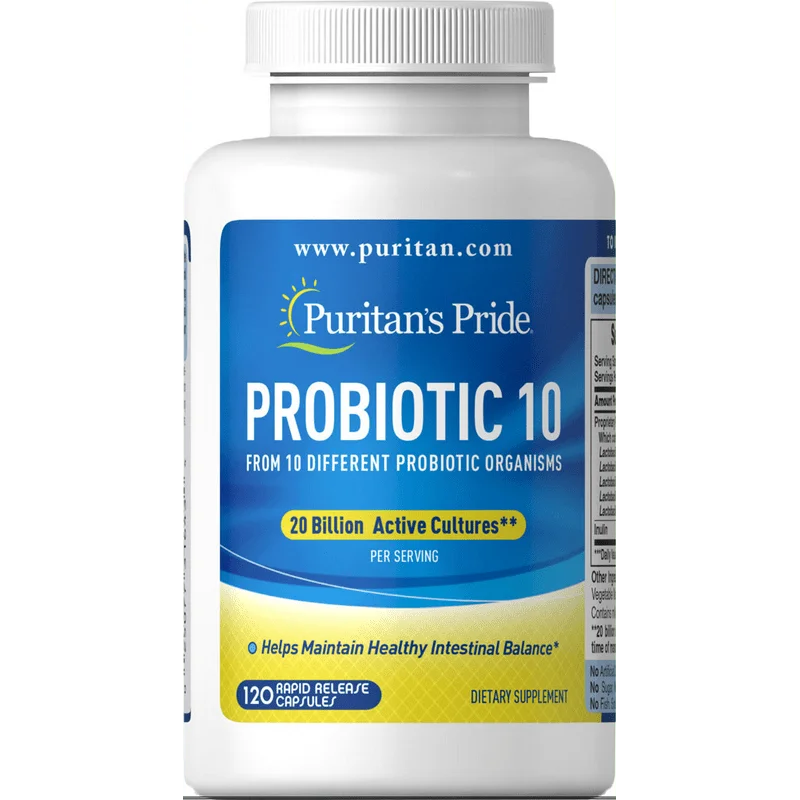
Quick answer: Puritans Pride Probiotic 10 is a multi-strain probiotic that supplies ten different strains of live beneficial bacteria per serving. Probiotics have real, evidence-backed uses in specific situations — such as after antibiotics — but their effects are strain-specific, so they are a targeted support rather than a general cure.
Key facts about Puritans Pride Probiotic 10
| Product | Puritans Pride Probiotic 10, 120 capsules |
| Brand | Puritans Pride |
| Type | Multi-strain probiotic supplement |
| Provides | Ten probiotic strains of live bacteria per serving |
| Suggested use | Usually 1 capsule daily — follow the label |
| Best suited for | Adults wanting broad daily digestive-flora support |
What is Puritans Pride Probiotic 10?
Puritans Pride Probiotic 10 is a daily probiotic supplement that delivers ten different strains of live beneficial bacteria in each serving. The bottle contains 120 capsules, and the “10” in the name refers to the number of bacterial strains in the blend. It is designed as a broad, general-purpose support for the digestive system rather than a treatment for a specific diagnosed condition.
What probiotics actually are
Probiotics are live microorganisms — mostly bacteria such as Lactobacillus and Bifidobacterium species — that, taken in adequate amounts, may confer a health benefit. The dose is measured in colony-forming units (CFU), and the specific strain matters as much as the number. Different strains do different things, which is why “probiotic” is a category, not a single effect.
What the evidence does and does not support
Honesty is important here. According to the NCCIH overview of probiotics, there is reasonable evidence that certain probiotic strains help with specific issues — for example reducing antibiotic-associated diarrhoea and easing some symptoms of irritable bowel syndrome — but the benefits are strain-specific and do not apply to every product or every person. Probiotics are not a proven treatment for most conditions, and a general blend is best seen as support, not therapy.
What probiotics will not do
A probiotic will not “detox” you, will not reliably cause weight loss, and will not cure disease. Marketing sometimes implies a probiotic is a fix-all for health and immunity; the science is far more modest and situation-dependent. Setting realistic expectations helps you judge whether a probiotic is worth taking for your particular goal.
Who might benefit
People who may find a multi-strain probiotic useful include those recovering from a course of antibiotics, some individuals with occasional digestive discomfort or bloating, and those wanting general daily flora support alongside a fibre-rich diet. Response varies from person to person, so a trial period is often the only way to know if it helps you.
Probiotics and antibiotics
One of the better-supported uses of probiotics is reducing the diarrhoea that antibiotics can cause. If you take a probiotic during a course of antibiotics, separate the two by a couple of hours so the antibiotic does not kill the probiotic bacteria. Continue the probiotic for a while after the course finishes to help the gut flora recover.
How to take and store it
Follow the label, which is commonly one capsule daily. Consistency matters more than timing, though many people take it with a meal. Check whether your product needs refrigeration or is shelf-stable, and keep it away from heat and humidity to protect the live cultures. Living organisms decline over time, so respect the expiry date.
Safety and who should be cautious
Probiotics are generally safe for healthy adults, with mild, temporary gas or bloating being the most common effect as the gut adjusts. However, people who are severely immunocompromised, critically ill, or have serious underlying illness should only use probiotics under medical supervision, because in these situations there are real safety considerations. If in doubt, ask your doctor.
Prebiotics, fibre and diet
Probiotics work best when the diet also feeds beneficial bacteria. Prebiotic fibres — found in vegetables, legumes, whole grains, onions and garlic — provide fuel for gut microbes, and fermented foods such as yoghurt, kefir and sauerkraut add natural cultures. A supplement is one tool; an overall gut-friendly diet is the foundation.
How to choose a probiotic
When comparing probiotics, look at the named strains, the CFU count guaranteed through to the end of shelf life (not just at manufacture), and whether the product matches your intended use. A higher strain count is not automatically better; the right strains at a viable dose matter more than the biggest number on the label.
When to see a doctor
See a healthcare professional if you have persistent digestive symptoms, unexplained weight loss, blood in the stool, severe or ongoing abdominal pain, or symptoms that do not settle. These need proper assessment rather than a supplement. A probiotic is not a substitute for investigating a genuine medical problem.
Expert note
Dr. Abdallah Fouad — Clinical Nutrition Specialist, 25+ years of experience: Probiotics are one of the few supplement categories with genuine, if narrow, evidence — particularly for reducing antibiotic-associated diarrhoea and easing some IBS symptoms. Puritans Pride Probiotic 10 is a reasonable broad-spectrum option, but manage your expectations: effects are strain-specific and individual. Pair it with a fibre-rich diet, separate it from antibiotic doses, and if you are severely unwell or immunocompromised, only use it under medical advice.
Frequently asked questions
What is Puritans Pride Probiotic 10 good for?
It provides broad daily support for digestive flora and can be useful during and after antibiotics. Benefits are strain-specific and vary between individuals, so it is a support rather than a cure.
How do I take Puritans Pride Probiotic 10?
Usually one capsule daily, following the label. If taking it alongside antibiotics, separate the doses by a couple of hours and continue for a while after the course.
Do probiotics help with weight loss or detox?
No. There is no reliable evidence that a general probiotic causes weight loss or “detoxifies” the body. Its documented benefits are digestive and situation-specific.
Are probiotics safe?
They are generally safe for healthy adults, with mild temporary bloating being the most common effect. People who are severely immunocompromised or critically ill should only use them under medical supervision.
Does Probiotic 10 need refrigeration?
Check your specific bottle — some probiotics are shelf-stable and others benefit from refrigeration. Either way, keep it away from heat and humidity and respect the expiry date to protect the live cultures.
References
- NCCIH (National Center for Complementary and Integrative Health) — Probiotics: What You Need To Know.
- NHS — Probiotics and gut health.
- Reviews on probiotics for antibiotic-associated diarrhoea and IBS symptom management.
Bottom line
Puritans Pride Probiotic 10 is a sensible multi-strain probiotic for adults wanting general digestive-flora support, with its strongest evidence around antibiotic-associated diarrhoea and some IBS symptoms. Keep expectations realistic — it is strain-specific support, not a cure or a weight-loss aid — pair it with a fibre-rich diet, and seek medical advice for persistent or serious digestive symptoms.



Reviews
There are no reviews yet.