


Description
Bundle: 65 cannulas for EGP 513 (about EGP 7.89 each) – minimum order EGP 500.
✔ Available for bulk supply to hospitals, clinics, pharmacies and care centres – contact us on WhatsApp for a volume quote.
ⓘ Orders are confirmed once the shipping fee is transferred in advance.
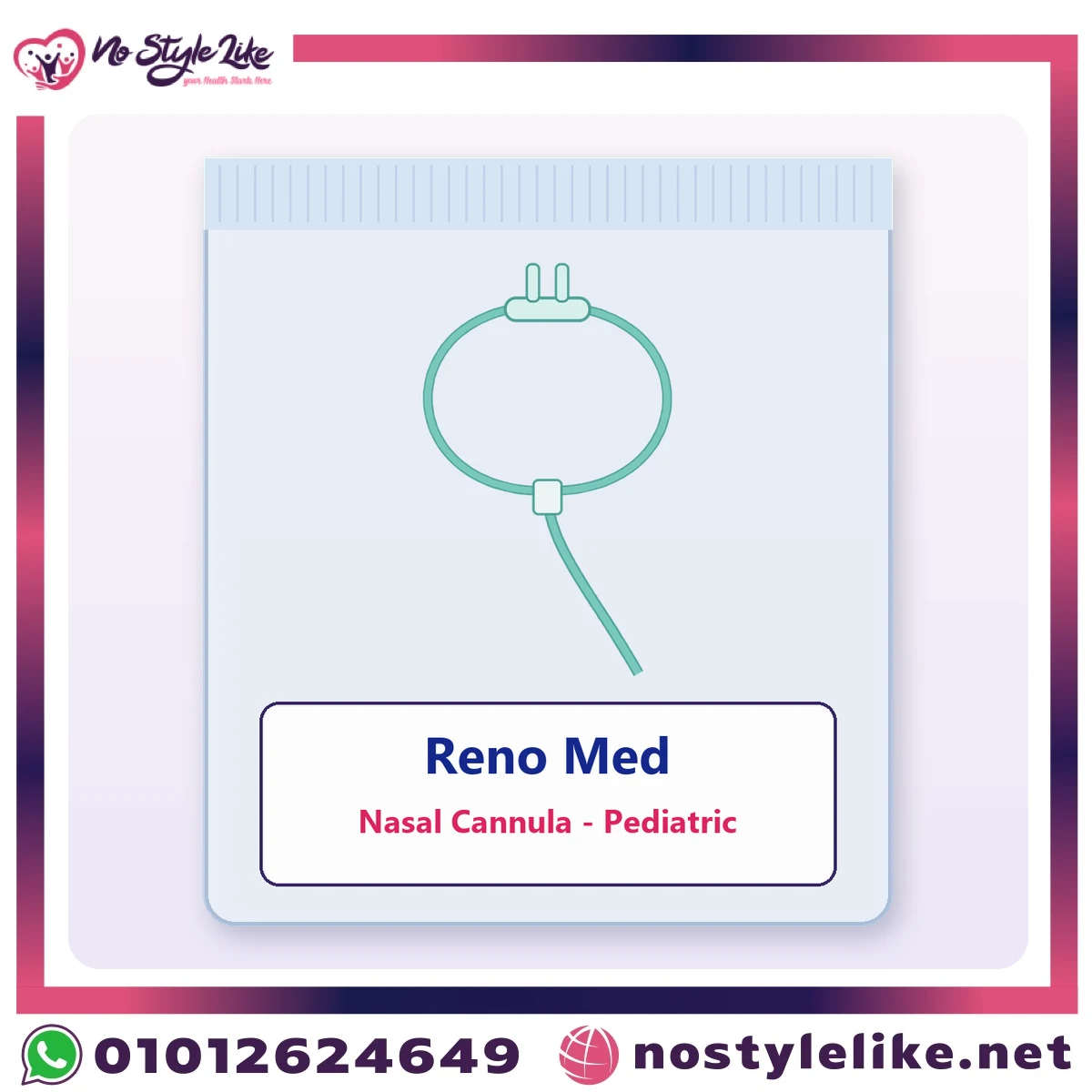
Reno Med Pediatric Nasal Oxygen Cannula: A 22-Section Parent Guide to Safety and Comfort
Quick answer:
The Reno Med Pediatric Nasal Oxygen Cannula is a nasal cannula with smaller prongs and a shorter tubing loop to suit a child’s face, from Reno Med (Reno Med Medical Supplies), and it connects to an oxygen cylinder or concentrator. It is used only at the low flows your paediatrician prescribes, and the prongs must not completely fill the nostrils. Its big advantage is that the child can feed, eat and play while on oxygen, but long tubing is a danger to a child’s neck and must be routed away from it, with no smoking or flames near the oxygen.
Key Facts About the Reno Med Pediatric Nasal Oxygen Cannula
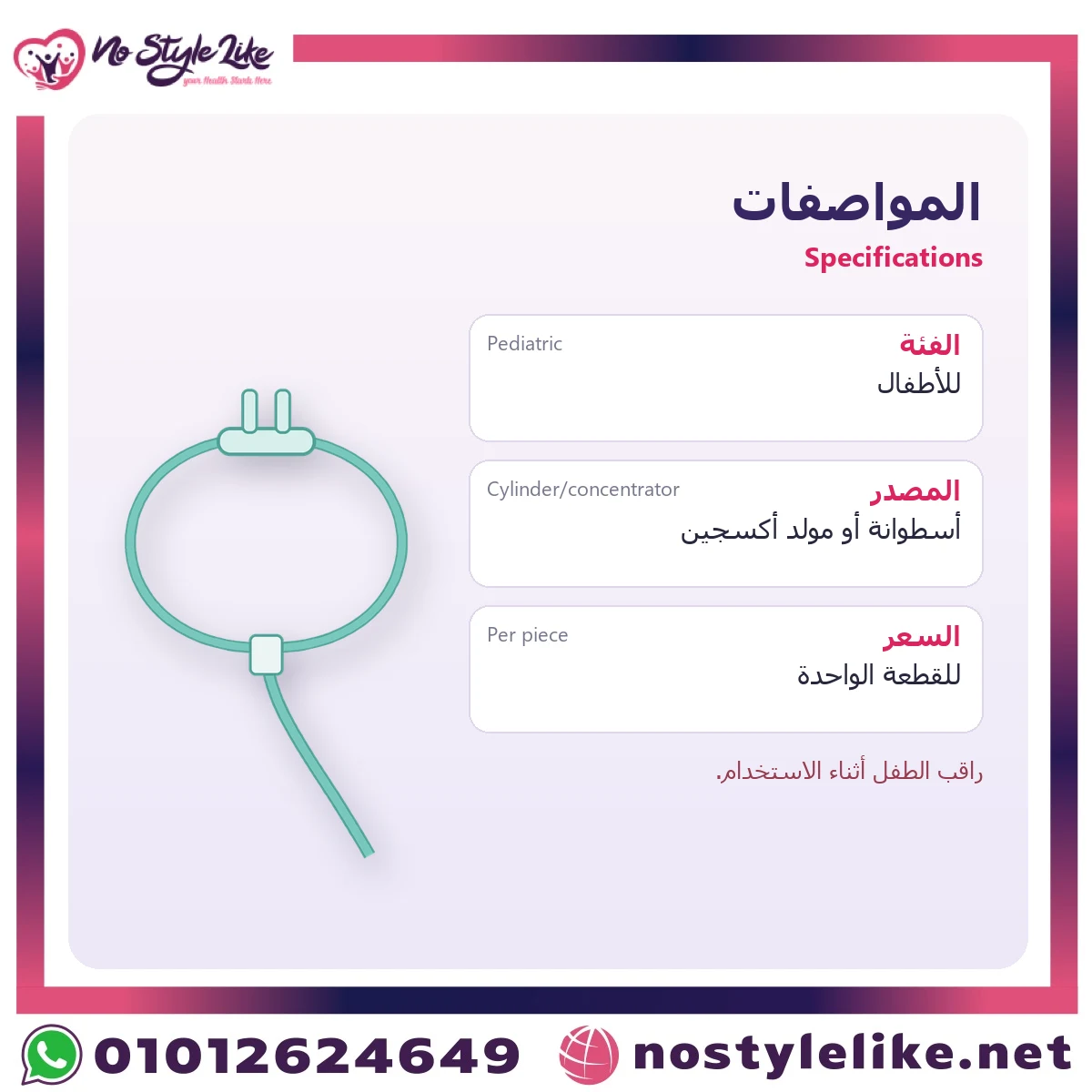
| Name | Reno Med Pediatric Nasal Oxygen Cannula |
| Brand | Reno Med (Reno Med Medical Supplies), an Egyptian medical-supplies importer and distributor |
| Type | Nasal oxygen cannula, paediatric size |
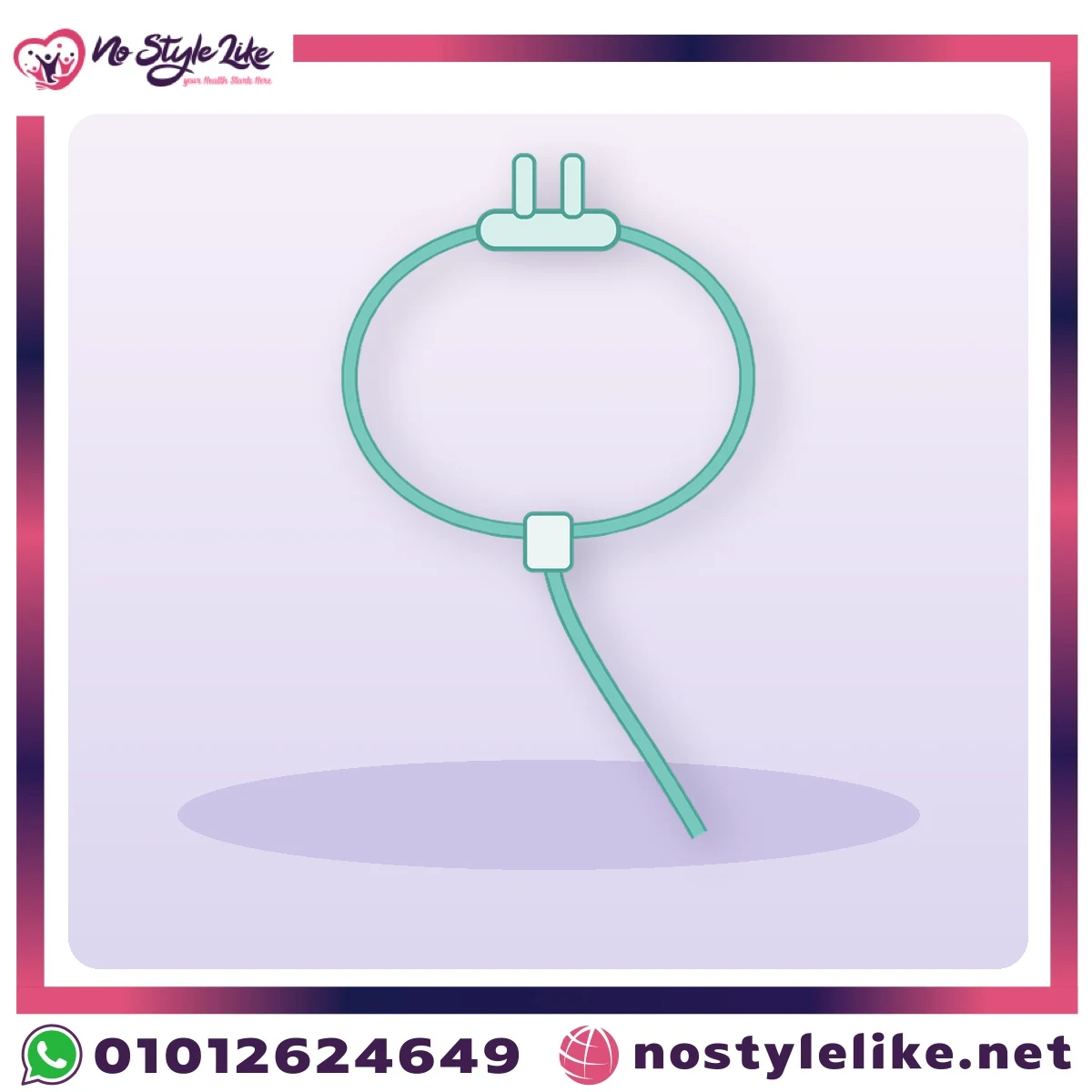
| Parts | Smaller nasal prongs, smaller tubing loop, supply tubing |
| Flow | Low flows set by the paediatrician for each child |
| Pack | One cannula with its tubing; exact age range and tubing length are not stated in the material we have |
| Key warning | Keep tubing away from the child’s neck and supervise constantly |
| Expiry | Printed on the pack |
Short description: The Reno Med Pediatric Nasal Oxygen Cannula is a small nasal cannula that delivers the oxygen your paediatrician prescribed at a low flow and leaves the child’s mouth free for feeding, eating and talking, with guidance for parents on safe securing and monitoring.
On this page
- Introduction for parents
- What is it?
- Parts and design
- Key advantages
- Situations at home
- Who is it for?
- When is it not suitable?
- How to fit it on your child
- When to use it
- What to watch for
- Mistakes parents make
- Myths and facts
- Possible problems
- Compatibility with cylinders, concentrators and humidifiers
- Child and fire safety
- Checks before and during use
- What you need with it
- Comparing respiratory products
- When to get help immediately
- NSL expert tip
- FAQ
- Conclusion
Introduction for Parents to the Reno Med Pediatric Nasal Oxygen Cannula
Some children leave the neonatal unit or hospital with a prescription for low-flow oxygen at home, such as premature babies, children after severe bronchiolitis, or children with certain heart and lung conditions. In these cases the paediatrician often chooses a nasal cannula, because it is lighter on the child’s face and lets them feed and play. The Reno Med Pediatric Nasal Oxygen Cannula is that cannula in a small size.
In this guide we explain how to fit the cannula without blocking your child’s nose, how to secure it and keep the tubing away from the neck, how to follow saturation, and which signs need emergency care.
What Is the Reno Med Pediatric Nasal Oxygen Cannula?
It is a nasal oxygen cannula with smaller prongs and a shorter tubing loop than the adult size, supplied by Reno Med, the Egyptian importer and distributor of medical supplies. It delivers oxygen directly into the child’s nostrils through tubing from a cylinder or a home concentrator.
The cannula is only a delivery device, and the flow is set by the paediatrician. The exact age range is not stated in the material we have, so you confirm the fit by looking at your child’s nose as explained below.
Parts and Design of the Reno Med Pediatric Nasal Oxygen Cannula
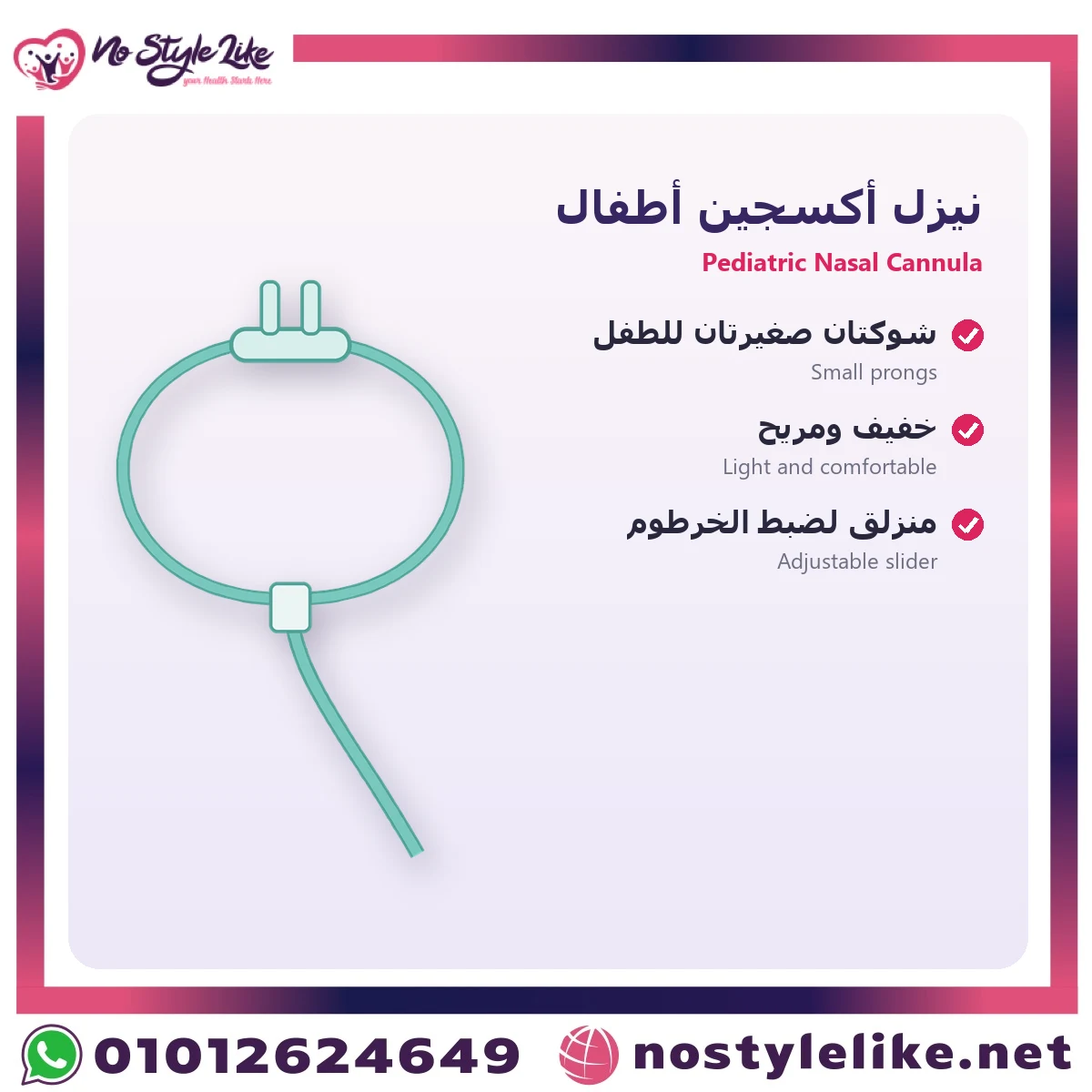
- Two small nasal prongs: they sit just inside the child’s nose and should be smaller than the nostrils, leaving a gap around them.
- Smaller tubing loop: sized for a child’s head; it passes over the ears or is secured on the cheeks as the nurse shows you.
- Supply tubing: connects the cannula to the oxygen source; its length is not stated in the material we have.
These are the typical parts. If you need to confirm a detail before ordering, message the pharmacy on WhatsApp.
Key Advantages of the Reno Med Pediatric Nasal Oxygen Cannula
- Leaves the child’s mouth free for feeding, eating, talking and crying.
- Lighter than a mask, and many children accept it more easily.
- The child can play and move around the room while on oxygen.
- Suits the low flows paediatricians often prescribe for home use.
Situations at Home
A baby girl discharged from the neonatal unit on low-flow oxygen: the nurse showed her mother how to secure the Reno Med Pediatric Nasal Oxygen Cannula on the cheeks with child-friendly tape and how to breastfeed with the cannula in place.
A 2-year-old who crawls and plays: his father routed the tubing behind the child’s back, away from the neck, and placed the concentrator in a safe corner so the child cannot pull on the tubing.
Who Is the Reno Med Pediatric Nasal Oxygen Cannula For?
- Children whose paediatrician has prescribed low-flow oxygen.
- Babies and children who need to feed or eat while on oxygen, once the doctor confirms the size.
- Children who do not tolerate a mask on the face.
When Is the Reno Med Pediatric Nasal Oxygen Cannula Not Suitable?
- When the child needs a higher flow; the doctor may choose a mask such as the Reno Med Pediatric Oxygen Mask.
- Severe nasal blockage with secretions or a nosebleed, until the doctor has assessed the child.
- Teenagers and adults, who need a larger size: the Reno Med Adult Nasal Oxygen Cannula.
- Nebulizer treatments, which need a different mask, the Reno Med Pediatric Nebulizer Mask.
How to Fit the Reno Med Pediatric Nasal Oxygen Cannula on Your Child
- Wash your hands and keep the oxygen source away from any flame or heat.
- Gently clear secretions from your child’s nose as the doctor advised, for example with saline drops.
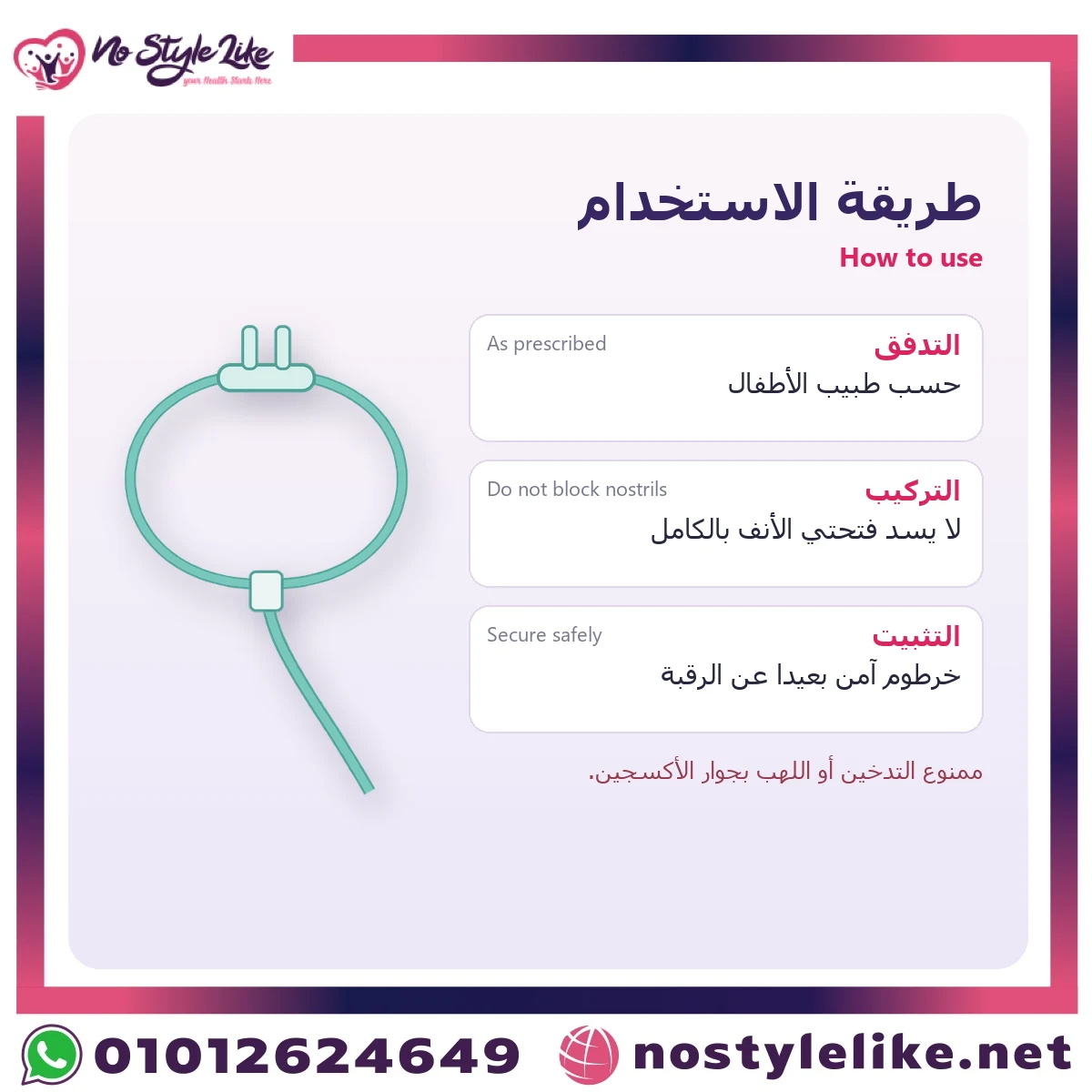
- Connect the tubing to the regulator, concentrator or humidifier, and set the flow to exactly the paediatrician’s number.
- Place the prongs in the child’s nose with the curve pointing downwards, and check they do not completely fill the nostrils.
- Pass the loop over the ears and adjust it gently, or secure it on the cheeks if the nurse showed you how.
- Route the tubing behind the child’s back or towards the feet, never around the neck.
- Stay close to your child and check regularly that the prongs are still in place.
When to Use It
The timing and duration of oxygen are set by the paediatrician; some children need it all day, others only during sleep and feeds. Do not stop it or change the flow without speaking to the doctor.
What to Watch For With the Reno Med Pediatric Nasal Oxygen Cannula
At the correct flow, the saturation reading usually improves within minutes, the child feeds or eats with less effort, and sleep becomes calmer. If fast breathing continues or blue colour appears, seek emergency care straight away.
Mistakes Parents Make With the Reno Med Pediatric Nasal Oxygen Cannula
- Using an adult cannula on a child, so the prongs block the nose completely.
- Leaving long tubing around the cot or close to the child’s neck.
- Turning the flow up on your own when the child cries.
- Putting petroleum jelly or oil-based cream on the child’s nose.
- Not clearing secretions, so the nose blocks and oxygen does not get through well.
Myths and Facts
Myth: A nasal cannula is too much for a small baby. Fact: Nasal cannulas are among the most widely used devices for babies and children, at the size and flow the doctor sets.
Myth: If the child cries, no oxygen gets through. Fact: Crying increases the need for oxygen, so calm your child and check the prongs are in place, but do not raise the flow without the doctor.
Possible Problems
- A dry nose or minor nosebleeds.
- Redness on the cheeks or behind the ears from the tubing or tape.
- Prongs blocked by secretions.
- Irritation at the nostrils if the prongs are too big or pressed in.
Compatibility of the Reno Med Pediatric Nasal Oxygen Cannula With Cylinders, Concentrators and Humidifiers
The Reno Med Pediatric Nasal Oxygen Cannula connects to the regulator and flowmeter of an oxygen cylinder or to the outlet of a home oxygen concentrator. Very low paediatric flows need a flowmeter that reads them accurately, so ask your equipment supplier or doctor whether your device is suitable. The doctor may also add a humidifier with distilled water to prevent nasal dryness.
The connector type and tubing length are not stated in the material we have, so ask the pharmacy on WhatsApp if your device has an unusual outlet.
Child and Fire Safety With Oxygen
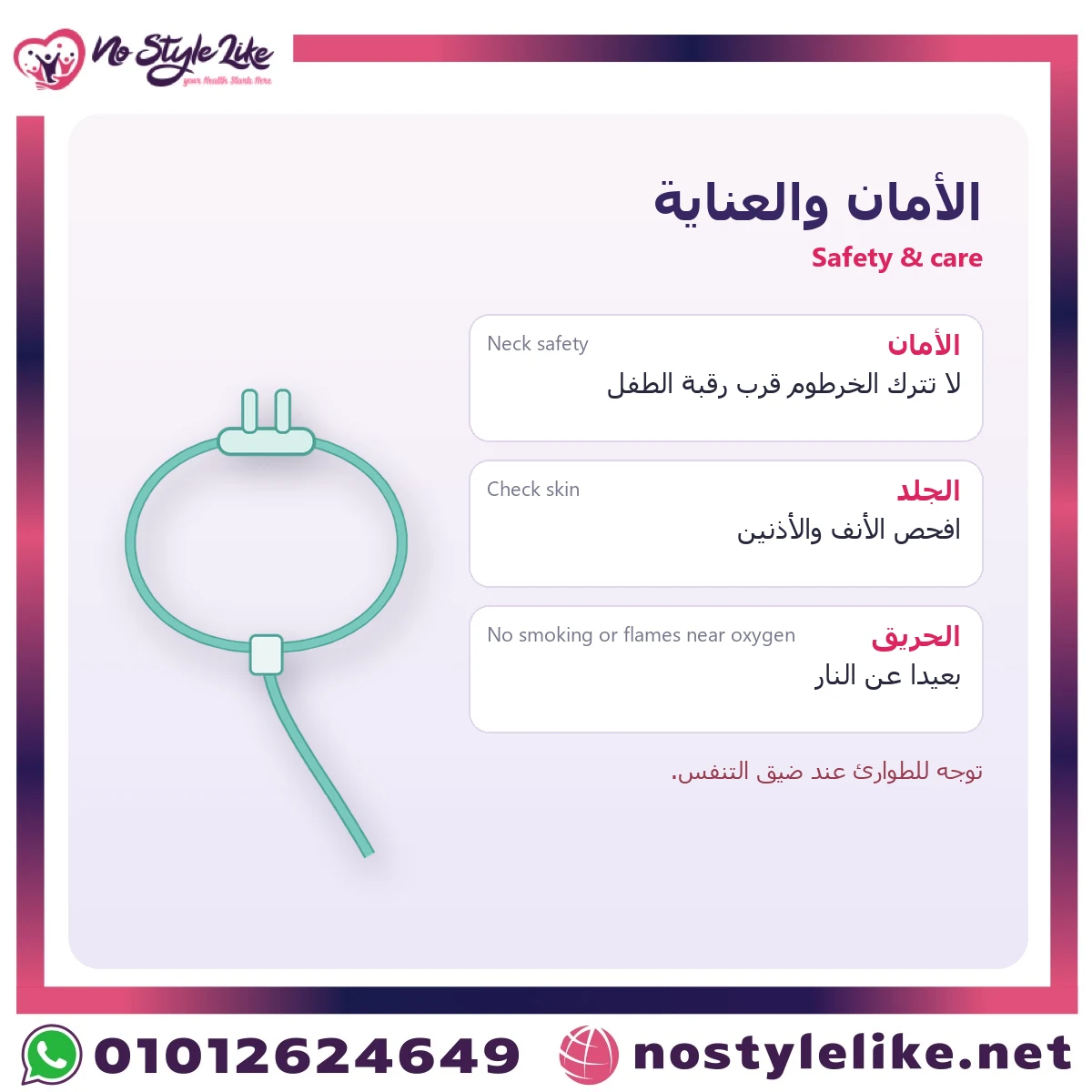
- Strangulation risk: never leave long tubing where it could wrap around the child’s neck, especially during sleep.
- No smoking at all in the home while oxygen is in use.
- Keep the cylinder and concentrator away from gas cookers, candles and heaters, and do not cover them.
- Do not give the child toys that spark while oxygen is running.
- Do not use petroleum jelly or oils on the child’s face.
- The Reno Med Pediatric Nasal Oxygen Cannula is for one child only and should be replaced when it gets dirty or stiff.
Checks Before and During Use of the Reno Med Pediatric Nasal Oxygen Cannula
- Pulse oximetry: use a sensor made for babies or children, take readings while the child is calm, and ask the doctor for the target number.
- Nose check: the prongs are in place and the nose is not blocked with secretions.
- Flow check: the flowmeter matches the paediatrician’s prescription.
- Feeding and weight: note whether your child feeds well, as the doctor follows weight alongside oxygen.
- Skin check: cheeks and behind the ears every day.
What You Need With It
- A pulse oximeter with a baby or child sensor.
- Saline nose drops if the doctor advises them.
- Child-friendly skin tape if the nurse taught you to secure the cannula on the cheeks.
- A spare Reno Med Pediatric Nasal Oxygen Cannula in the same size.
- If the doctor has prescribed nebulizer sessions for your child, use the Reno Med Pediatric Nebulizer Mask for them.
Comparing the Reno Med Pediatric Nasal Oxygen Cannula With Other Respiratory Products
Reno Med offers breathing devices in adult and child sizes. This table helps you understand the differences with your paediatrician:
| Product | What it is for |
|---|---|
| Reno Med Pediatric Nasal Oxygen Cannula | Smaller prongs and ear loop for children, low flows |
| Reno Med CPAP Mask | Full-face mask for a CPAP or BiPAP machine during sleep |
| Reno Med Pediatric Nebulizer Mask | Child-size nebulizer mask kit for inhaling the prescribed medicine |
| Reno Med Adult Nebulizer Mask | Adult nebulizer mask kit for inhaling the prescribed medicine |
| Reno Med Adult Oxygen Mask | Adult simple face mask over nose and mouth, medium flow of about 5-10 L/min |
| Reno Med Pediatric Oxygen Mask | Child-size simple face mask, used under constant supervision |
| Reno Med Adult Nasal Oxygen Cannula | Adult nasal prongs for low flow of about 1-6 L/min, lets you eat and talk |
When to Get Help Immediately
- Blue lips, face or colour around the mouth.
- Skin pulling in between the ribs or grunting with breathing.
- Refusing feeds or being unable to eat.
- Severe drowsiness or difficulty waking the child.
- A saturation reading below the number your doctor set even though the prongs are in place.
Call an ambulance on 123 or go to the emergency department straight away.
NSL Expert Tip
From the No Style Like pharmacy team’s experience with parents: safety with the Reno Med Pediatric Nasal Oxygen Cannula starts with the tubing, not the prongs. Before your child goes to sleep, trace the tubing from the device to the face and make sure it runs behind the back, away from the neck. Then look inside the nose: if there is no gap around the prongs, the size is too big for your child, so ask the doctor before carrying on.
FAQ About the Reno Med Pediatric Nasal Oxygen Cannula
Can my baby feed with the cannula in the nose?
Yes, that is one of its main advantages, with the doctor following how comfortable the baby is while feeding.
Is the Reno Med Pediatric Nasal Oxygen Cannula suitable for newborns?
The exact age range is not stated in our material; the right size for a newborn is decided by the doctor or neonatal unit.
How do I know the size is right?
The prongs do not fill the nostrils, and there is a gap around them.
Do we need a humidifier?
The doctor may add one to prevent your child’s nose from drying.
How often should I replace the Reno Med Pediatric Nasal Oxygen Cannula?
When it gets dirty or stiff, or as your doctor advises. It is for one child only.
What is the expiry date?
It is printed on the pack.
Conclusion
The Reno Med Pediatric Nasal Oxygen Cannula is a small nasal cannula from Reno Med that delivers the oxygen your paediatrician prescribed at a low flow while your child feeds and plays. Make sure the prongs do not block the nose, keep the tubing away from the neck, follow saturation and keep smoking and flames away. Order the Reno Med Pediatric Nasal Oxygen Cannula today from No Style Like Pharmacy with delivery across Egypt.
Reviewed by the No Style Like Pharmacy content team. This information is for educational purposes only.
Follow your doctor and the pack directions; oxygen is a prescribed treatment and this content does not replace medical advice. Learn more at MedlinePlus – Oxygen Therapy and MedlinePlus – Oxygen safety.

Reviews
There are no reviews yet.