


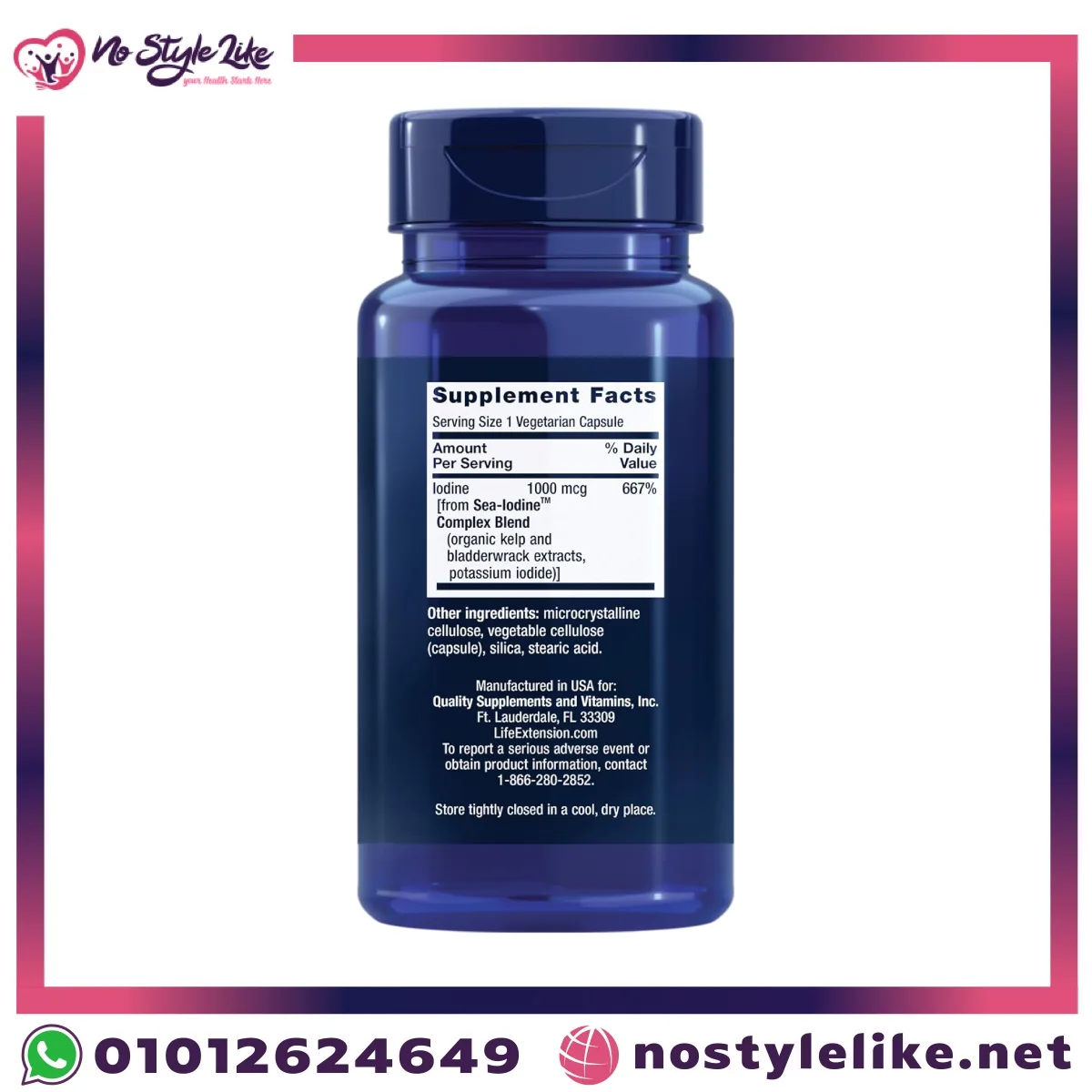
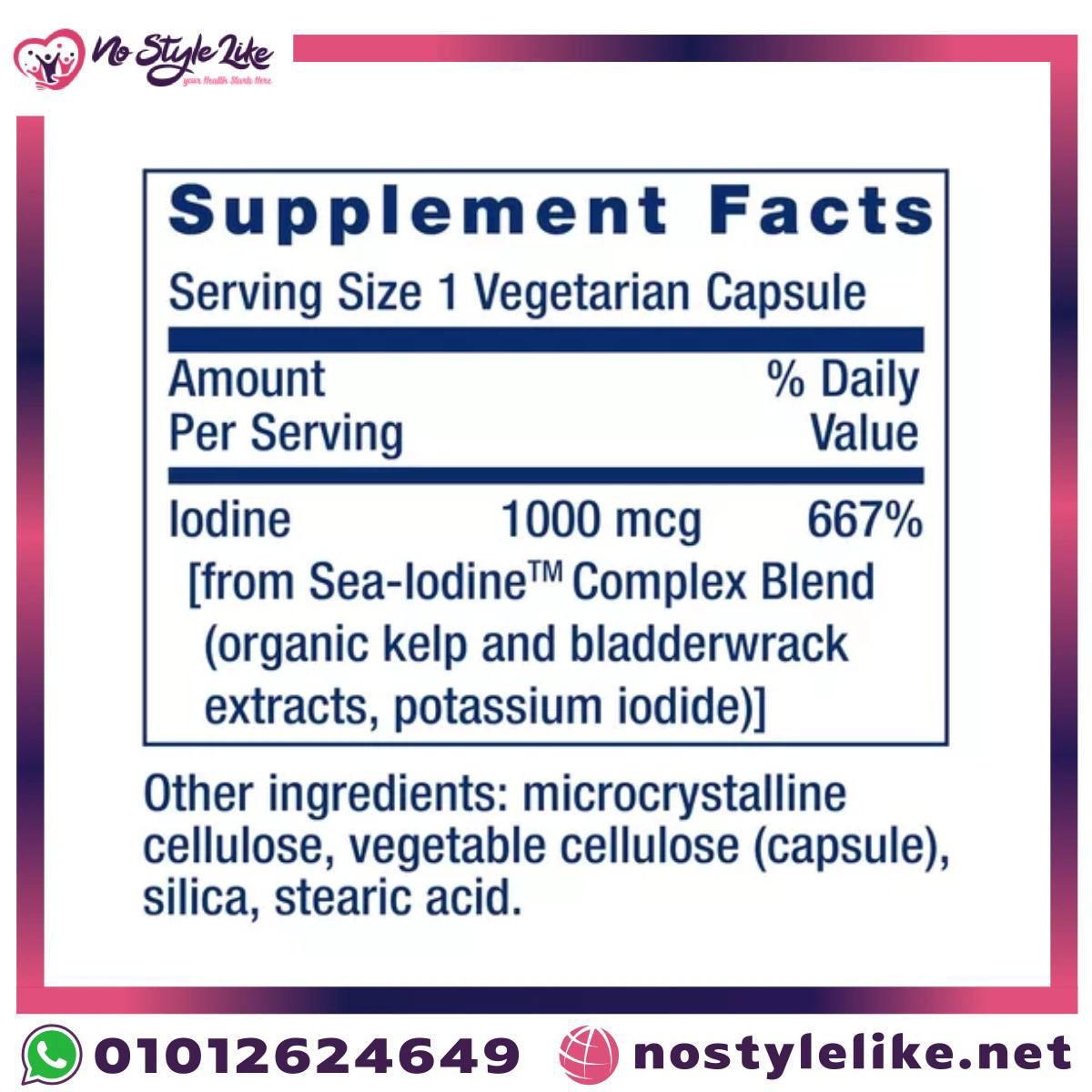
Description
Quick Answer: What Is Sea Iodine 1000 mcg?
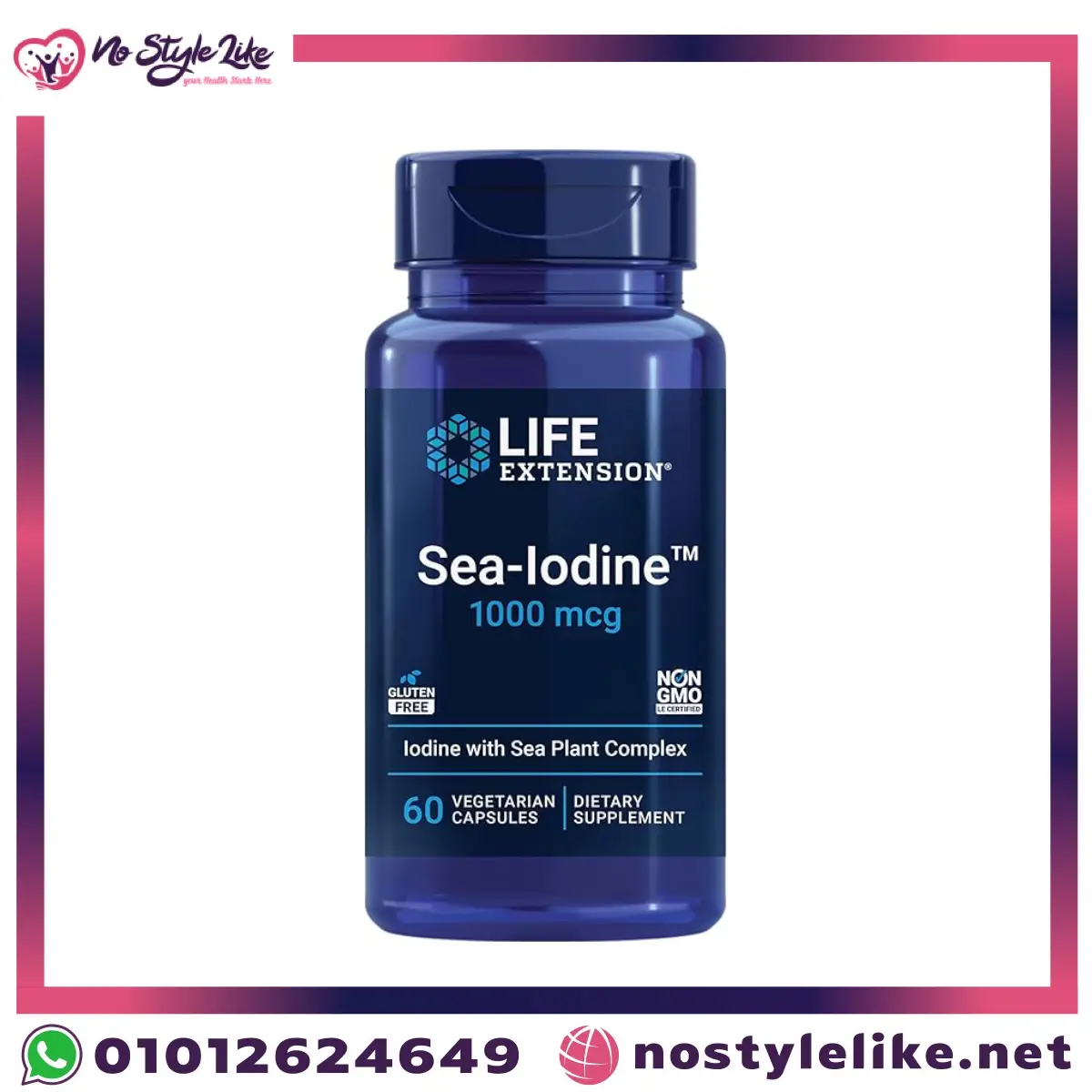
Sea Iodine delivers 1000 mcg of natural, marine-sourced iodine — the essential mineral your thyroid gland uses to manufacture thyroid hormone. Marketed in some contexts as a natural alternative approach to thyroid support, the honest clinical position matters here: iodine is genuinely essential for thyroid function, but both deficiency and excess iodine can disrupt thyroid health, and it is not a replacement for prescribed thyroid medication (like levothyroxine) in anyone with a diagnosed thyroid condition.
Key Facts About Sea Iodine 1000 mcg
| Product Name | Sea Iodine 1000 mcg |
|---|---|
| Source | Natural marine (sea) iodine |
| Role | Essential raw material for thyroid hormone production |
| Important Caution | Not a substitute for prescribed thyroid medication in diagnosed thyroid disease |
| Serving | Per label, typically one capsule daily |
| Prescription Status | Over the counter (dietary supplement) |
| Price in Egypt | 1,200 EGP |
Why Iodine Matters — And Why More Isn’t Automatically Better
The thyroid gland uses iodine as the literal building block for thyroid hormones T3 and T4, which regulate metabolism, energy, temperature, and virtually every organ system. True iodine deficiency (rare in Egypt due to iodized salt but possible with very restricted diets) causes hypothyroidism and goiter. However, the thyroid is also sensitive to excess iodine — in susceptible individuals, too much iodine can trigger or worsen both hypothyroidism and hyperthyroidism, particularly in people with pre-existing thyroid autoimmunity (Hashimoto’s or Graves’ disease) who may not know they carry that susceptibility. This is precisely why iodine supplementation deserves more caution than most vitamins.
Who Might Reasonably Consider Sea Iodine
- People with confirmed dietary iodine insufficiency (very low salt intake, no dairy, no seafood, avoiding iodized salt specifically).
- As general nutritional support in someone without any known thyroid condition, at standard label doses.
Who Should Not Take Iodine Supplements Without Medical Guidance
- Anyone with a known thyroid condition — Hashimoto’s thyroiditis, Graves’ disease, nodules, or any diagnosed hypo/hyperthyroidism — should not add iodine supplements without their endocrinologist’s explicit approval, as it can worsen either direction of thyroid dysfunction.
- Anyone already taking prescribed thyroid medication (levothyroxine, etc.) — iodine is not a substitute and combining without medical guidance can complicate dosing and lab monitoring.
- Pregnant women — iodine needs are genuinely higher in pregnancy, but dosing should be confirmed with an obstetrician rather than self-supplemented at high doses.
How to Take Sea Iodine Correctly
- Take one capsule daily with food, per the label.
- Do not exceed the labeled dose — iodine has a narrower safe range than many minerals.
- If you have any thyroid symptoms (fatigue, weight change, heart rate changes, neck swelling) — see a doctor for proper thyroid function testing before self-supplementing with iodine.
Possible Side Effects
At standard doses in people without thyroid conditions: generally well tolerated. In susceptible individuals (undiagnosed thyroid autoimmunity), iodine supplementation can trigger thyroid dysfunction symptoms — unusual fatigue, weight changes, heart palpitations, or neck swelling warrant stopping and seeing a doctor for thyroid function tests.
Storage
Store below 25°C, tightly closed, dry. Keep out of reach of children.
Sea Iodine Price in Egypt
The price of Sea Iodine 1000 mcg in Egypt is 1,200 EGP. Check availability on this page.
Related Products
For diagnosed thyroid conditions, see our Eltroxin and Euthyrox prescription options in our hormonal medications collection.
Expert Note
“Iodine sits in an unusual spot among minerals: genuinely essential, but with a narrower safety margin than most people assume. My rule is simple — general nutritional support at label doses is fine for most healthy people, but anyone with a thyroid diagnosis or thyroid symptoms needs their doctor’s involvement before adding iodine, not after.” — Dr. Abdallah Fouad, Clinical Nutrition Specialist, 25+ years in clinical nutrition.
Frequently Asked Questions About Sea Iodine
Can Sea Iodine replace my levothyroxine prescription?
No — iodine is a raw material for thyroid hormone production, not a replacement for prescribed thyroid hormone medication in diagnosed thyroid disease.
Is iodine deficiency common in Egypt?
Less common than it once was due to iodized salt, but possible in people avoiding salt, dairy, and seafood entirely.
Can too much iodine hurt my thyroid?
Yes — excess iodine can trigger or worsen thyroid dysfunction, particularly in people with underlying thyroid autoimmunity, which is why exceeding label doses isn’t advisable.
I have Hashimoto’s — can I take this?
Only with your endocrinologist’s explicit approval — iodine supplementation can worsen autoimmune thyroid conditions in susceptible individuals.
What symptoms suggest I should see a doctor before supplementing?
Unusual fatigue, unexplained weight change, heart palpitations, or visible neck swelling all warrant thyroid function testing first.
Getting Iodine From Food First
For most healthy people without a diagnosed thyroid condition, iodized table salt, dairy, eggs, and seafood cover daily needs reliably without any supplement at all. Anyone specifically avoiding iodized salt for blood-pressure reasons should discuss alternative iodine sources with their doctor rather than assuming a supplement is automatically the safest substitute.
References
Iodine fact sheet: NIH ODS – Iodine.
Bottom line: Sea Iodine offers genuine nutritional support for thyroid function in people without existing thyroid conditions — order it from No Style Like, respect the labeled dose, and involve your doctor first if any thyroid history is in the picture.

Reviews
There are no reviews yet.