


Description
Solpadeine is a prescription-only medication. It must only be used under the supervision of a physician. Never start, stop, or change the dose without medical advice.
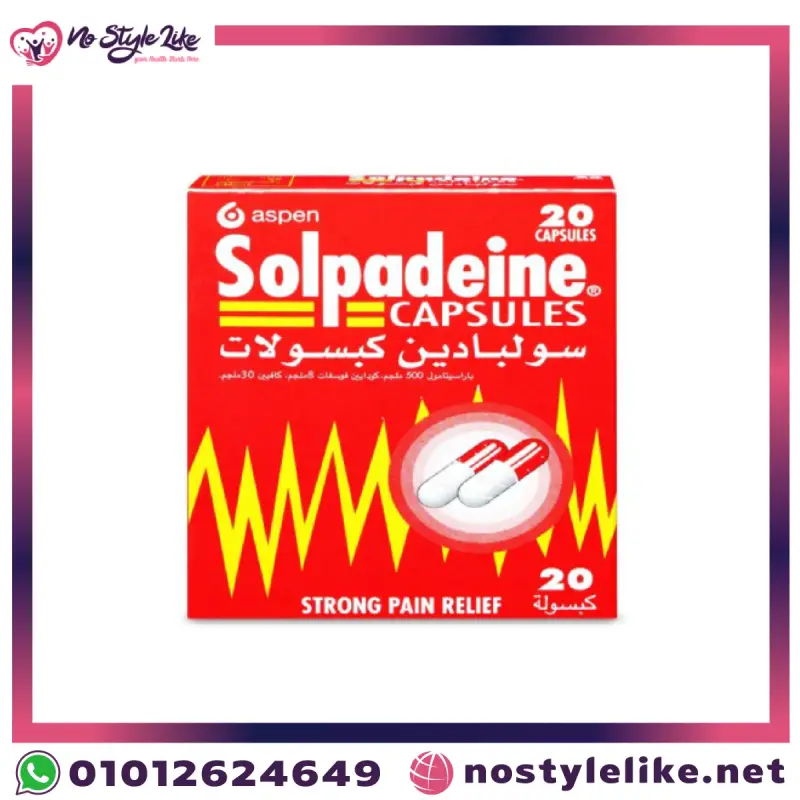
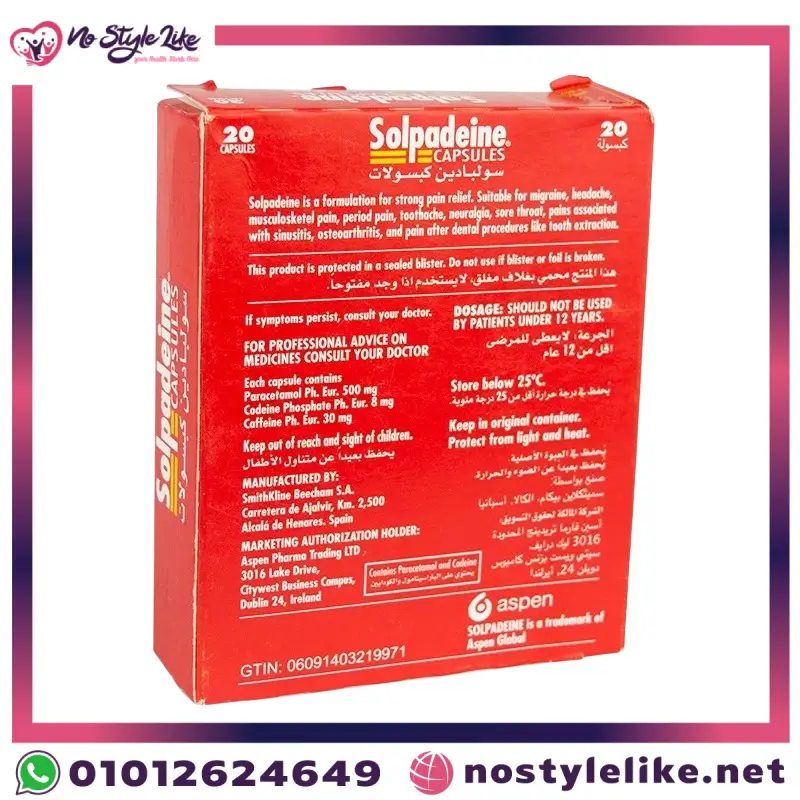
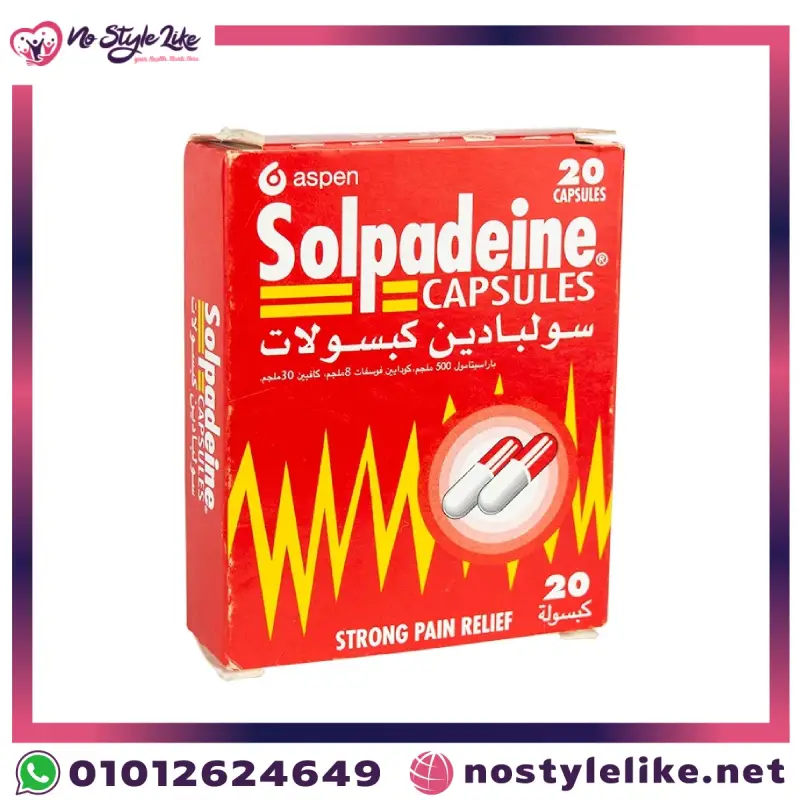
Solpadeine is a combination analgesic containing paracetamol, codeine phosphate, and caffeine, used for short-term relief of moderate pain such as headache, dental pain, and muscular aches when simple painkillers are not enough. Because it contains codeine, an opioid, it carries dependency risk and should only be used exactly as directed by a doctor or pharmacist, for the shortest time necessary.
Key Facts
| Active Ingredients | Paracetamol + Codeine Phosphate + Caffeine |
| Drug Class | Combination analgesic (contains opioid) |
| Main Use | Short-term moderate pain relief |
| Form | Capsules |
| Status | Prescription/pharmacist-controlled — contains codeine |
| Reviewed By | Dr. Abdallah Fouad — Clinical Nutrition Specialist (25+ yrs) |
Table of Contents
- 1. What Is Solpadeine?
- 2. How Does It Work?
- 3. Dosage Guidance
- 4. Who Should Avoid It
- 5. Risks and Side Effects
- 6. When to See a Doctor
1. What Is Solpadeine?
Solpadeine combines paracetamol (a mild analgesic/antipyretic), codeine phosphate (a mild opioid analgesic), and caffeine (which enhances the pain-relieving effect). It is intended for short-term use when standard paracetamol alone is insufficient.
2. How Does It Work?
Paracetamol reduces pain and fever through central mechanisms, codeine acts on opioid receptors to reduce the perception of pain, and caffeine boosts the overall analgesic effect and can help counter drowsiness.
3. Dosage Guidance
Always follow your doctor or pharmacist’s exact instructions. Codeine-containing products should be used at the lowest effective dose for the shortest time — typically no more than 3 days without medical reassessment.
4. Who Should Avoid It
- Anyone with a history of opioid dependency or substance use disorder, unless specifically supervised.
- Those with severe respiratory conditions.
- Pregnant or breastfeeding women, without medical advice.
- Anyone taking other sedatives, alcohol, or CNS depressants.
5. Risks and Side Effects
Codeine can cause drowsiness, constipation, nausea, and — with prolonged or excessive use — dependency and withdrawal symptoms. Combining with alcohol or other sedatives increases the risk of dangerous respiratory depression.
6. When to See a Doctor
See a doctor if pain persists beyond a few days, if you feel you need increasing doses for the same effect, or if you experience severe drowsiness, breathing difficulty, or signs of dependency.
Frequently Asked Questions
What is Solpadeine used for?
It is used for short-term relief of moderate pain, such as headaches and muscular aches, when simple painkillers are insufficient.
Does it contain an opioid?
Yes, it contains codeine phosphate, a mild opioid, alongside paracetamol and caffeine.
How long can I take it?
It should be used at the lowest effective dose for the shortest time, typically no more than a few days without medical reassessment.
Can it cause dependency?
Yes, codeine carries a risk of dependency with prolonged or excessive use.
Is it safe with alcohol?
No, combining codeine with alcohol or other sedatives increases the risk of dangerous drowsiness and breathing problems.
This article was written and medically reviewed by Dr. Abdallah Fouad, Clinical Nutrition Specialist with over 25 years of experience. Learn more about Dr. Abdallah Fouad.
Sources: MedlinePlus — Codeine.




Reviews
There are no reviews yet.