


St John’s Wort Interactions: 12 Drug Groups You Must Not Mix With It
Why St John’s Wort Interactions Are So Serious
Few herbs interact with as many medicines as St John’s wort. Doctors and pharmacists treat St John’s wort interactions as a real safety issue, not a theoretical one, because they have caused transplant rejection, unplanned pregnancies and serotonin syndrome. Here we explain the mechanism and the 12 drug groups that matter most.
How St John’s Wort Interactions Happen
The herb, mainly through hyperforin, switches on liver and gut enzymes, especially CYP3A4 and CYP2C9, and the P-glycoprotein pump that pushes drugs out of cells. The result is that many medicines are broken down and removed faster, so their blood levels fall and they stop working properly.
A second mechanism is serotonin: the herb raises serotonin activity, so combining it with other serotonin drugs can cause a dangerous excess. Importantly, the enzyme effect can last about two weeks after you stop the herb.
Table of the Main St John’s Wort Interactions
| Drug class | Effect | Action |
|---|---|---|
| SSRIs, SNRIs, triptans, tramadol | Serotonin syndrome | Do not combine |
| MAO inhibitors | Serotonin excess, blood pressure spikes | Do not combine |
| Birth control pills, patches, rings, implants | Contraceptive failure, breakthrough bleeding | Avoid or use a non-hormonal method |
| Warfarin | Weaker anticoagulation, clot risk | Avoid; doctor and INR checks |
| Cyclosporine, tacrolimus | Low levels, transplant rejection | Never combine |
| HIV protease inhibitors, NNRTIs | Treatment failure, resistance | Never combine |
| Digoxin | Lower levels, poor heart control | Avoid |
| Some statins (simvastatin, atorvastatin) | Higher cholesterol | Ask your doctor |
| Chemotherapy (irinotecan, imatinib) | Reduced cancer treatment effect | Never combine |
| Anticonvulsants | Lower levels, seizure risk | Avoid |
| Benzodiazepines, methadone | Weaker effect, withdrawal | Avoid; doctor review |
| PPIs (omeprazole) | Lower acid-suppression effect | Ask your pharmacist |
1. Antidepressants and Migraine Drugs
Combining St John’s wort with SSRIs such as sertraline or fluoxetine, SNRIs, triptans for migraine, or tramadol can cause serotonin syndrome: agitation, fast heartbeat, sweating, tremor, high temperature and muscle twitching. It needs urgent care. With MAO inhibitors the risk is even higher.
2. Birth Control and Hormones
This is one of the most common St John’s wort interactions. The herb lowers hormone levels from pills, patches, rings and implants, leading to breakthrough bleeding and unplanned pregnancy. The effect may persist for two weeks after stopping, so use a barrier method during that time.
3. Blood Thinners and Heart Medicines
Warfarin becomes less effective, raising the risk of clots and stroke. If the herb is then stopped suddenly, warfarin levels rebound and bleeding risk rises. Digoxin levels also drop, which may worsen heart failure or rhythm control.
4. Transplant, HIV and Cancer Drugs
Cyclosporine and tacrolimus levels can fall sharply, and transplant rejection has been reported. HIV protease inhibitors and NNRTIs may fail, and irinotecan or imatinib may work less well. These are the most dangerous St John’s wort interactions and the combination must never be tried.
5. Seizure, Anxiety and Pain Medicines
Some anticonvulsants, benzodiazepines such as alprazolam, and methadone are broken down faster, which can bring back seizures, anxiety or withdrawal symptoms.
6. Statins and Stomach Medicines
Simvastatin and atorvastatin levels may fall, and proton pump inhibitors such as omeprazole may become less effective. Discuss with your doctor whether monitoring is needed.
Practical Rules to Avoid St John’s Wort Interactions
- Give your pharmacist a full list of medicines, including vitamins and herbs.
- Never start the herb while on any prescription drug without approval.
- Never stop it suddenly while on a drug that was adjusted around it; ask first.
- Remember the effect can last about two weeks after the last dose.
- Tell your surgeon or anaesthetist that you take it.
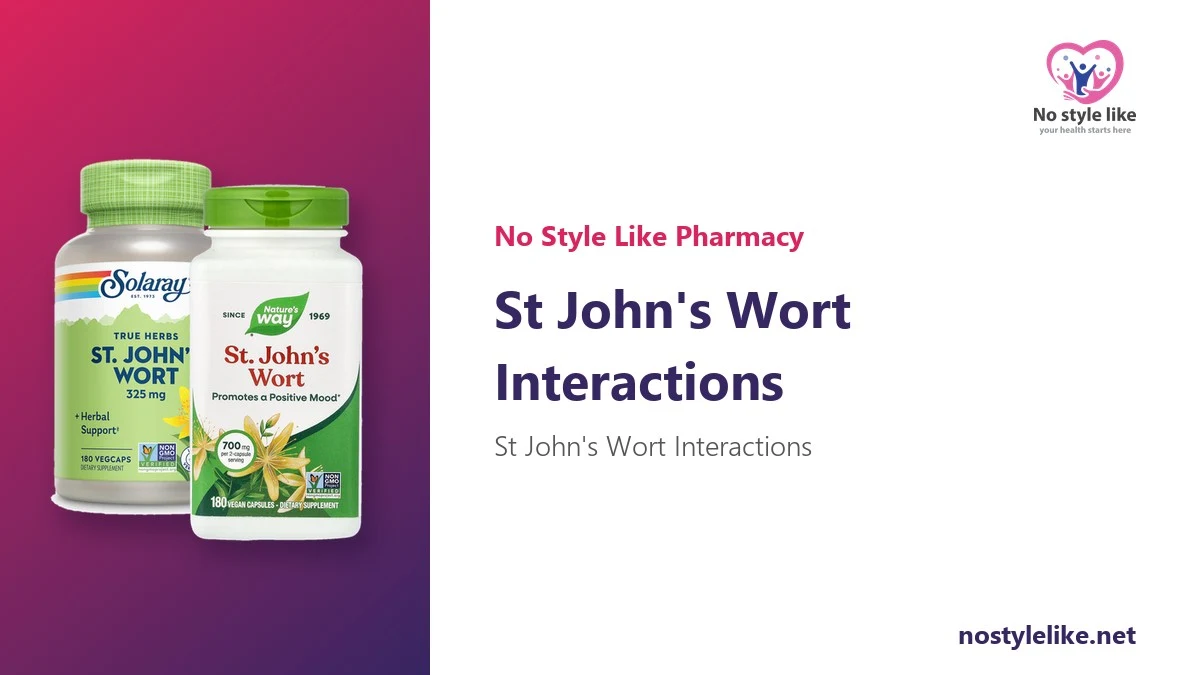
The label of every product we stock carries this warning. Solaray St. John’s Wort 325 mg 180 and Solaray 325 mg 100 (1 capsule three times daily) and Nature’s Way St. John’s Wort 700 mg (2 capsules twice daily) all interact in the same way. For the evidence on mood, read St John’s wort benefits.
Frequently Asked Questions About St John’s Wort Interactions
Can I take it with paracetamol?
There is no well-known major interaction with occasional paracetamol, but ask your pharmacist.
How long should I wait after stopping it before starting an antidepressant?
Your doctor will decide, but a gap of about two weeks is often advised.
Does tea or tincture interact too?
Yes. Any form that contains hyperforin can cause St John’s wort interactions.
What about the side effects themselves?
See St John’s wort side effects for sun sensitivity, stomach upset and more. If you feel low, our depression and anxiety guide may help.
Conclusion
St John’s wort interactions are serious because the herb speeds up the breakdown of many medicines and adds to serotonin effects. Never combine it with antidepressants, the pill, warfarin, transplant, HIV or cancer drugs. If you take no interacting medicine and your doctor agrees, Solaray 180, Solaray 100 and Nature’s Way 700 mg are available at No Style Like Pharmacy.
This article was reviewed by the No Style Like pharmacy content team. It is for general awareness only and does not replace advice from your doctor or pharmacist.
Always show your full medicine list to your pharmacist before starting St John’s wort. For more information see the NCCIH St. John’s wort page.