


Description
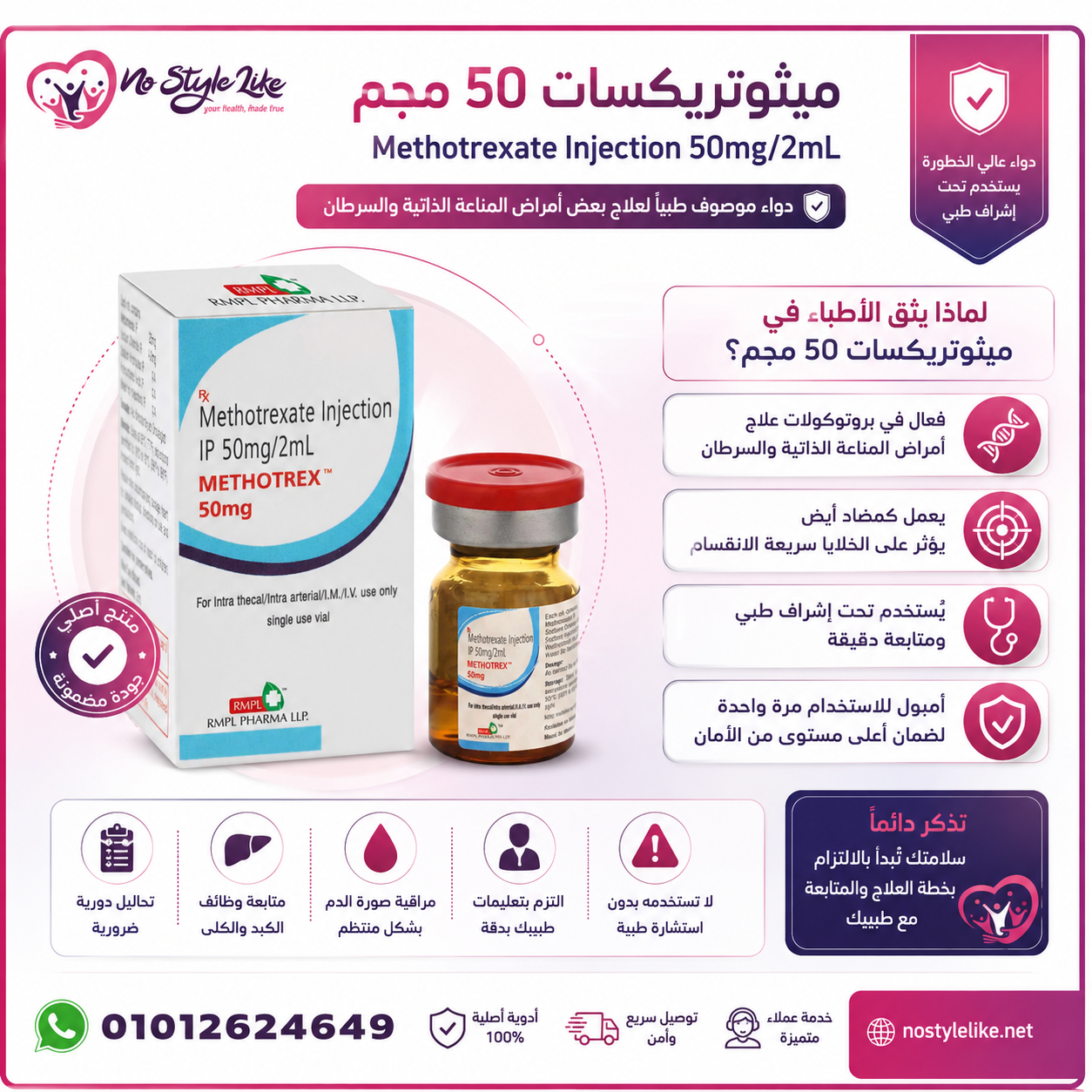
Methotrexate Injection 50mg/2mL (METHOTREX 50mg) – Prescription Use, Safety, Tests & FAQ
Short Description:
Methotrexate Injection 50mg/2mL (brand example: METHOTREX 50mg) is a
prescription antimetabolite (folate antagonist) used by clinicians in carefully selected cases such as
certain cancers and specific autoimmune conditions.
Because dosing, route, and monitoring vary widely by indication, this product should be used
only under specialist supervision with appropriate lab testing and safety precautions.
Serious toxicity can occur with incorrect dosing or interactions. Do not self-inject or adjust doses without your prescriber.
If you suspect overdose or severe side effects, seek urgent medical care.
Table of Contents
- Introduction
- How to Use
- How It Works
- Benefits
- Advantages
- Common Issues Solved
- Important Information
- Myths Correction
- Expected Results
- NSL Tip
- Who Is It For / Not For
- How to Get Best Results
- Contraindications
- Drug Interactions
- Required Tests
- What to Eat
- Improvement Timeline
- Effect on Other Medications
- When to See a Doctor
- FAQ
- Conclusion
Related on No Style Like:
(If you send your exact internal links, I’ll replace these with real product/blog URLs and anchor text.)
Introduction to Methotrexate Injection 50mg/2mL
Methotrexate Injection 50mg/2mL is a sterile injectable formulation of methotrexate, a medicine that can
affect rapidly dividing cells and immune activity. Clinicians may prescribe it for different protocols including
oncology (certain malignancies), and in lower or protocol-specific regimens for
autoimmune diseases (e.g., rheumatoid arthritis, severe psoriasis) or other specialist-directed indications.
Because methotrexate can cause serious adverse effects (blood, liver, lung, kidney, gastrointestinal, skin), safe use relies on:
correct route, accurate dosing schedule, lab monitoring, and avoiding dangerous interactions.
This page is educational and helps customers understand safety basics—not a substitute for medical advice.
How to Use Methotrexate Injection 50mg/2mL Safely
Methotrexate injection should be administered only by trained healthcare professionals or by patients
who have been specifically trained and prescribed a home-administration plan. The correct approach depends on the indication
and may involve IM, IV, SC, or other routes based on the product labeling and protocol.
- Follow the exact schedule: Many safety incidents happen when weekly regimens are mistakenly taken daily.
- Do not mix medicines: Use only the diluent/compatibility instructed by your clinic.
- Single-use vial rules: If labeled single-use, discard leftovers as instructed.
- Handling: Wear gloves if advised; avoid contact with skin/eyes; keep away from children.
- Missed dose: Contact your prescriber/clinic for instructions—do not “double” without advice.
How Methotrexate Injection 50mg/2mL Works
Methotrexate is commonly described as a folate antagonist. In oncology protocols, it can interfere with
DNA synthesis and cell replication in rapidly dividing cells. In autoimmune protocols (often lower dose schedules),
it modulates immune pathways and inflammation signaling. Mechanisms vary with dose and indication, which is why
specialist oversight matters.
Some regimens include folic acid supplementation (or folinic acid rescue in specific oncology settings),
which can reduce certain side effects—this must be guided by your clinician because it depends on the protocol.
Key Benefits (Protocol-Dependent)
- Specialist-directed therapy: Used in evidence-based protocols for certain cancers and immune conditions.
- Flexible clinical routes: Injectable form may be preferred when oral absorption/tolerance is limited.
- Structured monitoring: Treatment plans typically include lab follow-up to improve safety.
- Long-term planning: In autoimmune care, it may support disease control when used consistently as prescribed.
Advantages of Injectable Methotrexate Injection (When Prescribed)
- Predictable delivery: Injection may provide more consistent exposure than oral dosing in some patients.
- Clinician control: Allows careful titration and administration within protocols.
- Option for intolerance: Helpful when oral methotrexate causes significant GI intolerance (as assessed by a clinician).
Common Issues It May Be Used For (Doctor-Led)
Depending on the specialist plan, methotrexate injection may be used in protocols for:
- Oncology: selected malignancies under oncology supervision.
- Autoimmune inflammatory disease: rheumatoid arthritis, severe psoriasis, certain inflammatory arthropathies.
- Other protocols: specific gynecologic or specialist indications where clinically appropriate.
Indications differ by country and protocol. Always follow your prescriber’s diagnosis and plan.
Important Information Before Starting
- Pregnancy warning: Methotrexate can cause fetal harm. Use effective contraception as instructed; discuss plans for pregnancy.
- Breastfeeding: Typically not recommended—confirm with your clinician.
- Infection risk: It can suppress immune function; report fever or signs of infection promptly.
- Alcohol: Often discouraged due to liver toxicity risk—follow clinician guidance.
- Sun sensitivity: Some patients notice photosensitivity—use sun protection.
Myths vs Facts Methotrexate Injection
- Myth: “If I feel better, I can stop.”
Fact: Stopping or changing dose can cause relapse or complications—ask your prescriber. - Myth: “Weekly and daily dosing are the same.”
Fact: Confusing schedules is dangerous. Follow the exact plan. - Myth: “Herbal products are always safe with it.”
Fact: Some supplements can stress the liver or interact—tell your doctor about everything you take.
Expected Results (What Patients Often Notice)
Results depend on the condition and regimen:
- Autoimmune conditions: improvement may be gradual over weeks, with ongoing monitoring.
- Oncology protocols: response is assessed by oncology teams through imaging/labs and clinical evaluation.
If symptoms worsen or side effects appear, contact your healthcare team promptly.
NSL Tip (Smart Safety Habits)
- Keep a written schedule (day/time) and set reminders if your regimen is weekly.
- Carry a medication list on your phone including “methotrexate” for emergency visits.
- Ask your clinic what symptoms require urgent care and keep the emergency contact number accessible.
Who Methotrexate Injection 50mg/2mL Is For / Not For
Who it may be for
- Patients under specialist care with a confirmed diagnosis where methotrexate is indicated.
- Those needing injectable administration based on clinical assessment.
Who it may NOT be for (general examples)
- Pregnant patients or those planning pregnancy without specialist guidance.
- Severe liver disease, significant renal impairment, or blood disorders unless specialist decides otherwise.
- Active severe infection, uncontrolled ulcers, or severe immunosuppression (case-by-case).
How to Get Best Results (Without Increasing Risk)
- Do labs on time: CBC, liver and kidney tests as scheduled.
- Report side effects early: mouth sores, unusual bruising, severe nausea, breathing symptoms.
- Hydration: follow your protocol instructions (especially in certain oncology settings).
- Medication review: always check with your prescriber before adding new medicines or supplements.
- Folate plan: take folic acid only as instructed (dose and timing matter).
Contraindications (Do Not Use Unless Doctor Says Otherwise)
- Known hypersensitivity to methotrexate.
- Pregnancy (unless a specific specialist protocol exists and is legally/medically appropriate).
- Severe liver disease or alcohol misuse disorder where clinician judges risk unacceptable.
- Severe renal impairment without specialist dosing/monitoring plan.
- Severe bone marrow suppression (very low blood counts) unless managed by oncology/hematology.
Drug Interactions Methotrexate Injection
Tell your doctor and pharmacist about all medicines and supplements. Important interactions may include:
- NSAIDs (e.g., ibuprofen, diclofenac): may increase toxicity risk in some settings.
- Trimethoprim/sulfamethoxazole and some antibiotics: can raise bone-marrow suppression risk.
- Proton pump inhibitors (some cases): may affect clearance in certain regimens.
- Live vaccines: may be avoided depending on immune status and clinician advice.
- Other hepatotoxic drugs (e.g., high alcohol intake, some retinoids): increase liver risk.
Interaction risk varies with dose, kidney function, and protocol. Always follow your prescriber’s guidance.
Required Tests & Monitoring
Your clinician may request baseline and follow-up monitoring such as:
- CBC (complete blood count): white cells, hemoglobin, platelets.
- Liver function tests: ALT/AST, bilirubin (risk of hepatotoxicity).
- Renal function: creatinine/eGFR (methotrexate clearance depends on kidney function).
- Pregnancy test where applicable before starting and as needed.
- Infection screening when clinically indicated (e.g., hepatitis, TB) based on risk and local protocols.
- Chest assessment if respiratory symptoms occur (rare lung toxicity requires evaluation).
What to Eat to Support Tolerance
- Hydration: water intake as advised by your clinician.
- Gentle meals: bland, protein-balanced meals may help if nausea occurs.
- Limit alcohol: often recommended due to liver risk.
- Discuss supplements: folic acid only as prescribed; avoid “detox” herbs without approval.
Expected Improvement Timeline
- Autoimmune: often gradual; some patients notice changes within a few weeks, others need longer.
- Oncology: timelines are protocol-specific and assessed by the oncology team.
If you have no improvement or worsening symptoms, your clinician may adjust the plan—do not self-adjust.
Does It Affect Other Medicines?
Yes—methotrexate can interact with medicines that affect the kidneys, immune system,
and liver. Also, some drugs can alter methotrexate clearance, increasing toxicity risk.
Always inform healthcare providers that you are using Methotrexate Injection 50mg/2mL before starting:
painkillers, antibiotics, stomach acid medicines, vitamins, or herbal products.
When to See a Doctor
Seek urgent medical advice if you experience any of the following warning signs:
- Fever, chills, severe sore throat, or signs of infection.
- Unusual bruising/bleeding, black stools, or severe weakness (possible blood count issues).
- Severe mouth sores, persistent vomiting/diarrhea, inability to keep fluids.
- Shortness of breath, persistent cough, chest pain (possible lung toxicity needs evaluation).
- Yellowing of skin/eyes, severe abdominal pain (possible liver issues).
- Severe rash, blistering, swelling of face/lips, or allergy symptoms.
- Suspected overdose or dosing error (e.g., took a weekly dose daily).
If side effects last more than 24–48 hours or are getting worse, contact your clinic even if they seem “mild.”
External References (Trusted Medical Sources)
For medical accuracy and patient safety, see the following trusted references about methotrexate:
- MedlinePlus (NIH): Methotrexate Injection – uses, warnings, side effects
- FDA Label (PDF): Methotrexate Injection – prescribing information
- American College of Rheumatology (ACR): Methotrexate patient guidance
- NHS SPS: Methotrexate monitoring (CBC, LFTs, renal tests)
- CDC/NIOSH (PDF): Hazardous drugs list (includes methotrexate)
FAQ – Methotrexate Injection 50mg/2mL
1) Is Methotrexate Injection 50mg/2mL the same as oral methotrexate?
They contain the same active ingredient, but dosing, absorption, route, and tolerability can differ.
Your clinician chooses the route based on indication and response.
2) Can I take painkillers with Methotrexate Injection ?
Some painkillers (especially NSAIDs) may increase toxicity risk in certain settings.
Ask your doctor/pharmacist before using ibuprofen, diclofenac, or similar medicines.
3) Why are blood tests required so often?
Methotrexate can affect blood counts and liver/kidney function. Testing helps detect issues early and keeps treatment safer.
4) What are common side effects?
Side effects vary by dose and protocol. Some people may experience nausea, fatigue, mouth sores, or increased sensitivity to infections.
Report any severe or persistent symptoms to your healthcare team.
5) Do I need folic acid with Methotrexate Injection ?
Many autoimmune regimens include folic acid to reduce certain side effects, but dose and timing must be prescribed.
Do not self-start supplements without medical guidance.
6) Can methotrexate be used during pregnancy?
Generally, methotrexate is avoided in pregnancy because it may cause fetal harm.
Discuss contraception and pregnancy planning with your clinician.
7) How should I store this Methotrexate Injection ?
Storage depends on the manufacturer label (temperature/light protection). Follow the pack instructions and keep out of reach of children.
8) What should I do if I took the wrong schedule?
Contact emergency services or your healthcare provider immediately—dosing errors can be serious. Bring the package and dosing details.
Conclusion
Methotrexate Injection 50mg/2mL is a specialist-prescribed medicine used in specific protocols for
certain cancers and autoimmune diseases. Safe results depend on correct dosing, route,
regular lab monitoring, and careful management of interactions. If you need help confirming availability
or choosing the correct strength for your prescription, our team at No Style Like can assist with order support.
WhatsApp: 01012624649 |
Website: nostylelike.net


Reviews
There are no reviews yet.