


Description
Quick Answer
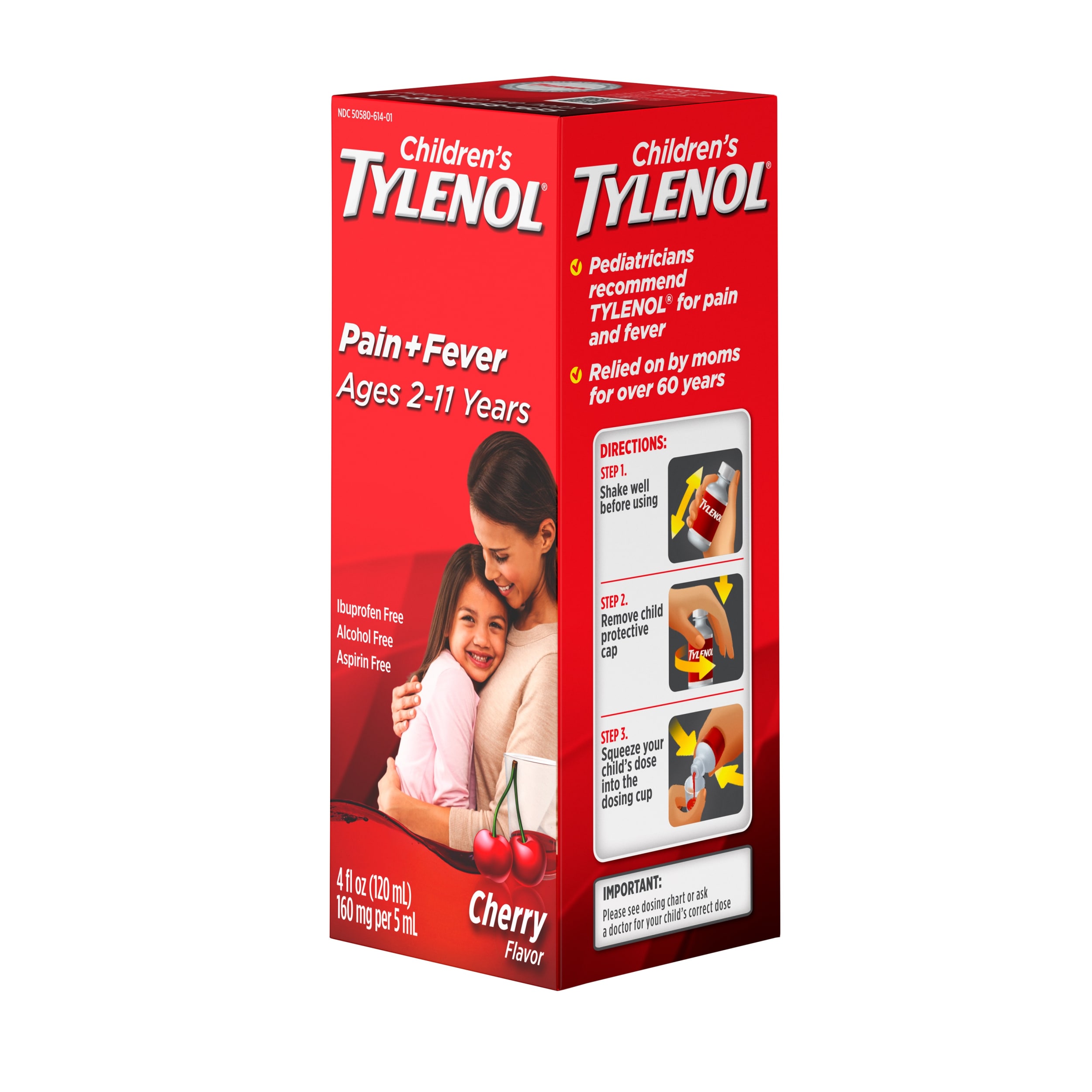
Children’s Tylenol 120 ml is an oral suspension of acetaminophen (paracetamol) 160 mg per 5 ml — the world’s most widely used fever reducer and pain reliever for children. Tylenol for children lowers fever and eases pain from teething, sore throat, earache, headache, and vaccination reactions. It is gentle on small stomachs, but the single most important rule is exact weight-based dosing, because too much acetaminophen can seriously damage a child’s liver.
Key Facts Table
| Product | Children’s Tylenol Oral Suspension 120 ml |
|---|---|
| Active Ingredient | Acetaminophen (Paracetamol) 160 mg / 5 ml |
| Uses | Fever reduction, mild-to-moderate pain relief |
| Typical Age | 2–11 years (under 2 only per doctor’s instruction) |
| Dosing Interval | Every 4–6 hours; maximum 5 doses in 24 hours |
| Dosing Basis | Child’s weight (preferred) or age |
| Aspirin Free | Yes — no Reye’s syndrome risk |
What Is Children’s Tylenol?
Tylenol for children is a flavored liquid suspension of acetaminophen designed for accurate small-body dosing. Acetaminophen works centrally in the brain, raising the pain threshold and acting on the temperature-regulation center to bring fever down. Unlike ibuprofen, it does not irritate the stomach lining, which makes Tylenol for children the preferred first choice when a child is feverish and not eating well, has a sensitive stomach, or is vomiting intermittently.
When to Use Tylenol for Children
Reach for Tylenol for children with fever from colds, flu, or common childhood infections; discomfort after routine vaccinations; teething pain in toddlers; sore throat, earache, or headache; and general aches that make a sick child miserable. Remember that fever itself is a defense mechanism — the goal of treatment is your child’s comfort, not forcing the thermometer to a perfect number.
Weight-Based Dosing — The Right Way
Weight-based dosing is safer and more accurate than age-based dosing. The standard pediatric dose of acetaminophen is 10–15 mg per kilogram of body weight per dose, every 4–6 hours as needed. Using the 160 mg/5 ml concentration: a 12 kg child receives about 5 ml, an 16 kg child about 7.5 ml, and a 22 kg child about 10 ml. Always use the dosing cup or syringe supplied in the pack — kitchen spoons vary wildly and cause both underdosing and overdosing. Shake the bottle well before every dose.
Dosing Rules That Protect Your Child
Never give more than 5 doses in any 24-hour period. Wait at least 4 hours between doses. Do not give Tylenol for children for more than 3 days of fever or 5 days of pain without medical review. For babies under 2 years, dose only on a doctor’s or pharmacist’s specific instruction. Write down each dose time — sleep-deprived parents caring for a sick child forget more easily than they expect.
⚠️ Critical Overdose & Storage Warning
Acetaminophen overdose is the leading cause of acute liver failure in children — and it is almost always preventable. The greatest danger is doubling up: many cold, flu, and combination medicines already contain acetaminophen. Never give any other medicine containing acetaminophen/paracetamol at the same time as Tylenol for children. Read every label. Early overdose symptoms (nausea, vomiting, lethargy) are deceptively mild while liver injury progresses silently. If you suspect your child received too much — even without symptoms — go to the emergency department immediately; the antidote works best within 8 hours. Store the bottle locked, on a high shelf, out of sight and reach: the sweet flavor makes it attractive to children, and a swallowed bottle is a medical emergency.
Side Effects
At correct doses, acetaminophen is remarkably well tolerated — that is why it remains the first-line pediatric fever medicine worldwide. Side effects are rare but can include mild nausea or, very rarely, allergic rash. Seek immediate care for any swelling of the face or lips, difficulty breathing, or a spreading skin reaction after a dose.
Who Should Not Use It / Ask a Doctor First
Consult a doctor before giving Tylenol for children to a child with liver disease, kidney disease, severe malnutrition or dehydration, or a known acetaminophen allergy. Children taking other regular medications — especially anti-seizure drugs or the antibiotic isoniazid — need medical guidance, as these can increase liver sensitivity to acetaminophen.
Tylenol vs. Ibuprofen for Children
Both are effective. Acetaminophen (Tylenol) is gentler on the stomach, safe during vomiting illnesses, and usable in children with asthma sensitivity to NSAIDs. Ibuprofen lasts longer (6–8 hours) and adds anti-inflammatory action, useful for injuries and swelling, but must be taken with food. Never combine or alternate the two on your own schedule without a pediatrician’s explicit instruction — alternation is a common source of dosing errors.
When to See a Doctor Immediately
Fever medicine is comfort care, not a substitute for diagnosis. Seek urgent medical attention for any fever in a baby under 3 months; fever above 39.5°C that does not respond to medication; fever lasting more than 3 days; a child who is unusually drowsy, stiff-necked, struggling to breathe, or covered in a new rash; signs of dehydration; or a febrile seizure. Trust your instinct — a parent’s sense that “something is wrong” is a legitimate medical sign.
Expert Note — Dr. Abdallah Fouad
“In 25+ years of clinical practice, nearly every acetaminophen emergency I have seen traced back to one of two errors: a kitchen spoon instead of the measuring syringe, or a second acetaminophen-containing product given on top of Tylenol. Dose by weight, use the supplied syringe, log every dose on your phone, and check each label for the word ‘paracetamol.’ Follow those four habits and Tylenol for children is one of the safest medicines in your home.”
Dr. Abdallah Fouad — Clinical Nutrition Specialist, 25+ years of experience
Frequently Asked Questions
How quickly does Children’s Tylenol work?
Fever typically begins dropping within 30–45 minutes, with peak effect around 1–2 hours. Expect the temperature to come down by 1–1.5°C — the aim is comfort, not a perfectly normal reading.
Can I give it on an empty stomach?
Yes. Unlike ibuprofen, acetaminophen does not irritate the stomach, making it suitable for children who are vomiting or refusing food.
What if my child vomits right after a dose?
If vomiting occurs within 15–20 minutes and you can see the medicine came up, one repeat dose is generally acceptable. If more time has passed, wait for the next scheduled dose. When in doubt, call your pharmacist.
Can I alternate Tylenol with ibuprofen?
Only under a pediatrician’s explicit instruction with a written schedule. Unsupervised alternating is a leading cause of accidental double-dosing errors.
Is Tylenol the same as Panadol?
Both contain the same active ingredient — acetaminophen (paracetamol). Check the concentration on each bottle, because children’s products vary, and never give both together.
References
American Academy of Pediatrics — fever and antipyretic guidance; MedlinePlus — Acetaminophen drug information; manufacturer labeling for Children’s Tylenol oral suspension.
Bottom Line
Tylenol for children remains the gold-standard first-line choice for pediatric fever and pain: effective, stomach-gentle, and extremely safe when dosed by weight with the supplied syringe. Its one serious risk — liver injury from overdose — is fully preventable with careful measuring, dose logging, and checking every other medicine label for hidden acetaminophen. Keep it locked away, follow the limits, and use it for comfort, not for chasing numbers on a thermometer.



Reviews
There are no reviews yet.