


Description
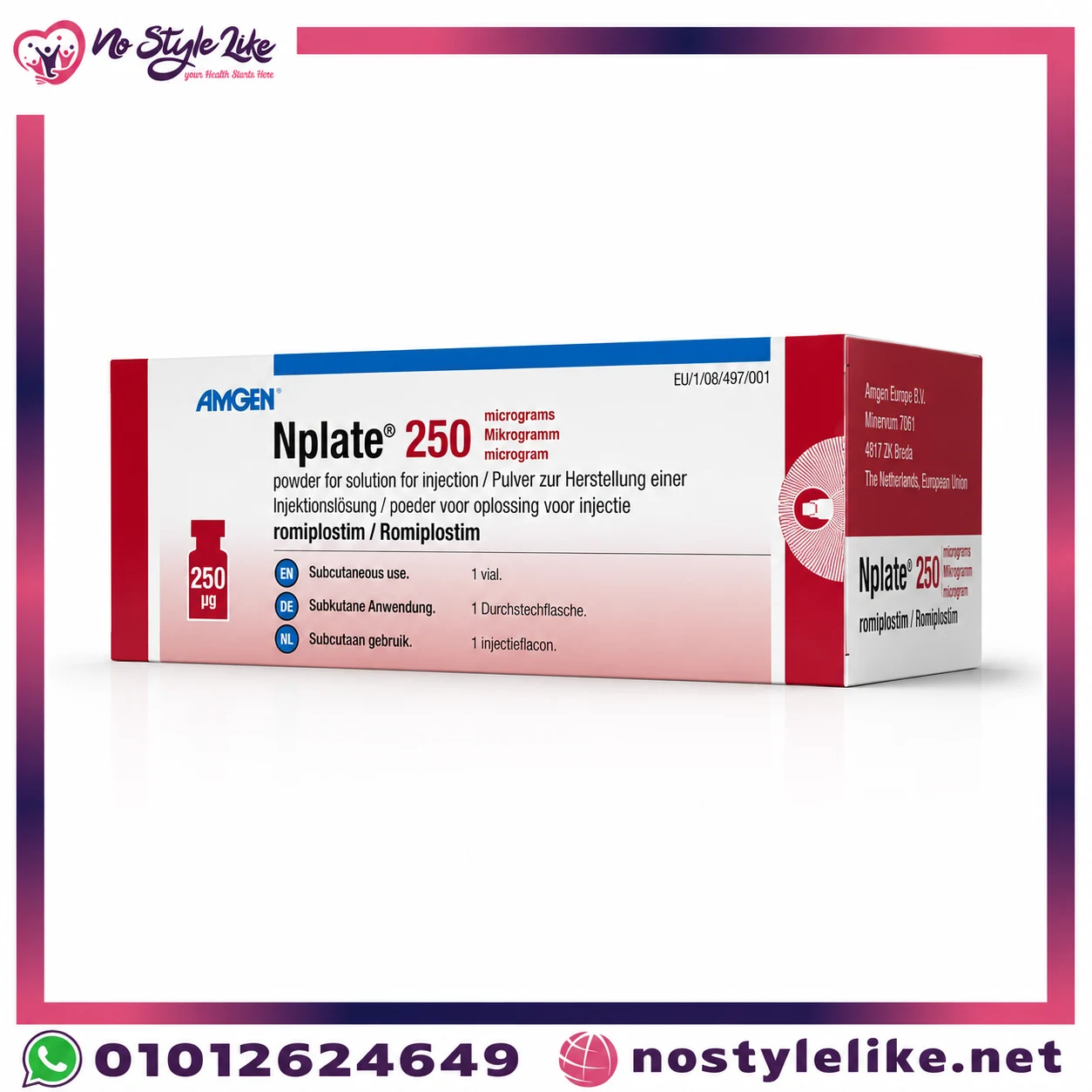
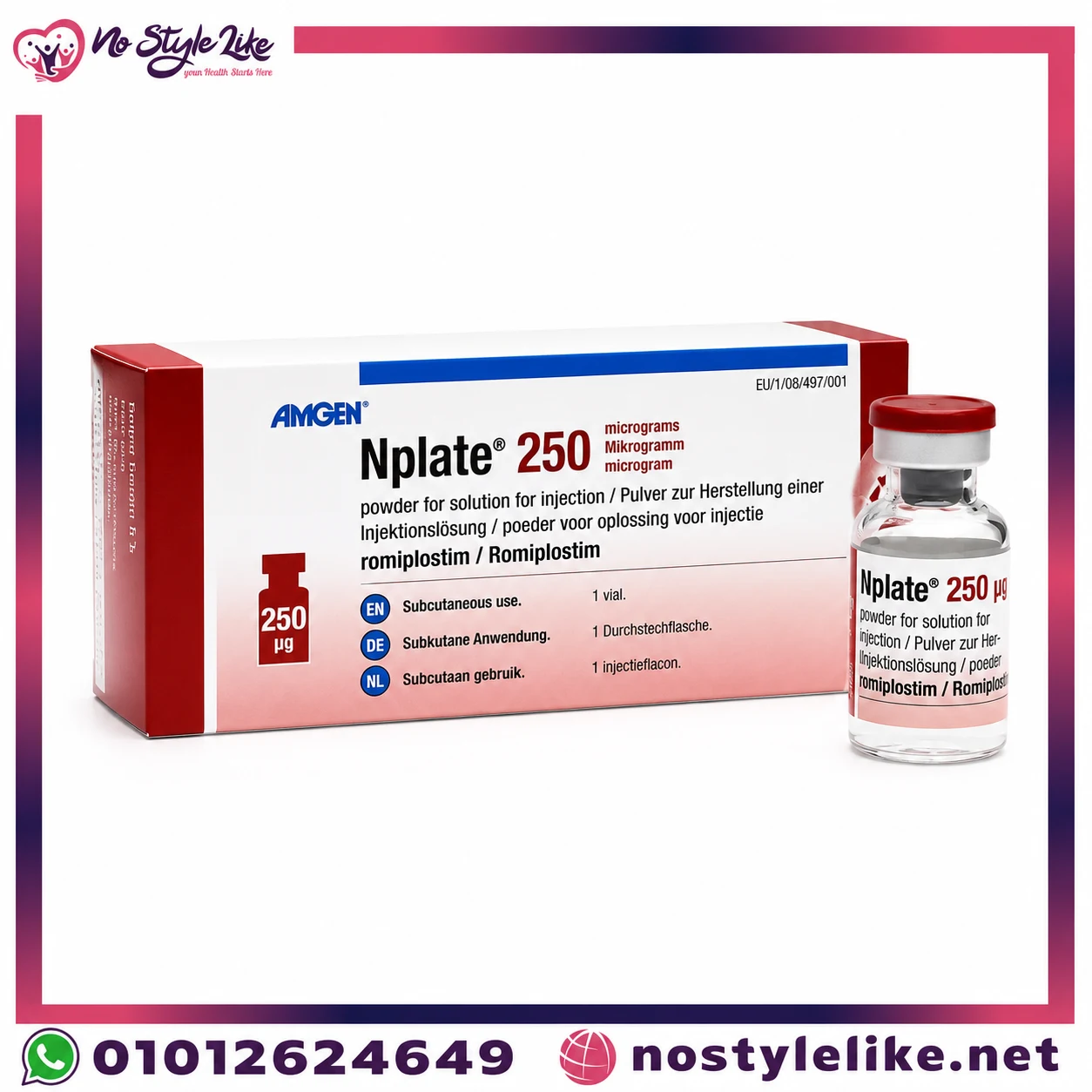
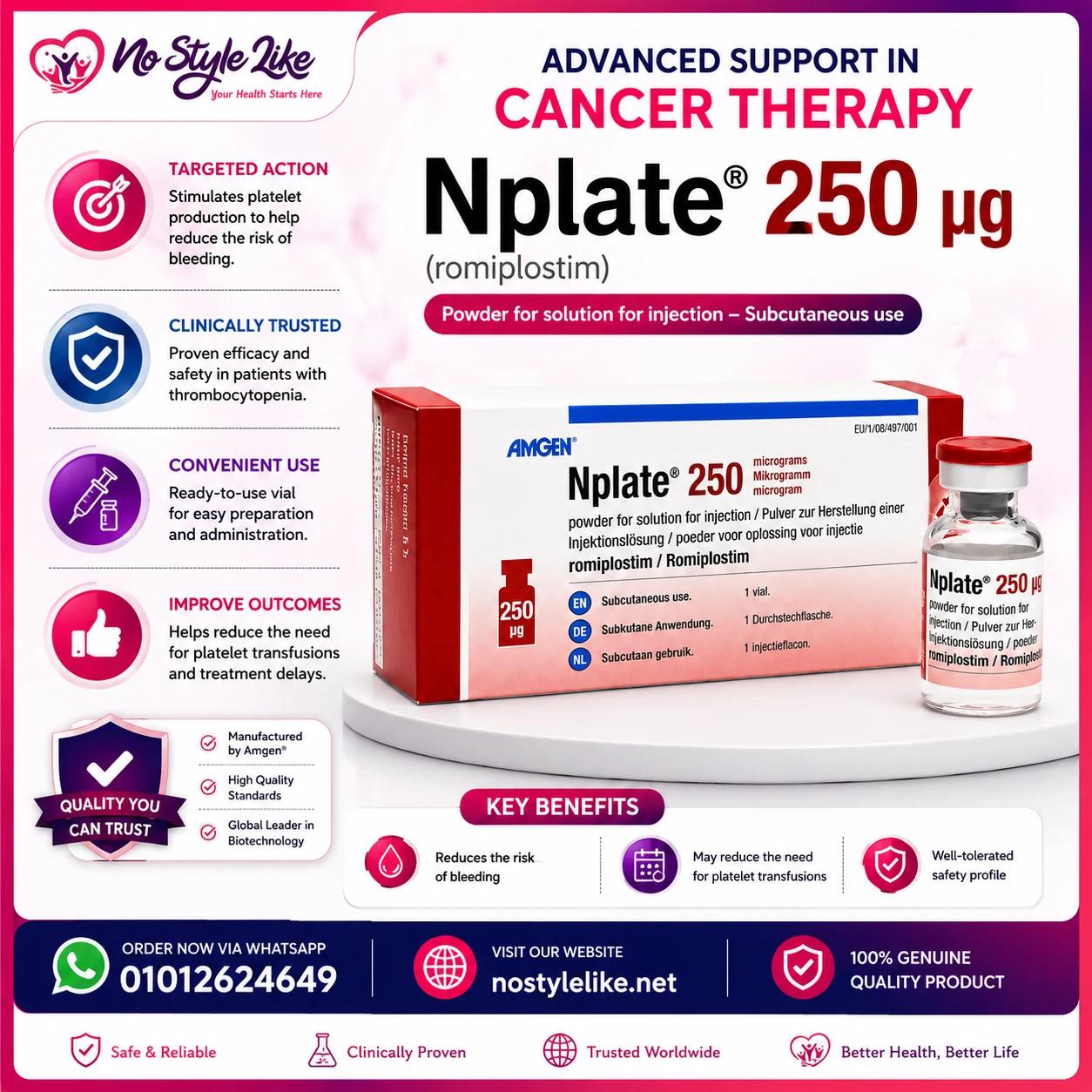
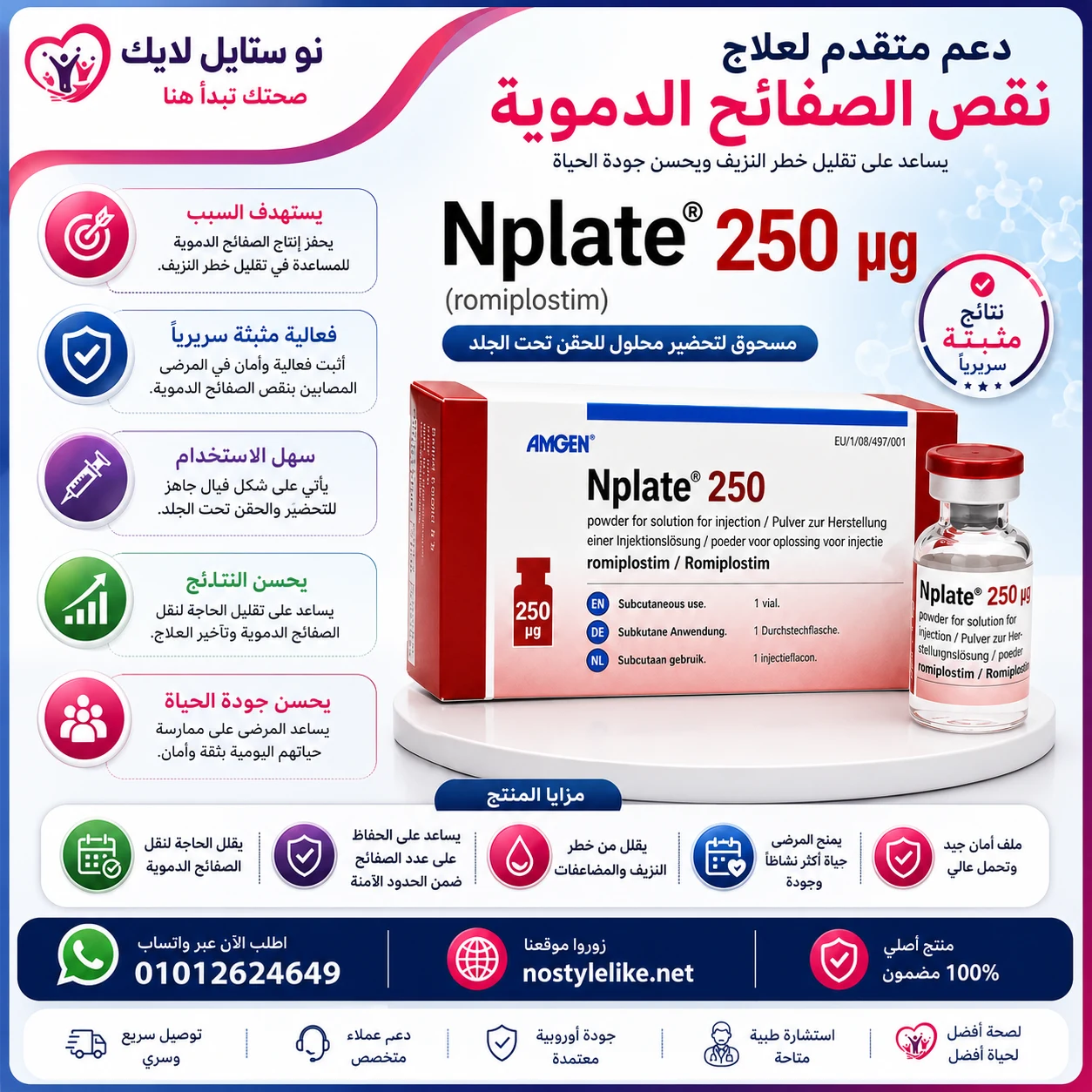
Nplate 250 mcg is available at No Style Like. Below you will find full details on its benefits, uses, dosage, and important precautions.
Nplate 250 mcg (Romiplostim) Vial — Complete Guide for Chronic Immune Thrombocytopenia (ITP)
Quick Answer: Nplate 250 mcg is a weekly injection containing romiplostim, used in adults with chronic immune thrombocytopenia (ITP) who have not responded adequately to corticosteroids, immunoglobulins, or splenectomy. It works by stimulating platelet production through the thrombopoietin (TPO) receptor. Dosing is weight-based, starting at 1 mcg/kg weekly and adjusted gradually based on platelet counts, under specialist (hematology) supervision.
Key Facts Table
| Item | Details |
|---|---|
| Active ingredient | Romiplostim (produced in E. coli by recombinant DNA technology) |
| Strength | 250 mcg or 500 mcg vial (powder for reconstitution) |
| Drug class | Thrombopoietin (TPO) receptor agonist |
| Main use | Chronic immune thrombocytopenia (ITP) refractory to other treatments |
| Dosing | Starting 1 mcg/kg subcutaneously weekly; titrated by 1 mcg/kg increments (max 10 mcg/kg/week) |
| Route | Subcutaneous injection (weight-based, calculated dose) |
| Storage | Refrigerator 2–8°C; protect from light; do not freeze |
| Prescription status | Prescription only — hematologist supervision |
Short Description
Nplate (romiplostim) is an EMA- and FDA-approved thrombopoietin receptor agonist that stimulates the bone marrow to produce more platelets. It is used specifically for chronic immune thrombocytopenia that has not responded adequately to first-line treatments, with individualized weekly dosing based on body weight and platelet response.
Table of Contents
- Introduction
- What Is Nplate?
- How Does It Work?
- Main Benefits
- Real Use Cases
- Who Is It Best For?
- Who Should Avoid It?
- How to Use Correctly
- Best Time to Use
- Common Questions Users Ask
- Expected Results Timeline
- Common Mistakes
- Myths vs Facts
- Drug Interactions
- Contraindications
- Required Tests
- What to Eat With It
- Effect on Other Medications
- When To See a Doctor
- NSL Expert Tip
- Conversational FAQ
- Conclusion
Introduction
Chronic immune thrombocytopenia leaves the body attacking its own platelets, and when steroids, immunoglobulins, or splenectomy haven’t provided lasting control, patients and hematologists need another approach entirely. Nplate addresses the problem from a different angle — rather than suppressing the immune attack, it stimulates the bone marrow to simply produce more platelets, offering an alternative path to a safer platelet count.
What Is Nplate?
Nplate is a fusion protein (romiplostim) that acts as a thrombopoietin receptor agonist. It is approved for adults with chronic primary immune thrombocytopenia (ITP) who are refractory to other treatments such as corticosteroids or immunoglobulins, and in some regions for pediatric chronic ITP as well.
How Does It Work?
Thrombopoietin (TPO) is the body’s natural signal for platelet production, acting on TPO receptors in the bone marrow. Romiplostim binds and activates these same receptors, stimulating megakaryocyte development and platelet production in a manner analogous to natural TPO. This raises platelet counts in patients whose ITP has caused persistently low levels, reducing bleeding risk.
Main Benefits
- Directly stimulates platelet production rather than only suppressing immune destruction.
- Individualized weight-based dosing allows fine-tuning to each patient’s response.
- Can allow reduction or discontinuation of other ITP medications once platelet counts stabilize.
- Effective in a substantial proportion of patients previously refractory to standard therapies.
- Self-injectable at home after training, once dosing is stable, using the weight-calculated volume.
- Well-characterized safety profile from extensive clinical trial and long-term extension study data.
Real Use Cases
- An adult with chronic ITP whose platelet counts remain low despite corticosteroids and immunoglobulins.
- A patient who has undergone splenectomy without adequate platelet response.
- A patient wanting to reduce reliance on long-term corticosteroid therapy and its associated side effects.
- A patient needing ongoing platelet count stabilization to reduce bleeding risk during daily activities.
Who Is It Best For?
Adults with chronic primary immune thrombocytopenia who have had an insufficient response to corticosteroids, immunoglobulins, or splenectomy, under the ongoing care of a hematologist who can monitor platelet counts and adjust dosing.
Who Should Avoid It?
- Patients whose thrombocytopenia is due to myelodysplastic syndrome (MDS) or any cause other than chronic ITP — Nplate is not indicated for these conditions and progression from MDS to acute myelogenous leukemia has been observed with use.
- Patients under 18 years of age in most regions, unless a pediatric indication specifically applies.
- Caution regarding increased risk of blood clots (thromboembolism), particularly at higher platelet counts.
- Caution in patients with a personal or family history of hematological malignancy — discuss your full history with your hematologist.
How to Use Correctly
- Starting dose: 1 mcg/kg subcutaneously once weekly, based on actual body weight.
- Weekly dose is adjusted by increments of 1 mcg/kg (up to a maximum of 10 mcg/kg/week) based on platelet count response, aiming for a safe count of 50 × 10⁹/L or higher — not to normalize counts completely.
- Do not administer if the platelet count exceeds 400 × 10⁹/L; continue weekly monitoring and resume at a reduced dose if counts fall.
- Reconstitute the powder exactly as directed in the leaflet; use only the diluent provided.
- Injections are typically given by a healthcare professional initially, and may transition to self-injection once dosing is stable and training is complete.
- Body weight should be reassessed periodically (e.g., every 12 weeks) to keep dosing accurate.
Best Time to Use
Nplate is injected once weekly on a consistent day, making a fixed weekly schedule the easiest way to stay on track. Time of day is flexible, but weekly platelet count checks should align with your hematologist’s monitoring schedule so dose adjustments can be made promptly.
Common Questions Users Ask
Why does my dose keep changing? Nplate dosing is individually titrated based on your weekly platelet count response — there is no single fixed dose for everyone, and adjustments are a normal part of finding your effective level.
Will this normalize my platelet count completely? The goal is a safe platelet count (generally 50 × 10⁹/L or higher) to reduce bleeding risk, not full normalization, which is not the treatment target.
Can I stop my other ITP medications once I start Nplate? Your hematologist may reduce or discontinue other ITP therapies once your platelet count reaches a safe level on Nplate, but this is a medical decision made case by case.
Expected Results Timeline
| Period | What to Expect |
|---|---|
| 1–3 weeks | Initial platelet count response begins to emerge as dosing is titrated. |
| Several weeks | Dose adjustments continue in 1 mcg/kg increments until a stable, safe platelet count is reached. |
| Once stable | Platelet counts monitored monthly rather than weekly, once consistent for at least 4 weeks without dose changes. |
| Long term | Ongoing weekly injections sustain platelet counts; some patients may reduce other ITP medications. |
Common Mistakes
- Expecting a fixed, one-size-fits-all dose rather than understanding the individualized titration process.
- Missing scheduled platelet count checks, which are essential for safe dose adjustment.
- Attempting to normalize platelet counts completely rather than reaching the safe target range.
- Continuing treatment without periodic body weight reassessment.
- Using Nplate for thrombocytopenia from a cause other than chronic ITP, such as MDS.
Myths vs Facts
| Myth | Fact |
|---|---|
| “It works by suppressing my immune system like other ITP treatments.” | Nplate works by directly stimulating platelet production through the TPO receptor, a different mechanism from immunosuppressive ITP therapies. |
| “Higher platelet counts are always better.” | The treatment goal is a safe platelet count, not maximum or normal levels; doses are withheld if counts rise above 400 × 10⁹/L. |
| “Nplate can be used for any type of low platelet count.” | Nplate is specifically indicated for chronic ITP and is not appropriate for thrombocytopenia due to MDS or other causes. |
Drug Interactions
- Other ITP medications (corticosteroids, immunoglobulins) may continue initially and be tapered as your platelet count responds, per your hematologist’s plan.
- No major cytochrome-based drug interactions are established, since romiplostim is a biologic protein.
- Report all medications to your hematologist, particularly any that affect blood clotting or platelet function.
Contraindications
Not indicated for thrombocytopenia due to myelodysplastic syndrome or any cause other than chronic ITP. Hypersensitivity to romiplostim or any excipient.
Required Tests
- Weekly complete blood counts including platelet counts until a stable response is achieved, then monthly.
- Weekly monitoring for at least 2 weeks after discontinuing treatment.
- Periodic body weight reassessment (e.g., every 12 weeks) to keep dosing calculations accurate.
- Peripheral blood smear evaluation if bone marrow abnormalities are suspected.
What to Eat With It
Nplate has no specific food interactions. A balanced diet supporting overall blood health is helpful alongside treatment: adequate iron, vitamin B12, and folate intake support healthy blood cell production generally. Patients with ITP should discuss any activities or dietary factors that could increase bleeding or bruising risk with their hematologist, particularly during periods of low platelet counts.
Effect on Other Medications
As a biologic protein, romiplostim does not interact through liver enzyme pathways the way small-molecule drugs typically do. Its main practical interaction is with other ITP therapies, which your hematologist will coordinate — often tapering corticosteroids or immunoglobulins as your platelet response to Nplate becomes established.
When To See a Doctor
- Signs of blood clots: leg swelling and pain, sudden shortness of breath, chest pain.
- Signs of bleeding despite treatment: unusual bruising, blood in urine or stool, prolonged bleeding.
- New or worsening fatigue, bone pain, or unexplained symptoms that could suggest a blood disorder requiring evaluation.
- Allergic reaction symptoms: swelling, hives, difficulty breathing.
- Missed scheduled platelet count monitoring appointments.
NSL Expert Tip
Dr. Abdallah Fouad — Clinical Nutrition Specialist: Understand from the start that your Nplate dose will likely change several times as your hematologist titrates toward a safe platelet count — this is expected, not a sign that something is wrong. Never skip your scheduled platelet count checks, since dose adjustments depend entirely on that data, and remember the goal is a safe count, not the highest possible number.
Conversational FAQ
How is my dose calculated?
Your dose is based on your actual body weight, starting at 1 mcg/kg weekly and adjusted in 1 mcg/kg increments according to your platelet count response.
Can children use Nplate?
In some regions, Nplate is approved for chronic ITP in children of certain ages who have had an insufficient response to first-line treatments; this is a specialist decision.
What if my platelet count gets too high?
If your count exceeds 400 × 10⁹/L, the dose is withheld and weekly monitoring continues; treatment resumes at a reduced dose if counts fall again.
Is long-term safety established?
Nplate has substantial long-term extension study data, though your hematologist will continue monitoring given ongoing research into long-term risks.
Can I stop suddenly?
Discuss any changes with your hematologist first; monitoring continues for at least 2 weeks after stopping to watch for platelet count changes.
Conclusion
Nplate 250 mcg offers a distinct approach for chronic immune thrombocytopenia that has not responded adequately to standard treatments, directly stimulating platelet production through the TPO receptor pathway. With careful weight-based dosing, consistent weekly platelet monitoring, and realistic expectations around a safe rather than maximal platelet count, it provides hematologists with a valuable tool for patients who need an alternative to immunosuppressive approaches. It remains a prescription-only biologic requiring ongoing hematologist supervision.
Medically reviewed by: Dr. Abdallah Fouad — Clinical Nutrition Specialist, 25+ years of clinical experience.
Medical Disclaimer: This content is educational and not a substitute for professional medical advice. Nplate is a prescription-only biologic requiring hematologist supervision and regular blood monitoring. Sources: European Medicines Agency (EMA) and U.S. FDA product information for Nplate (romiplostim).
Related Products & Useful Resources
You may also like related products such as Fusion Plus Mesotherapy injection: You G , Konjac Capsules Weight Loss Solution by from our store.
For more trusted medical information, refer to Drugs.com. Always consult your doctor or pharmacist before use.

Reviews
There are no reviews yet.