


St John’s Wort Benefits: 6 Evidence-Based Facts About Mood and Safety
What Are St John’s Wort Benefits Really?
St John’s wort (Hypericum perforatum) is a yellow-flowered plant that has been used for centuries in European herbal medicine. Today it is one of the most researched herbs for mood. But St John’s wort benefits are often exaggerated online, so in this article we separate what the studies actually show from marketing claims, in 6 clear facts, and explain who should not take it at all.
1. St John’s Wort Benefits for Mild to Moderate Low Mood
The best evidence for St John’s wort benefits comes from clinical trials in people with mild to moderate depression. Several reviews found that standardized extracts worked better than placebo, and in some trials about as well as older antidepressants for this mild to moderate group, with fewer side effects such as dry mouth or drowsiness.
However, results were not consistent across all studies, and trials done in different countries gave different answers. The herb has not been shown to work for severe (major) depression. It is a possible support for mild symptoms under medical guidance, not a cure.
2. The Extract Used in Studies Matters
Most positive trials used standardized extracts containing about 0.3% hypericin or a set amount of hyperforin, usually 300 mg three times a day, around 900 mg daily. Whole-herb products, which contain the dried flowering tops, stems and leaves without standardization, have been studied less, so their effect may differ from what the trials reported.
This is honest context, not a reason to fear the herb, and it shapes realistic expectations of St John’s wort benefits: it simply means you should not expect identical results from every product labelled St John’s wort.
3. How It Is Thought to Work
Hyperforin and hypericin appear to affect the reuptake of several brain messengers, including serotonin, noradrenaline and dopamine. This is similar in idea to how some antidepressants work, which is exactly why the herb must never be combined with them. It is also a powerful liver enzyme inducer, which explains its long list of drug interactions, covered in detail in St John’s wort interactions.
4. Other Possible Uses With Weaker Evidence
- Menopausal mood swings and hot flashes, in small studies, usually combined with other herbs.
- Premenstrual symptoms, with mixed results.
- Somatic symptom complaints and mild anxiety, with limited data.
- Traditional topical use of the oil on minor skin wounds.
These possible St John’s wort benefits are not proven, so do not rely on the herb for any of them without asking your doctor.
5. It Is Not a Replacement for Prescribed Antidepressants
Never stop or swap a prescribed antidepressant for St John’s wort on your own. Stopping suddenly can cause withdrawal symptoms or relapse, and taking both together can cause serotonin syndrome. If you have persistent sadness, loss of interest, or any thoughts of self-harm or suicide, see a doctor immediately or go to the nearest emergency department. Our depression and anxiety guide explains the warning signs.
6. How Long Before You Notice an Effect?
In trials, any improvement usually appeared after 4 to 6 weeks of daily use, which is why Nature’s Way recommends using its product for at least two months. If there is no improvement after a reasonable period, or if mood worsens, stop and speak to a doctor.
Products Available at No Style Like Pharmacy
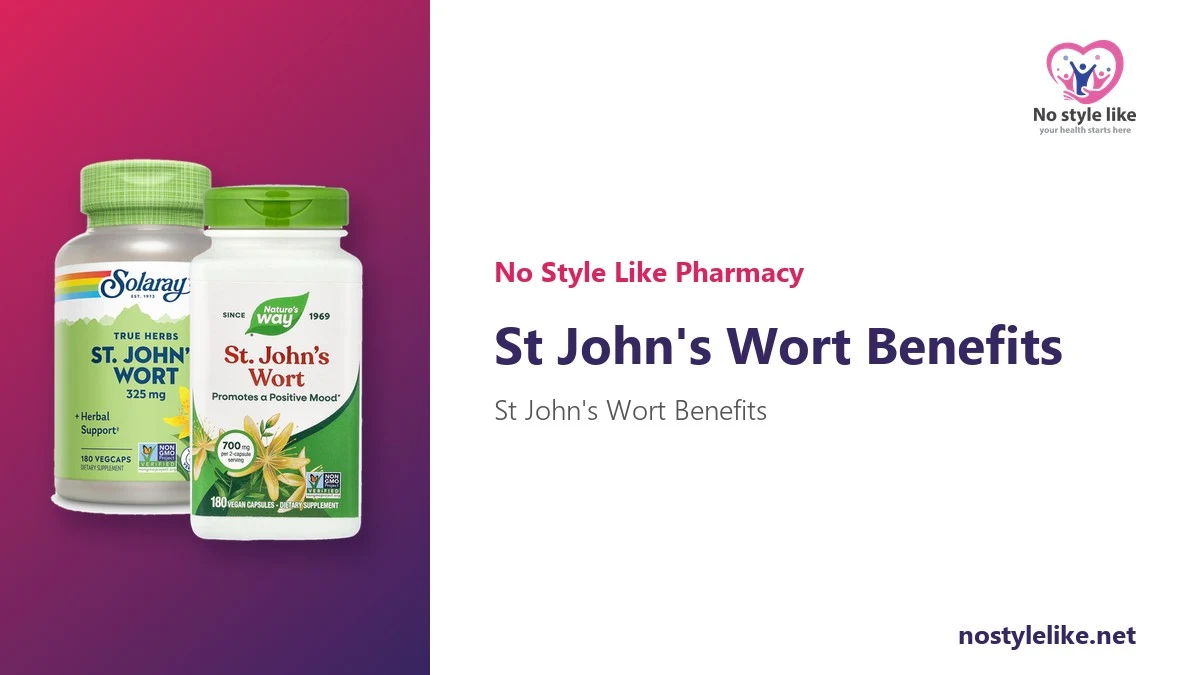
- Solaray St. John’s Wort 325 mg 180 VegCaps: whole aerial herb, 325 mg per capsule, 1 capsule three times daily with a meal or glass of water.
- Solaray St. John’s Wort 325 mg 100 VegCaps: the same formula in a smaller pack, about 33 days at 3 capsules a day.
- Nature’s Way St. John’s Wort 700 mg: 700 mg of herb per 2 capsules, 2 capsules twice daily, used for at least two months.
Note that all three are whole-herb products rather than standardized hypericin extracts. Check with your pharmacist that none of your current medicines interact before you start.
Who Should Not Seek St John’s Wort Benefits?
- Anyone taking antidepressants, birth control pills, blood thinners, transplant drugs, HIV medicines or chemotherapy.
- Pregnant or breastfeeding women and children.
- People with bipolar disorder, because it may trigger mania.
- Anyone planning surgery in the next two weeks.
For the full list of possible reactions, read St John’s wort side effects.
Frequently Asked Questions About St John’s Wort Benefits
How soon do St John’s wort benefits appear?
Usually after 4 to 6 weeks of regular daily use, not after a few days.
Does it help with sleep?
It is not a sleep aid, and in some people it actually causes insomnia, so take it earlier in the day.
Can I take it with the pill?
No. It can make hormonal contraceptives fail and cause breakthrough bleeding. Use another method or avoid the herb.
Is it good for severe depression?
No. Severe depression needs medical treatment. St John’s wort benefits have only been seen in mild to moderate cases.
Can I take it with food?
Yes, taking it with a meal may reduce stomach upset.
Conclusion
The main St John’s wort benefits are a modest improvement in mild to moderate low mood, mostly shown with standardized extracts at about 900 mg a day. It is not proven for severe depression, does not replace prescribed treatment and interacts with many medicines. If your doctor agrees, you can find Solaray 180, Solaray 100 and Nature’s Way 700 mg at No Style Like Pharmacy.
This article was reviewed by the No Style Like pharmacy content team. It is for general awareness only and does not replace advice from your doctor or pharmacist.
If you have thoughts of self-harm, seek emergency help immediately; do not rely on herbal products. For more information see the NCCIH St. John’s wort page.