


Astaxanthin Benefits: 6 Facts About Eyes, Skin and Safety
What Is Astaxanthin?
Astaxanthin is a red-orange carotenoid made by the microalga Haematococcus pluvialis. It is the pigment that gives salmon, shrimp and flamingos their pink colour. Supplements usually come from the algae itself. Interest in astaxanthin benefits comes from its strong antioxidant activity in the lab and a growing number of small human studies. Here are 6 facts that show what is known and what is still uncertain.
1. Astaxanthin Benefits as an Antioxidant
Its structure lets astaxanthin sit across cell membranes and neutralise free radicals on both sides, and lab studies show strong antioxidant activity. It also crosses the blood-brain and blood-retina barriers, which is why it is studied for the eyes. But strong results in a test tube do not automatically mean health benefits in people. Large trials of antioxidant supplements in general have often been disappointing, so treat astaxanthin as promising rather than proven.
2. Astaxanthin Benefits for Eye Strain
Several small trials, mostly from Japan, gave 4 to 12 mg a day for about 4 weeks to people who use screens heavily. Some found modest improvements in eye fatigue scores and in the eye’s ability to adjust focus. The studies were short and small, some were funded by manufacturers, and results were not always consistent. So astaxanthin benefits for eye strain are possible but not guaranteed.
Eye strain has simple causes that a supplement will not fix: an outdated glasses prescription, poor lighting, and reduced blinking at screens. Have your eyes tested first. Simple habits also help: blink fully, keep the screen slightly below eye level at arm’s length, reduce glare, and take regular breaks.
3. Skin Research
Small studies suggest astaxanthin may improve skin moisture and elasticity and slightly reduce fine wrinkles after 8 to 16 weeks. These astaxanthin benefits for skin are modest and need confirmation in larger trials. Claims of astaxanthin benefits for sports recovery, the heart or the brain are also based mainly on small or animal studies. It does not replace sunscreen: daily sun protection remains the most effective anti-ageing step for the skin.
4. How to Take Astaxanthin
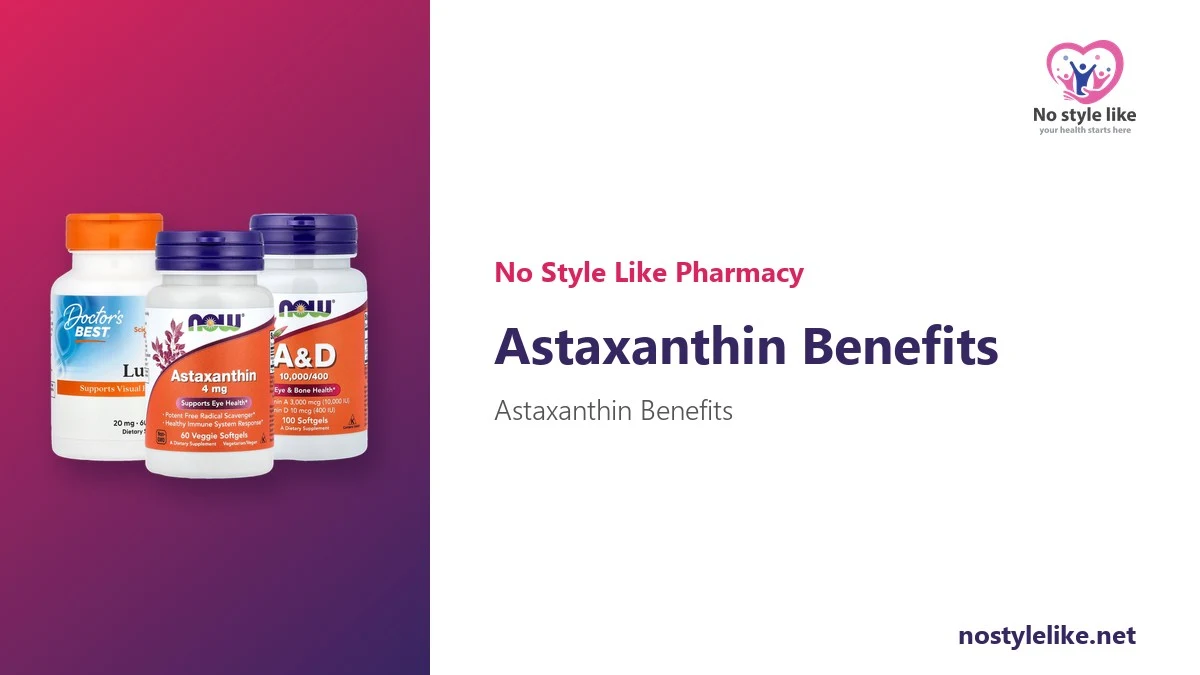
Astaxanthin is fat-soluble, so take it with a meal that contains some fat. Each softgel of NOW Astaxanthin 4 mg provides 4 mg of astaxanthin from Haematococcus pluvialis algae extract in extra virgin olive oil, with mixed tocopherols and rosemary extract. The label says 1 softgel 1 to 2 times daily with food, so 4 to 8 mg a day, within the range used in studies. The bottle holds 60 vegetarian softgels. Taking more will not multiply astaxanthin benefits, so stay with the label dose.
5. Safety and Limits of the Evidence
- Astaxanthin is generally well tolerated in studies lasting up to a few months.
- Long-term safety data are limited, and most studies of astaxanthin benefits lasted weeks, not years.
- Very high intakes may slightly colour the skin or stools.
- Pregnant and breastfeeding women, people on medicines and anyone with a medical condition should ask a doctor first, as the label advises.
- No supplement treats glaucoma, cataract, diabetic retinopathy or macular degeneration.
6. Astaxanthin Benefits Alongside Other Eye Nutrients
For the macula, the stronger evidence belongs to lutein and zeaxanthin; read lutein benefits. Doctor’s Best Lutein 20 mg gives 20 mg of lutein and 1 mg of zeaxanthin per softgel, taken once daily, best with a fatty meal. Vitamin A matters for night vision, and NOW Vitamin A and D provides 3,000 mcg RAE of vitamin A and 400 IU of vitamin D3 per softgel; that is the adult upper limit, so it is not for pregnancy or for combining with other vitamin A. For a full comparison read eye vitamins.
Frequently Asked Questions About Astaxanthin Benefits
How long does astaxanthin take to work?
Studies on eye fatigue and skin lasted 4 to 16 weeks. If you notice nothing after 2 to 3 months, it may not help you.
Is astaxanthin from salmon enough?
Wild salmon contains a few milligrams per serving; farmed salmon usually contains less. Eating oily fish twice a week also gives omega-3; see omega-3 for heart health.
Can I take astaxanthin with lutein?
Yes, they are often combined, and no harmful interaction is known. Show your full supplement list to your pharmacist.
Conclusion
The most realistic astaxanthin benefits are modest relief of eye fatigue and possible skin effects, based on small studies. Take it with fat, keep expectations realistic, and see an eye doctor for persistent symptoms. You can find NOW Astaxanthin 4 mg at No Style Like pharmacy.
This article was reviewed by the No Style Like pharmacy content team. It is for general awareness only and does not replace advice from your doctor, ophthalmologist or pharmacist.
Ask your doctor before using antioxidant supplements if you are pregnant, take regular medicines or have a chronic condition. For more information see the NCCIH page on antioxidant supplements.