


Effervescent Vitamin C: 6 Advantages and 4 Cautions Before You Choose It
Effervescent Vitamin C: Is It the Best Choice for You?
Effervescent tablets are one of the most popular supplement forms, especially for vitamin C. Drop a tablet into a glass of water and it becomes a refreshing orange or lemon drink. But is effervescent vitamin C better than capsules, and who should be careful before using it? This article answers both questions.
How Do Effervescent Tablets Work?
Each tablet contains an acid, such as citric acid, and a base, such as sodium carbonate or sodium bicarbonate. In water they react and release carbon dioxide, so the tablet dissolves quickly and the vitamin C spreads through the drink.
6 Advantages of Effervescent Vitamin C
- Easy to take: ideal for people who struggle to swallow tablets.
- Pleasant taste: fruit flavours make it an enjoyable daily drink.
- Extra fluids: every dose adds a glass of water to your day.
- Fully dissolved: the vitamin arrives already in solution.
- Combination formulas: many combine vitamin C with zinc or vitamin D.
- Good value: often economical compared with other forms.
4 Cautions Before Using Effervescent Vitamin C
1. Sodium
The fizz usually comes from sodium salts, so each tablet contains some sodium, and the amount varies by product. People on a low-salt diet for blood pressure, heart or kidney conditions should check with their doctor first.
2. Sorbitol and sweeteners
Some tablets contain sorbitol, which can have a laxative effect in excess, as well as sweeteners such as sucralose.
3. Acidity and teeth
The drink is acidic, and sipping it slowly throughout the day may affect tooth enamel. Drink it in one go and rinse your mouth with water afterwards.
4. The stomach
The acid and fizz can bother people with reflux or stomach ulcers, so it is better taken after food.
How to Prepare It Correctly
- Drop the tablet into a full glass of water (about 200 ml).
- Wait until it has fully dissolved and stopped fizzing.
- Never swallow the tablet whole or put it in your mouth.
- Close the tube straight away to protect the remaining tablets from moisture.
How to Store Effervescent Tablets
Moisture is the main enemy of effervescent tablets, because it starts the reaction inside the tube. Keep the tube tightly closed in a dry place away from the bathroom and kitchen, never take a tablet out with wet hands, and keep the desiccant in the lid – it protects the tablets but must not be eaten.
Effervescent or Capsules?
Both forms deliver vitamin C effectively. Choose effervescent vitamin C if you prefer a drink and can tolerate the sodium; choose capsules if you follow a low-salt diet or suffer from reflux. To understand the zinc that many effervescent tablets add, read our guide to vitamin C and zinc.
An Example of a Combination Effervescent Tablet
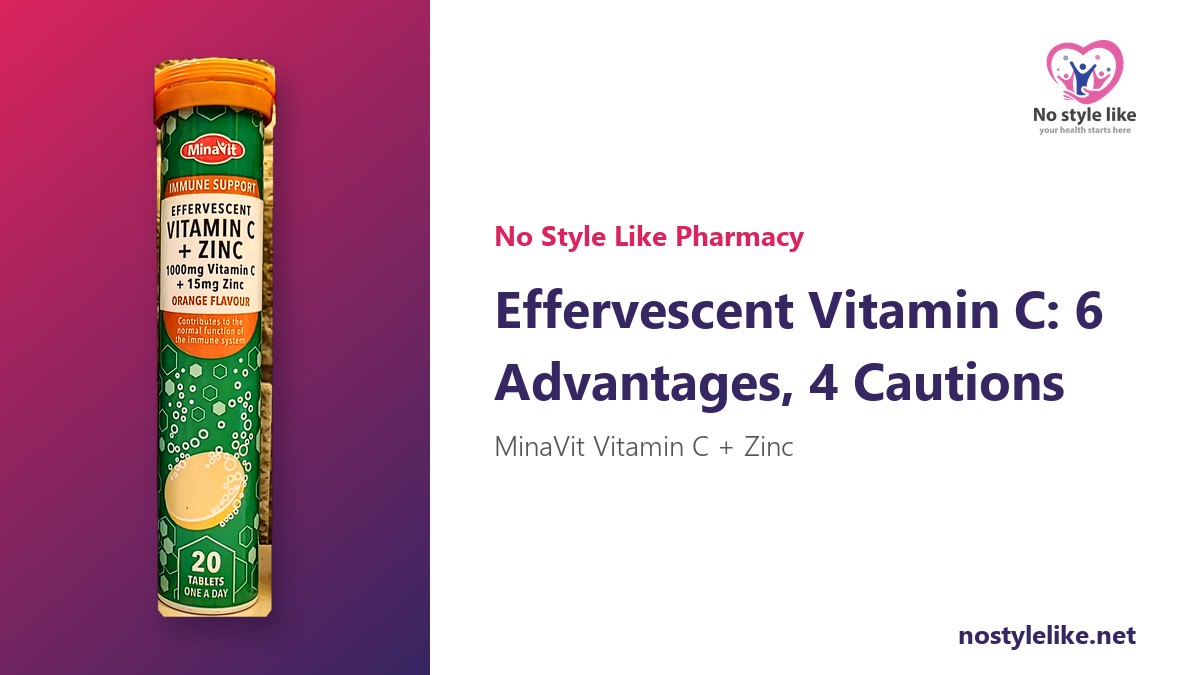
MinaVit Vitamin C Zinc is an orange-flavoured effervescent tablet with 1000 mg vitamin C and 15 mg zinc, no added sugar and suitable for vegans. The dose is one tablet a day in 200 ml of water.
Effervescent Vitamin C FAQ
Does it lose strength in water?
Drink it straight after it dissolves rather than leaving it for hours.
Can I dissolve it in juice?
Water is better, because juice adds sugar and extra acidity.
Is it suitable for people with diabetes?
Most tablets have no added sugar, but always check the ingredients.
Can children take it?
Many products are for adults and children over 12 only, so follow the age on the label.
Conclusion
Effervescent vitamin C is a practical, tasty way to get vitamin C every day, but it contains sodium and makes an acidic drink, so take care if you follow a low-salt diet or have reflux. You can find MinaVit Vitamin C Zinc effervescent at No Style Like pharmacy.
This article was reviewed by the No Style Like pharmacy content team. It is for general awareness only. Vitamin C and zinc are food supplements, not medicines intended to diagnose or treat any disease, and this article does not replace advice from your doctor or pharmacist.
Ask your doctor before using effervescent tablets if you follow a low-sodium diet. Adult upper limits are 2,000 mg of vitamin C and 40 mg of zinc a day from all sources. Ask your doctor during pregnancy and breastfeeding, and keep supplements out of the reach of children. For more information see the NIH zinc fact sheet.