


Vitamin C and Zinc: A 7-Point Guide to the Best-Known Immune Support Duo
Vitamin C and Zinc: Why Are They Combined in Immune Supplements?
Walk into any pharmacy in winter and you will see plenty of products combining vitamin C and zinc. So what is the secret of this pair, and do they really support immunity? This guide explains the role of each, what research realistically shows and how to use vitamin C and zinc safely.
The Role of Vitamin C
Vitamin C is a water-soluble antioxidant that the body cannot make or store in large amounts, so we need it daily from food. It contributes to the normal function of immune cells, supports collagen formation for skin, blood vessels and wound healing, and improves iron absorption from plant foods.
The Role of Zinc
Zinc is an essential mineral involved in hundreds of enzymes. The immune system needs it for the growth and function of its cells, and it also supports wound healing, taste and smell, and healthy bones, skin and hair. Read more in our article on zinc benefits.
Why Combine Vitamin C and Zinc?
Both contribute to normal immune function in different ways, so manufacturers combine them in one tablet to make daily use easier. A shortfall in either can weaken the body’s response to infection, especially in older adults and people with limited diets.
What Does Research Say About Colds?
- Vitamin C: regular use does not reduce how often most people catch colds, but it may shorten them slightly. Starting it after symptoms appear has no clear effect.
- Zinc: some studies suggest zinc lozenges may shorten colds if started within 24 hours of symptoms.
The realistic summary: vitamin C and zinc support immunity as part of a healthy lifestyle, but they do not prevent infection or replace a doctor.
Food Sources of Vitamin C and Zinc
The richest sources of vitamin C are peppers, guava, oranges, strawberries, kiwi and broccoli. Zinc is found in red meat, poultry, oysters, legumes, nuts and pumpkin seeds. A varied diet covers most people’s needs, with supplements filling the gap when needed.
Who Needs Vitamin C and Zinc Most?
- People who eat few fruits and vegetables.
- Smokers, who need more vitamin C.
- Vegetarians and vegans, because zinc from plants is less well absorbed.
- Older adults and people with digestive conditions.
Learn the warning signs in our article on zinc deficiency.
Daily Needs and Safe Limits
- Vitamin C: 75 mg a day for women and 90 mg for men; upper limit 2,000 mg.
- Zinc: 8 mg a day for women and 11 mg for men; upper limit 40 mg.
Smokers need an extra 35 mg of vitamin C a day, and needs for both nutrients rise during pregnancy and breastfeeding.
How to Choose a Vitamin C and Zinc Supplement
- Check the amount per tablet and make sure it stays within safe limits.
- Choose the form that suits you: regular tablets, effervescent tablets or lozenges.
- Note the sodium content of effervescent tablets.
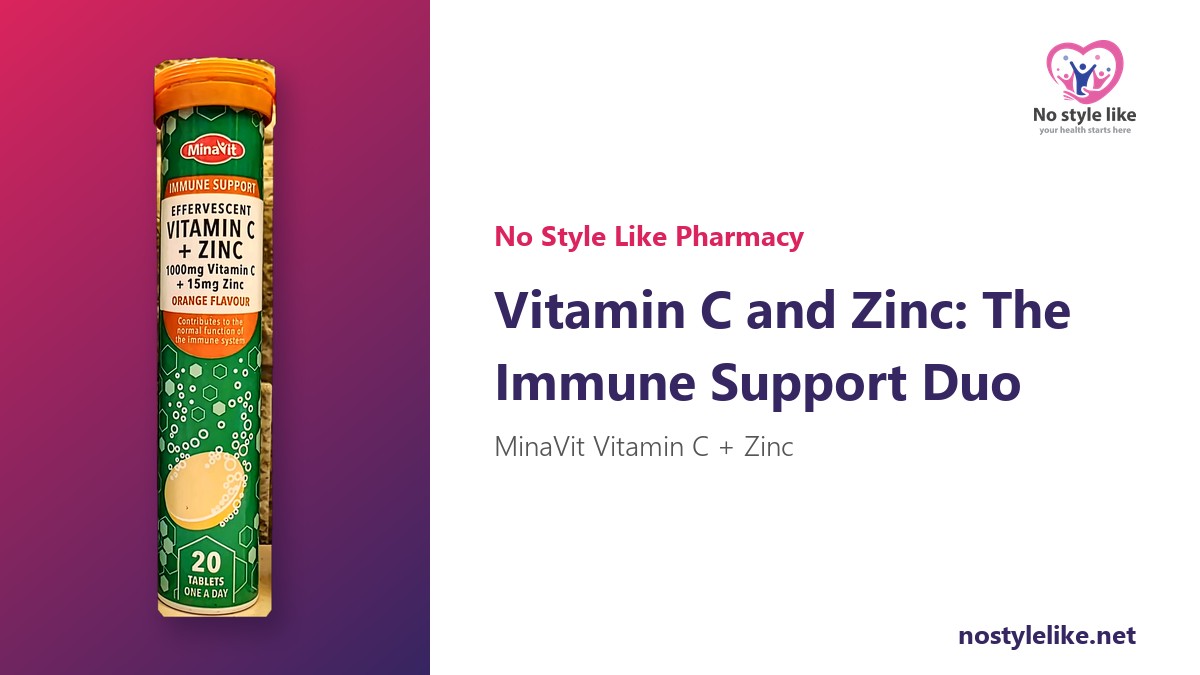
One example is MinaVit Vitamin C Zinc effervescent, with 1000 mg vitamin C and 15 mg zinc per tablet. To compare forms, read our guide to effervescent vitamin C.
Frequently Asked Questions
Can I take them every day?
Yes, at the dose on the label and within safe limits.
Do they interact with medicines?
Zinc reduces the absorption of some antibiotics, so separate them by two hours.
Are they suitable for children?
There are children’s products with lower doses; do not give adult doses to young children.
When should I take them?
After a meal, to reduce zinc-related nausea.
Conclusion
Combining vitamin C and zinc supports normal immune function, but it is one part of a system that includes diet, sleep and activity. Stick to safe doses, and find MinaVit Vitamin C Zinc at No Style Like pharmacy with delivery across Egypt.
This article was reviewed by the No Style Like pharmacy content team. It is for general awareness only. Vitamin C and zinc are food supplements, not medicines intended to diagnose or treat any disease, and this article does not replace advice from your doctor or pharmacist.
Do not combine several zinc-containing supplements without adding up the total. Adult upper limits are 2,000 mg of vitamin C and 40 mg of zinc a day from all sources. Ask your doctor during pregnancy and breastfeeding, and keep supplements out of the reach of children. For more information see the NIH zinc fact sheet.