


Zinc Deficiency: 8 Symptoms, 5 High-Risk Groups and How to Correct It Safely
Zinc Deficiency: Small Signs That May Point to a Problem
Zinc is a mineral we need in small amounts, yet it is involved in hundreds of enzymes. When levels fall, signs can appear that seem minor, such as hair loss or frequent colds. This article explains the symptoms of zinc deficiency, who is most at risk and how to correct it safely.
Why Does the Body Need Zinc?
The immune system needs zinc for the growth and function of its cells, and zinc also supports wound healing, taste and smell, healthy skin, hair and nails, and normal bones. The body does not store much zinc, so we need a regular supply from food. Read more in our article on zinc benefits.
8 Symptoms That May Suggest Zinc Deficiency
- Frequent infections and weaker immunity.
- Slow wound healing.
- Hair loss.
- Loss of appetite.
- Reduced sense of taste or smell.
- Diarrhoea.
- Skin problems and sores around the mouth.
- Delayed growth in children.
These symptoms have many other causes, so do not self-diagnose zinc deficiency – see your doctor.
5 Groups at Higher Risk of Zinc Deficiency
- Vegetarians and vegans: grains and legumes contain compounds that reduce zinc absorption.
- Pregnant and breastfeeding women: because needs increase.
- People with digestive conditions: such as Crohn’s or coeliac disease, or after stomach or bowel surgery.
- People who drink alcohol heavily.
- Older adults: who may eat less and absorb less.
How Is Zinc Deficiency Diagnosed?
Zinc can be measured in the blood, but the test does not always reflect the body’s stores accurately. Doctors therefore combine symptoms, diet history and overall health with test results.
Food Sources of Zinc
- Oysters – the richest source.
- Red meat and poultry.
- Legumes, nuts and seeds such as pumpkin seeds.
- Whole grains and dairy products.
Zinc Deficiency vs Iron Deficiency
Some symptoms overlap, such as tiredness and hair loss. Iron deficiency is linked more with anaemia, pale skin and breathlessness on exertion, while zinc deficiency is linked with poor taste, slow wound healing and frequent infections. Both can occur together in vegans and pregnant women, so doctors order the right tests before deciding on treatment.
Tips to Improve Zinc Absorption
- Soaking legumes and grains before cooking reduces compounds that block absorption.
- Do not take iron or calcium supplements at the same time as zinc.
Correcting Zinc Deficiency with Supplements
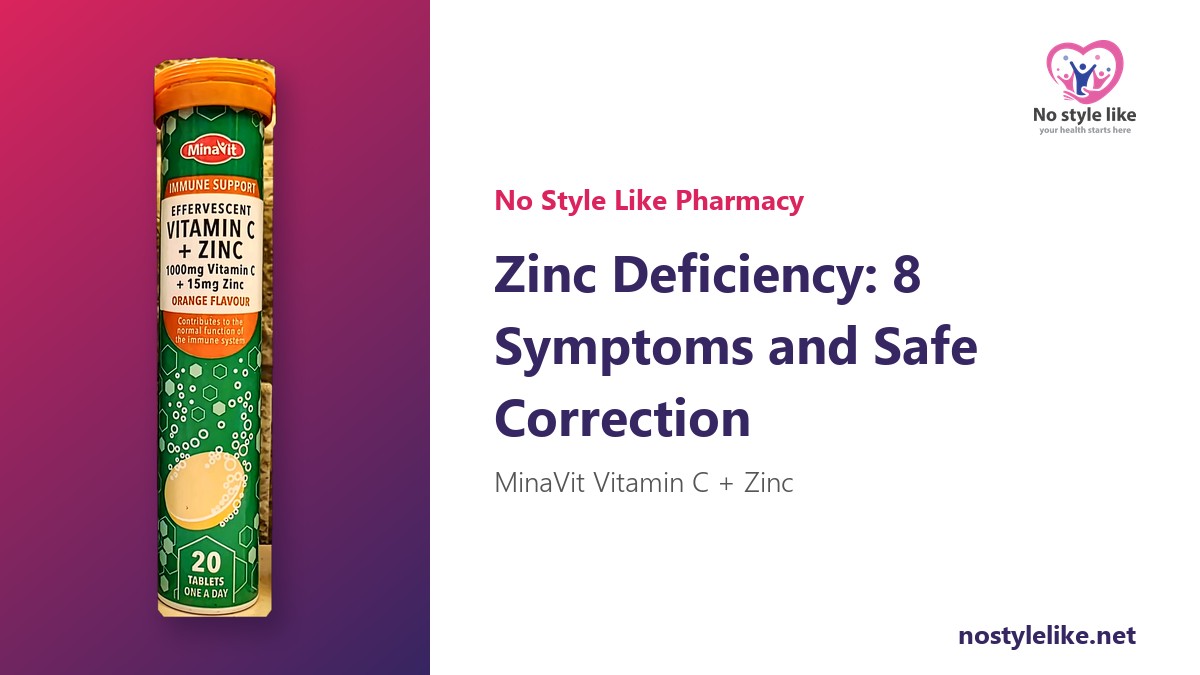
Daily needs are 8 mg for women and 11 mg for men, rising in pregnancy and breastfeeding. Many supplements contain 15–25 mg. One example is MinaVit Vitamin C Zinc, which combines 15 mg zinc with 1000 mg vitamin C in an effervescent tablet. To understand this combination, read our guide to vitamin C and zinc.
Beware of Too Much
The adult upper limit is 40 mg a day from all sources. High doses over long periods can cause copper deficiency, weaker immunity, nausea and stomach upset. Zinc also reduces the absorption of some antibiotics, so separate them by two hours.
Zinc Deficiency FAQ
How long does it take to correct?
Some symptoms improve within weeks; your doctor will set the duration based on your situation.
Can zinc deficiency cause hair loss?
It can be one cause, but hair loss has many causes.
Can effervescent tablets correct it?
Yes, if they contain a suitable dose – see our guide to effervescent vitamin C.
Should I take zinc on an empty stomach?
It is better after a meal to avoid nausea.
Conclusion
Zinc deficiency may show up as weak immunity, hair loss or slow wound healing, and it is more common in vegans, pregnant women and people with digestive conditions. Correct it through food first, then with a safe supplement dose after speaking to your doctor. You can find MinaVit Vitamin C Zinc at No Style Like pharmacy.
This article was reviewed by the No Style Like pharmacy content team. It is for general awareness only. Vitamin C and zinc are food supplements, not medicines intended to diagnose or treat any disease, and this article does not replace advice from your doctor or pharmacist.
Do not take high doses of zinc for long periods without medical supervision. Adult upper limits are 2,000 mg of vitamin C and 40 mg of zinc a day from all sources. Ask your doctor during pregnancy and breastfeeding, and keep supplements out of the reach of children. For more information see the NIH zinc fact sheet.