


Description
Quick Answer: What Is Dacarbazine?
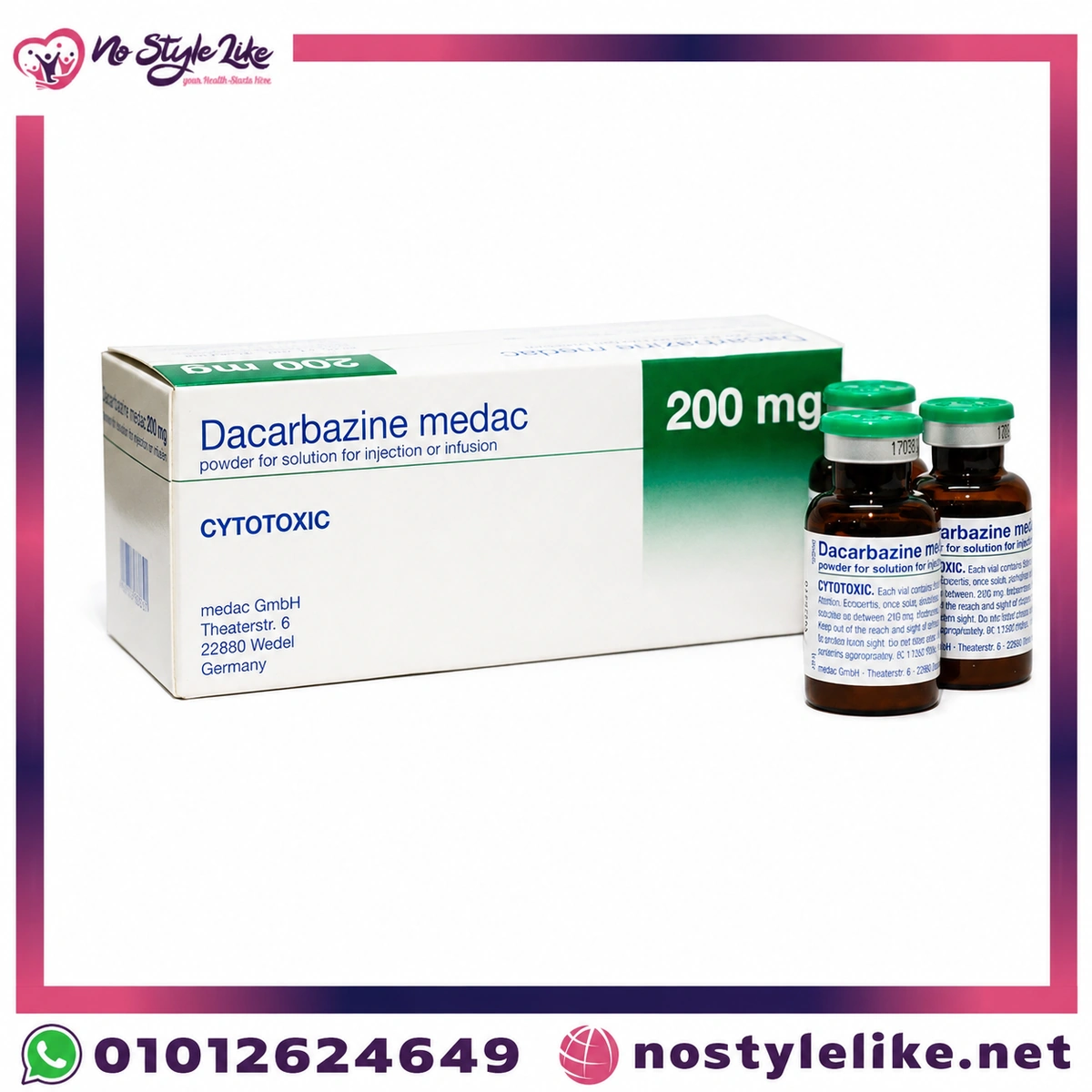
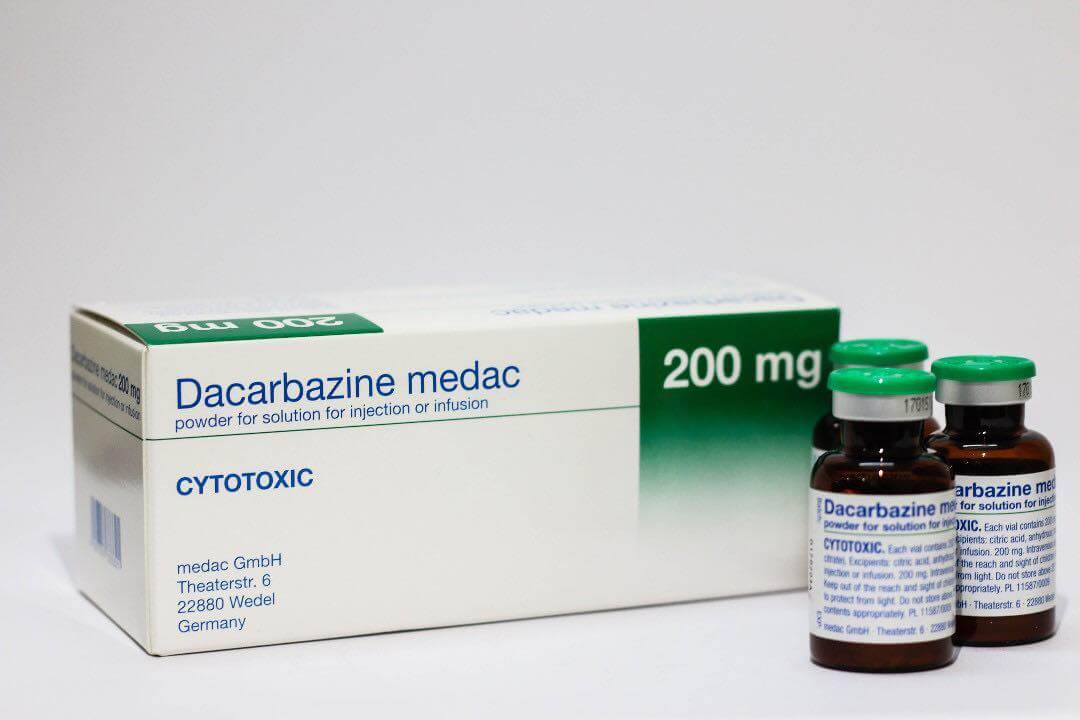
Dacarbazine is a chemotherapy medicine belonging to the alkylating agent class, used primarily in treating malignant melanoma, Hodgkin lymphoma (often as part of the ABVD combination regimen), and certain soft-tissue sarcomas. This 200mg vial is administered exclusively as an intravenous infusion in a hospital or oncology infusion center by your treating oncology team — dosing, combination with other chemotherapy agents, and treatment schedule are determined entirely by your oncologist based on your specific cancer type and stage.
Key Facts About Dacarbazine
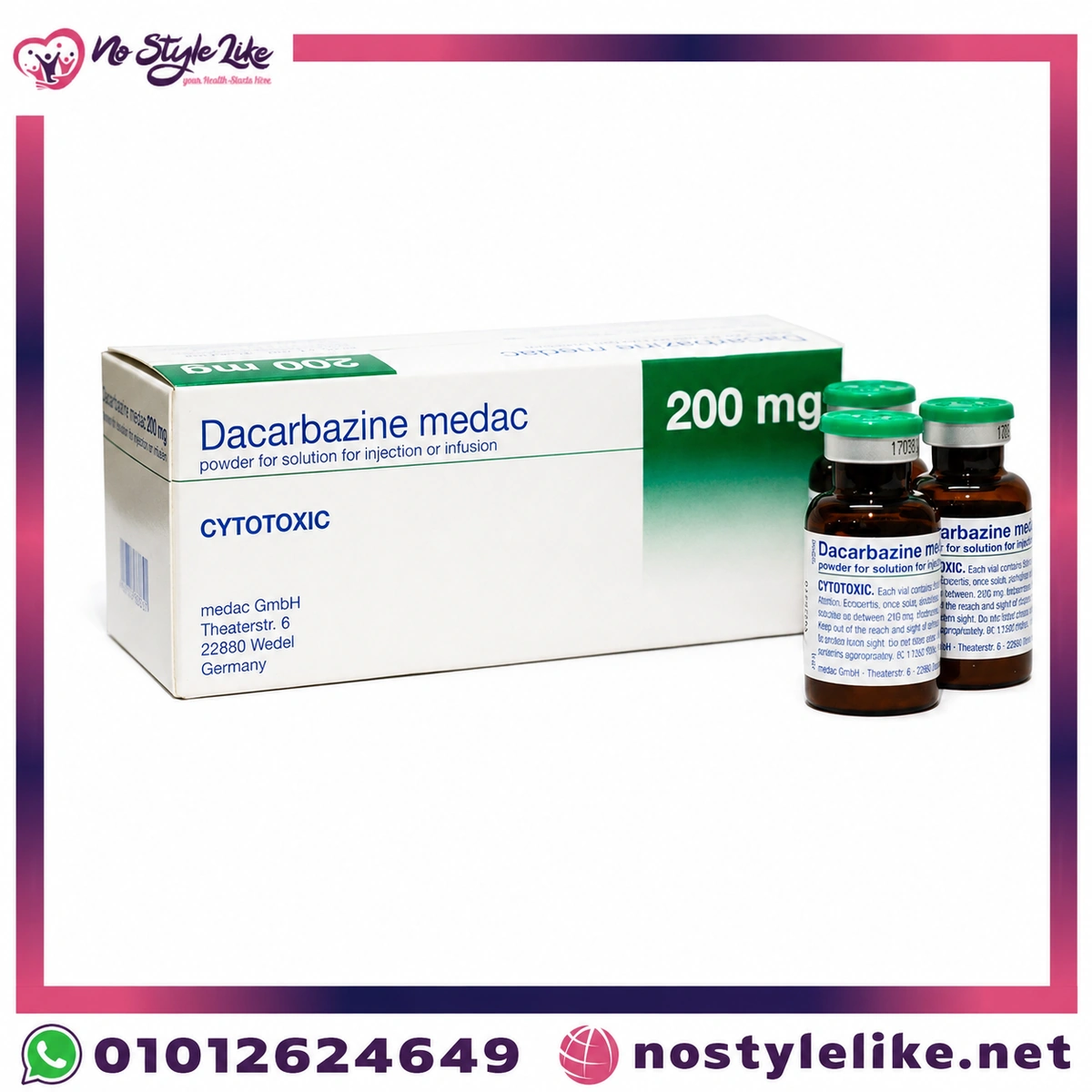
| Product Name | Dacarbazine Medac 200mg Vial |
|---|---|
| Drug Class | Alkylating agent chemotherapy |
| Main Uses | Malignant melanoma, Hodgkin lymphoma, soft-tissue sarcomas |
| Administration | Intravenous infusion, hospital/oncology center only |
| Common Combination | Often part of ABVD regimen for Hodgkin lymphoma |
| Key Handling Note | Light-sensitive — requires protection from light during infusion |
| Prescription Status | Prescription only — hospital/oncology administration exclusively |
| Price in Egypt | 6,500 EGP |
How Dacarbazine Works
Dacarbazine works as an alkylating agent, attaching chemical groups to cancer cell DNA that damage its structure and prevent proper replication — cancer cells, dividing far more rapidly than most healthy cells, are disproportionately affected by this DNA damage and die as a result. In Hodgkin lymphoma, it’s typically combined with other agents (doxorubicin, bleomycin, vinblastine — the ABVD regimen) that attack cancer cells through different complementary mechanisms, a combination strategy that has achieved excellent outcomes in this specific cancer type over decades of refinement.
What Treatment Involves
- Administered as an IV infusion in a monitored oncology setting, with the medication protected from light during preparation and administration — dacarbazine degrades on light exposure, affecting both effectiveness and side-effect profile.
- Anti-nausea medicine is typically given before infusion, as dacarbazine carries a notably high emetic (nausea-inducing) potential requiring proactive management.
- Blood counts are checked before each cycle, with dosing adjusted based on results.
- Treatment cycles repeat on a schedule your oncologist sets based on your specific protocol.
Managing the Treatment Journey
- Nausea and vomiting are significant and expected with this specific chemotherapy agent — proactive anti-nausea medication before and after infusion is standard, not optional; tell your oncology team if control feels inadequate.
- Flu-like symptoms (fever, muscle aches) can occur in the days following infusion — distinguish this from infection-related fever by discussing the pattern with your oncology team.
- Hair loss is possible, particularly in combination regimens.
- Nutrition support during cycles — small, frequent, protein-forward meals — helps maintain strength; a clinical nutrition consultation alongside oncology care can meaningfully improve tolerance.
Possible Side Effects
Common: significant nausea and vomiting (proactively managed), flu-like symptoms, and appetite loss. Monitored: blood count suppression affecting infection risk and bleeding tendency, checked before each cycle. Report fever during a low-blood-count window immediately — this is a same-day emergency in chemotherapy patients.
Storage and Handling
This is a hospital-administered, light-sensitive oncology medicine requiring specialized handling and cold-chain storage by pharmacy and nursing staff — not a home-storage product. We coordinate delivery directly with your treating hospital or oncology center.
Dacarbazine Price in Egypt
The price of Dacarbazine Medac (200mg vial) in Egypt is 6,500 EGP. As an essential oncology medicine, we prioritize continuous availability for treatment centers — coordinate with your oncology team on cycle timing.
Related Products
See our oncology medications collection at No Style Like.
Expert Note
“Dacarbazine remains a backbone agent in Hodgkin lymphoma’s excellent modern cure rates, though it’s also one of the more nausea-inducing chemotherapy medicines — proactive anti-nausea treatment before infusion, not reactive treatment after symptoms start, is what makes the real difference in tolerating this specific drug’s cycles.” — Dr. Abdallah Fouad, Clinical Nutrition Specialist, 25+ years of pharmaceutical and oncology-adjacent nutrition experience.
Frequently Asked Questions About Dacarbazine
Why does nausea seem worse with this chemotherapy than others?
Dacarbazine carries a notably high emetic potential; proactive anti-nausea medication before infusion is standard practice specifically because of this.
Why must it be protected from light?
Dacarbazine degrades on light exposure, which can affect both its effectiveness and side-effect profile — your infusion team handles this specialized requirement.
What are the flu-like symptoms after infusion?
Fever and muscle aches can occur in the days following treatment; discuss the specific pattern with your oncology team to distinguish from infection.
Will I lose my hair on this medicine?
Possible, particularly in combination regimens like ABVD — your oncology team can advise based on your specific protocol.
What if I develop a fever between cycles?
Contact your oncology team immediately — this is a same-day medical emergency during low-blood-count windows.
Nutrition Support Between Cycles
Small, frequent meals emphasizing easily digested protein sources help maintain strength between infusions, and ginger tea or crackers before eating can ease residual nausea on lower-symptom days — a clinical nutrition consultation alongside your oncology team can tailor this further to your specific tolerance pattern.
Supporting a Loved One Through This Treatment
Family members can help most by tracking symptom patterns between visits, ensuring nausea medication is taken on schedule rather than only when symptoms peak, and encouraging rest without pressure to “push through” fatigue, which is a normal and expected part of the recovery window after each cycle.
References
Dacarbazine clinical profile: DrugBank – Dacarbazine.
Bottom line: Dacarbazine is a proven chemotherapy backbone for melanoma and Hodgkin lymphoma under full oncology supervision — coordinate through No Style Like with your treating hospital, and lean on proactive anti-nausea management for each cycle.

Reviews
There are no reviews yet.